“Drinking Buddies”: Hold me, thrill me, kiss me, beer me

drinkingbuddies

“Drinking Buddies” plays Thursday, Oct. 3 at 7 p.m. and Saturday, OCt. 5 at 9:30 p.m. at the Marquee Theater in Union South, 1208 W. Dayton St. R, 1:30, three and a half stars out of four. FREE!

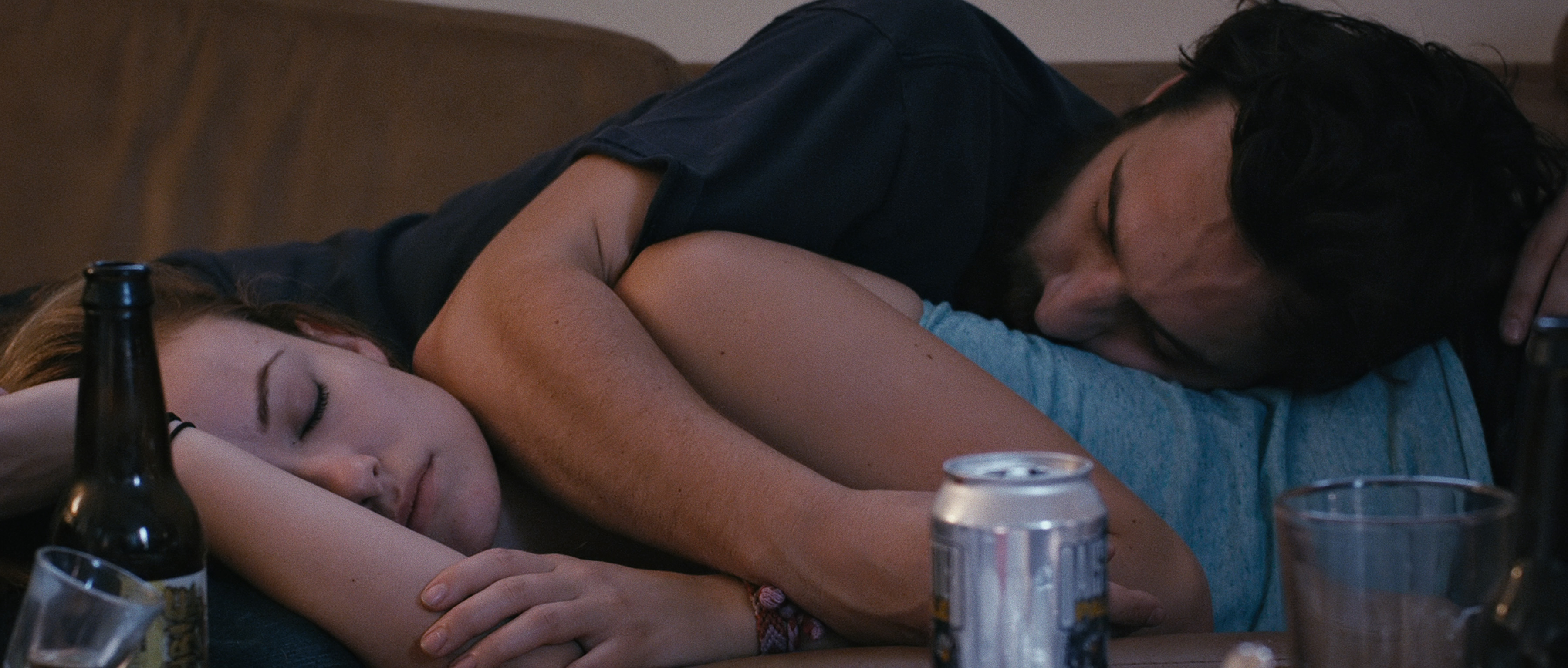
While I admire the UW-CInematheque for its mission to bring unusual and challenging films to the big screen, I fear it may have gone too far with “Drinking Buddies.” A romantic comedy set in the world of craft brewing? Who’s going to want to see that in Madison?

The truth is, of course, lots of people, especially since Joe Swanberg’s film is so good, simultaneously grounded in real emotional behavior and effervescent in its comedy. And it doesn’t hurt that the Cinematheque is screening it at the Marquee, where you can bring in a great craft beer purchased downstairs at the Sett.

Continue reading

“The Hunt”: An innocent teacher caught in a witch hunt

thehunt

“The Hunt” plays Monday through Thursday at Point and Eastgate Cinemas. Not rated, 1:52, three stars out of four.

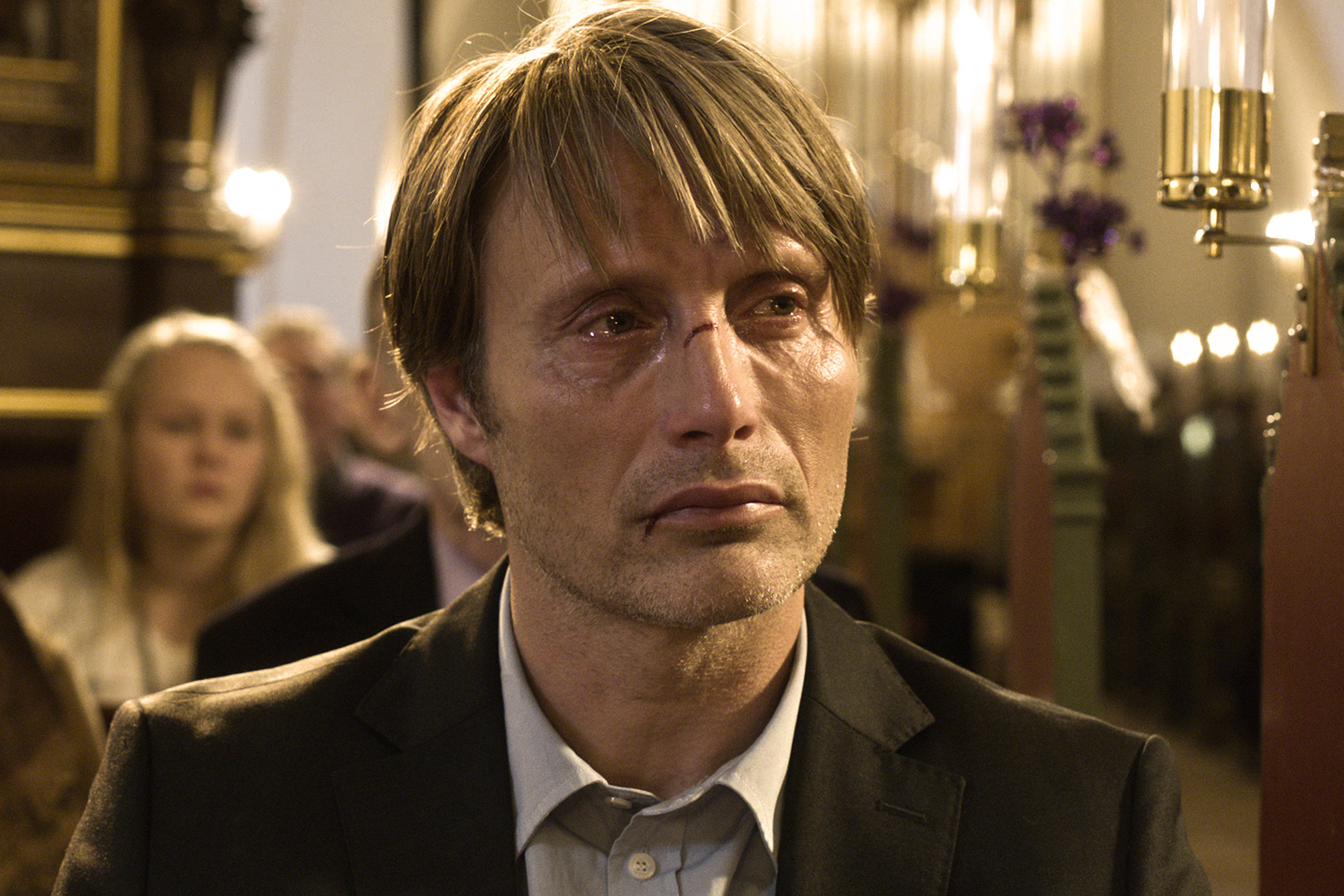
Even  when things get very bad, the little Danish town in “The Hunt” seems so nice. It’s a place where everybody knows everybody, where folks walk to school and drop in unannounced in each other’s homes, where the pews are full on Christmas Eve.

It’s in this bucolic little retreat that director Thomas Vinterberg (“The Celebration”) creates a modern-day “Crucible,” a frighteningly plausible examination of how suspicion can spread through otherwise decent people.

Continue reading

“Low Movie (How to Quit Smoking)”: Sound and vision collide in Duluth

low-alanjpeg-66d61948e7cbccb9

“Low Movie (How to Quit Smoking)” screens at 8 p.m. Wednesday at the Barrymore Theatre, 2090 Atwood Ave. Tickets are $10. Not rated, 1 hour 8 minutes, three stars out of four.

Phil Harder doesn’t appear on any albums by the Duluth band Low, but they consider him part of the band. The filmmaker has been Low’s go-to guy for videos and short films since its inception in 1993, and on their 20th anniversary, Harder decided to release a compendium of “20 years of not knowing what the hell we were doing,” as singer Alan Sparhawk wryly puts it in the introduction.

So if you’re looking for a documentary about Low, some revealing personal or backstage footage about the band, look elsewhere. (Minnesotans might not be comfortable sharing that much anyway.) Instead, “Low Movie” is like a series of short films built around music, each not having any particular relationship to the other, varying widely in style.

Continue reading

“Don’t Stop Believin’: Everyman’s Journey”: It goes on and on and on and on

dontstopbelievin03

“Don’t Stop Believin’: Everyman’s Journey” screens Monday through Thursday at Point and Eastgate Cinemas. R, 1:53, two and a half stars out of four.

In 1981, while Journey was packing arenas around the world on its “Escape” tour, the band’s future lead singer was a kid on the streets of Manila, singing for his supper.

Arnel Pineda grew up poor, and for a time was homeless, performing for spare change to live on. His unlikely journey to the spotlight is chronicled in Ramona S. Diaz’s engaging but shallow documentary “Don’t Stop Believin’: Everyman’s Journey.”

Steve Perry’s voice was the essential ingredient in ’80s hits like “Open Arms” and “Faithfully,” and he left Journey foundering when he quit the band in the mid-1990s. They went on with a replacement singer, seemingly chosen as much for his physical resemblance to Perry has his vocal resemblance, but when his voice gave out a decade later, the band was stuck.

Continue reading

“Thanks for Sharing”: A movie about sex addiction that rubs you the right way

thanks-for-sharing

“Thanks for Sharing” opens Friday at Sundance Cinemas. R, 1:52, three stars out of four.

“is that even a thing?” one character in “Thanks for Sharing” asks about sex addiction. “I thought that was just something guys said when they got caught cheating.”

Sex addiction is a thing, although the movies haven’t done much with it, aside from the overwrought “Shame,” which turned it into an epic tragedy. Stuart Blomberg’s “Thanks for Sharing” is refreshingly grounded because it treats it like any other addiction. Substitute booze and pills for online porn and prostitutes, and this could be any other addiction drama.

While the ads are selling “Sharing as a fizzy Nancy Meyers-esque romantic comedy, in truth it’s about two-thirds drama and one-third comedy. Blomberg (who co-wrote the superior “The Kids Are All Right”) balances the light and dark well, and if the film goes into the familiar places we expect from addiction dramas, it does so with realism and empathy.

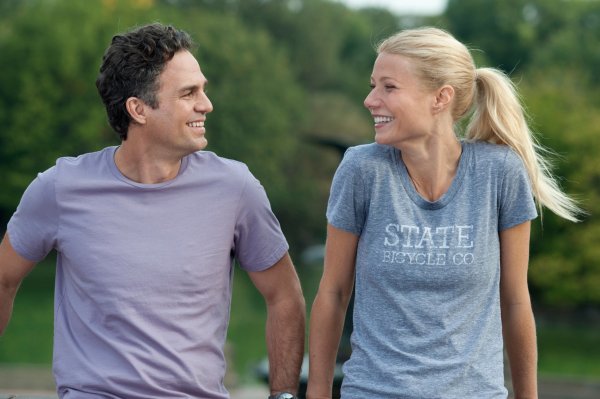
Adam (Mark Ruffalo) is a successful Manhattan environmental consultant who is five years “sober” with sex addiction. Yep, it’s the same 12-step program as any other, with meetings, sobriety medallions, bad coffee. He takes pragmatic steps to avoid temptation — he doesn’t have a TV, his laptop is locked in Ultra SafeSearch mode, and he stays off the subway, where close quarters can lead to unwelcome contact.

Adam meets Phoebe (Gwyneth Paltrow) at a gourmet bug-eating party (hey, no carbs!) and is smitten with her. She’s a cancer survivor and marathoner, and Adam is reluctant to tell her about his sordid past. But it comes out, of course, and the couple have to wrestle with trust issues.

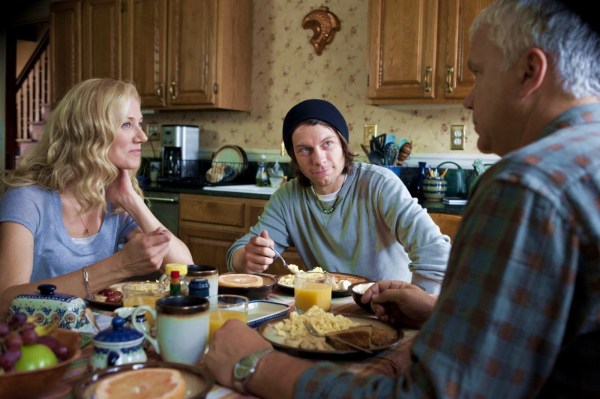
Meanwhile, Adam’s sponsor is Big Mike (Tiim Robbins), a gregarious small-business owner who has both sex and alcohol addiction in his past. His sins were revisited on his son (Patrick Fugit), a former drug addict trying to stay clean. They’ve also got trust issues to work out.
thanks-for-sharing03

Thirdly, and most comedically, is Adam’s sponsee, Neil (Josh Gad), who is a straight-up pervert, rubbing up against women on the subway and taking upskirt photos of his co-workers. Forced into the program by the courts, he’s reluctant to go along, but starts wising up by helping a female sex addict (the singer Pink), a novelty in the meetings.

Like most addiction dramas, this a film about addicts trying to go straight, and the sober trying not to stray off the path. But the performances are uniformly appealing, especially Ruffalo’s low-key charm and earnestness in the lead role, and Robbins as Mike, who wants to be sort of a Super Sponsor to others so he doesn’t have to make his own amends.

The characters are connected through empathy, one helping another and then turning around and being helped in return. For a topic that could be so potentially sensational, and characters whose behavior is sometimes appalling, “Thanks for Sharing” is surprisingly affirming.


“Hannah Arendt”: A great thinker looks at evil through a haze of cigarette smoke

hannaharendt

“Hannah Arendt” opens Friday at Sundance Cinemas. Not rated, 1:49, three stars out of four.

In 2009, writer-director Margarethe Von Trotta and actress Barbara Sukowa made a film called “Vision,” about the life of a 12th-century Benedictine nun who fought against church elders over some of the doctrines of her church. Filmmaker and actress reunite for “Hannah Arendt,” another film about a strong-willed woman willing to defy all around her to pursue what she believes to be right. But this woman is by no means — for one thing, she smokes a lot.

Other than that, “Hannah Arendt” is a fascinating look inside the philosopher and writer, and in particular the one series of articles she did for the New Yorker that made her the most famous, and notorious. The magazine’s William Shawn (Nicholas Woodeson) assigned Arendt to cover the trial of Nazi Adolf Eichmann. As Arendt sat in the court, she didn’t see Eichmann as a monster, but rather a chilly bureaucrat who insisted that he was just a cog in a very large machine, serving his function, and as such shouldn’t be held accountable for the morality or immorality of that machine. When someone describes Eichmann as a scary creature, she responds, with a touch of wonder, “He’s a nobody.”

Arendt wrote about this in her New Yorker articles, coining the famous phrase the “banality of evil” to describe the atrocities committed by ordinary men who truly believe they are not doing wrong. The articles would come to change the way the Western world thought about the nature of evil, but at the time, Arendt was excoriated by her fellow Jewish thinkers as an apologist for the Nazi regime.

If they thought they could cow Arendt into recanting her articles, they had another thing coming. Sukowa (a frequent collaborator with Von Trotta going back to “Berlin Alexanderplatz”) makes Arendt a flinty, wily woman, always seeming to appraise people through the haze of her cigarette smoke. It’s both an amazing piece of impersonation and a subtle, canny performance that suggests the sharpness of Arendt’s thinking. But Arendt is not an unfeeling person — she dotes on her ailing husband Heinrich (Axel Milberg). She just has no use for nationalism. “I never loved any people,” she tells one colleague from Israel. “I only love my friends.”

hannah2

Like “Vision,” “Hannah Arendt” is a story of what happens when ideas clash with emotions, the individual against groupthink. The film ends with a stirring defense by Arendt in front of her classroom that should convince anybody, but her detractors on the faculty are unmoved. They see her as a monster, therefore her views are monstrous, therefore they will not even engage with them.

Some of the film is a little stage-y, and some minor characters in party scenes speak as if they are reading directly from editorials, rather than talking as human beings. But overall “Hannah Arendt” is an engaging look at a small skirmish in one corner of 20th-century thought that illuminates an age-old battle between reason and emotion.

“Between Us”: Taking turns hosting the dinner party from hell

between-us-movie-stiles-george-harbour-diggs-kitchen-hr-blue

“Between Us” screens Monday through Thursday at Point and Eastgate Cinemas, check marcustheatres.com for showtimes. R, 1:30, two-and-a-half-stars out of four.

Most dramas would be content with one disastrous evening that ruins the obliterates the friendship between two couples, but Dan Mirvish’s “Between Us” opts for two. By the end of it all, I’m guessing nobody’s getting a Christmas letter this year.

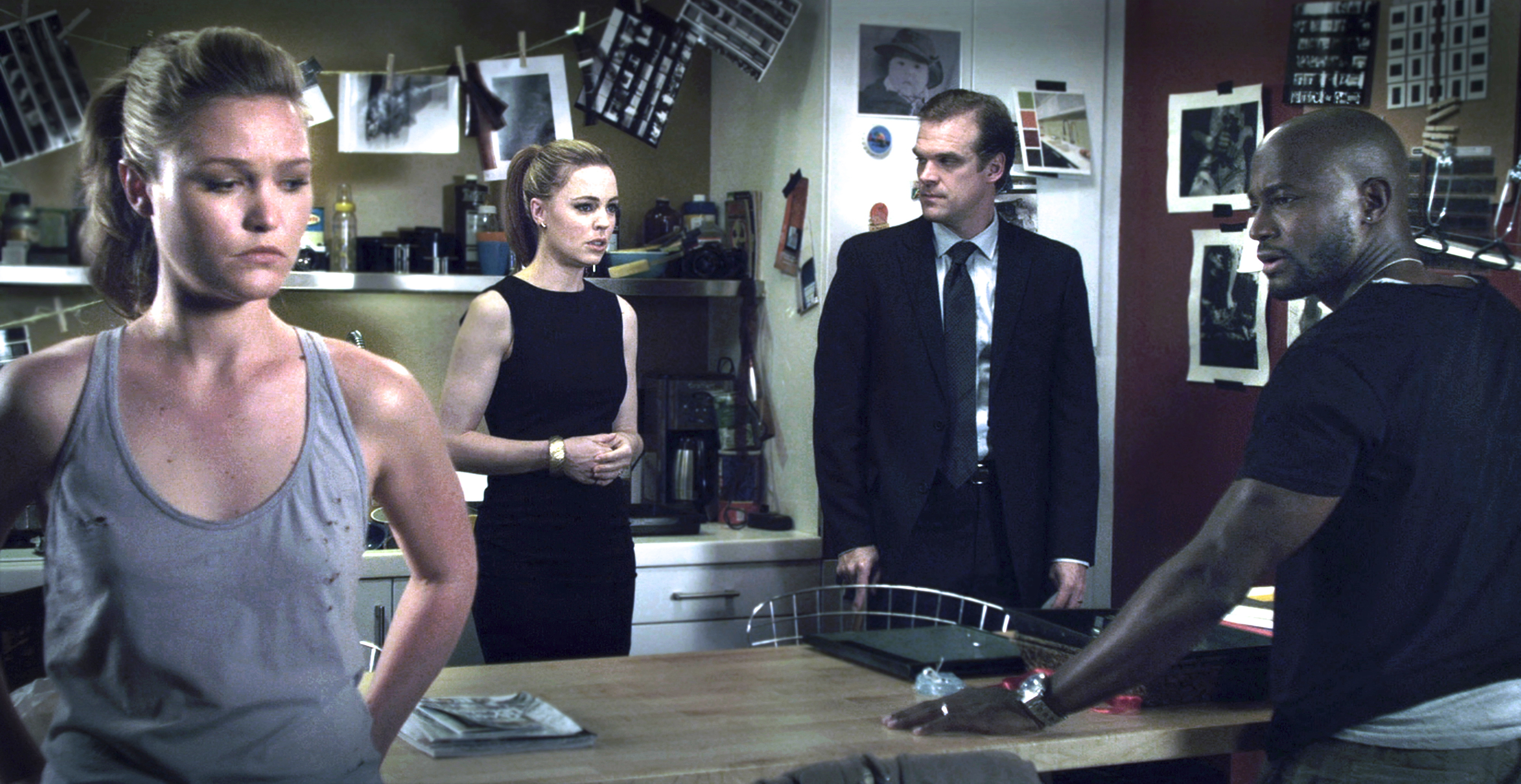
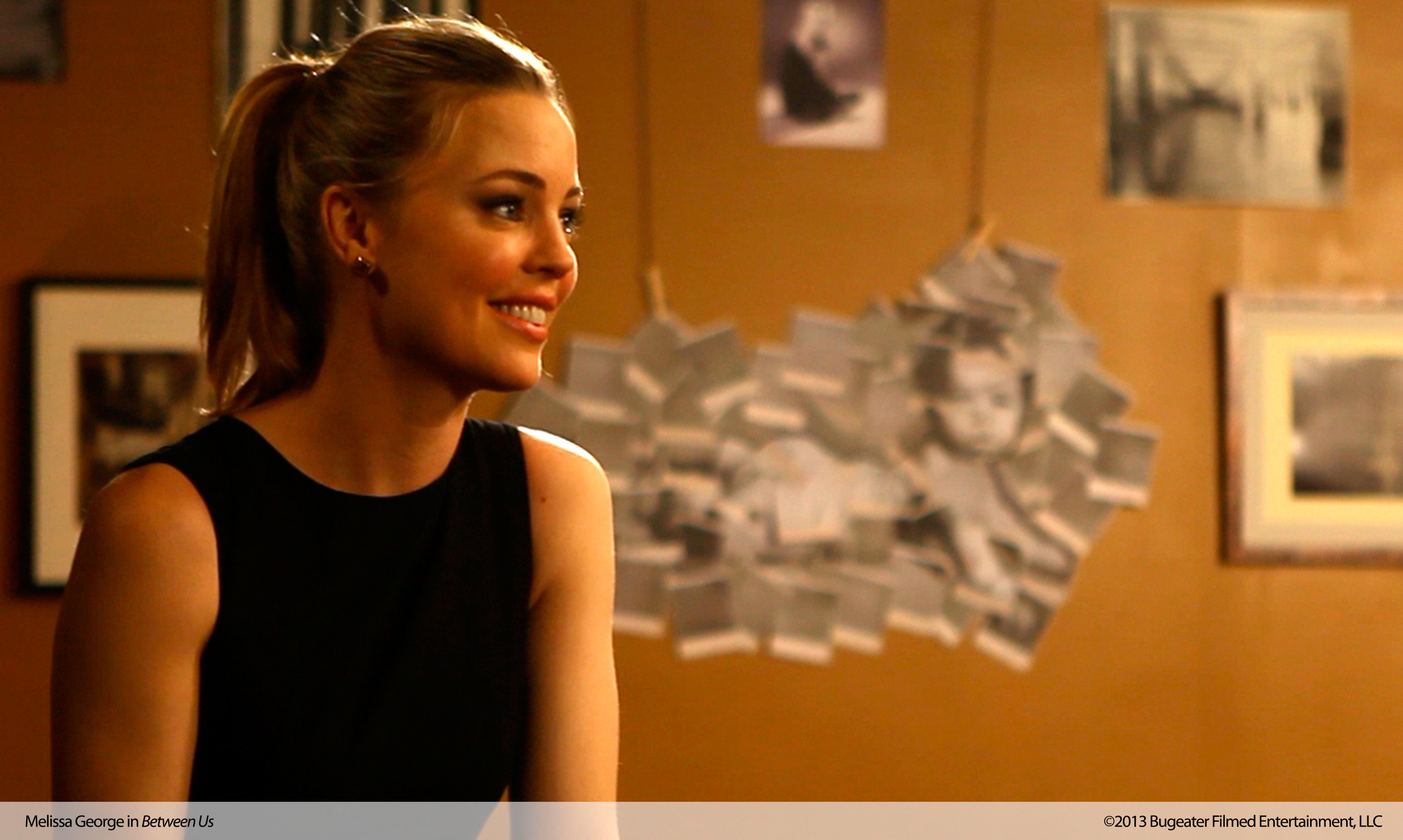
A brief prologue shows the friendship that once was, between two talented photographers and their wives, Carlo (Taye Diggs) and his wife Grace (Julia Stiles), and Joel (David Harbour) and his wife Sharyl (Melissa George). In grad school, the photographers were inseparable, even as their friendly rivalry laid the groundwork for recriminations to come.

In the first dinner party, Carlo and Grace are invited out to the gigantic exurban home of Joel and Sharyl. Joel has “sold out” and made a fortune in advertising, “spending 113 billable hours trying to get honey to drip just right off a granola bar.” He’s filled with self-loathing, with extends to loathing everyone in his life, including the tightly-wound Sharyl.

The second dinner party — really more of an extended argument over milkshakes — happens a couple of years later. Joel has found some measure of inner peace, possibly religious-driven, and he and Sharyl have come back to New York to make amends. Only now Carlo and Grace are the ones at each other’s throats — Carlo’s run out of high road in his pursuit of being an art photographer, and living in New York has put the couple massively in debt.

Instead of presenting these scenes sequentially, the film cuts back and forth between them, creating mirror images of tension. Some may complain that it’s essentially a stage play on film, but limiting the locations and keeping the interest squarely on the characters works to its benefit — whenever Mirvish tries to break the theatrical mold, such as in a dream sequence where Grace imagines visiting Brazil, the momentum of the film dissipates.

Between Us

The dialogue gives the actors plenty to dive into, like a doubles match Neil LaBute play, and the performances are uniformly strong. Diggs finds layers of resentment and insecurity under his cool-guy exterior, and between this and “Silver Linings Playbook,” Stiles is coming close to perfecting the brittle spouse role. But it’s the lesser-known Harbour who steals the show, consumed by self-hatred in one scene, touchy-feely entitlement in the next, but all the while somewhat amused at the predictable downward arc his life has taken.

It’s the script that lets these four actors down, shifting the characters from real humans to broad types and back again. Every time we think we’ve gotten to something real, the screenplay inserts a “This is what a rich person would say” or “This is what a New York boho would say” line that pulls us back out. “Between Us” is a showcase for great actors who could have used more consistent material to springboard off of.

“Austenland”: A comedy that tosses all sense and sensibility out the window

_MG_8634119.jpg

“Austenland” opens Friday at Sundance Cinemas. PG-13, 1;37, three stars out of four.

Diehard Jane Austen fans might see “Austenland” as something of an abomination. It takes the world of a Jane Austen novel — the clever dialogue, the elegant setting, the romantic plot turns — and turns it into something goofy and crass.

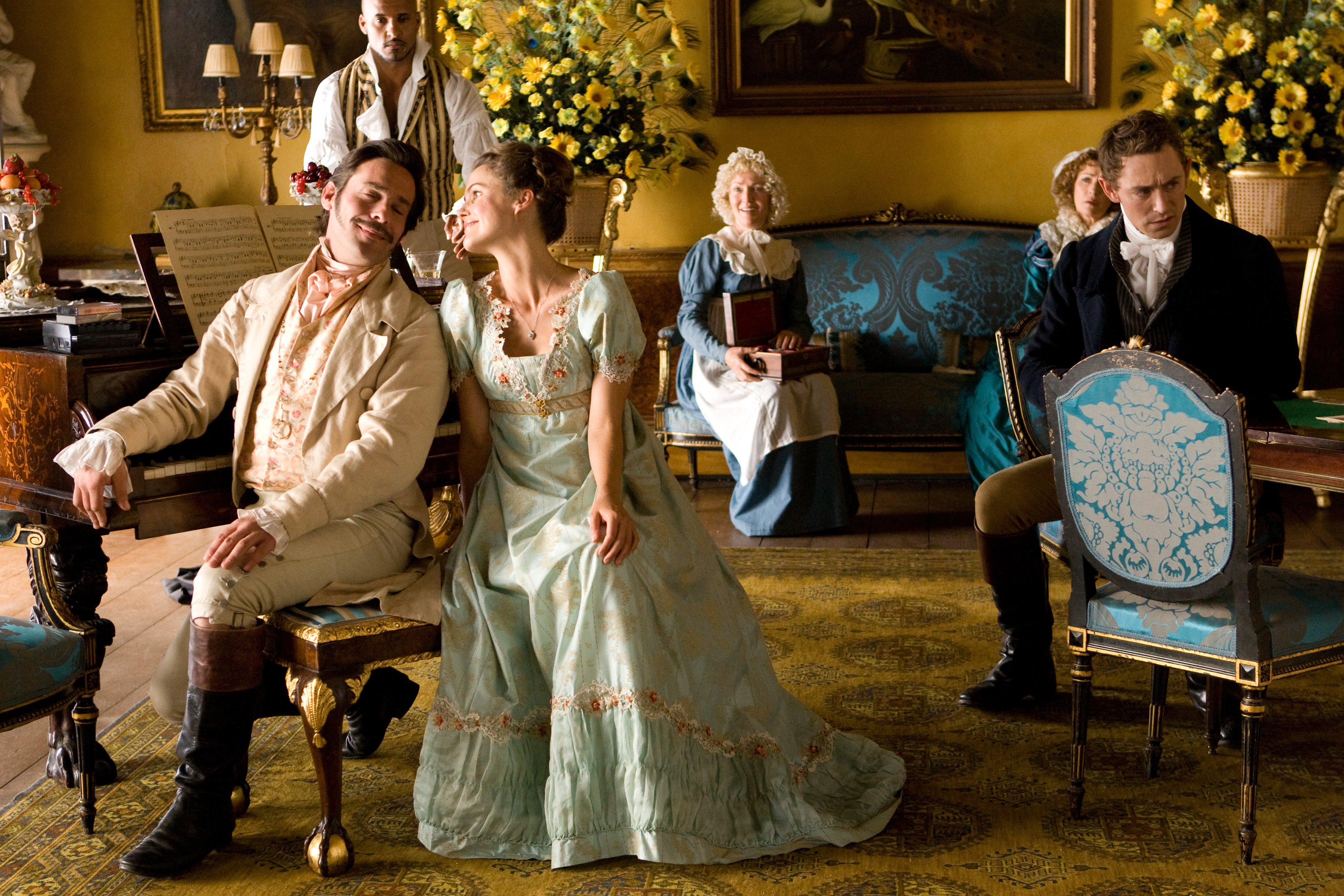
Lighten up, Darcy. The tone of writer-director Jerusha Hess’ comedy is appropriately ridiculous because the premise itself is so ridiculous. In the film (based on Shannon Hale’s novel), Austenland is sort of a theme park for lovelorn Jane fans. For a hefty fee, women get to play-act as a Jane Austen heroine, dressing in costumes, learning how to play whist in the drawing room, and, of course, getting wooed by the park’s stock of handsome male actors. It’s like Pride and Prejudice Fantasy Camp.

And it sounds like heaven to our Jane (Keri Russell), a bookish Yank who is such an Austen-phile that she has a Colin Firth Fathead watching over her bed. Unable to deal with 21st-century men, she cashes in her life savings for a trip to Austenland. Unfortunately, as Austenland’s matriarch ( Jane Seymour) explains, she only has enough money for the Copper Package. So while Platinum Package members get to wear the best dresses and sleep in the fanciest rooms, Jane’s accommodations are one step above “charwoman.”

Just like an Austen heroine, Jane finds herself choosing between two suitors. One is an actor (J.J. Feild), playing a Darcy-esque prig named Henry Nobley. The other is a groundskeeper at Austenland who is “out-of-game” (Bret McKenzie of “Flight of the Conchords”), who seems to offer the chance at a genuine, non-make-believe relationship. Will Jane choose reality, or the fantasy she’s chased all her life? Complicating matters is that Nobley is so convincing that one almost wonders if there’s a real spark of attraction underneath that waistcoat.

austenland

“Austenland” starts off silly and gets increasingly sillier — Jennifer Coolidge is a riot as a crass rich American who becomes Jane’s confidant, and blurts out very un-Austen-like lines like “Shut yer hole” in the drawing room. When a hunky new suitor (Ricky Whittle) who can’t keep his shirt on appears, we’re sure we’ve wandered into the realm of pure farce, somewhere between a rom-com and a French & Saunders sketch.

But I liked it, especially the eagerness of Hess (who co-wrote “Napoleon Dynamite”) to mercilessly tweak the conventions of romantic comedy, making the laughs broader and goofier as the movie progresses. And yet, what really sells the film is Russell, who is so slyly charming, attuned both to the zany comic moments and its wistful romantic undertone. She’s a great actress who, aside from FX’s “The Americans,” has been really underused in recent years — maybe it’s time to put her in a real Jane Austen movie. One that doesn’t quote Nelly’s “Hot in Herre.”

“Crystal Fairy”: Strangers in a strange land

Crystal-Fairy1

“Crystal Fairy” opens Friday at Sundance Cinemas. Not rated, 1:38, three stars out of four.

In “This is the End,” Michael Cera drew big laughs for playing himself as a callous Hollywood bad boy, because the image of him snorting coke and banging hotties was so different from his usual sweet and gentle persona.

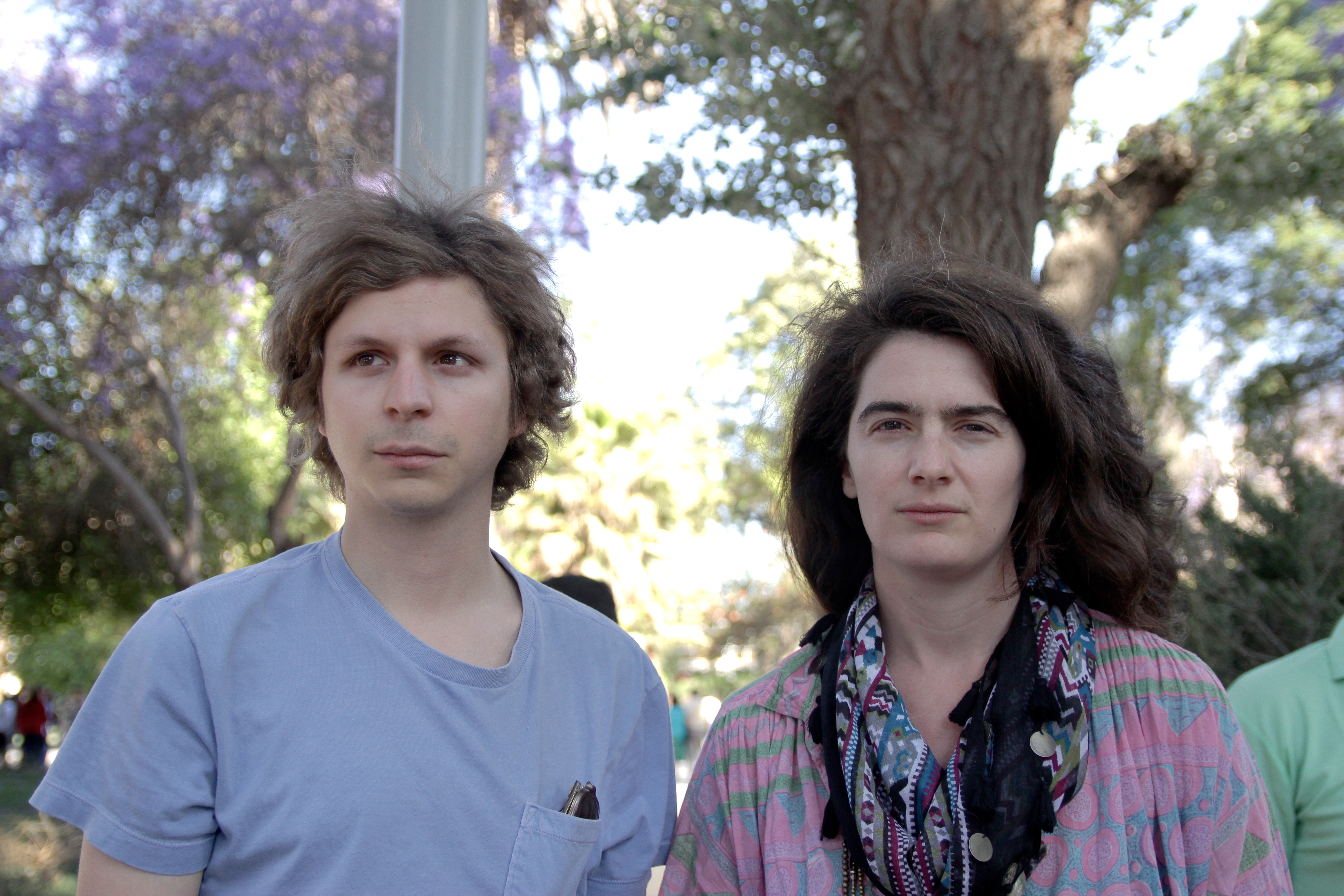
In “Crystal Fairy,” Cera plays a character who is in many ways as unsympathetic, only this time he does it for real. The result is a strong and bracing performance, balanced out beautifully by another very different strong performance by Gaby Hoffmann.

Cera plays Jamie, a drug tourist of sorts who lives in Chile on an endless, unspecified source of income. His life seems focused utterly on chasing that next high, almost monomaniacal in his pursuit. Under a “Hey, that’s cool,” veneer, he seems deeply uncomfortable with other people when he’s straight, a mix of arrogance and social awkwardness. It’s only when he’s high, it seems, that he can finally forget himself.

At a party, Jamie hears word of a rare cactus, the San Pedro, from which a potent form of mescaline can be made. He urges his friends to come with him on a road trip in the Chilean desert to find some and, in a moment of addled intimacy, invites a girl he just met at a party to come as well.

The next morning, Jamie and his three Chilean friends set out on their trip, only to find they have another passenger — the girl, who Jamie has completely forgotten he invited. She’s a neo-hippie named Crystal Fairy (Hoffmann), a free-spirited type who is comfortable in her skin as Jamie is ill at ease in his, unabashed about walking around naked in front of the others, insistent on sharing her deepest personal secrets. With the three Chileans as kind of an audience, Jamie and Crystal Fairy spar all the way into the desert.

crystal-fairy01

The offhanded, naturalistic approach Silva takes keeps you on edge — you’re never sure if something horrible or wonderful is waiting for these pilgrims in the desert. Both Jamie and Crystal Fairy are, in their own way, completely alone in this world. Jamie treats his journey with the self-absorption of a traveler on a business trip, while Crystal insists she’s deeply connected to every other living thing, oblivious to how precious and overbearing she comes off to others. If you’ve ever backpacked through Europe, you’ve sat next to both these types on a train.

I wish the three Chilean men (all played by Silva’s brothers) were more deeply drawn, and just when the film inches towards some kind of epiphany for Jamie and Crystal Fairy, Silva ends it, as if not wanting to compromise his loose approach with an actual climax. Still, “Crystal Fairy” is a funny and authentic look at two very distinct types of Americans abroad, who can’t escape themselves no matter how far they go.

“Adore”: This Australian film is a total MILF (Melodrama I’d Like to Forget)

adore

“Adore” opens Friday at Sundance Cinemas. R, 1:49, two stars out of four.

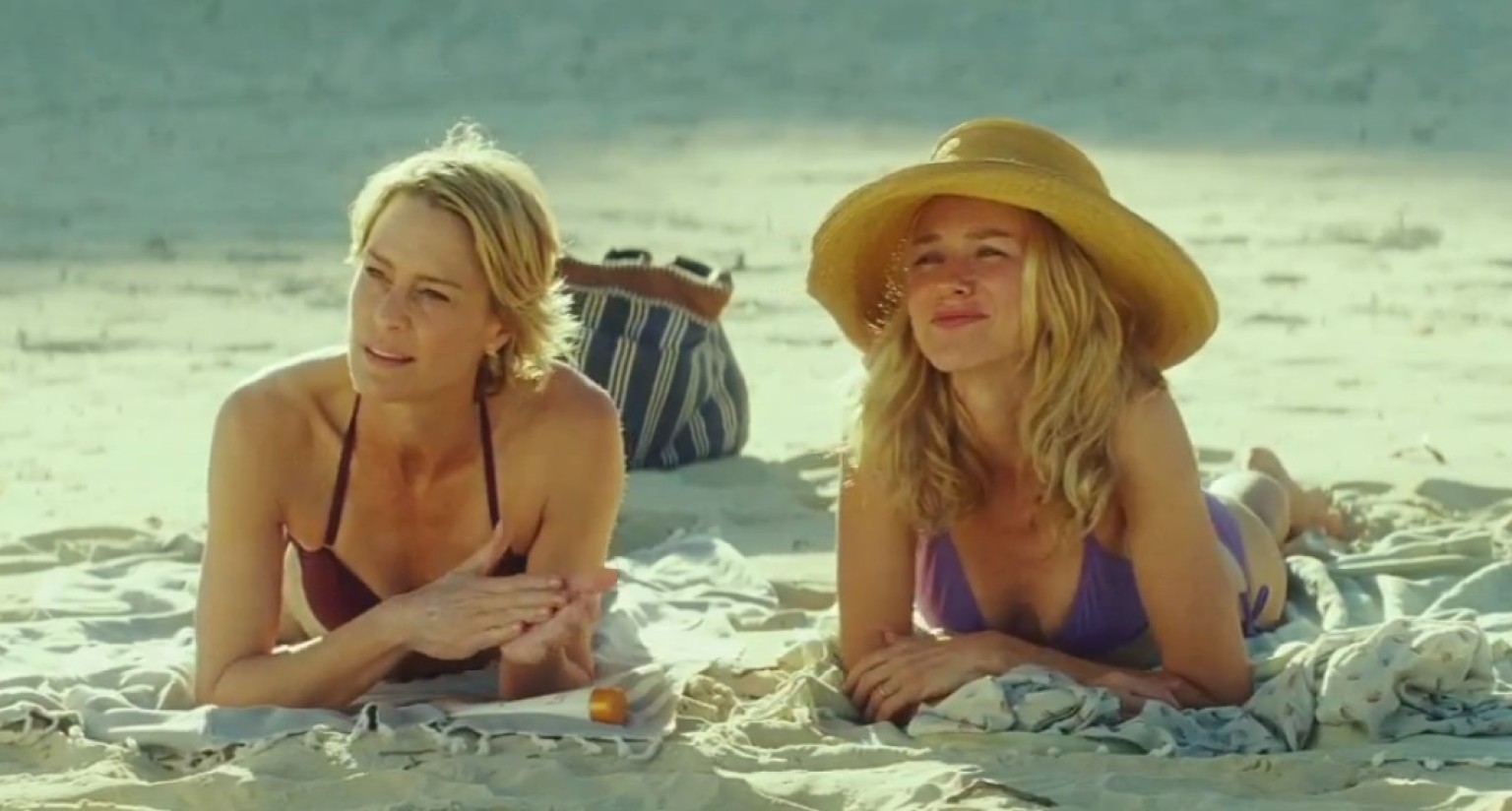
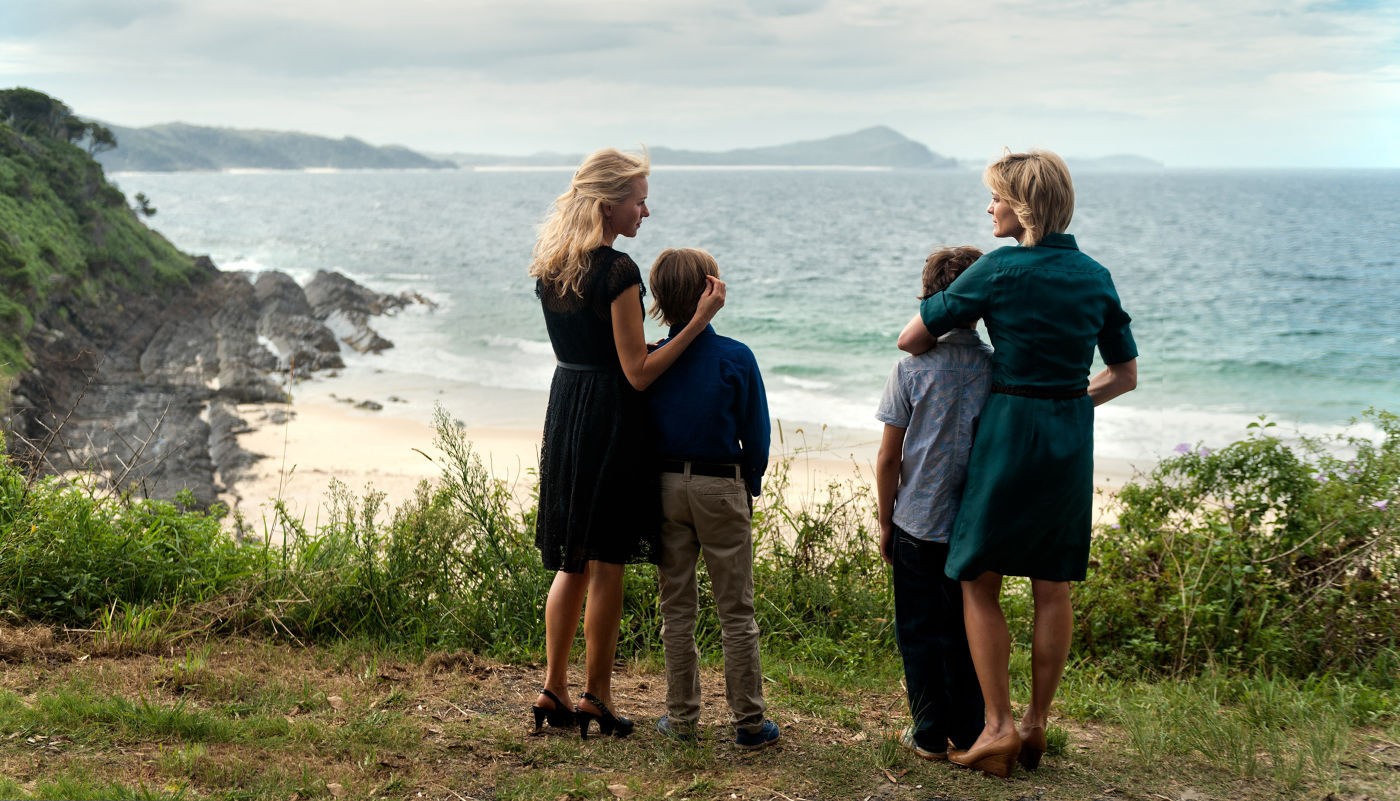
There’s no question that “Adore” would be unbearably skeevy if the gender roles were reversed, and it was about two older men having affairs with each others’ college-age daughters. But Anne Fontaine’s drama is about two middle-aged women (Naomi Watts and Robin Wright) playing sexual criss-cross with each other’s hunky sons is still plenty icky.

And the problem is that “Adore,” based on a novella by the late Doris Lessing, is all about the premise, giving the charactes little room to maneuver outside its weird sexual arrangement. Worse, Fontaine and screenwriter Christopher Hampton dig into what this relationship actually is — is it morally twisted and a prelude to disaster, or a legitimate alternatve arrangement? For a film with dicey subject matter and somewhat explicit sex scenes, “Adore” is awfully polite when it comes to the emotions, substituting deadly seriousness for actual insight.

Roz (Wright) and Lil (Watts) are lifelong friends who live in an idyllic community on the coast of Australia, their families growing up side by side. When Lil’s husband dies, and Roz’s (Ben Mendelsohn) accepts a job at a Sydney university that will keep him away for most of the year, the women get bored. One night, without preamble, Lil’s son Ian (Xavier Samuel) makes a movie on Roz, and she barely puts up a fight. Roz’s son Tom (James Frecheville) witnesses this, and immediately goes over to bed Lil. And so it begins. “What have we done?” Roz asks the next morning. “Crossed a line,” Lil responds. Ya think?

Under the sun-dappled beauty of the Australian coast (brought to life in gorgeous 35mm Cinemascope), the foursome hang out, although the balance isn’t perfect. Ian is consumed with puppy love for Roz, while Lil and Ian’s relationship seems to be based on a more immediate sexual connection. Eventually, the boys’ romantic attentions start to wander, and they move on with their lives. But the attraction lingers.

adore2

Watts and Wright are terrific actresses, and they work hard to imbue their characters with a mix of carnal lust and maternal guilt. But when the script doesn’t know how to explain their behavior, it leaves the actresses at sea as well. The presence of an unsuitable older suitor seems to suggest that Lil has few romantic options left in her life, but please. The idea that these women are past their prime and unable to find loving partners whose diapers they haven’t changed at one point is ludicrous, and borderline offensive to women over 40 in general.

It doesn’t help that Samuel and Frecheville (who was really good in “Animal Kingdom”) are such handsome blanks, giving Watts and Wright nothing to play off of except their tanned, toned bodies. Which might be enough for a tawdry beach novel, but enough for a drama starring two of our finest actresses.