“Finding Fela” explores the man, the myth and the musical

findingfela

Alex Gibney’s “Finding Fela” is a very good documentary about the legendary African musician and political activist Fela Kuti. It is also a pretty good documentary about the creation of “Fela!” a Broadway musical chronicling his life.

It’s when “Finding Fela” tries to be both at the same time that it gets a little shaky. Gibney’s film is now out this week on DVD and on Netflix Instant.

“Fela!” does seem like a terrible idea for a Broadway musical, as Questlove of The Roots says about when he first heard of it. What does the politically-charged, hypnotic music of Kuti have to do with the well-to-do audiences in Manhattan? But under the guidance of artistic director Bill T. Jones (who is coming to the Wisconsin Union Theater on Valentine’s Day), the musical captures the contours of Kuti’s story as well as the spirit of his music. With the excellent Afrobeat band Antibalas serving as house musicians, performances erupt into wild onstage parties that seem to have little to do with the carefully orchestrated corporate-backed musicals elsewhere on Broadway.

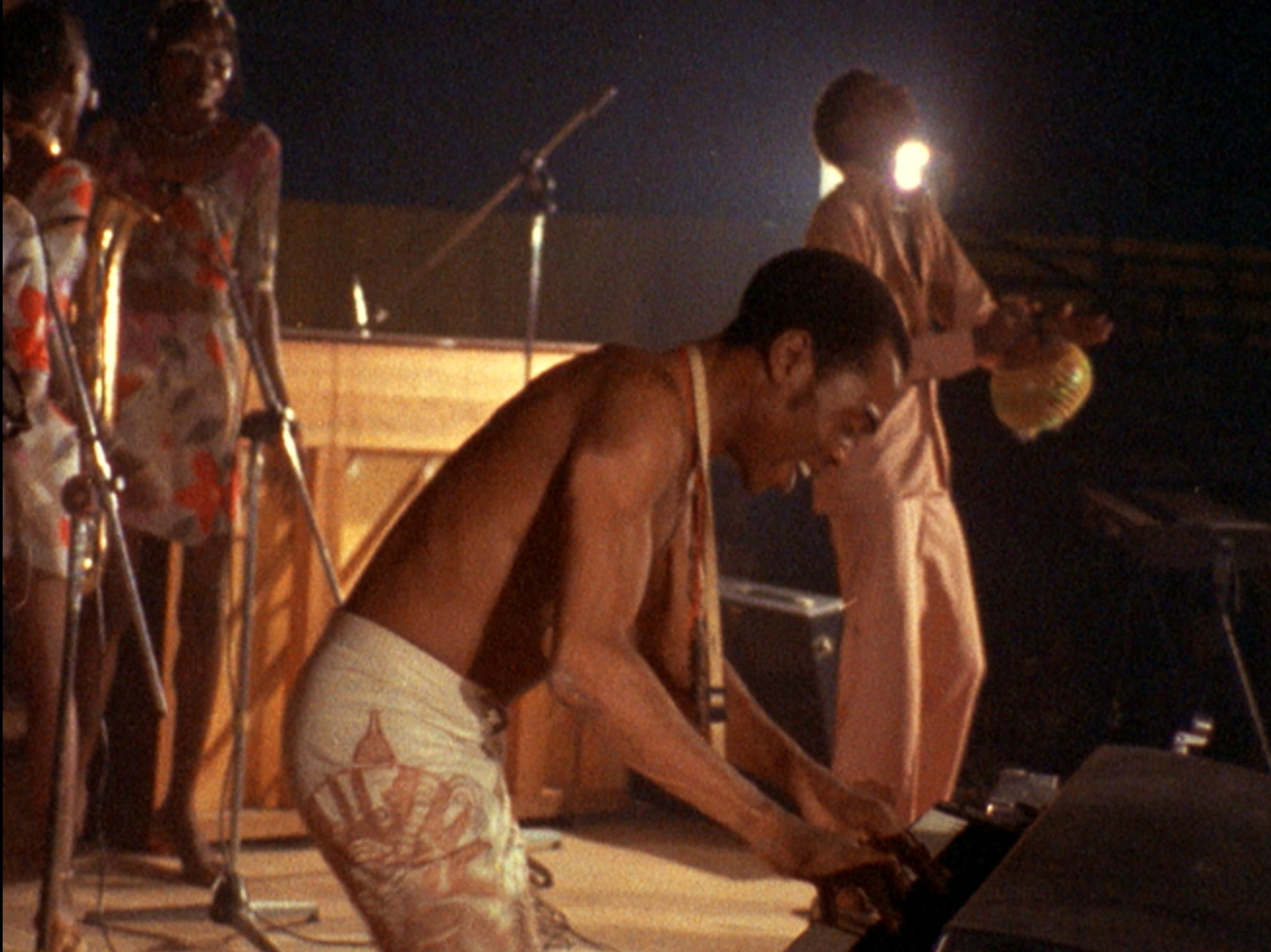
What Gibney does is use the play as a visual device through which to tell Kuti’s story. We’ll see a few lines from the musical as the actor Kuti describes his upbringing in Nigeria, then cut to archival footage and interviews with people who were there. And beneath it all is the music — humming, throbbing Afrobeat songs that could be propulsive and energetic, or stretch out to a simmering half-hour or so. It was Kuti’s ambition in part that thwarted his efforts to make it big in America — record labels kept asking him how they could turn a 28-minute song into a three-minute hit on the radio.

fela2-e1381855439173

While Kuti was an inspiration and a hero to many in Nigeria and across Africa during a turbulent political time, Gibney (“Taxi to the Dark Side,” “Enron: The Smartest Guys in the Room”) doesn’t flinch from some of the less laudable aspects of his character. His treatment of women was abysmal, and his house was filled with his many wives, all sitting around waiting to serve him.

There is plenty of live footage of Kuti, both in interviews and onstage, and the live performances from “Fela!,” bold and colorful, add a great deal of excitement to “Finding Fela.” But the film falters when it lets the musical take over, lets Jones interpret the facts of Kuti’s life that we’re seeing for us. You can feel Gibney’s and Jones’ different agendas grinding against each other at times, and when “Finding Fela” slips into “behind the scenes at a play” mode it’s much less interesting.

But then, it wouldn’t be a documentary about Kuti if it was neat and well-behaved.


“Selma” uses the cliches of historical dramas to challenge them

la_ca_1021_selma

As I wrote on Friday, Ava DuVernay’s “Selma” is a magnificent film, an urgent historical drama that makes the civil rights battles of the 1960s feel painfully relevant to the civil unrest of today. Much of the film’s potency comes from DuVernay’s refusal to wrap the events in the film in the gauzy cloak of history. Everything about the film, from the screenplay bracing honesty to the nuanced and convincing performances, is designed to give the film a we-are-there immediacy.

But DuVernay and screenwriter Paul Webb also use two familiar techniques of historical dramas, things we see in almost every movie based on real events. At first, these techniques come almost as a comfort, we’re so used to seeing them. But then it becomes clear than “Selma” is using them in a clever and even subversive way, as a rebuke to the traditional historical narrative about civil rights.

The first is the use of scene-setting text throughout the film to orient the viewer as to where we are in a given scene and who we’re seeing. This is a pretty common narrative technique in historical drama (“The White House, Jan. 24, 1963).

But the text in “Selma” is presented as if taken (and may very well be taken) from the secret files that the FBI under J. Edgar Hoover gathered on King. Hoover had King under surveillance, tried to discredit him for his infidelities and even nudge him towards suicide, and the text reflects this suspicious tone. For example, when King calls legendary gospel singer Mahalia Jackson because he needs to “hear the Lord’s voice,” the text sneers “King contacts Negro entertainer.”

We’re so used to seeing such text take an omniscient, God’s Eye perspective on historical events that it’s jarring to see such biased, even prejudiced text in a film. DuVernay’s point is that observations like these were the official history of King, according to the white power structure in the South and in much of Washington, D.C. Putting it on-screen gives such official prejudice a terrible weight, underscoring the magnitude of what King was struggling to overcome.

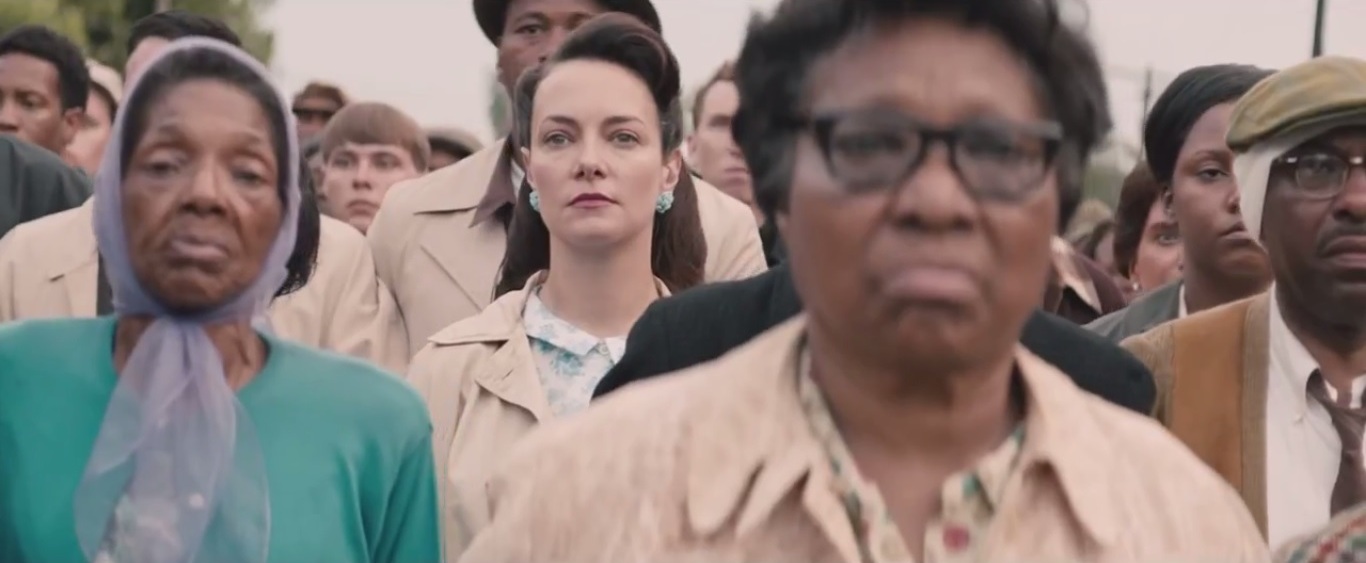
The other technique also involves on-screen text, and comes at the end of the film. As King gives his thundering speech in Montgomery, Alabama, the camera finds several of the players in the film, and shows us a sentence or two about what happened to them. There’s John Lewis, future 14-term Congressman. There’s Alabama Governor George Wallace, who seven years later will be paralyzed by an assassin’s bullet. These kind of where-are-they-now messages were a familiar part of historical dramas since well before “Animal House” made fun of them.

selma-viola-liuzzo-played-by-tara-ochs (1)

But then the camera finds a protester, a white woman named Viola Liuzzo, listening raptly to King’s speech. And the text tells us that, five hours from now, she will be murdered by Klansmen on the way home from the event.

It’s a shocking detail that abruptly breaks through the glow of victory that pervades the final scene. To tidily package away these events as history, as something that happened then and not now, does them a disservice, DuVernay is saying. And it reminds us that the struggle was far from over, there were still lives that would be lost, and the questions that “Selma” asks — about racial justice, about violence, and about who gets to tell the story of our shared past — still need asking.


Instant Gratification: “Frank” and four other good movies to watch on Netflix Instant and Amazon Prime

frank

Pick of the week: “Frank (Netflix)My full review is here. Michael Fassbender as you’ve never seen him before — completely obscured by a giant papier-mache head as he plays the enigmatic, possibly emotionally damaged leader of an art-rock band in this strange, funny and sad film about the price and salvation of creative genius. Great supporting turns by Maggie Gyllenhaal as the mercurial power behind the band and Domhnall Gleeson as a mediocre songwriter who tries to push the band towards mainstream success.

Continue reading

“Selma”: Bending the arc of the moral universe towards justice

SELMA

“Selma” is now playing at Point, Eastgate, Star Cinema and Sundance. PG-13, 2:07, four stars out of four.

History does not have to happen. Years after, it seems inevitable that African-Americans would have gotten the right to vote, just as years from now it will seem inevitable that gay people would get the right to marry, or someday it will seem inevitable that African-Americans would be treated fairly by the criminal justice system.

But it does not just happen on its own. It happens because people put their shoulder to the wheel and push, push their leaders to act, push their media to listen, push their countrymen to see. It requires hard work and diligence and suffering to, as one character in “Selma” puts it, “build the path best we can. Rock by rock.”

Continue reading

In “Birdman,” “Big Eyes” and “Top Five,” everybody’s a critic (hater)

birdman-4

Everybody’s a critic these days at the movies. Or, at least, everybody’s a critic hater. For some reason, three of the top movies released in the last couple of months have prominent and pretty unflattering roles for critics — New York Times critics in particular. Did the Old Grey Lady do something to tick off Hollywood?

Continue reading

Instant Gratification: “Election” and four other good movies to watch on Netflix Instant

Election-still

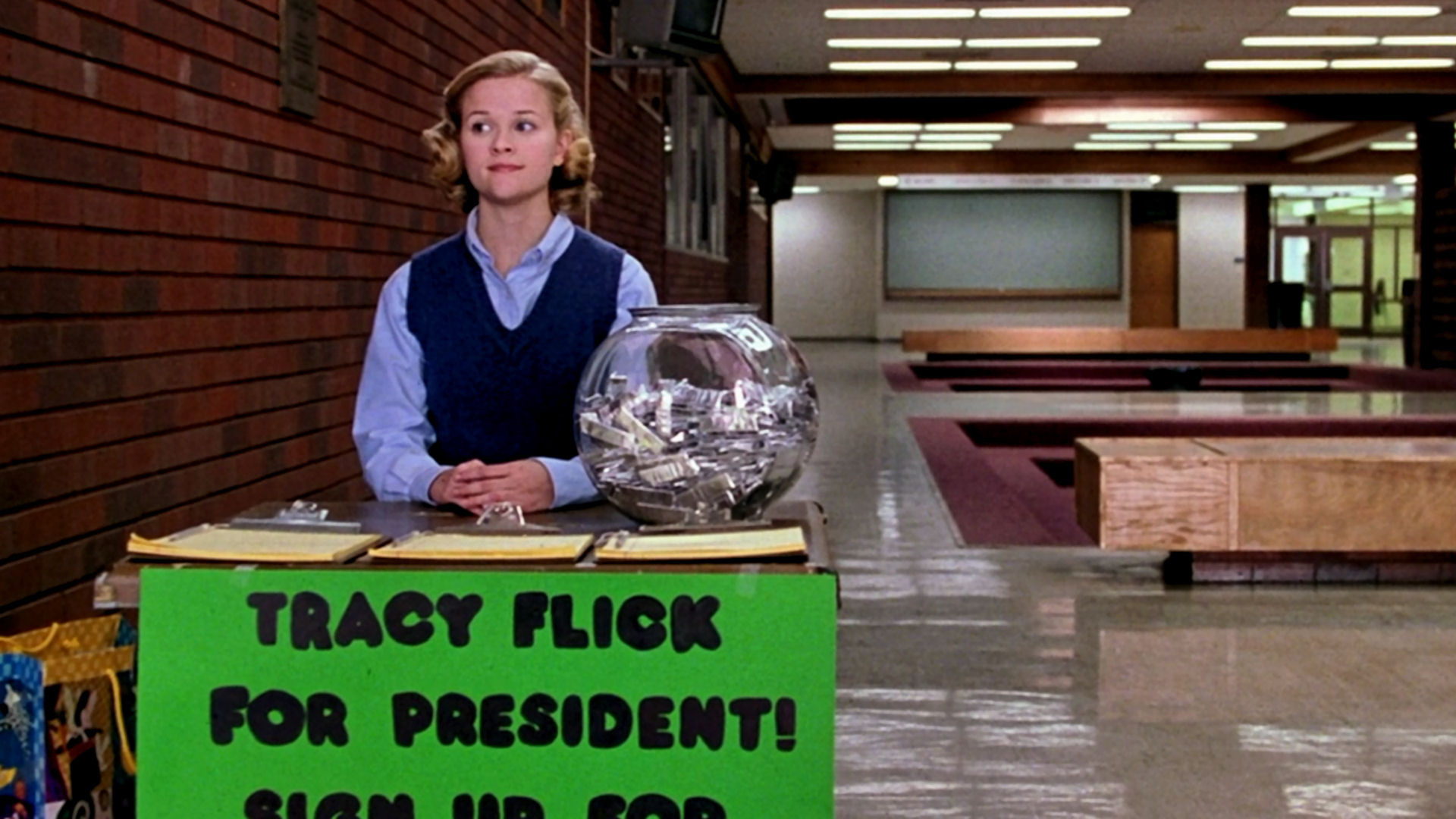
Pick of the Week: “Election — Tracy Flick would have turned up her nose at the messy, careless Cheryl Strayed, but after seeing Reese Witherspoon’s tour de force in “Wild,” it’s fun to go back and see her in Alexander Payne’s 1999 comedy about a driven high school student and the teacher (Matthew Broderick) determined to stop her.

Continue reading

Instant Gratification: “Coherence” and four other good movies to watch on Amazon Prime

coherence

Usually this weekly streaming column is either partially or entirely devoted to new titles on Netflix Instant. But with Netflix in a bit of a late-December funk (“I, Frankenstein,” anyone?), I thought I would turn my attention to Amazon Prime Instant Video.

Amazon Prime has been busy making exclusive streaming deals with independent film distributors like A24 (“The Bling Ring”) and, in October, Oscilloscope Laboratories. A whole bunch of excellent films from Oscilloscope and elsewhere just went up exclusively on Amazon Prime in the last couple of weeks, so this week’s column will focus on those.

Continue reading

“Big Eyes”: In Tim Burton’s quirky indie, the eyes have it

bgi

“Big Eyes” is now playing at Point, Eastgate, Star Cinema and Sundance. PG-13, 1:44, three stars out of four.

“Big Eyes” is both the least Tim Burton-y film that Tim Burton has ever made and the most Tim Burton-y film he’s ever made. Least, in that the brightly-colored pastel palette of the film doesn’t contain a drop of darkness or CGI trickery. Most, in that it celebrates the life of an outsider artist without worrying about whether the art was actually any good or not.

Continue reading

“The Interview”: Well, that was a lot of work to see an okay movie

theinterview

“The Interview” is now streaming on several major services, including YouTube and Google Play, and is playing in several theaters, but none in Madison or Milwaukee. R, 1:44, two and a half stars out of four.

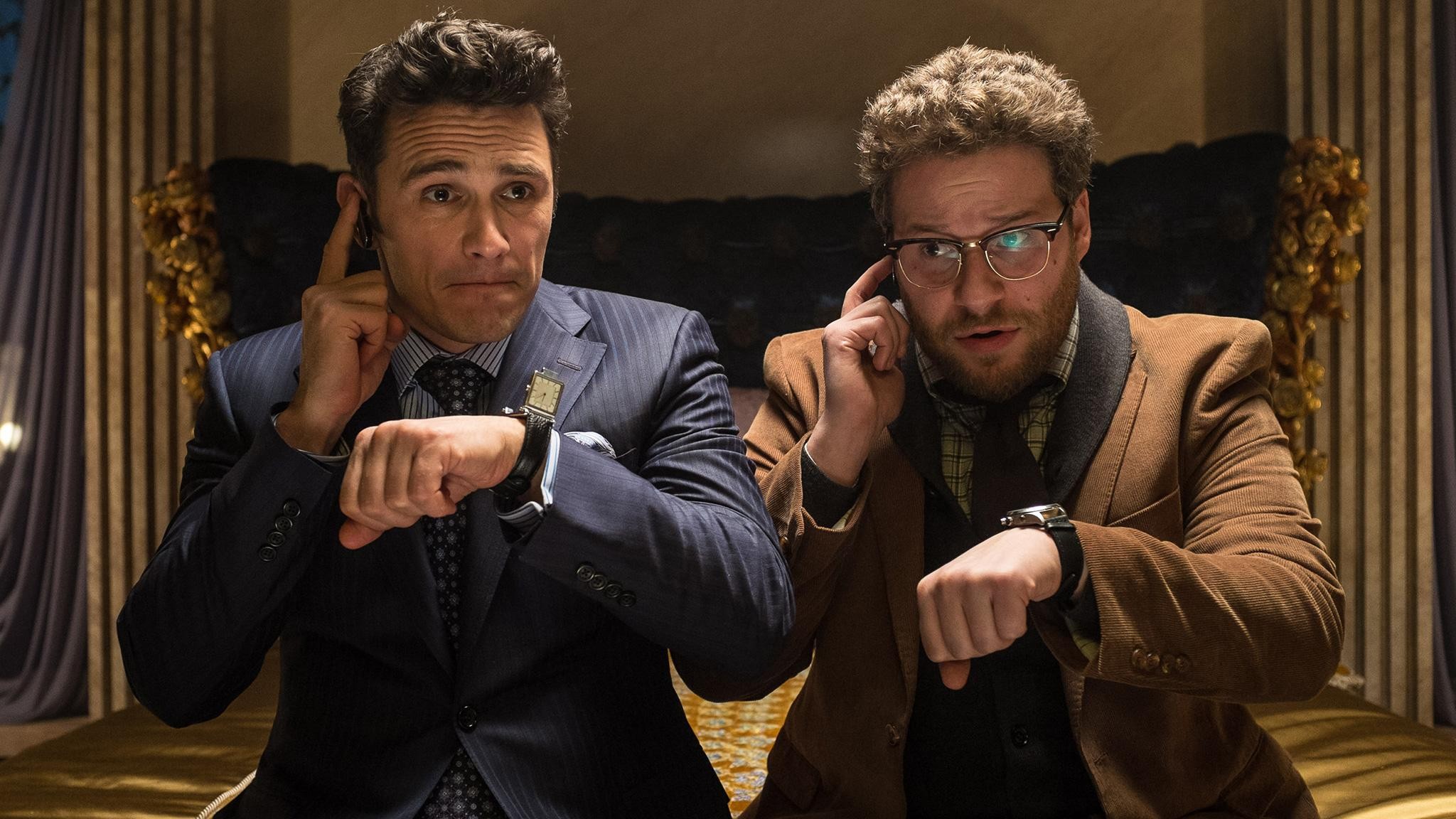
“The Interview” is something of a disappointment, and I’m not just saying that because North Korea has gotten its Internet back up. After the achingly funny apocalyptic comedy of “This is the End” and the (relatively) more grounded comedy of last summer’s “Neighbors,” Seth Rogen and his writing-directing partner Evan Goldberg seem to be coasting a little this time around, with a potentially great, risky comic idea that they’re not quite sure what to do with.

Continue reading

Instant Gratification: “The Trip to Italy” and four other good movies to watch on Netflix Instant

The Trip To Italy

Pick of the week: “The Trip to ItalyMy full review is here. The second go-round for Steve Coogan and Rob Brydon isn’t quite as much fun as the original “The Trip,” despite gorgeous Italian locations and mouth-watering food. But it’s still a lot of laughs, as they trade impressions, rock to Alanis Morissette and chuckle in the face of impending mortality.

Continue reading