“Our Children”: A young mother suffocates under her family

Nos Enfants

“Our Children” has its Madison premiere at 7 p.m. Thursday at the Madison Museum of Contemporary Art, 227 State St., as part of its Spotlight Cinema series. Not rated, 1:51, three stars out of four.

“Our Children” opens in the aftermath of a horrifying event, one of those unspeakable tragedies that we hear about on cable news and come away a little more convinced that there must be evil in the world. Writer-director Joachim Lafosse gives us a sense of the what, and then the rest of “Our Children” goes back in time to show us the how and, as much as it can be possible to understand, the why.

Continue reading

“Best Man Down”: Grooming Tyler Labine for better things

bestmandown

“Best Man Down” is now streaming on VOD and is available for purchase on ITunes. PG-13, 1:31, two stars out of four.

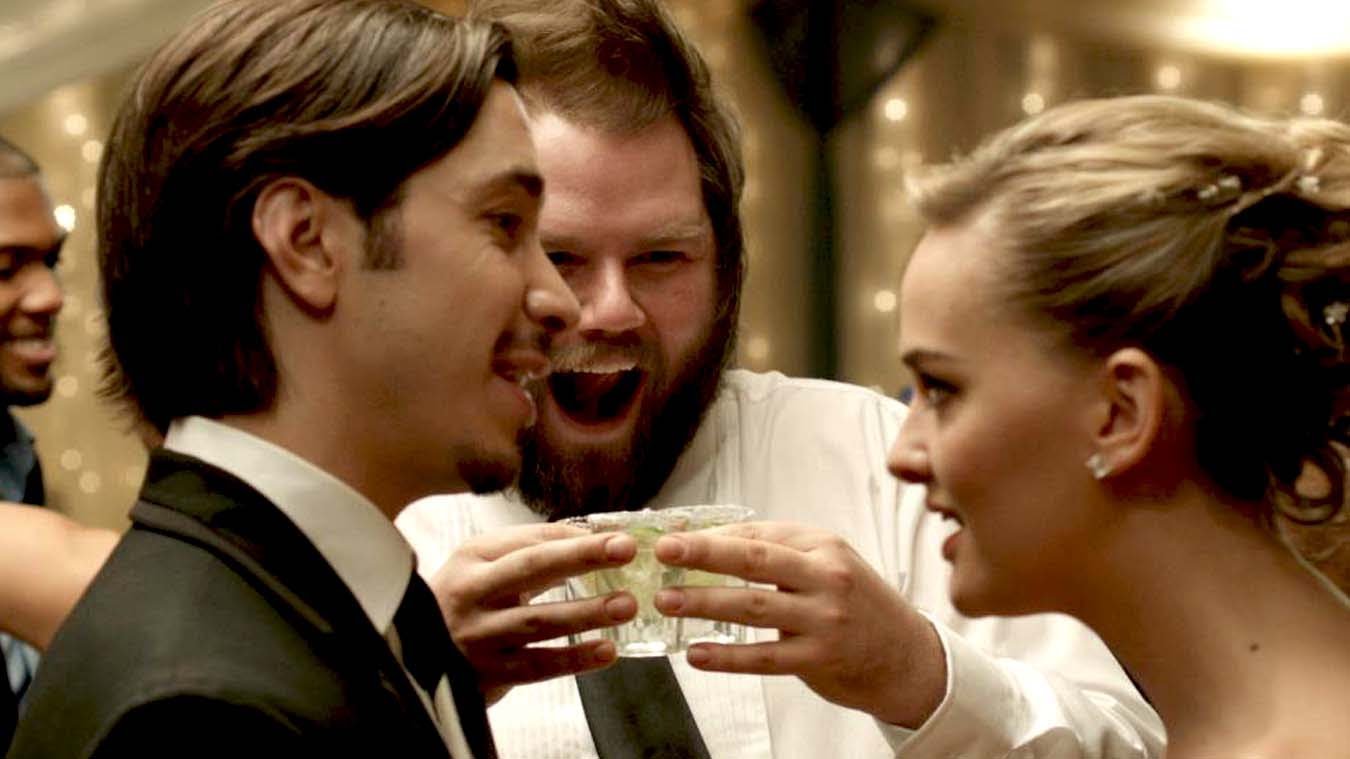
When your film’s most compelling character dies in the first five minutes, your film has a problem. Writer-director Ted Koland’s debut comedy-drama “Best Man Down” has that problem. And a few others.

Continue reading

Blu-ray review: “Autumn Sonata” rakes over old family wounds

Autumn Sonata_ image 2

Autumn. A time for watching the leaves turn, making spiced apple cider on the stove, and, of course, engaging in bitter recriminations with your parents.

At least that’s how Ingmar Bergman does autumn (and I’m not sure about his opinion on the leaves or the cider) in “Autumn Sonata,” which the Criterion Collection just re-released in a new Blu-ray edition with new bonus features not on the original DVD version.  This is wrenching family drama as only Bergman can do it.

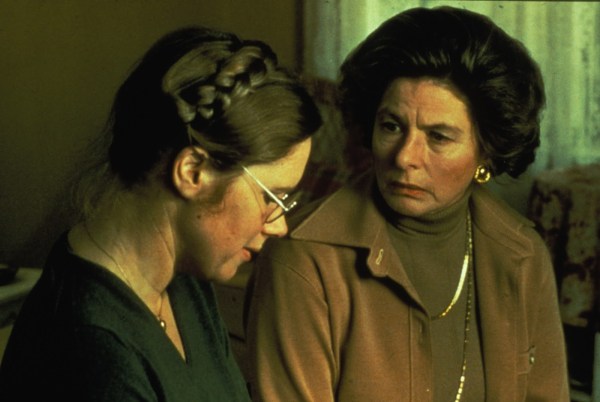
The 1978 film is also notable for being the only one of Bergman’s films to feature Sweden’s other famous Bergman, Ingrid. She plays a world-renowned concert pianist, Charlotte, who comes home to visit her eldest daughter Eva (Bergman favorite Liv Ullmann) after a long absence. Ingrid carries herself with an imperious glamor, her star power so bright it dominates the screen, and Ullmann has deliberately dowdied herself up as the repressed Eva. We learn that Eva has been taking care of Charlotte’s other daughter, the severely disabled Helena (Lena Nyman).

At first, relations are polite but wary between mother and daughter, but as the evening wears on, politeness gives way to honest expressions, as the emotions Eva has been bottling up since childhood come pouring out. The film turns into a lacerating mother-daughter war, the air thick with accusations and recriminations, the mousy Eva growing stronger and more fiery as Charlotte seems to physically retreat, horrified at the truth of her family that she kept ignoring, all those years out on tour. Meanwhile, Helena writes in inarticulate pain in the back room, a living symbol of Charlotte’s neglect.

Although the film has a couple of the characters, including Eva’s husband providing opening and closing narration, this is really a two-character film. Bergman and Ullmann give fearless, bruised performances, locked in bitter combat, horrified at the truths they discover about themselves. Bergman’s descent into confusion and regret is most pronounced (it was her final film role, and she was nominated for an Oscar), but it wouldn’t work as well without Ullmann’s mirroring performance, as quiet Eva finds her voice, and can’t stop using it. One would assume our sympathies would lie with Eva, the abused and neglected daughter, but she’s no saint, warped by a lifetime of silent frustration.

Bergman’s camera seems to inch in closer and closer as the wounds go deeper and deeper, and the rich autumnal colors (which glow in this new 2k transfer) seem to almost mock the emotional rawness of the content.

So how was this great meeting of the Bergmans on set? “Terrible,” a “headache,” a “nightmare,” Ingmar Bergman says in a 2003 interview included in the bonus features. For the first few days, Ingrid Bergman’s performances on set were far to big and theatrical, and Ingmar feared the movie would be a disaster. Finally, he showed her the dailies, and blessedly, she saw the error of her approach and adjusted downward. The shoot was still contentious between the two, but Ingmar got the performance he needed.

The Criterion Blu-ray edition also includes an exhaustive (as in three-and-a-half-hour) documentary on the making of “Autumn Sonata,” an audio commentary by Bergman scholar Peter Cowle, and, new to the Blu-ray, an interview conducted this year with Ullmann about the movie.

“Captain Phillips”: It’s not just the camera that shakes you up

captain-phillips01

“Captain Phillips” opens Friday at Point, Eastgate, Star Cinema and Sundance. PG-13, 2:14, three and a half stars out of four.

The handheld shooting style of director Paul Greengrass can be a mixed blessing; in films like “United 93” and “Bloody Sunday,” Greengrass can put the viewer right in the middle of chaos with a you-are-there immediacy. But in more conventional films like “Green Zone,” his restless style can seem more like an affectation than an asset.

Continue reading

MMOCA Spotlight Cinema returns with “American Promise”

american-promise

By the standards of the UW-Cinematheque series or the Marquee Theater season, the Spotlight Cinema series at the Madison Museum of Contemporary Art is rather modest. Five films on five Thursday nights in the fall. Yet the series is always well curated, bringing five movies that have never played in Madison before (and likely never would theatrically) to the big screen. Past years have included such major independent films as “Holy Motors” and “We Need to Talk About Kevin.”

Continue reading

“Wisconsin Rising”: This is what democracy looked like

WI_ROTUNDA_FULL

Memories fade. Less than 3 years later, thinking back on the Wisconsin protests against Gov. Scott Walker’s plans to strip public-sector employees of most of their barganing rights, I start to question my memory a little. Were the rallies really that big? Were they really that loud?

Yes and yes, and a new documentary, “Wisconsin Rising,” serves as a document to remind us of that. The hour-long film by Sam Mayfield has its Wisconsin premiere at 7 p.m. Wednesday at the Barrymore Theatre, 2090 Atwood Ave. Tickets are $5-$10 at the door, and Mayfield will be there to talk about the film and answer questions.

Continue reading

Instant Gratification: “Room 237” and four other good movies available now on Netflix Instant

room_237_documentary_trailer_athensbars

Pick of the week: “Room 237“: My full review is here.  Rodney Ascher’s playful and engrossing documentary is a love letter and a warning to film obsessives, as we watch “The Shining” through the eyes of five cinephiles with increasingly bizarre theories on the film’s “true” meaning. (Unfortunately, “The Shining” is not on Netflix.)

Crime film of the week: “Lock, Stock and Two Smoking Barrels“: Ah, I miss the days when Guy “Sherlock Holmes” Ritchie used to make movies like this, profane, twisty, fun crime films, in this case following several roughneck parties who collide over a pair of antique shotguns.

Action film of the week: “The Italian Job”: Not the Michael Caine original, but the American remake starring Mark Wahlberg, which is a pretty good heist film in its own right that makes good use of those Mini Coopers.

Comedy of the week: “The Last Days of Disco”: Whit Stillman’s 1998 film is a sly comedy of manners in the age of the Bee Gees, starring Kate Beckinsale and Chloe Sevigny.

Foreign film of the week: “Starbuck”: My full review is here. This French-Canadian film (which will be remade as “The Delivery Man” with Vince Vaughn in November) follows a middle-aged screw-up who finds that his sperm donations have resulted in him fathering over 500 children.


“The Lesser Blessed”: Trudging along familiar terrain in the Northwest Territories

Lesser Blessed

“The Lesser Blessed” screens Monday through Thursday at Point and Eastgate Cinemas. R, 1:30, two stars out of four.

Larry’s back and chest are covered in a network of ugly burn scars, his skin surface resembling the bleak landscapes of the Northwest Territories village where the First Nations teenager lives. And it also resembles the scars on his psychic landscape as well.

Writer-director Anita Doron’s well-acted but derivative coming-of-age drama, based on Richard van Camp’s young adult novel, makes the most of its unfamiliar setting, but is very familiar when it comes to its characters and plot points.

Continue reading