John McClane, a Timex watch in a digital age

die-hard-original

There are some moviegoing experiences you vividly remember, even aside from what you thought aobut the movie. Seeing “Die Hard” in the summer of 1988 was one of them. I went with a couple of friends to see it at the old Continental in Denver, as a joke really, thinking we’d make fun of it in the way that teenage boys do. Come on, the guy from “Moonlighting” in an action movie? He looked ridiculous in the trailer. Should be good for a laugh, anyway.

And, as we’re in the lobby, heading towards the theaters, we see the crowd from the previous screening letting out. In the midst of the throng is another friend of ours, Kevin. He sees us, and has this dazed look in his eyes. “Best action movie ever” he says fervently. Really? Couldn’t be.

Of course, we undoubtedly had that same glazed happy look when we left the theater two hours later. And the “Die Hard” franchise was born.  So, with AMC Star Cinema hosting an all-day “Die Hard” marathon today, and with the fifth installment in the franchise, “A Good Day To Die Hard,” opening Thursday, it seems like a good time to look back at the very eventful life of John McClane, terrorist magnet.

First off, the original “Die Hard” is just an incredibly well-made action movie that holds up beautifully today — watching it is a Christmas tradition for more than one family I know. A large part of that is its economy, how it uses the confined space of a few upper floors of an office building as a battlefield. You always know exactly where McClane is, exactly where the bad guys are. And, of course, the movie has perfect opposites in its hero and villain — the sweaty, bloody, blue-collar cop and the refined, amused, suit-coveting German villain. “Die Hard” is one of those movies where every element works (well, aside from that last from-the-dead appearance by Alexander Godunov — that felt a little tacked on, right?)

A sequel is amost inevitably a step down, but it was clear right from the get-go that “Die Hard 2” would be a big step down. First off, William Sadler’s psychotic super-soldier is just no match for Alan Rickman’s Hans Gruber. Doing naked tai chi in your hotel room, then aiming your TV remote like a gun? That’s actually not scary at all, dude. Kind of lame, actually.

The sudden deaths of innocents in the first “Die Hard” were genuinely shocking at the time, such as Gruber coldly executing Mr. Takagi. But Renny Harlin’s “Die Hard 2” just tried too hard to make its villains seem villainous, resulting in some gratuitous cruelty that really saps the fun out of the movie. How could anyone possibly think it would be a good idea to crash a planeload of innocent passengers — killing more people than were even in the original “Die Hard” — just to establish the bad guy’s bona fides? It’s a grievous miscalculation, as are the laborious attempts to fit in minor characters, like William Atherton’s slimy reporter, into the film somehow.

For me, the “Die Hard” movies work best when they have a clear sense of their environment, that you have good guys and bad guys maneuvering within a defined space, an arena. What’s surprising about 1995’s “Die Hard with a Vengeance” is that “arena” is really all of New York City. But it still works because returning director John McTiernan uses the geography of Manhattan much as he did the top 5 floors of Nakatomi Plaza. If you’re a New Yorker, you know exactly where Bruce Willis and Samuel L. Jackson are at all times. One of my favorite moments is that pell-mell car ride down the length of Manhattan, when McClane not only thinks to call in a fake 911 call so he’ll have an ambulance to use “as a blocker,” but he knows which hospital to call, and how far the ambulance’s call area is.

If there’s anything that today’s modern CGI action movies lack, it’s that sense of spatial grounding. Once you can use digital effects to show anything, from any angle, a director can sometimes forget about those parameters in a hunt for something that just looks cool. What’s funny is that, at the time, “Vengeance” was considered over-the-top, and for years Willis would insist that a fourth “Die Hard” would return to the original’s gritty roots, possibly with McClane using only his wits to survive bad guys in the South American jungle. So much for that.

Which brings us to “Live Free or Die Hard.” The bad guy in this 2007 film (a miscast Timothy Olyphant) calls McClane a “Timex watch in a digital age,” which sums up both the problems with the fourth installment, but also its saving graces. Director Len Wiseman chases bigger, better, more implausible stunts at every turn — John McClane jumps on the wing of a fighter jet! John McClane knocks a helicopter out of the sky with a police car! — because that’s the way action movies are done now. The film rushes headlong from one setpiece to the next, one effect to the next. For minutes at a time, it could be any action movie.

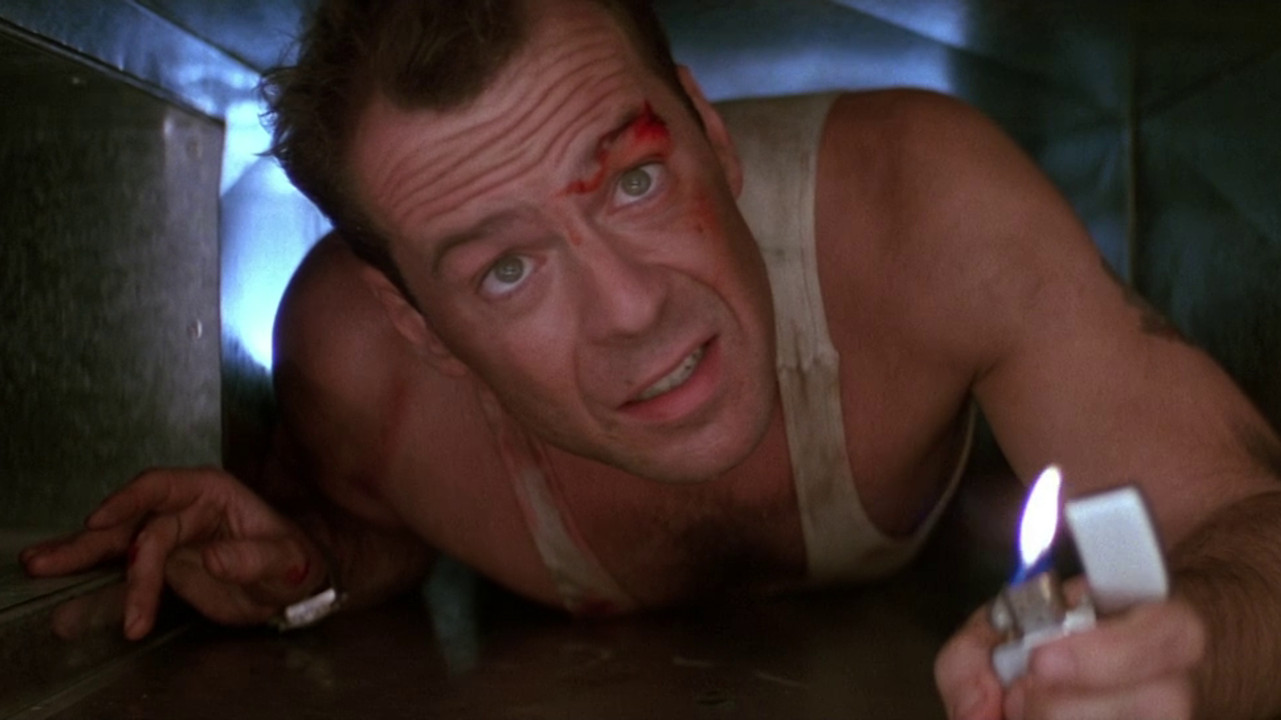
What saves it, and what makes it pretty fun, is Willis as McClane, still beaten and bedraggled as he was crawling through those air ducts almost 20 years earlier, still smirking away at all the mayhem around him. That the movie ends not with a big blockbuster climax, but with a quick, violent shootout, showed that the “Live Free” did keep its connection, however tenuous, to the series.

Which brings us to “A Good Day to Die Hard,” which sends McClane to Moscow to battle a new army of baddies with his estranged son. The previews showcase big, implausible action that makes “Live Free” look like a modest little thriller, and now the fate of the world rests on his shoulders.

It could be fun. But I can’t help but miss the guy crawling through the air ducts, the perfectly-wound Timex watch of action heroes.

Wisconsin director’s action thriller “A Lonely Place for Dying” banned in Russia

lonelyplacefordying

In Russia, Cold War spy thrillers watch you.

Okay, that may not make much sense, but I’ve never been one to pass up a quality Yakov Smirnoff reference. And it is true that, in the case of one Cold War thriller with Wisconsin ties, Russians won’t be able to watch it.

New Berlin-based writer-director Justin Eugene Evans said last week that his film “A Lonely Place for Dying,” which screened at the Barrymore Theatre last May, has been banned by censors from playing on movie streaming websites in Russia. No reason for the ban was given by government censors, but the government also knocked back Evans visa application to visit Russia to promote the film. That suggest to Evans that the government finds the film’s content to be objectionable.

“This film is about a time and place in history that no longer exists,” Evans told Crave Online. “I don’t see why anyone in the Russian Federation would be offended by our observations of the Soviet Union and the KGB.”

Which is weird, because the KGB agent in “A Lonely Place for Dying” is arguably the most sympathetic character in the movie. The film takes place in 1972, and a KGB double agent working for the CIA discovers that the agency is illegally bombing the country of Laos with deadly sarin gas. He arranges a meeting with a reporter at an abandoned Mexican prison, but the CIA gets wind of the leak and sends an agent to kill him.

Evans, a videogame art director and stay-at-home dad, made “A Lonely Place For Dying” for a paltry (by Hollywood standards) $200,000, using an array of digital tricks to make the film look more expensive than it is. Although it has some clunky moments, it’s overall an entertaining and engrossing film. American audiences will be able to see the film — it begins streaming on ITunes today (Feb. 12).

By sheer coincidence, the movie has one other Wisconsin connection this week. The newspaper editor that the KGB agent contacts is played by James Cromwell, who made headlines last week when he stormed into a UW Board of Regents meeting lsat Thursday to protest research experiments being conducted on cats.

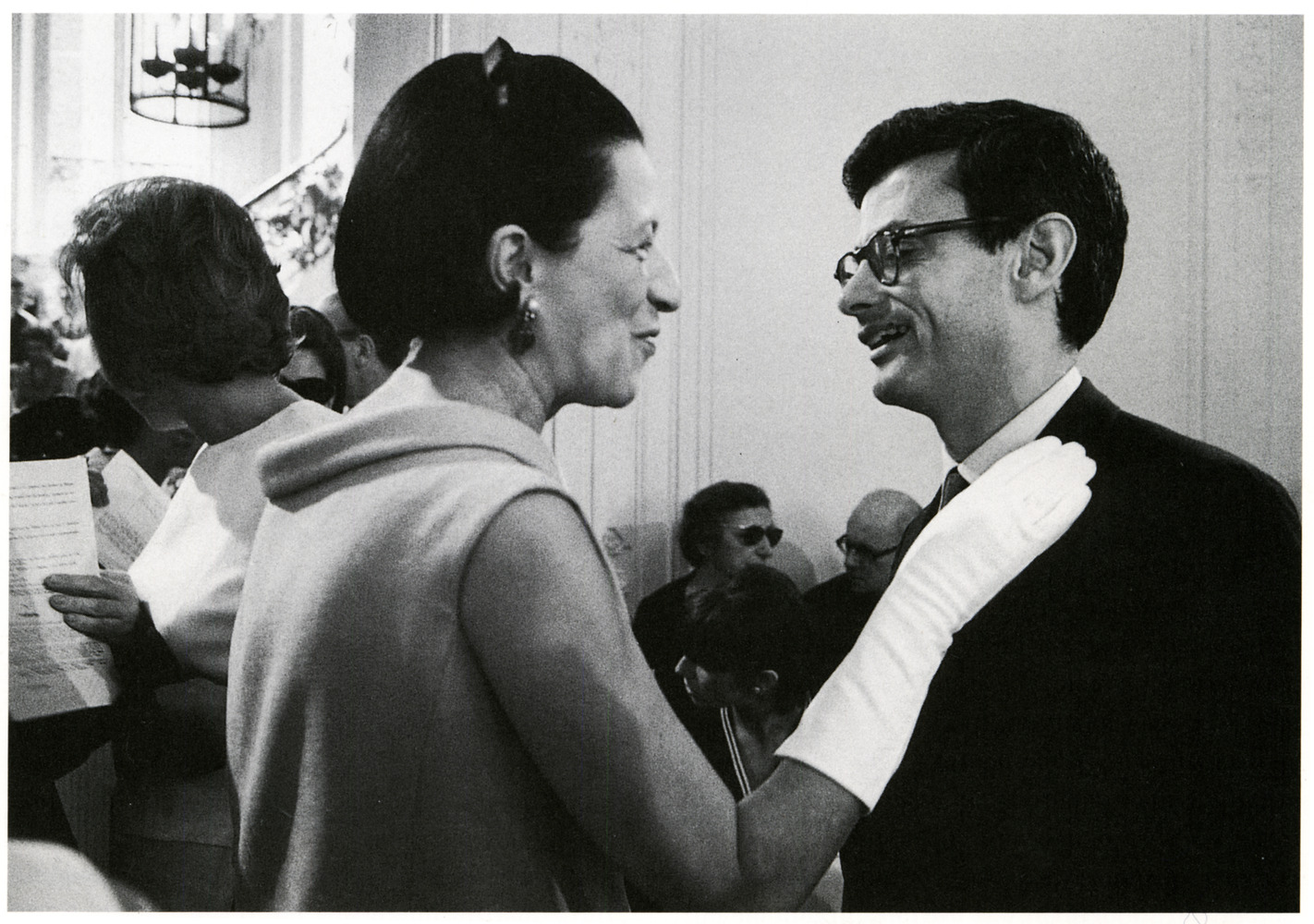
Diana Vreeland doc kicks off fashionable film series at UW

Image

“Diana Vreeland: The Eye Has To Travel” plays for free at 7 p.m. Tuesday at Union South Marquee Theater, 1308 W. Dayton St. Not rated; 1:25.

I had pen and paper in hand while watching “Diana Vreeland: The Eye Has To Travel,” ready to catch the money quote that would sum up the life and philosophy of the iconic fashion magazine editor.

Eventually, I gave up. Every sentence out of the woman’s mouth was eminently quotable, as if she was always being interviewed. That eternal public persona was appropriate, I suppose, for a woman who celebrated the beauty of artifice, who didn’t think a woman was truly herself until she was completely dolled up in her haute couture armor, ready to take on the world.

“The Eye Has To Travel” is an entertaining and brisk walk through Vreeland’s long life, mostly letting her tell her own story because, really, who would have the temerity to interrupt her? It’s out on DVD from EOne Entertainment, plays for free Tuesday night at Union South, the first of a series of fashion-related films co-sponsored by the Wisconsin Union Directorate and the Textile and Apparel Student Association.

The documentary uses as its backbone a transcript from a lengthy 1983 interview Vreeland did with George Plimpton at the age of 80. Soundalike actors read the transcript, so Vreeland gets to tell her own story of growing up in France during the Belle Epoque. (“Arrange to be born in Paris,” she advises. “Everything else follows quite naturally.”) She had a knack for being in the right place at the right time almost since birth, aside from summers spent in the Rocky Mountains as a girl. She loved horses, but the frontier life wasn’t for her.

From there, she spent a quarter-century as fashion editor of Harper’s Bazaar, then went on to become editor-in-chief of Vogue. She hobnobbed with celebrities, oversaw outrageous fashion shoots where money was no expense, and embraced high culture as well as low, the latest trends as well as historical costumes.

Producer and director Lisa Immordino Vreeland (Diana’s granddaughter-in-law) interviews dozens of her friends and colleagues, from Calvin Klein to Anjelica Huston, to paint a portrait of a woman who was joyfully driven. But the film treads lightly over Diana’s personal life; we learn that her mother was a difficult woman who treated Diana as an ugly duckling, but she firmly brushes off any attempt to psychoanalyze her.

The closest we get to Vreeland’s personal life is in her lifelong devoted marriage to Reed Vreeland. But when he dies in 1966, we learn that Diana wore white to the funeral. Even in her darkest hour, it seems, she couldn’t resist making a fashion statement.

The series continues next Tuesday, Feb. 19, with the fascinating documentary “Bill Cunningham New York,” about the eccentric and humanist photographer for the New York TImes’ Sunday Style section. On Tuesday, Feb. 26, the series will show “Funny Face” with Audrey Hepburn as a bookstore clerk who just happens to fall into the world of modeling.

“Hyde Park on Hudson”: The only thing we have to fear is an uninspired biopic

Hyde-Park-on-Hudson

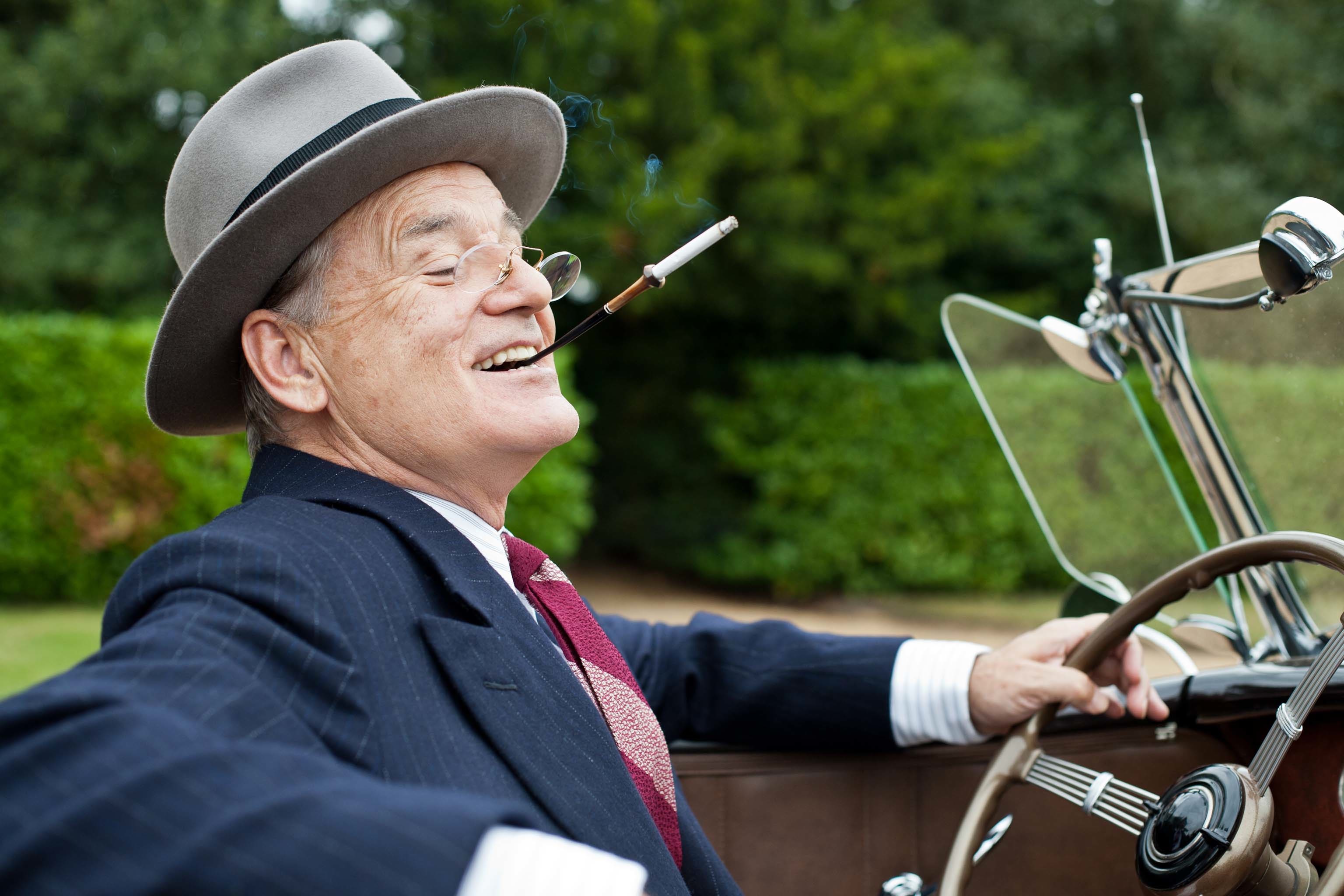
Boy, what happened to this movie? When I first started seeing the trailer for “Hyde Park on Hudson,” I thought for sure it looked like a big Oscar contender. Historical drama, a little overlap with “The King’s Speech,” and one of Hollywood’s most beloved actors, Bill Murray, stretching himself in what looked like a convincing fashion playing FDR. At the very least, I thought, we’d have two ex-Presidents duking it out for the Best Actor Oscar.

Instead, “Hyde Park” didn’t get any Oscar nominations, little love from critics and audiences, and now finally limps into Madison in February for less than a week (Sundance Cinemas is pulling it Thursday to make room for “A Good Day to Die Hard” — the indignity!). What happened?

Unfortunately, the movie happened. Although Murray is good as FDR, the movie around him is a mess, never sure whether it’s a historical drama or a comedy, and way too tentative about its subject matter, watching events from a careful, dull distance. The two subjects — FDR’s invite of the King and Queen to American to discuss America’s possible intervention in World War II, and FDR’s many affairs, including with a distant cousin (Laura Linney) — never fit together at all. In the end, “Hyde Park” reminded me a lot of “The Iron Lady” or “My Week With Marilyn,” in which a great act of historical impersonation is surrounded by a middling movie that doesn’t live up to it.

My review for the Capital Times is here.

Terrific 2012 Oscar animated shorts nominees are hard to keep quiet about

Paperman_still_1

“2012 Oscar Shorts: Animated” opens Friday at Sundance Cinemas. Not rated (fine for kids), 1:28.

Sometimes, when you’re good and you know it, you don’t have to say a word.

That’s certainly the case with the five animated short films nominated this year for an Oscar. It’s the strongest collection of nominees in years — and all five of them are totally dialogue-free. While that seems to be an ongoing trend in animated shorts (I can’t remember a Pixar short that had spoken dialogue), it’s telling that so many animators are opting to tell their stories entirely visually, and doing so so well and so cleverly.

Pixar’s entry this year is the enchanting “Paperman,” which screened in theaters before “Brave.” It wears its romantic heart-on-its-sleeve, a typical boy-meets-girl, boy-loses-track-of-girl, boy-finds-girl-with-help-of-magical-paper-airplanes sort of tale. In the storytelling, it captures that mix of wry humor and emotion that the best Pixar films balance, but it’s the execution that’s so unexpected here. Director John Kahrs has opted to make a film that’s entirely black and white (with one notable exception), and employs an engaging mix of 3D and hand-drawn 2D animation. It really feels like a traditional, lovingly-drawn 2D cartoon that somehow fills the space of a computer-generated cartoon.

Judge for yourself: Pixar posted “Paperman” online last week:

At the other end of the relationship arc is the British stop-motion animated film “Head Over Heels,” which looks at a middle-aged couple in a loveless marriage, living in the same house but barely acknowledging each other’s existence. Writer-director Timothy Reckart devised a simple but brilliant visual metaphor for the couple growing apart — in the house, the wife lives on the floor while the husband lives on the ceiling, upside down. If and how they manage to get on the same plane makes for a very affecting little film.

It says something about the strength of a set of animated films when “The Simpsons” is the weakest link. And “The Longest Daycare” is still pretty good, following young Maggie Simpson as she enters a dodgy day care center and has to protect a butterfly from the playroom bully. It’s full of little in-jokes and well-animated — good Simpsons but not exactly transcendent.

Writer-director Minkyu Lee’s “Adam and Dog” takes a simple concept — what if there was a dog in the Garden of Eden — and spins it out with flat-out gorgeous hand-painted visuals of forests and meadows. The story is fairly simple, but the animation is evocative, especially at capturing how dogs really explore the world around them.

Lastly, PES’ “Fresh Guacamole” is a two-minute explosion of creativity and ingenuity, a stop-motion marvel using everyday objects to simulate the making of guacamole — the avocado is a grenade, half a golf ball becomes the lime, and the diced tomatoes and onions are, well, dice.

In addition, the theatrical screening of “2012 Oscar Shorts — Animated” includes three more animated films that weren’t nominated, including “The Gruffalo’s Child,” the sequel to the delightful Oscar winner from a couple of years back. At under 90 minutes, the collection is suitable for family viewing but inventive and engaging enough for their parents as well.

2012 Oscar live action shorts find the familiar all across the globe

curfew

“2012 Oscar Shorts — Live Action” opens Friday at Sundance Cinemas. Not rated, 1:47.

This year’s crop of five live-action short films take us from a retirement home in Quebec to a beach in Somalia, from a junkyard in Afghanistan to a bowling alley in New York.

Where several of the films struggle, however, is in finding something interesting or new to say once they get there. While the animated short nominees this year are uniformly strong, the live-action shorts this year play it awfully safe. In particular, in having seen a few years’ worth of these films, I’m getting awfully tired of films set in Third World countries — often made by Western filmmakers — that tell some sort of fable or parable, rather than an honest depiction of how life is lived there. It’s like the films want credit for bringing attention to this troubled regions, but want to tell a tidy, uplifting story that won’t turn off Western audiences.

For example, “Asad” has noble intentions, with a cast entirely made up of Somali refugees, telling the tale of a young boy, Asad, who daydreams about joining the pirates raiding luxury yachts off the coast, and is loathe to settle for the simple, unglamorous life of a fisherman. The boy who plays Asad is very affecting, but the story is weak, and the twist ending involving Asad’s mysterious “catch” from visiting a boat raided by pirates is just weird, and in rather poor taste.

Much better is “Buzkashi Boys,” a gritty and cinematic look at two boys living in Kabul, Afghanistan. One boy is shy, quietly chafing at the prospect of becoming a blacksmith like his father, while his brash friend daydreams of playing buzkashi, a brutal sport that’s sort of like polo, but with a dead goat as the ball. The film has a striking, even terrifying beauty as it uses the bombed-out locations of Kabul, in particular a junkyard full of buses, stacked high on top of each other, that seems like something out of a nightmare.

Standing out from the pack is the Belgian steampunk thriller “Death of a Shadow,” in which a time-traveling photographer (Matthieu Schoenarts of “Rust and Bone”) is dispatched with a special camera that can capture a person’s shadow at the moment of their death. He brings these shadows back to a creepy collector, who sticks the shadows to the canvas like a lepidopterist pinning butterflies. It’s an idea rich with haunting possibilities, and unfortunately the film seems to rush ahead rather than pausing to explore them a little more.

The French-Canadian “Henry” is a rather wan attempt at trying to get inside the mind of a patient with dementia, using cheap cinematic tricks in the vein of a paranoid thriller to try to make us guess what’s real and what isn’t. Movies like “Away With Her” and “Amour” have explored the same territory with more feeling.

Finally, Shawn Christensen wrote, directed, edited and stars in “Curfew,” playing a suicidal artist whose humanity is awakened after he babysits his niece for a night. Christensen is a talent behind the camera, and the film is full of lyrical touches, like a surreal dance number at a bowling alley. But the screenplay is a thinly-conceived redemption story, with cookie-cutter characters, and the film ends up not earning the emotional uplift it’s stretching for.

2012 Documentary Short Oscar nominees pack a dramatic punch

Inocente_4_IMG_7786

“2012 Oscar Shorts — Documentary” opens at Sundance Cinemas in Madison Friday and plays only through Sunday. Not rated; 3:15 (divided into two programs).

Sometimes, nothing grabs you by the lapels like a real person, looking into the camera, and telling their story.

The five nominees for an Oscar this year for Best Documentary Short all deal with weighty issues — homelessness, illness, old age. But they all do so on a very human level, eye to eye with the viewer. With each film running exactly 39 minutes — the ideal length of time for a documentary to run on HBO or public television, the likely home of all these films — watching all five of them in a theater isn’t exactly casual viewing. But it is worthwhile.

The best of the bunch for me is the luminous “Inocente,” telling the inspiring story of a 15-year-old homeless Latina girl, and how she uses her art — paintings as vibrant and hopeful as her life can be bleak and despairing — to overcome her circumstances. The film by Sean Fine and Andrea Nix (“War/Dance”) adeptly pulls in many threads, from larger issues involving child homelessness to Inocente’s contentious relationship with her mother. But the film is riveting when Inocente, her face often painted with elaborate markings, locks eyes with the camera and fearlessly tells her story.

Also very affecting and intimate is “Mondays at Racine,” Cynthia Wade’s film about a Long Island hair salon who, on the third day of each month, offers free services each month to cancer patients. We meet a range of women dealing with cancer, from Linda, a 60-year-old woman who has seen 18 years of cancer destroy her marriage, to Cambria, a young mother terrified of leaving her children behind. It’s the little things that can matter, and in the end, I suppose getting dolled up for a day is small comfort for these women. But you can see the effect that such a loving act can have, as when Linda fits the perfect wig on her bald head and says, “I’m alive.”

Kings Point” is an unexpectedly complex film from Sari Gilman about the residents of a Florida retirement community. The film is neither cutesy nor sentimental, but a revealing and sometimes tough-minded look at these elderly people (many widows or widowers) who have chosen to spend their last years far from their families, surrounded by acquaintances but few real friends. It’s the good life they spent a lifetime yearning for, but what, in the end, does that really say about that lifetime?

Open Heart” is a simple but powerful film about Rwandan children with heart disease who undergo a high-risk surgery. As well as telling the story of these brave children in their families, the film shows the difficulties of trying to conduct high-risk, advanced surgery in an African nation where millions need medical attention. Finally, “Redemption” is an insightful and sometimes wry look at several New York City residents who make their living collecting and recycling cans off the street. “This is full-time work,” one says, and after spending time with them in this fly-on-the-wall film, you believe it.

“Citizen Koch” and “56 Up” coming to Wisconsin Film Festival

56-up

I wrote a story for the Capital Times yesterday with an update on some of the titles that have been announced for the Wisconsin Film Festival, which runs April 11 to 18. I think if there’s any trepidation among longtime fans about the big changes afoot at the festival (a change in leadership, and the fact that the festival won’t be downtown this year, screening on campus and at Sundance Cinemas), hearing the movies that are coming will go a long way towards easing their worries.

So far, it sounds like a great festival. The two big titles with the biggest local connections are “Citizen Koch,” the documentary about the Citizens United decision’s effect on the nation, focusing specifically on Gov. Scott Walker’s attempt to strip most public unions of most of their bargaining rights, and the resulting protests in early 2011. It was kind of a no-brainer that “Koch,” which premiered at the Sundance Film Festival last month, would make it to Madison.

Less of a sure thing was “56 Up,” the latest in Michael Apted’s landmark documentary series interviewing a group of people every seven years of their lives. One of the participants is Nick Hitchon, who is a professor at the UW. I don’t believe “49 Up” played theatrically in Madison, so it’s gratifying to see the new version (which got a great review in the New Yorker last month) will make it here.

In past years, the Wisconsin Film Festival titles were usually announced in one fell swoop in early March, but festival organizers have been releasing names in dribs and drabs via social media over the last few weeks. Since I wrote the Capital Times story, for example, the festival announced via Facebook that it would be showing a film about Bill Watterson, the creator of “Calvin and Hobbes.”

“Starlet”: Have you heard the one about the octogenarian and the porn star?

starlet

It sounds like the worst sitcom on Lifetime: a beautiful young porn actress befriends a cranky old lady with a bingo addiction.

And yet Sean Baker’s “Starlet” works hard to avoid any sort of cliche, or any audience expectations at all, really. Instead, it’s an unsentimental yet moving indie drama that keeps allowing its two main characters to reveal deeper and deeper layers beneath their easily stereotyped facades. It’s exactly the sort of well-crafted low-budget indie that Madison needs to see more of in theaters, so audiences shouldn’t miss the chance. “Starlet” screens for free in the Union South Marquee Theater, 1308 W. Dayton St., at 7 p.m. Thursday and Saturday.

Dree Hemingway (daughter of Mariel and great-granddaughter of Ernest) makes an assured lead performance as Jane, a languid 22-year-old Florida transplant who bides her time in California’s San Fernando Valley, a sun-dried wasteland of cheap apartments and strip malls. Dree and her two deadbeat roommates (Stella Maeve and James Ransone) dabble in porn to pay the rent. Dree seems smarter than her roommates, less desperate and deluded about her circumstances, but one of the fascinating aspects of “Starlet” is discovering how much of her worldliness is real and how much is just a pose. Hemingway’s nuanced (and often funny) performance keeps us wondering.

Jane’s moral compass is put to the test when, at a yard sale, she buys a thermos for a dollar, takes it home and finds that it’s filled with tightly-wrapped wads of cash. She immediately goes on a shopping spree, but then, out of a sense of guilt or just curiosity, starts visiting the 85-year-old Sadie (Besedka Johnson) she bought the thermos from. Sadie is hilariously crotchety and resistant, but Jane is so doggedly, cheerfully persistent that Sadie finally starts to warm up to her.

Their friendship goes nowhere you might expect — Sadie doesn’t teach Jane any hard-won life lessons, and Jane doesn’t try to rekindle Sadie’s lost youth. There are no montages here. Instead, Baker shows how their completely different worlds slowly find an intersection point, tentatively. I love how Johnson (in her first acting role) never makes Sadie the least bit likable; she’s a genuinely prickly and difficult woman to the end, and yet makes us feel for her deeply.

Baker opts for a very naturalistic style in the vein of Kelly Reichardt (“Old Joy”) or Kenneth Lonergan (“You Can Count on Me”), allowing scenes some space for awkward pauses and meaningful glances, for the hesitations and awkwardness of real interactions. He has one favorite technique he employs several times, letting the twinkling music on the soundtrack build and build, and then suddenly shutting it off cold.

The film features some explicit sex in its portrayal of the adult film industry, but what’s more shocking than the nudity is how incredibly boring porn looks for all involved. Baker lets the film spend a little too much time in this world, especially following the hapless exploits of Dree’s roommates, who, incredibly, seem too dumb even for porn. I kept wanting to get back to Jane and Sadie, how Jane grins wickedly as she prods and pokes Sadie into some kind of response, and how Sadie, after a withering flicker of her eyes, finally allows herself to light up a little.

See all nine Best Picture nominees in 36 hours and get really, really depressed

Les-Mis-Hathaway-Jackman11-1280x844

I had mentioned on Monday that AMC Star Cinema was offering moviegoers the chance to see all nine Oscar contenders for Best Picture in one fell swoop — four of them on Saturday, Feb. 16 and the remaining five on Saturday, Feb. 23.

Wimps.

Now Marcus Theatres announced Tuesday that they’ll be showing all nine films in one weekend at several of its theaters, including Point in Madison. You can see the first five films on Saturday for $30, and the remaining four films on Sunday for $25. Or you can shoot the moon and see all nine films for $50. Visit marcustheatres.com to buy tickets.

I don’t think there’s any question this is a great deal, both financially and artistically — the crop of Best Picture contenders is awfully strong this year. The one I like the least is “Les Miserables,” and I still pretty much liked that.

No, the question I have is more medical in nature: Should the human brain be subjected to that much misery in such a concentrated amount of time?

Oscar contenders frequently get knocked for being a pretty sad bunch of films, but this year’s crop seems particularly dire. Let’s walk through Point’s film-by-film schedule and see what we’re in for, shall we?

Saturday

11 a.m. — “Beasts of the Southern Wild” (global warming, loss of home, death of parents)

1:10 p.m. — “Amour” (dementia, illness, slow and painful death)

3:40 p.m. — “Les Miserables” (poverty, war, sickness, forced prostitution, economic injustice, and, of course, lots of death)

6:50 p.m. — “Argo” (kidnapping, terror)

9:20 p.m. — “Django Unchained” (slavery, torture, and bloody, bloody death)

Sunday

12:30 p.m. — “Life of Pi” (shipwreck, death of parents, starvation)

3:10 p.m. — “Lincoln” (war, slavery, and — spoiler alert — death)

6:10 p.m. — “Silver Linings Playbook” (mental illness, death of spouse, ballroom dancing — this is the romantic comedy)

8:50 p.m. — “Zero Dark Thirty” (terrorism, torture, death of innocents, nagging sense that the moral cost of conquering our enemies may not be worth it)

Now, I’m not saying don’t go see these movies. I’ve seen all nine of them and are much better for it. All I’m saying is that they can get a little grim. Might want to DVR a few cartoons and episodes of “Parks and Rec” to perk yourself up afterwards.