Point’s big remake includes full-service bar and marquee

pointbuilding

To paraphrase Tom Waits, so that’s what they’re building in there.

Point Cinemas patrons, especially the early birds who have been chagrinned lately to see the west side theater not open until 3 p.m. during the week, have been wondering what Marcus Theatre has had in mind with its renovations going on over there.

Well, the company officially announced its renovation plans for the theater, and the one not surprisingly getting the most attention is the addition of a full-service bar, the Take Five Lounge, offering beer, wine and cocktails, as well as appetizers and Milwaukee-based Zaffiro’s pizza, from 11 a.m. to midnight daily. According to Wisconsin State Journal reporter Karen Rivedal, who broke the story late Monday, the theater will file an application for a Class B liquor license at Tuesday night’s Madison City Council meeting, from which it will be kicked to the Alcohol License Review Committee.

As I read the press release Marcus sent out late Monday afternoon, the theater is not asking to allow patrons to bring beer or wine outside of the lounge and into theaters, something you can do at Sundance Cinemas. The challenge for the theater will be making sure no overserved customers make a nuisance of themselves during screenings. I’ve never run into that as an issue at Sundance, but part of that may be that Sundance has many patrons for its second-floor bar (and especially the Rooftop Bar in the summertime) who never even go to a movie. Point’s location isn’t as friendly to the after-work-drinks clientele, so I’m guessing the vast majority of folks who drink there also plan on seeing a movie either before or after.

What this means, I think, is that Marcus has been paying attention to the success that theaters around the country have had in integrating alcohol and food sales into the moviegoing series, to get folks to arrive early to eat and stay later for a post-show chat over drinks. The challenge, I think, is making that work in a space as isolated as a suburban multiplex — most of the ones I’ve seen work in other cities tend to be in urban areas, or within walkable shopping areas or other mixed-use developments where it’s a little more natural for people to kind of move in and out.

Among the other renovaitons, Point will now have a giant tower marquee sign, similar to the one at Brookfield’s Majestic Cinema that you can see off Interstate 94 when you head into Milwaukee. Point was in dire need of a facelift, and losing the ’90s Santa Fe shopping mall exterior for something more classic (and classy) will be a welcome change. The Brookfield Majestic sounds like it will be a blueprint for the interior renovations that Marcus has in mind for Point, including an expanded lobby, recliming seats in the auditorums (except for the Ultrascreen) and a bigger box office.

Marcus plans to have all these renovations in place by May, just in time for the summer blockbuster season to kick off with “Iron Man 3” on May 4.

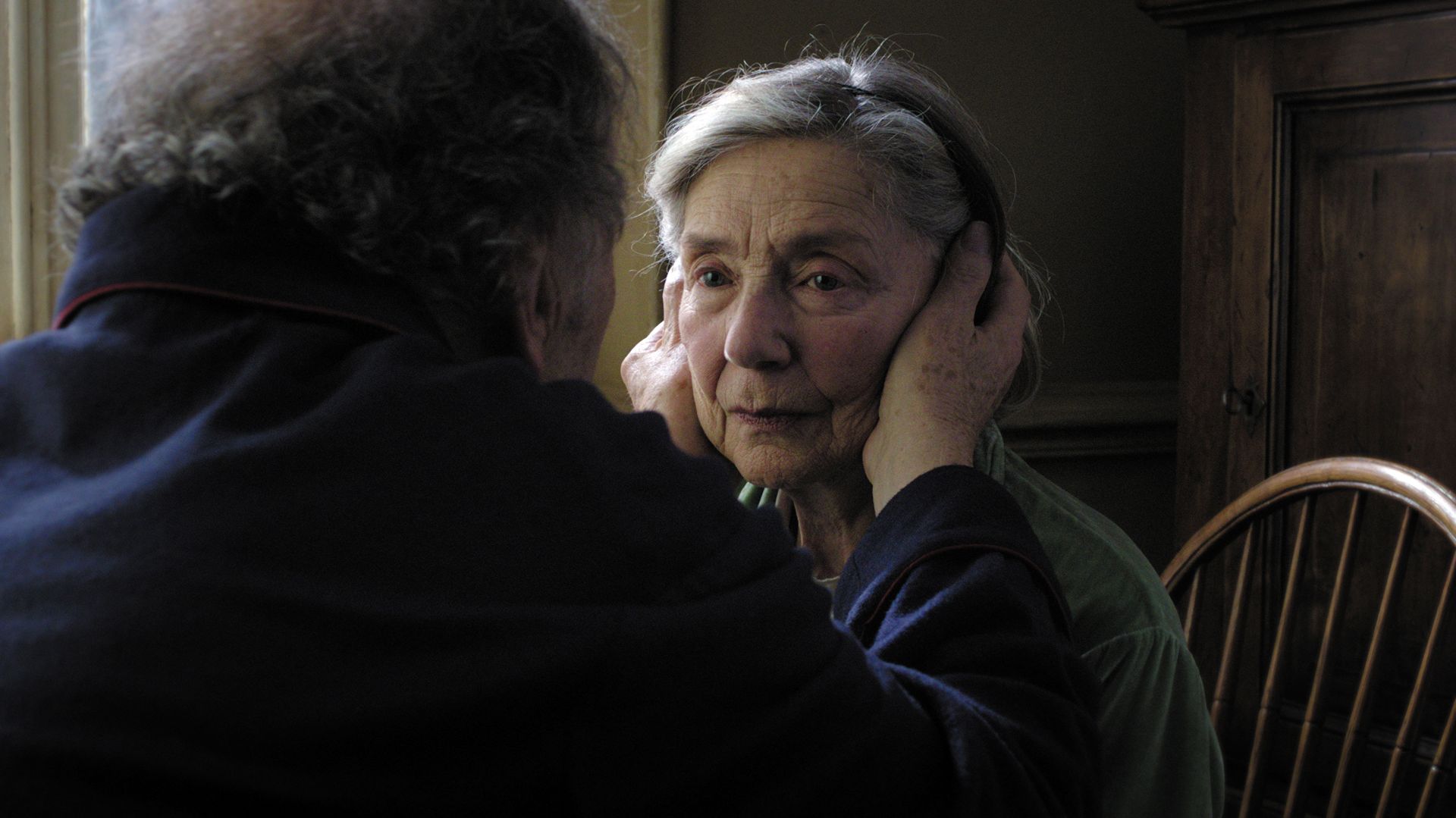
Maybe a date-night promotion connected to “Amour” isn’t the greatest idea

amour02

Movie theaters and studios are an interesting place right now. With less than three weeks to go until the Oscars, suddenly there’s a lot of interest from audiences in some very good films.

Which is great to see packed houses for “Zero Dark Thirty” or “Silver Linings Playbook.” But theaters don’t live on ticket sales alone — they need to move concession sales as well. The problem is that Oscar-nominated films tend to be downers, or at least about weighty subjects, so they don’t lend themselves to special tie-ins. Nobody wants a “Lincoln” commemorative cup to take home with them the way kids wanted a “Wreck-It Ralph” cup.

So I feel for whatever advertising executive at AMC Theateres thought this up.

First of all, this year AMC is continuing its tradition of having marathon showings of all the Oscar-nominated films at its theaters nationwide. Which is a fun idea — it’s a great chance for film fans who have had other priorities over the holidays to get caught up in a hurry for their office Oscar pools. In Madison, on Saturday, Feb. 16 at 10 a.m., for $30, you can settle in and watch “Amour,” “Les Miserables,” “Argo” and “Django Unchained,” then come back the following Saturday, Feb. 23, at 10 a.m. and spend $40 to watch “Beasts of the Southern Wild,” “Life of Pi,” “Lincoln,” “Silver Linings Playbook” and “Zero Dark Thirty.”

So that’s great. But then AMC took it a step further with their “Oscar Offer Mania” promotion, in which they tied special discounts to each movie. See “Argo” today through Wednesday and get a free small drink. Fine. Free small cheese pizza “pie” when you see “Life of Pi.” Cute.

Then we get to “Amour,” the incredibly sad French film about an elderly man watching his lifelong wife slip into illness, dementia and death. Which at AMC, you can watch with a a free Light Snacker popcorn and soda combo!

This is the actual ad copy with that offer:

“Celebrate a love that spans generations and share a popcorn and soda combo with someone you love.”

Wow. Sounds like a great date-night outing! Say, in the spirit of the movie, should I hand-feed my date the popcorn and spoon soda into her mouth while we watch?

I suppose it could be worse. The promotion connected to “Zero Dark Thirty” could have been “Waterboard yourself with our jumbo-sized soft drinks, now $1 off!”

“Amour”: A lifelong love faces its final test

Amour

Michael Haneke’s “Amour” opens with some police officers breaking into a locked Parisian apartment. They find one door sealed with duct tape. Unsealing the door, they enter a bedroom and find an old woman, Anne, (Emmanuelle Riva) lying dead on her bed, surrounded by flowers.

That might seem like a spoiler, but it is the first scene of the movie. And, really, the entire movie is a spoiler, the most massive spoiler of all time. This is our ending. We’re all going to die someday, and many of us will die badly.

Haneke subtly reinforces the universality of his beautifully sad story by next taking us back in time a few months to a concert hall full of people. We have a hard time picking out the woman and her husband Georges (Jean-Louis Trintignant) from the crowd. They could be anybody.

In the cab ride home, we get a sense of them — retired music teachers in their 80s, cultured, still in love, still full of things to say to one another. They’re living the last years of their lives in the way all of us would — together, and loved.

Then they enter the apartment, and never leave it again for the rest of the movie. Anne suffers a stroke, goes blank for a few minutes. Then she comes back to Georges, as if nothing as happened.

But this is the beginning of the end, a long, agonizing slow fall rung by rung down the ladder, slipping away from Georges. Anne’s mental lapses become more frequent, and her physical health starts to deteriorate. She hangs on to the things that give her pleasure — books, music, conversation — as long as she can, but then that fades. She continues to slip away.

Through it all, Georges is single-minded in his devotion to his wife, refusing to put her in a retirement home or a hospice. He does everything for her — everything — and anyone who has had to take care of a terminally ill loved one will feel the pain of recognition. It’s not just the physical chores that must be done day after day — it’s the gulf that widens between caregiver and patient. When Anne cries out “Hurts! Hurts!” over and over, she can’t tell him what is wrong, and he can’t figure it out.

“Amour” has been nominated for five Oscars, including Best Picture and Best Actress for Riva, but not Best Actor for Trintignant. That says a lot about how we view acting. Riva’s performance is undeniably magnificent, as she must chart every step of Anne’s physical and mental deteriorating with exacting precision.

It’s an external performance, but Trintignant gives an internal performance that’s just as worthy. He’s incredibly loving towards his wife, but his single-minded devotion shuts out the rest of the world, even their daughter (Isabelle Huppert) when she comes to visit. He’s frustrated and abrasive, choosing to bear the entire burden himself; describing what his wife’s life as an invalid is like to his daughter, he says, “None of all that deserves to be seen.”

But, of course, Haneke is showing us all of it, sparing us almost nothing. In the past, I’ve always thought Haneke made films to torment and his audience; “Cache” offered us a brilliant Hitchcockian thriller, but only if we were willing to be complicit in the actions of the unseen voyeur, and the sadistic “Funny Games” seemed to be a rebuke to anyone who buy a ticket to see a movie like “Funny Games.”

There’s definitely an element of that here, as we are shut into this apartment with Georges and Anne, sharing every bit of their misery with them. But it’s only by enduring that that we can understand what a great love story “Amour” really is, how everything Georges does for Anne — even the last thing — is done out of love.

Haneke wants his audience to face an uncomfortable truth about life, as he so often does. But this time, I think he means to celebrate how, if love can’t halt the inexorable march of time, it can make it a little easier to bear.

“Amour” starts today at Sundance. PG-13 for brief nudity and language; 2:07.

“Stand Up Guys”: Step back and let the old guys do their thing

Stand-Up-Guys_085051

There are those actors who you’d watch in just about anything. They’re the ones who just seem to enjoy themselves while they’re acting, whether the movie around them is bad or not.

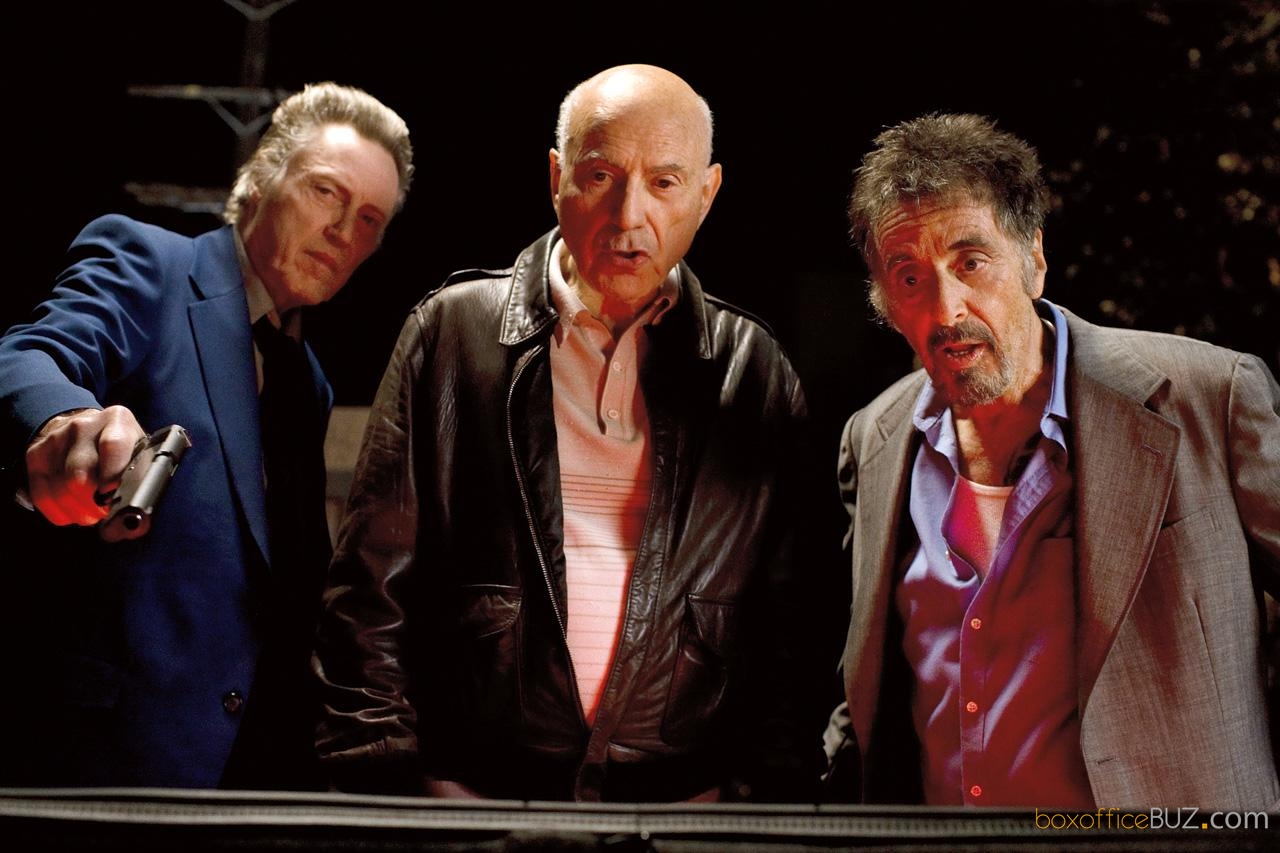
“Stand Up Guys” has three of them — Al Pacino, Christopher Walken and Alan Arkin — and just their presence goes a long way towards making “Stand Up Guys” a watchable movie. The movie itself doesn’t take it much farther, a sometimes ungainly mix of soft-boiled crime thriller and Viagra comedy.

But I enjoyed it well enough for the chance to see three old pros do their thing. “We’re all still here!” Pacino exults at one point, and their presence and vitality as performers is something to celebrate.

Val (Pacino) is a small-time criminal who has just gotten out of prison after a 28-year stint for murder and bank robbery. Meeting him at the prison gates is Doc (Christopher Walken), his old friend, who promises him a first day of freedom to remember. But if Doc is so happy to see Val, why does he have such haunted eyes, and a loaded gun?

“Stand Up Guys” is thin on plot, although I kind of wish the film had jettisoned the plot altogether and just had 90 minutes of the actors sitting around diners shooting the breeze. Instead, the movie labors through some wheezy setpieces, such as the old guys going to a brothel and showing the women there a thing or two, or stealing a new Dodge Challenger, mystified at the keyless ignition. The best part comes when Doc and Val bust their old getaway driver Hirsch (Arkin) out of a retirement home for some fun; Arkin’s presence adds a lot of zip to the film, but despite his equal status on the movie poster, he’s really just in the film for an extended cameo.

The pleasure of the movie comes in just watching the veteran actors volley lines back and forth, taking about past glories and present-day regrets. Pacino is his usual florid, outsized self, serving up raspy f-bombs like slices of prime rib. Walken is more contained and still, delivering serious lines as if they were funny and funny lines as if they were serious. They make a good odd-couple team, and if actor-turned-director Fisher Stevens pushes the geriatric comedy too hard at times, at others he’s wise to lay back and let the actors just work.

The film ends with a deeply dumb shootout — Stevens must have mistakenly thought that the audience, so used to seeing these guys play gangsters, wanted to see then back in action. But it’s when Pacino and Walken are back in inaction, chatting over surf ‘n’ turf or walking the streets telling old gangster stories, that “Stand Up Guys” lives up to the joy they so evidently still take in their work.

“Stand Up Guys” is now playing at Point and Star Cinema in Madison. R for language, violence, and sexuality.

“Warm Bodies”: She loves me, she loves me rot

Warm_Bodies_3

Before he met her, he felt dead inside. Dead outside, too. And after he met her, he still felt dead. But he was in love.

That’s the wry premise behind the horror-comedy “Warm Bodies,” which goes light on the horror and heavy on the comedy. R (Nicholas Hoult) seems in some way like any awkward teen — uncomfortable in his own body, eager to connect with other people but unsure how. The catch is that that body is rotting away — R is a zombie, and keeps a running voiceover monologue of his woes in the film’s clever early scenes. “What’s wrong with me?” he bemoans. “I should eat better.”

While the humans are safely esconced inside a walled city, the zombies roam morosely around the local airport, perhaps because that was the place they felt the least human while they were alive, so it’s the place they feel the most human while they were dead? R’s days are spent grunting at the airport bar with his best friend M (Rob Corddry) and staying clear of another breed of zombies, the skeletal Boneys, who have ripped away their last vestiges of humanity.

On a mission to find some food (i.e. us), R stumbles across a band of humans, including Julie (Teresa Palmer), with whom he’s instantly smitten. He gets close to her the only way he knows how — by kidnapping her, and by eating her boyfriend’s brains, which contain all his memories of her. Not exactly a “meet-cute,” but writer-director Jonathan Levine (“50/50”) is sly about finding all the laughs in the idea of a human-zombie teen romance while still making it seem sweet and faintly believable.

By the way, if the names R and Julie don’t tip you off as to Levine’s source material for his tale of ill-fated lovers, perhaps the balcony scene will. Like the Montagues and the Capulets, both M and Julie’s father Grigio (John Malkovich) loathe the opposite side of the dead-undead line. And R and Julie have to overcome the prejudices of both their kinds to stay together, especially when they learn that the blush of romantic love might be enough to reverse the zombie apocalypse.

The film barely earns its R rating, and horror fans might be disappointed that “Warm Bodies” is almost gore-free; you see much worse every week on “The Walking Dead.” On the other hand, “Twilight” fans looking for the next supernatural teen romance might be bummed out that the film’s romantic hero, although a cutie, has rotting flesh and a little brain matter caught between his teeth.

But for the rest of us, “Warm Bodies” hits an appealing sweet spot, sending up what we know about zombie movies while still being awfully sweet, with Hoult’s halting zombie and Palmer’s jaded human making for a very likable couple. This is a quirky, fun film that lives for moments when Corddry, trying to console R after a romantic setback, shakes his decaying head and grunts, “Bitches, man.”

“Warm Bodies” opens today at Point, Eastgate and Star Cinemas in Madison. R for violence and language, 1:37.

The worst movie of 2012

The_Paperboy_1

When I dutifully turned in my Worst Movies of 2012 list last December, I couldn’t help but feel a little bit of a pang. It felt incomplete somehow.

I had limited the list, as always, to movies that had played theatrically in Madison. And there were some bad movies, certainly. But there was one elephant in the room, a movie I had watched a screener of in slack-jawed wonder months before, half-hoping and half-dreading that it would play someday in Madison. But it never did.

But now it’s out on DVD. Now, finally, I can write about it.

I give you “The Paperboy,” the worst movie of 2012.

On paper, it looks solid. A fine cast (Nicole Kidman, John Cusack, Matthew McConaughey in the midst of a banner year), an acclaimed director (Lee Daniels of “Precious”), adapting a good book by a fine writer (Pete Dexter, who co-wrote the screenplay with Daniels.) It seems like it has to be at least watchable.

Holy geez. “The Paperboy” is can’t-turn-your-eyes-away terrible, like that YouTube link you wish you never clicked on. It’s a campy, trashy, pulpy disaster, a thick slice of Southern noir that’s been left out to rot in the Florida sun.

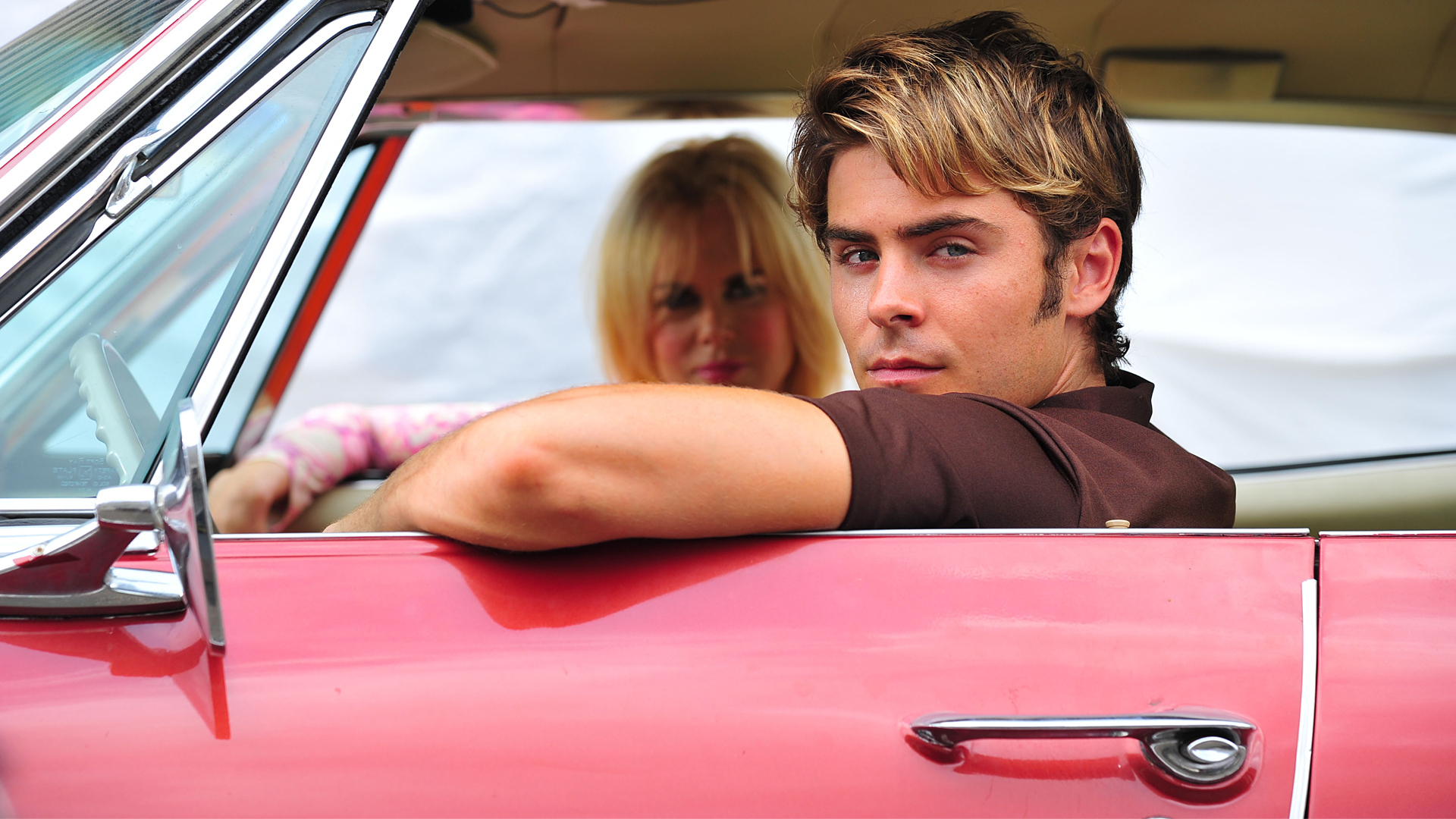
Start off with McConaughey and David Oyelowo, playing a pair of hotshot Miami reporters who have come back to McConaughey’s swampy Florida hometown to investigate a murder. The local sheriff has been offed, and a slack-jawed hillbilly thug (Cusack) has been convicted of the crime. Only a prison groupie (Kidman) insists he’s innocent, and the reporters are in town to check her story out. They hire McConaughey’s younger brother (Zac Efron) to chauffeur them around town.

Now, from that description, an audience member might fairly assume that at some point, the murder will be solved, or another culprit will be fingered, or the reporters will move in any way forward in their investigation. But no. No, Daniels could not care less about the investigation, and whenever he returns to the murder plot, you feel like he’s annoyed at having to do so. What he cares about is atmosphere, ladles and lades of humid atmosphere, of scene after scene of the characters sitting around, sweating magnificently, drinking profusely, while he experiences with blown-out colors, odd camera angles, bizarre jump cuts. There are scenes, I swear, where I don’t think the actors were even told where the cameras were, so ineptly are they framed.

When “The Paperboy” does rouse itself from its sozzled stupor, it’s so Daniels can get supremely icky. A rough sex scene, intercut with shots of rotting dead animal carcasses? Check. Mutual masturbation in a prison visitors’ lounge? Check. And the I-can’t-believe-I-just-saw-that apex, a scene in which Efron’s characte gets stung by a jellyfish, and Kidman has to fight off other women at the beach for the chance to urinate on him. Efron is dreamy and all, but I can’t imagine demand is that high to pee on him that women will fight for the privilege. (Although I’ve never seen “High School Musical.”)

It would have been one thing if this was just garbage, and there were honestly times when I thought this was some kind of “Grindhouse”-like meta experiment where  Daniels was trying to mimic the cruddy look and craft of early ’70s Southern B-flicks. But then he insists on also making “The Paperboy” a treatise on how horrible race relations were in the South in the ’60s, just in case anybody wasn’t clear on that. The movie is narrated not by any of the main characters, but by Efron’s family maid (Macy Gray, and there’s a voice you want to spend two hours with), who seems to be there only to be humiliated again and again by Efron and his family.

Daniels gets the actors to emote up a storm (Kidman actually got a Golden Globe nomination for this, although I assume it’s more for solace than for appreciation, the award-season equvalent of a cup of hot soup and a blanket) but most of them don’t seem to know what they’re doing from scene to scene. Efron plays a college-age student like he was a sniveling five-year-old, and Cusack is severely miscast as a racist, sexually brutal pig (Lloyd Dobler, no!)

“The Paperboy” is one hot mess, the sort of fiasco that could have a second life as an unintentional camp classic. It’s that terrible. If you’re a connoisseur of bad cinema, treat yourself.

UW-Madison grad Phil Johnston wrote Oscar-nominated “Wreck-It Ralph”

wreck-it-ralph-15449-1920x1080

I wrote a short story for the Capital Times about Phil Johnston, a native of Neenah and a UW-Madison graduate, who has quickly become a successful screenwriter. His first film, “Cedar Rapids,” was a very funny film that gave Midwestern rubes a certain nobility, almost.

It didn’t do much at the box office, but his second film was “Wreck-It Ralph,” which has been a big animated hit for Disney and, not entirely expectedly, a big critical hit as well. It’s up for an Oscar for Best Animated Feature, and what’s kind of funny is that Johnston seems fairly blase about it. There are five slots for animated film, which basically means if your film makes any kind of splash, it’s going to get nominated.

Also, whether the writer of an animated film actually gets an Oscar if it wins, or if its the producers and director who collect the statuary, isn’t clear to me. Which may contribute to Johnston’s sanguine outlook.

I actually think “Ralph” has a pretty good shot at winning; the perennial favorite Pixar’s “Brave” was underwhelming to some (although I thought it was both vastly entertaining and a surprisingly nuanced look at mother-daughter relations), and some critics really liked the unpredictability and poignancy of “Ralph.”

I was a little disappointed, honestly; I thought the film went to painstaking lengths to establish its video game universe, only to basically abandon it halfway through in favor of the geopolitics of the “Sugar Rush” world. I may need to see it again before fully passing judgment, and, having two young daughters, I’m sure I’ll get the chance.

Oscar-nominated shorts kick off next round of Sundance Screening Room

It’s been a long wait, since early October if I recall correctly. The Sundance Cinemas Screening Room schedule, featuring independent, foreign and documentary films showing exempt from the usual amenities fees, has been on a long hiatus to make room for all the big fall and holiday releases.

But it’s back.

The first round of Screening Room films kicks off next Friday, Feb. 8 with screenings of all 15 Oscar-nominated short films. You’ll be able to see the five shorts nominated for live-action in one screening, and the five nominated for Best Animated Short at another, all that week. Plus, just for the weekend of Feb. 8, audiences can see all five films nominated for Best Documentary Short.

After that, we can look forward to new films from Werner Herzog and Abbas Kiarostami, a new documentary on hunger from the producers of “Food Inc,” and Charlie Sheen’s unlikely cinematic comeback. Here’s how the rest of the upcoming Screening Room calendar shakes out, which will bring us up to early April:

The Other Son” (Feb. 15) — Two boys discover they were switched at birth. The kicker? One is Israeli, the other Palestinian in this French drama.

A Glimpse Inside the Mind of Charles Swan III” (Feb. 22) — The Charlie Sheen National Rehabilitation Project continues in this film from Wes Anderson colleague Roman Coppola, starring Sheen as a graphic designer in crisis alongside Wes faves Bill Murray and Jason Schwartzman.

A Place at the Table” (March 1) — A documentary from the producers of “Food, Inc.” about the hunger crisis that lets millions of Americans go underfed, and offers specific solutions to the problem.

Happy People: A Year in the Taiga” (March 8) — The latest documentary from Werner Herzog looks at a small band of indigenous people living in Siberia whose lives haven’t changed in the last century, and, as the title suggests, are just fine with that.

Barbara” (March 15) — An East German doctor hoping to flee the country in the 1980s is banished to a small rural hospital in this acclaimed drama.

Any Day Now” (March 22) — A gay couple (Alan Cumming and Garret Dillahunt) fight the legal system to keep custody of a mentally-challenged teenager who they have taken in off the streets.

Like Someone in Love‘ (March 29) — The latest film from master Iranian filmmaker Abbas Kiarostami (“Certified Copy”) looks at the relationship between an old man and a young woman in Japan.

“Wake in Fright”: It’s Australian for fear, mate

The Australian we usually see in movies tends to fall into a familiar stereotype — friendly, manly, beer-drinking alpha males who just want to have a good time. It’s no wonder that many Australians seem to view this Outback character as the “real Australia,” much as some Americans would call the deep South the “real America.”

But there’s a darker side to that national character, one we don’t see much of at the movies. That’s what makes the 1970 film “Wake in Fright” so bracing, over 40 years after its release. The disturbing film was released in the United States as “Outback,” then lost for decades, until a print resurfaced a few years back. There’s a fine new Blu-ray edition out this month from Drafthouse Films, and the UW-Cinematheque is screening “Wake In Fright” at 7 p.m. tonight as part of its Marquee Monday series at the Marquee Theater, 1308 W. Dayton St.

Think of “Wake in Fright” as an Aussie “Straw Dogs” or “Deliverance,” in which a supposedly cultured man has his primal animal nature awoken, against his will. Gary Bond (who bares a striking similarity to a young Peter O’Toole) plays John Grant, a schoolteacher from Sydney teaching in a small one-room schoolhouse in the Outback. He hates the place, hates the people, hates the endless dull copper expanse of the desert around him; the cinematography of “Fright” shows how wide open spaces can feel just as claustrophobic, just as stifling, as a tight crawlspace.

On his train ride home to Sydney for the holidays, Grant is waylaid for the night in an Outback mining town nicknamed “the Yabba.” The hospitality of the hard-drinking locals is almost oppressive, and despite his ill-concealed disdain, John accepts one beer at the local bar, and then another. (One of the film’s running jokes is how Australians impatiently hurry you to finish up your drink so they can buy you another.)

Thoroughly sozzled, Grant wanders into a gambling den where the locals bet on coin tosses. Grant thinks himself above it all, but gets sucked in by the allure of easy money — if he wins enough, he can buy off his government teaching contract and leave the Outback for good. Instead, he loses all his money; in one cruel visual joke, we see him wake up bleary-eyed and naked the next morning, as if he had literally lost his shirt.

Penniless, dragging his suitcase around town, Grant’s downward spiral begins in earnest. He drinks more and falls in with the locals, who love gambling, whoring, and fighting, and drinking above all. The most memorable, played by Donald Pleasence, is a defrocked doctor who has become a sort of wild man; the sight of the normally erudite Pleasence, shirtless and drunk, slurping stew straight from the saucepan, is hard to shake.

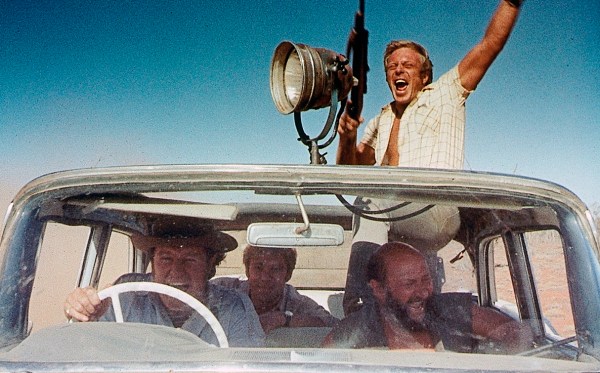
The carousing builds to one horrifying scene, in which Grant joins some good-old-boys for a trip to the desert to slaughter kangaroos, cackling as they shoot them with high-powered rifles. (What makes the sequence even more disturbing is that it uses footage from an actual kangaroo hunt.)

What frightens Grant the most is that he starts to like this kind of behavior, that even he isn’t immune to the anarchic lure of the Outback. “Wake in Fright” presents the desert as a morally barren place where men seem to feel they’re out of view of God himself, free to indulge their worst appetites; no wonder that one nickname for the region is the Back of Beyond.

“Wake in Fright” was, not suprisingly, a divisive film upon its release, with many critics calling it an attack on Australian character (it didn’t help that the director, Ted Kotcheff, was a Canadian, an outsider). But others saw it as an important unveiling of a side of the country that most Australians didn’t want to face, and that interpretation has seemed to hold sway.

The extras on the DVD show how the film was lost for years, until the original editor found cans of footage in a Philadelphia warehouse. The Australian Film and Sound Archive did a fantastic job restoring the film to its original, terrifying glory.

“Quartet” gives aging British opera stars (and one aging American actor-director) a chance to shine

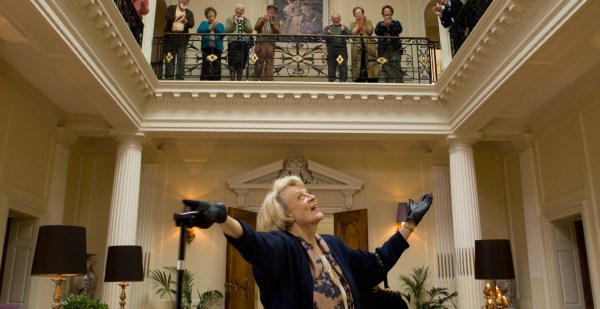
My review of “Quartet,” starring Maggie Smith and Billy Connolly, is now up at 77square.com. It’s a total charmer in the vein of “Best Exotic Marigold Hotel,” and a fine (if unlikely) directorial debut for Dustin Hoffman.

I saw “Quartet” last September at the Milwaukee Film Festival right after a documentary on Jeffrey Dahmer, and it’s light, sure touch was even more appreciated. It opens at Sundance today. (And, interestingly, Madison is getting it ahead of Milwaukee.)