“Red 2”: The old boys are back in town

RED 2

“Red 2” opens Friday at Point, Eastgate, Star Cinema and Sundance. PG-13, 1:56, two stars out of four.

The biggest genuine laugh I got during the comic mayhem of “Red 2” was a throwaway moment midway through the film. The heroes, all retired Cold War-era spies, head to a safe house in Moscow that hasn’t been used since Yuri Andropov was their target. The loopy L (John Malkovich) finds an old Moon Pie in one drawer, and to the horror of the others, starts munching on the 30-year-old treat. “It’s from before they had sell-by dates,” he explains blithely to his horrified comrades.

That’s the central joke of the “Red” films, based on a graphic novel by Warren Ellis and Cully Hamner: these old-school spies all pre-date the sell-by date, too old to fit into today’s world of espionage, but too tough to be dismissed, either. While the first “Red” movie was an unexpectedly fun and wry ride, the sequel basically takes these same characters and throws them into a standard “Find the Doomsday Device, Save The World” sort of plot. It’s a letdown, and a waste of an opportunity to do something different with the action-spy genre.

In the ’80s, the CIA smuggled a mega-bomb called Nightshade into the Soviet Union, and then lost track of it. In 2013, a conspiracy theorist website reveals that Frank (Bruce Willis) and Marvin (Malkovich) were involved in smuggling Nightshade and escorting the scientist Bailey (Anthony Hopkins) who created it. Suddenly, everybody wants Frank and Marvin and the device, from the Americans (led by a chilly Neal McDonough) to the British (led by the returning Helen Mirren) to the  Russians (led by Catherine Zeta-Jones). Caught in the middle, Frank and Marvin hop from London to Paris to Moscow, looking for Bailey and Nightshade before any government can get its hands on it.

The one good thing about the “Red” series is that they serve as an employment service for veteran characters actors: the last movie also had Morgan Freeman, Brian Cox and Ernest Borgnine, and this one includes David Thewlis as an arms dealer nicknamed The Frog, as well as a blink-and-you’ll-miss-him appearance by the great British stage actor Steven Berkoff.

RED 2

I do still enjoy Mary Louise-Parker as Sarah, Frank’s girlfriend, who gets a little too enthusiastic at the opportunity to engage in some “wet work.” And Willis manages to lose his usual mask of indifference and develop a nice, even tender rapport with her.

Much of the film is surprisingly low-key, dialing back the action and playing up the comedy, giving lots of screen time for Marvin and his increasingly silly outfits. When there is violence, it’s almost shockingly bloodless, even for a PG-13 film; we see someone get his throat slit and there is literally not a drop of blood spilled somehow. (The sets, meanwhile, don’t fare as well, getting Swiss-cheesed by automatic weapons fire in scene after scene.) And the product placement is distracting: there may in fact be a Papa John’s across the street from the Kremlin, but I don’t want to know about it.

Director Dean Parisot (“Galaxy Quest”) clearly wants to make a light, farcical action-comedy, but when the comedy is only so-so and the action is so rote, that makes for a film that’s mildly diverting at best.


Instant Gratification: “56 Up” and four other good movies to watch on Netflix right now

56-up

Pick of the week: “56 Up”My report from the Wisconsin Film Festival, including comments from subject Nick Hitchon, is here. The latest installment in Michael Apted’s revolutionary documentary series, which checks in on the same group of people every seven years of their lives, finds the subjects in a ruminative mood. The deft editing between prior installments shows the people (including UW-Madison professor Nick Hitchon) growing older, living with the choices they made along the way. Watching them it’s impossible not to think of the milestones in our own lives, those passed by, and those yet to come.

Drama of the week: “Starlet”My full review is here. It sounds like a terrible idea for a sitcom — an octogenarian bingo addict and a young porn star become friends. But this indie drama is a restrained and insightful character study of a strange but lasting relationship.

Foreign film of the week: “As Luck Would Have It”My full review is here. In this pitch-black media satire from Spain, a down-on-his-luck man becomes a media star after his head becomes impaled on a steel rod at a construction site. As reporters, politicians, and agents swirl around him, all looking for ways to exploit the situation, the victim becomes complicit in the selling of himself.

Comedy of the week: “Confessions of a Dangerous Mind” — As a director, George Clooney now makes pretty respectable entertainments like the upcoming “Monuments Men.” But his debut was this gonzo film that posits “Gong Show” host Chuck Barris was secretly a CIA assassin. The film features a great performance by Sam Rockwell in the unhinged lead role.

Thriller of the week: “Nick of TIme” — It’s Johnny Depp in the most shocking role of his life — a completely ordinary guy. In this well-plotted 1995 thriller, which unfolds in real time, Depp plays a dad blackmailed by Christopher Walken into assassinating a politician.

What’s playing in Madison theaters: July 5-11, 2013

THE LONE RANGER

All week

Despicable Me 2” (Point, Eastgate, Star Cinema, Sundance, Cinema Café) — My full review is here. While the first “Despicable Me” was a delightfully naughty animated film with a great premise (Blofeld becomes a single dad), the sequel plays too nice, reducing the diabolical Gru to a feeble hero. The Minions are still funny, though, and the 3D is eye-popping, especially during the closing credits.

The Lone Ranger” (Point, Eastgate, Star Cinema, Sundance, Cinema Café) — Tonto gets equal status with the Masked Man — not surprising, since Tonto is played by Johnny Depp. Many critics have been slagging Gore Verbinski’s film as another overbloated action epic in the vein of a later “Pirates of the Caribbean” film, but I’m seeing enough dissenters, who see sly wit and even subversive themes beneath the mayhem, to make me want to check it out.

Kevin Hart: Let Me Explain” (Eastgate, Sundance) — A mix of tour footage and performance from the immensely popular comedian’s Madison Square Garden show, which shows his ability to tell long, surreal stories that build in manic intensity.

Monday

Men in Black” (UW Memorial Union Terrace, 9 p.m.) — After being disappointed by last summer’s “Men in Black 3,” I went back to the 1997 original wondering if it was as good as I remembered. It was — still funny and fleet-footed, and any movie that features Green Bay’s own Tony Shahloub as an alien who can regrow his own head is worth seeing. FREE!

Tuesday

African Cats” (10 a.m., Point and Eastgate) — It’s nice to see Marcus’ Kids Dream summer film series is going heavy on Disney nature documentaries, since it provides nice counter-programming to the animated mayhem elsewhere. Here, the film follows a cheetah, a lion and a lion cub on their adventures, with Samuel L. Jackson narrating. (Don’t worry, it’s G-rated.) Admission is $2.

Wednesday

African Cats” (10 a.m., Point and Eastgate) — See Tuesday listing.

Thursday

Le Grand Amour” (UW Cinematheque, 4070 Vilas Hall, 7 p.m.) — Cinematheque is back! And the free on-campus film series is bigger and better than ever this summer, with a big tribute to the late Roger Ebert. We’ll get into that next week, but the summer series also includes the films of French comic filmmaker Pierre Etaix, whose absurdist satire was an inspiration to Terry Gilliam, David Lynch and others. The series begins with the daffy “Le Grand Amour,” in which a married man pines for his young secretary. It’s preceded by a short, “Happy Anniversary,” in which a couple’s celebrating is thwarted by Paris traffic. FREE!

African Cats” (10 a.m., Point and Eastgate) — See Tuesday listing.

AMC Theatres launches RunPee, for those who need their phone to tell them when to use the bathroom

largesoda

Now I’ve seen everything. AMC Theatres sent out a press release Monday touting its updated app, and along with the expected bells and whistles, such as linking it to their AMC Stubs rewards account was something called RunPee.

Horrible name. Revolutionary concept?

The premise behind RunPee, which began as a website (RunPee.com) and then a 99-cent app of its own before being folded into AMC’s, is that everybody needs to go to the bathroom at some point during a movie. (This may be the final stake in Mayor Bloomberg’s war against oversized sodas, as the populace adapts to consuming gallons of carbonated fluid rather than cutting back.) But nobody wants to miss three or four minutes in the middle of the movie.

So the original RunPee app would vibrate at a certain point midway through the film. It gives you a four-minute window to go to the bathroom (your mileage may vary) and then gives you a summary of those four minutes of plot. The AMC version doesn’t vibrate — it just tells you when to go and what you missed. This is something grown men and women are supposed to need.

For example, for “World War Z,” RunPee gives you three options of when to flee for the restroom. At 49 minutes in, your cue to leave is when Mireille Enos says “Gerry, I tried to call you.”  Go relieve yourself, and the app tells you that you missed the part where Gerry lands in Jerusalem and learns the Israelis have used giant walls to keep out the zombies. (Which seems kind of important to me, but whatever. RunPee seems more concerned that you don’t miss an action sequence than any actual plot.)

RunPee, in other words, is for that small subset of moviegoers who apparently check their phone regularly during the movie and yet can’t bear the thought of missing two minutes of a movie. And if AMC is officially sanctioning this, can we do away with the pre-screening admonishments about talking and using cell phones in the theater? It seems like letting your phone tell you when to go to the bathroom during a movie starts us down a slippery slope indeed.

Also, I couldn’t help noting that while “World War Z” offers three RunPee moments, “Monsters University” offers only one, which leads me to think the RunPee people have never seen a movie with a child. I would need RunPee options every five minutes if I had a kid in tow, just in case. Also, RunPee doesn’t seem to solve the problem of somebody in your row barging past you in the middle of the movie to go to the bathroom. Maybe RunPee 2.0 could sync up the phones in a given row so that everybody goes at the same time.

It seems like a silly concept to me, but AMC must like it enough to include it in their new app. Another, simpler option might be to simply go before the movie starts, or else not consume a beverage that’s the weight of a small child during the film. But how much fun is that?

“Frances Ha”: Finding a place of her own

francesha2

“Frances Ha” is now playing at Sundance Cinemas. R, 1:26, four stars out of four.

“How much longer?” Frances’ mother shouts through the locked bathroom door as Frances (Greta Gerwig) floats in the bathtub, unwilling or unable to move.

It’s a question that Frances asks herself, over and over, in Noah Baumbach’s beautifully funny ode to twentysomething uncertainty, a universe of unmade beds and house parties, casual hookups and platonic roommates. In addition to giving a sparkling and deeply-realized performance as Frances, Gerwig also co-wrote the film with Baumbach (the two are now partners in real life as well). The result is a film that bears all of the zingy dialogue and sharp characterizations of Baumbach’s other films (“The Squid and the Whale,” “Greenberg”) but with more of a generosity of spirit towards its characters.

It’s also one of the most insightful movies about female friendship to come along in quite a while. The movie opens with a glorious black-and-white montage of Frances and her roommate Sophie (Mickey Sumner). The pair are inseparable (“We’re like the same person but with different hair,” Greta tells people), and we see shots of the pair scampering through the streets, having philosophical talks on fire escapes, cackling at house parties. It’s like the dream every Midwestern liberal arts student has about what life in Brooklyn would be like after graduation.

But every dream ends, and in New York, real estate is usually the culprit. Sophie gets the chance to live in Tribeca, and takes it. The two vow to stay close, but a gulf slowly widens between them that can’t be spanned by the Williamsburg Bridge. Sophie, in publishing, starts growing up, getting serious with her boyfriend, making new friends.

Frances, meanwhile, is caught in stasis. Her career as a professional dancer has stalled out, and she starts bouncing from apartment to apartment, humiliation to humiliation, watching as Sophie and others slide forward on their moving walkways to adulthood while hers remains closed for repairs.

It’s a familiar arc for Baumbach, heaping self-inflicted punishment upon punishment upon his characters, as we see Frances blather at dinner parties, her self-deprecating monologues becoming less and less entertaining to her audiences. But there’s a lighter touch here, and a poignancy, especially watching Frances and Sophie drift farther away from each other. There’s a deceptively cheery phone conversation late in the film, where Frances is just piling lie on top of lie about how well she’s doing, that’s just so sad compared to how honest and inseparable they had been.

She takes an ill-advised trip overseas which has to be the worst cinematic trip to Paris every committed to film. Conversely, when she goes home to Sacramento for the holidays, we brace ourselves for condescending comedy about life in the suburbs. Instead, it’s a lovely montage of images as Frances reconnects with her loving parents and old friends; her look of longing as she rides up the escalator to her plane back to New York is piercing.

Gerwig is a tremendously acute physical and verbal comedic actress, capturing the mix of grace and clumsiness with which Frances navigates every aspect of her life; we can see her do a beautiful pirouette in the dance studio, then get her ring stuck on her thumb on the subway ride home. She’s an equally lovable and maddening character, and we root for her to clean up the messes she can’t help make.

And it’s that rare film in which the heroine’s happiness or fulfillment doesn’t depend on her finding the right guy or not. A couple of guys move in and out of her life, but they’re largely in the background, and when she seems to finally find the right one, it’s nice, but not a make-or-break thing. She’s already found a place of her own.

UFOs (Ultra-fun Films Outdoors) descend on the Terrace this summer

Image

One of the best ways to spend a Monday night in Madison during the summer is at a Lakeside Cinema movie on the UW Memorial Union Terrace. Okay, one of the best ways to spend any summer night in Madison is on the Terrace, so I’m cheating a bit.

Still, the long-running free Lakeside series is a pretty much guaranteed good time. They set  up a screen by the lake, and people cluster around with their popcorn and beer. There’s usually a trivia contest or some kind of other giveaway before the show starts at dusk. And the Union has greatly improved the projection and sound in the last few years, so you can actually appreciate the movie, which wasn’t always the case.

Every summer program has a theme, and this summer’s is “Outta This World” — movies both serious and silly that feature aliens and outer space. It kicks off next Monday at 9 p.m. with “E.T. The Extraterrestrial.” Which I know just played at Olbrich Park as part of Madison Parks’ own outdoor summer movie series. But, come on, it’s “E.T.”

Then comes “Spaceballs,” “Alien,” the original “Invasion of the Body Snatchers” and many more. It’s all free, so keep watching the skies! And the screen by the lake.

Here’s the full schedule. Visit union.wisc.edu/film for more information.

May 27: “E.T. the Extra-Terrestrial”

June 3:   “Spaceballs” 

June 10:  “Star Trek II: The Wrath of Khan”

June 17: “Mars Attacks!”

June 24: “Alien”

July 1:  “Muppets from Space”

July 8:  “Men in Black”

July 15: “The Last Starfighter”

July 22: “Close Encounters of the Third Kind”

July 29: “Galaxy Quest”

Aug 5: “Little Shop of Horrors”

Aug 12: “Invasion of the Body Snatchers”

Aug 19: “WALL-E”

Aug 26: “Total Recall” 

Sept 2:  “Space Jam”

“The Angels’ Share”: Just a drop of the hard stuff

The-Angels-Share

“The Angels’ Share” opens Friday at Sundance. Not rated, 1:46, three stars out of four.

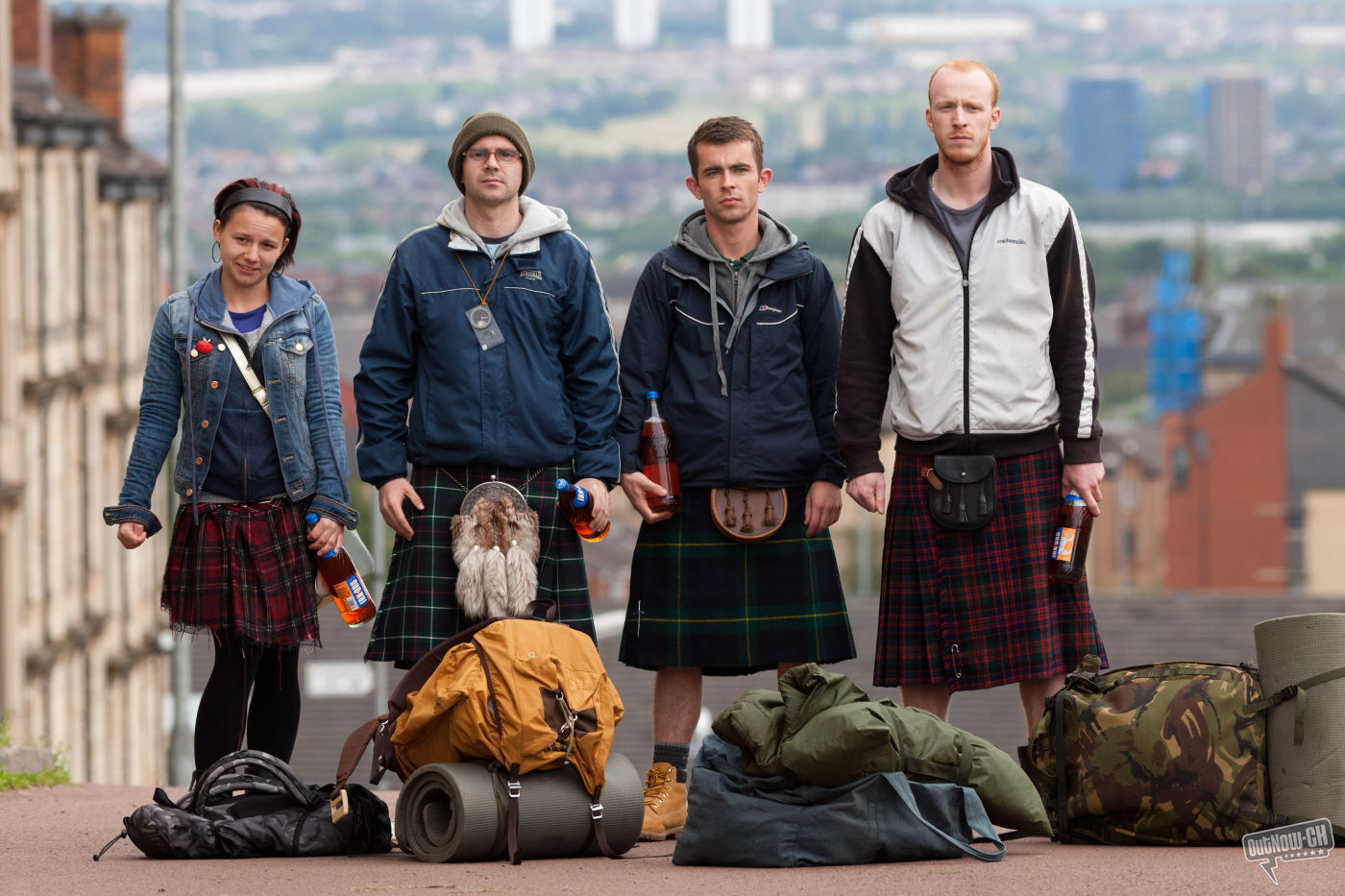
We think we’re in familiar Ken Loach territory from the outset of “The Angels’ Share.” From his 1970 debut “Kes” onward, Loach has excelled in showing the gritty truths of life in working-class England, favoring realism over sentimentality. But Loach’s new film, written by his longtime collaborator Paul Laverty (“The Wind That Shakes the Barley”), has some surprises up its sleeve.

“The Angels’ Share” starts in a courtroom, where we see a succession of petty criminals getting their sentences for shoplifting, public drunkenness and the like. The worst of them seems to be Robbie (Paul Brannigan), a jug-eared young man with a nasty scar on his face. We hear about his violent crimes, including a brutal beating during a traffic altercation, and figure he’s the worst of the bunch. He avoids incarceration by the skin of his teeth, sentenced to community service.

But then Loach and Laverty show us Robbie’s life; he’d like to go straight, especially for the sake of  his pregnant girlfriend (Siobhan Reilly), but is involved in a violent feud with other locals that he can’t avoid. He seems destined to loop right back around to that courthouse, only this time to be sentenced to prison.

The film’s view of the social underpinnings of crime is complex, and doesn’t offer any easy answers or opinions about Robbie. Just when we’ve grudgingly warmed to him, Loach flashes back to the traffic beating that got him arrested, and it’s horrible to watch. Robbie is forced to meet the victim of his crime, psychologically as well as physically damaged, and he weeps, vowing never to harm another person again. But good intentions only get you so far.

But Robbie finds an unlikely angel in his case worker Harry (John Henshaw), a big-hearted man who seems to see his job less as parole officer and more as camp counselor. He drives Robbie and the other parolees around town to do odd jobs for the city. At the end of the day, like a little field trip, he takes them to a local distillery.

Robbie has never tried whisky before, but he’s smitten with the romance around the history of Scottish distilling, and it turns out he has a natural nose for discerning the different varieties of whisky. He’s also very intrigued by a rare cask of whisky, the Malt Mill, which is scheduled to be auctioned off for a million pounds or more. That kind of money could help a young man truly start a new life.

And it’s here that “Angels Share” reveals its big surprise to the audience — it’s a caper film. Robbie and his band of delightful deliquents plot to steal the whisky right out of the cask and sell it on the side to a broker (Roger Allam). It’s an interesting turn for the film, which becomes much more of a lark in the second half, funnier and somewhat suspenseful, as we wonder if the crew can pull off such a daring liquid heist. Loach comes as close to hitting Hollywood movie beats as he ever has — if you had told me I’d see a Ken Loach film where the heroes speed across the Scottish countryside as the Proclaimers’ jaunty “500 Miles” plays on the soundtrack, I’d say you were nuts. But it happens here (twice), and it works, in large part because Loach has laid a foundation of social realism underneath the hijinks.

Whether Robbie pulls off his caper should be left for the audience to discover. But Loach’s great cinematic switcheroo goes off almost without a hitch.

“Oconomowoc (the film)” easier to like than it is to pronounce

Image

New York. Paris. Los Angeles. Berlin.

Add Oconomowoc, the Wisconsin town that is hard to pronounce but fun to type, to the list of great cinematic cities. Granted, so far Oconomowoc’s film oeuvre consists of one film, “Oconomowoc (the film).” But it is a start.

The indie comedy by writer-director Andy Gillies has been premiering around the state recently, and has its Madison premiere this Wednesday, May 1, at 7:30 p.m. at the Barrymore Theatre, 2090 Atwood Ave. Tickets are $10 in advance, $12 at the door. Gillies and Joe Hass, the film’s composer, and director of photography, will be at the screening to talk about the film afterward. More info is available at http://www.oconofilm.com, and the trailer is up on YouTube.

The film follows Lonnie Washington, a young man who slinks back to his old hometown to live with his mom and gets entangled in the lives of his family (including a stepfather who is younger than he is and dreams of designing lingerie) dreams.

I haven’t seen the movie, but judging by the trailer it look like a fun, deadpan character-based comedy that find laughs in ordinary folks’ misguided attempts to “hit the big time.”

“I wanted to write a story that was more character and dialogue-based and less of a traditional, plot-based story,” Gillies told OnMilwaukee last week. “There’s a loose plot, but it’s more so about the characters and personality types..I’ve always enjoyed stories about disconnection and misrepresentation and delusion.”

Shot on location (naturally, because what other town could simulate Oconomowoc?) the film features a mix of pro actors and friends and family, most from the area. Gillies said the film has been submitted to festivals in the hopes of reaching an audience beyond those who can already pronounce Oconomowoc.

Oh, and by the way, it’s Oh-KAHN-a-ma-WALK. I think.

“Arthur Newman:” Colin Firth and Emily Blunt, all-Americans

Arthur Newman, Golf Pro

“Arthur Newman” is now playing at Point and Star Cinema. R, 1:41, two stars out of four

If acting was real, they wouldn’t call it acting. There’s artifice in every performance, but it’s seldom seem more pronounced in the comedy-drama “Arthur Newman,” in which two fine British actors pretend to be two Americans pretending to be other people.

The cramped drama was first written by Becky Johnston (“Seven Years in Tibet”) and only finally makes it to the screen now with first-director Dante Ariola. Both Firth and Blunt are fine actors, and likely leaped at the chance t work together and play two roles far removed from their usual coterie. But the parts are so underwritten, and given so little to do, that the actors connect with each other and the material only intermittently.

Firth is Wallace Avery, a sad-sack Floridian with thwarted dreams of being a pro golfer. One day, on the course, he gives a rich man some pointers on his slice, and on the spot invents a new identity for himself — Arthur Newman, golf pro, just back from years working at some of Asia’s finest golf course. The rich man happens to own a country club in Terra Haute, Indiana, and offers him a job.

So Wallace jettisons his old life, including a girlfriend (Anne Heche) and teenage son (Sterling Beaumon), makes up a complete new identity for Arthur, and hits the road for Indiana in . . . of course . . . a convertible. Along the way, he comes across Mike (Blunt), a pickpocket and drifter who has severe emotional problems. We know that because she keeps telling Arthur about her severe emotional problems, and because she wears a hoodie a lot.) Mike likes this reinvention thing Wallace/Arthur is trying, so she hops in the convertible with him.

The couple head cross-country, stopping along the way to break into people’s houses, dress up in their clothes and have sex. I’ve nothing against role-playing in the boudoir, but couldn’t they rely on their imagination a little more. Obviously the theme of “Arthur Newman” is the American dream of starting over, but Johnston’s screenplay hits it so obviously that it loses its resonance. Thuddingly off-key moments abound, such as a scene in a restaurant when Arthur remembers choking on a championship putt that ended his golf career, and HE STARTS CHOKING ON A MEATBALL.

Blunt slips into her rest-stop klepto role more easily than we might expect, but Firth seems to have more trouble with his American accent, hitting his Rs so hard  you’d think they owed him money. But Arthur is drawn so willfully bland that we can’t work up much sympathy for him. I’m also mystified by the occasional scene back in Florida where we see Arthur’s son and girlfriend wondering where he is, which trip up the momentum of Arthur and Mike’s journey.

Wisconsin Film Festival review: “Shepard and Dark”

postcard_template_us

“It’s not that you need to be the same. It’s that you need to fit in some weird way.”

For nearly 50 years, Sam Shepard and Johnny Dark have fit in a weird way. Shepard is the acclaimed actor and playwright (“True West,” “Buried Child”). Dark works the deli counter at a supermarket in Mexico. And yet, somehow, they’ve been friends most of their lives, and the engaging documentary “Shepard & Dark” shows how.

The laconic Shepard describes himself as rootless and solitary, someone who keeps moving on, even if that hurts the ones closest to him. Dark, meanwhile, is happy staying put in his cozy little house in New Mexico, surrounded by his dogs and his books. Seeing them together, there’s an easy broken-in rapport, as they tease each other and trade Dylan lyrics. But the question can’t help but occur as it often does with long friendships — if they met each other on the street today, would they become friends?

The pair have exchanged letters for decades, and a university wants to buy them for their archives and perhaps turn the correspondence into a book. So they settle down with their boxes of old letters and try to make sense out of them. Dark in particular is almost obsessive when it comes to archiving his past, and the occasion causes the pair to reminisce about their long history together.

This delights Dark, but rankles Shepard, who has some things in his past he’s not eager to revisit. His abusive, alcoholic father looms large in his psyche, and there was a notorious incident in 1983 when Shepard left his wife and son for Jessica Lange. Dark, as it turns out, was married to Shepard’s ex-mother-in-law, and ended up staying to pick up the pieces of Shepard’s decision.

That’s a lot of shared history, and it’s perhaps inevitable that Shepard and Dark are heading for a big reckoning. Mixing interviews with old photographs and film from Dark’s personal collection, filmmaker Treva Wurmfeld has made a lovely and insightful film, not just about this friendship, but all friendships, and how having people in your life who know you so well can be a comfort and a curse.

Wurmfeld said during the post-show Q&A that she first met Shepard while making one of those making-of documentaries for the film “Fair Game.” She thought she would make a documentary just about him, but when she met Dark during the first week of filming, she knew the friendship would be the real subject of her film, each man providing insight into the other.

As intimate as “Shepard & Dark” gets, Wurmfeld said both subjects were extremely open and giving with their time, a bit of a surprise given Shepard’s reputation as being somewhat mysterious.

“I was always surprised about what he was willing to share,” she said. “They were both extremely generous in terms of answeering questions. Johnny was incredibly open with his old archives. It was really a treasure trove of material.”