“The Frankenstein Theory”: The found-footage horror genre is still alive . . . alive!

Image

“The Frankenstein Theory” is now playing at AMC Star Cinema. 1:25, and not rated, but would likely be rated R for pervasive language and violent images.

Almost 14 years after “The Blair Witch Project,” you’d think the found-footage horror genre would be played out by now. But every few years, some filmmaker with a lot of ingenuity and a little money comes along to reinvent the genre. Oren Peli did wonders with $10,000 and some in-camera special effects for the first “Paranormal Activity,” and Barry Levinson made an effective eco-horror thriller with last fall’s “The Bay” by drawing in multiple “found” sources, from local news B-roll to Skype chats. Heck, “Trollhunter” even made the genre hilarious.

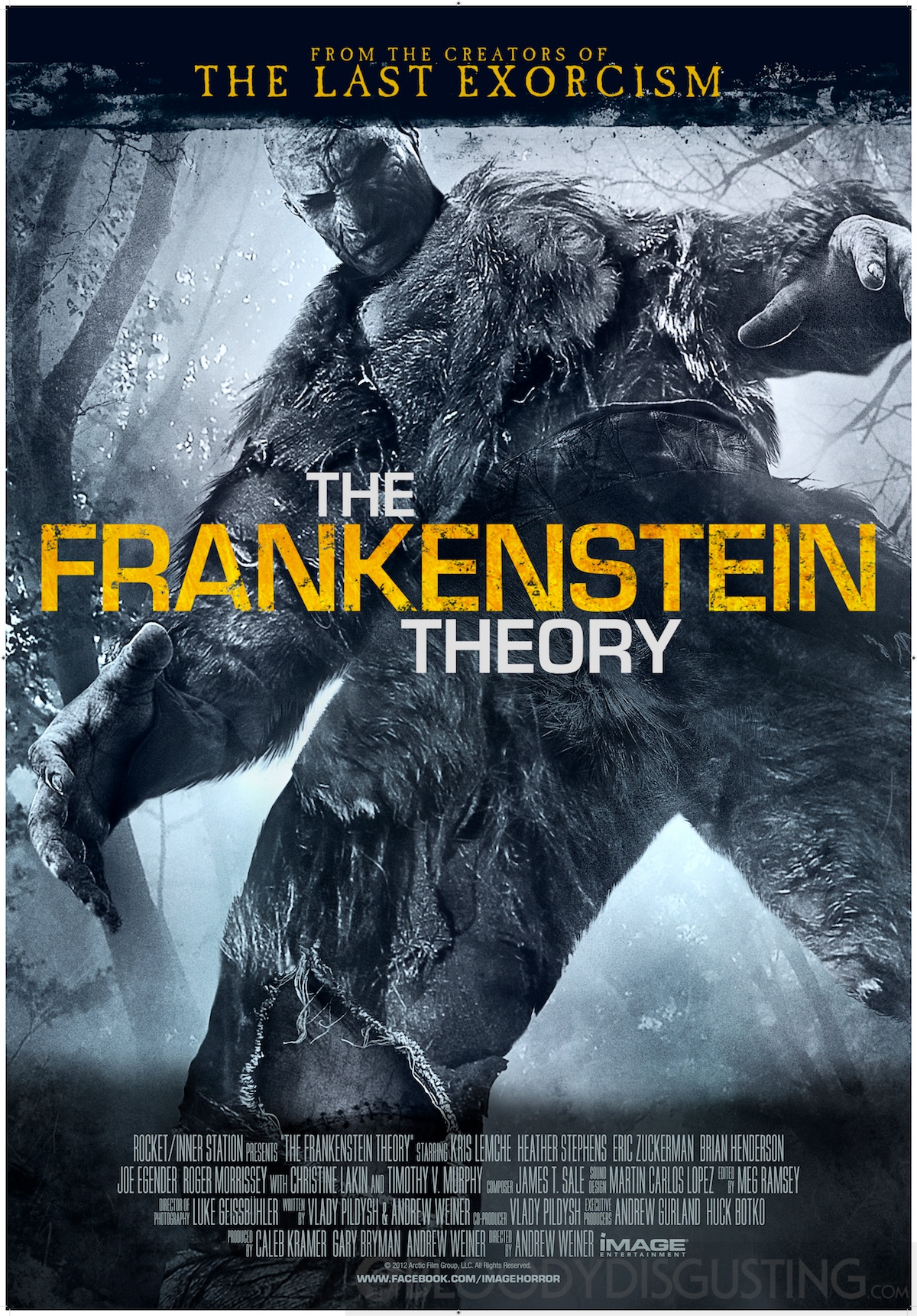
Andrew Weiner’s “The Frankenstein Theory” definitely does not reinvent the genre; it very much follows the “Blair Witch” template, as a group of unwary documentary filmmakers go after a mysterious creature, and don’t come back.

But it’s the first found-footage film I can remember to marry the 21st-century horror genre to classic horror from a century ago, and that makes it at least worth a look. The film is getting a very small cinematic rollout before it comes out on DVD on March 26, and among the 15 theaters it’s playing in is Fitchburg’ s AMC Star Cinema.

Arrogant young Jonathan Venkenheim (Kris Lemche) believes Shelley’s classic tale was a fictionalized account of real events, and that his ancestor was the real Mad Scientist. The book leaves Frankenstein and his creature stranded on an ice floe in the Arctic, and Venkenheim believes the creature is still roaming the tundra somewhere.

He bankrolls a documentary filmmaker (Heather Stephens) and her crew to chronicle his exploits, and off they go.

The film takes a while to get to the creepy stuff, and Weiner isn’t able to always hold the viewer’s interest until then. The movie’s saving grace are the two deeply skeptical film crew (Brian Henderson and Eric Zuckerman), who spend the first half of the movie giving each other Wet Willies and snickering behind Venkenheim. They’re genuinely funny, especially when things start to get a little scary in the frozen north (“I don’t want some bear to be making fun of me while he’s eating my leg!”)

Unfortunately, they’re also genuinely expendable, and “Theory” follows a familiar path as the characters are picked off one by one. Weiner keeps most of the mayhem offscreen, using unnerving sound effects and famliiarfound-horror visual touches (like night vision) to enhance the spooks. (Unfortunately, the effect is lessened a little by the fact that, for the monster’s roars, he seems to have cribbed sound effects from the video game “Doom.”)

Still, it’s an engaging debut, and possibly points the way forward for found-horror — backwards, to horror’s classic tales. I’m sure a shaky-cam visit to Dracula’s castle is in the works somewhere.

“Jack the Giant Slayer”: Fee fie fo fumble

Jack-the-Giant-Slayer_20

“Jack the Giant Slayer” opens Friday at Point, Eastgate, Star Cinema and Cinema Cafe in Stoughton. PG-13, 1:56.

It was just a little over a month ago that “Hansel & Gretel: Witch Hunters” opened, and I joked to a colleague that “Jack and the Beanstalk” would be the next storybook tale to get the IMAX 3D treatment. I thought I was joking, but here it is, “Jack the Giant Slayer.” I would quip that next up will be a PG-13 “Little Miss Muffet,” with Amanda Seyfried battling armies of giant spiders, but I don’t want to give anybody any ideas.

Suffice to say that “Jack” isn’t the worst of the fairytale trend (“Little Miss Riding Hood” owns that) nor is it the best (the gonzo stylish “Snow White and the Huntsman”). But the story of Jack does present a tricky question for director Bryan Singer and his team of writers (including Singer’s “The Usual Suspects” collaborator, Christopher McQuarrie); who’s the movie for, exactly?

You can’t just make a kids’ movie, since the studio is demanding a PG-13 action film that will bring in the teens. But there’s only so dark and violent you can go in a movie that has magic beans as a key plot element. So “Jack,” although energetic and prone to some moments of giddy visual wit, never settles on a consistent tone. It’s too scary for your youngest kid and too silly for your oldest.

A lengthy animated prologue (in which the giants don’t look much different than in the “live-action” film) explains how there’s a world of giants living in the clouds above ours, and how magic beans can build beanstalks to bridge the two worlds, so the giants can come down and kick our asses. (No real upside to the magic beans, methinks.) Luckily, a magic crown is forged that allows the wearer to control the giants.

The human sent the giants upstairs generations ago, but the king’s right-hand man Roderick (a gap-toothed Stanley Tucci) gets his hands on both the beans and the crown, with plans to use the giants to conquer the kingdom. Except farmboy Jack (Nicholas Hoult) gets ahold of the beans, accidentally sprouting a stalk in his living room that sends his house — with princess Isabelle (Eleanor Tomlinson) inside it — shooting up to the heavens.

The king (Ian McShane) sends a few good knights, along with Jack and the sneaky Roderick up to find her. It’s here, I think, that “Jack the Giant Slayer” makes its first major misstep. What I remember of previous fairytale iterations was the tension of Jack sneaking around the giant’s lair, trying not to be discovered, hearing the rumble as the giant gets closer and closer. Here, the humans are caught almost immediately, and the CGI giants are presented almost immediately. Wouldn’t want to waste any of that visual-effects money on actually building a little suspense.

And, honestly, the giants are a little boring. Visually and personality-wise, it’s hard to tell them apart, aside from one that looks like Harvey Keitel for some reason, and another that looks like either Kid or Play from “House Party” (I can never remember which is which.) Otherwise, they’re basically just one-dimensional brutes that like to munch humans like they were at Buffalo Wild Wings.

There’s one clever action sequence, in which gallant knight Elmont (Ewan McGregor) has to avoid being baked into the giant equivalent of a Hot Pocket. But Singer otherwise doesn’t get much mileage out of his villains — other than their size, they’re just generic “Lord of the Rings”-knockoff bad guys. Just imagine the mischief that a more daring filmmaker like Terry Gilliam would have had with this story.

But then, the studio likely couldn’t have trusted Gilliam to hit all the expected notes of big-budget fantasy-action, including the obligatory endless battle between humans and giants. It’s not awful, but for a movie about 40-foot behemoths, “Jack the Giant Slayer” has pretty small aspirations.

What’s playing in Madison movie theaters: March 1-7, 2013

21-and-Over-_-Miles-Teller-Justin-Chon-Skylar-Astin

It may not feel like spring outside, but the calendar does say March 1. And that’s all the excuse Hollywood needs to kick of the spring movie season. So the low-profile dramas and comedies of January and February that the studios had little hope for will start giving way to some semi-blockbusters that the studios hope will generate some big box office.

Jack the Giant Slayer” (Point, Eastgate, Star Cinema) — When “Hansel & Gretel: Witch Hunters” came out in January, the 77 Square graphic designer Brandon and and I were joking about what fairytale would be next. And I jokingly suggested “Jack and the Beanstalk,” imagining a poster with the tag line “Fee Fi Fo Summer 2013.” They took everything but the tagline.

The Last Exorcism Part II” (Point, Eastgate, Star Cinema) — My favorite movie title in quite some time. If the first movie had the last exorcism, then how can there be a Part II? Unless “last” didn’t refer to “final,” but merely “The Previous Exorcism,” or “The Most Recent Exorcism.” And that didn’t look too good on a poster.

21 & Over” (Point, Eastgate, Star Cinema) — The writers of the “Hangover” movies make a raunchy R-rated comedy about three buddies out on a night of drunken debauchery, in which their straight-laced buddy ends up getting the wildest. But this time, the friends are college-age. So it’s completely different.

Phantom” (Point, Eastgate, Star Cinema) — It’s been ages since we had a good submarine movie, and I had high hopes for this one, in which the great Ed Harris plays a Russian sub captain who takes aboard a covert ops team led by David Duchovny on a mysterious mission during the Cold War. Alas, early reviews have not been kind.

A Place at the Table” (Sundance) — This revealing documentary looks at the 51 million people (including 1 in 6 children) who live with hunger in America. I’ll be doing a post-show chat after the 7:05 p.m. Tuesday showing, and it looks like, as a very special bonus, I’ll be joined by Capital Times food writer LIndsay Christians, who recently did the Food Stamp Challenge. Come join us! Here’s my review.

The Frankenstein Theory” (Star Cinema) — Mary Shelley meets “Blair Witch” in this found-footage horror tale of a scientist in the Arctic out to prove Shelley’s tale was non-fiction, and the monster is out there. If handled well, it could be a lot of fun.

“Punishment Park” (UW Cinematheque, 4070 Vilas Hall, 7 p.m. Friday )  — The free on-campus film series presents a pair of films by button-pushing “mockumentary” filmmaker Peter Watkins with this disturbing 1971 film, in which antiwar protesters are rounded up for deadly exercises for the National Guard. It still has the power to shock over 40 years later. FREE!

Death Rides a Horse” (UW Cinematheque, 7 p.m. Saturday) — Oh yeah. The Cinematheque’s big spring series of spaghetti Westerns (which will spill over into the Wisconsin Film Festival) begins with this violent classic about a teenager (John Phillip Law) searching for his parents’ killers with the help of an outlaw (Sergio Leone favorite Lee Van Cleef.) Free!

Porco Rosso” (Chazen Museum of Art, 800 University Ave., 2 p.m. Saturday) — In this charming animated film from Studio Ghibli, a flying ace doesn’t let the fact that he’s turned into a pig keep him grounded. Free, but get there early, because the Ghibli series has been selling out every Sunday.

Middle of Nowhere” (Union South Marquee Theater, 1208 W. Dayton St., 7 p.m. Friday) — In this 2012 Sundance Film Festival award winner, a promising med student sees her life change when her husband is sent to prison for eight years. Free!

Skyfall” (Union South, 9:30 p.m. Friday, 6 p.m. and 9:15 p.m. Saturday, 3 p.m. Sunday). — I love it. Free!

Planet Terror” (Union South, midnight Friday and Saturday) — Watch the full version of Robert Rodriguez’s half of “Grindhouse,” in which toxic sludge turns folks into killer zombies. Weird they’re showing the other half, Tarantino’s “Death Proof” as well, no? Free!

Broken On All Sides” (Union South, 7 p.m. Monday) — Co-sponsored by UW Athletics, this documentary looks at mass incarceration in America and the role that poverty and race play. Free!

High Ground” (Union South, 7 p.m. Tuesday) — Vets for Vets co-sponsored the screening of this triumphant documentary about 11 veterans of the wars in Iraq and Afghanistan who climb a 20,000-foot peak in the Himalayas. Free!

Margin Call” (Union South, 7 p.m. Wednesday) — An all-star cast (no, really — Kevin Spacey, Jeremy Irons, Stanley Tucci, Demi Moore and more) turn the 2008 financial meltdown into the stuff of high drama, as we spend one tense night in a Goldman Sachs-like company facing Armageddon. Here’s my review. Free!

“A Place at the Table”: The face of hunger in America

placeattable2

“A Place at the Table” opens Friday at Sundance Cinemas. PG, 1:24. I’ll be doing a post-show chat about the film after the showing at 7:05 p.m. Tuesday, March 5.

“If another country was doing this to our kids, we’d be at war.”

Jeff Bridges says that in “A Place at the Table,” and it’s an interesting point. Imagine if North Korea developed some kind of biological weapon and dumped it in our drinking supply. Imagine it didn’t kill people — not right away — but instead made then more prone to developing lifelong illnesses, including one in three American children contracting Type 2 diabetes, exploding the cost of health care. Imagine it made children feel so sick that they couldn’t concentrate in school, leading to lower grades and dimmer futures. Imagine it made the population so unhealthy that only 1 in 4 Americans between the ages of 19 and 25 were physically fit enough to serve in the military, weakening the armed forces.

The “biological weapon,” of course, is hunger, and its cousin obesity. Filmmakers Kristi Jacobson and Lori Silverbush tackle a complex and seemingly intractable problem with every weapon at a skilled documentarian’s disposal. They present an array of sobering data, such as the fact that 51 million Americans don’t get enough to eat, but wrap that information around the personal stories of three very different members of that 51 million.

The film opens with beautiful shots of western Colorado — snow-capped peaks, verdant forests, rolling fields — as a song by T Bone Burnett and the Civil Wars plays on the soundtrack. It presents America as the land of plenty — surely hunger can’t exist in a country with so much bounty? But in fact it does; living right in the middle of all that natural beauty is Rosie, a Colorado teenager whose family lives hand-to-mouth, depending on charity from neighbors and the local food bank for meals each day. Poverty seems rampant in her picturesque little town; the local pastor’s food pantry is crowded with needy people, and we meet one father who works two eight-hour shifts a day — one as a cattle rancher, the other as a school janitor — and still has to use it.

The other two people are a Mississippi second-grader whose health problems are worsening because her mother can only afford processed foods, and a Philadelphia single mother living right at the edge of eligibility for food stamps. We see her get a good full-time job, which would be the triumphant finale of most documentaries. But the slightly higher salary means she loses her food stamps, and her children ended up eating worse than they did when she was classified as poor.

It’s a difficult, complex problem, one that can’t be solved by just donating a few cans of food to the local pantry. (Although, by all means, do that.) Jacobson and Silverbush show how addressing hunger needs a comprehensive, systematic approach at the federal government level, including an expansion not just of social programs but a look at agriculture policy, which subsidizes corporate crops like soybeans and inedible corn used for high-fructose corn syrup to the tune of $20 billion a year, but not fruits and vegetables. The result is a growing population that doesn’t have enough to eat, and can only afford the cheap calories that junk food provides.

And, somehow, there needs to be an honest conversation in the culture about American poverty, once and for all dispelling the grotesque misconception that those on welfare are living high on the hog on the taxpayers’ dime. Watching “A Place at the Table” is a good place to start that conversation.

Come talk about movies with me at Sundance Cinemas next week!

placeattable

So this is pretty exciting. I’m partnering with the nice folks at Sundance Cinemas for “Conversations in Film,” an occasional series where I will host special screenings of films from their Screening Room calendar, the series devoted to indie films, foreign films and documentaries. After each film, join me up in the second-floor lounge at Sundance, 430 N. Midvale Blvd.,  for a lively discussion of the movie we all just saw.

The first one takes place on Tuesday, March 5 at 7:05 p.m., and the movie we picked to start off the series should be an ideal conversation-starter. It’s the documentary “A Place at the Table,” which looks at how, in the land of plenty and the home of the super-sized milkshake, 49 million Americans don’t get enough to eat. It’s a beautiful film as well as an insightful one, and one that I think will change a lot of people’s perceptions of what poverty is.

The usual ticket prices apply, although the nice thing about the Screening Room Calendar is that its exempt from the usual amenities fees at the theater. I’ve got one other “conversation” scheduled on Tuesday, March 26, for the drama “Any Day Now,” starring Alan Cumming and Garret Dillahunt. And we plan to do more as the Screening Room calendar continues. Hope to see you there!

See what classic movies are coming to Sundance Cinemas

Image

Just in case you want a reason to feel old, consider this — a film from 1999 is now considered a “classic.”

The Sundance Cinemas Classics series returns next Wednesday, March 6 with the 1994 Oscar winner “Forrest Gump.” Which is bad enough for those of us who still vividly remember going to see it in the theater almost 20 years ago. But later in the series, the series will feature the 1999 Oscar winner, “American Beauty.”

1999? That’s practically this century!

Here’s the full list of films — visit sundancecinemas.com for tickets and more information.

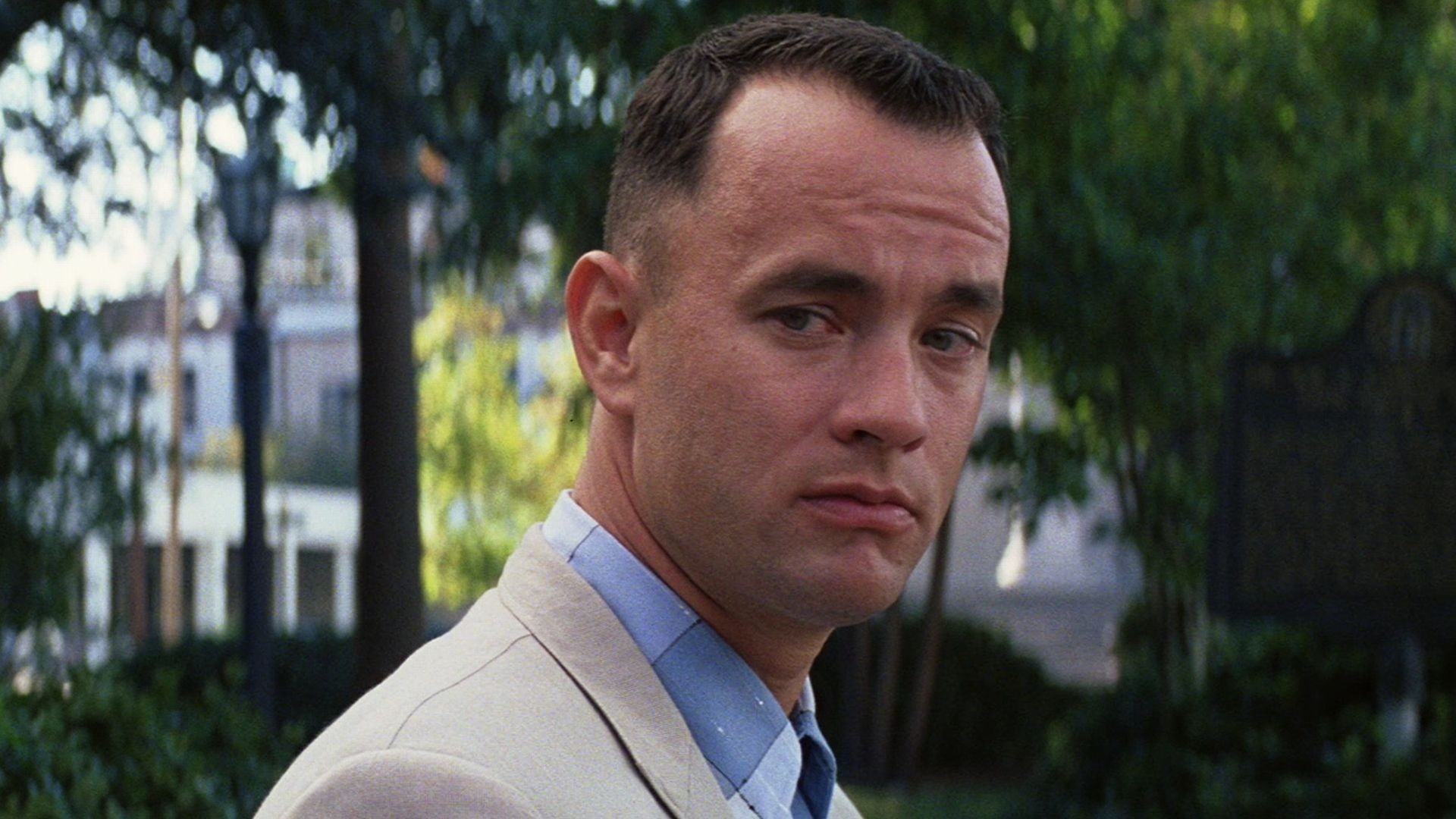
Forrest Gump” (March 6) — Not a dry eye in the house. Even 19 years later.

West Side Story” (March 13) — Fans who just saw the reinvented Broadway version at Overture Hall last week will want to catch the original film classic.

Lawrence of Arabia” (March 20) — This David Lean epic pretty much demands a big-screen viewing. Not sure if this is the new digital restoration that everyone has been raving about, but will find out.

American Beauty” (March 27) — Now that Kevin Spacey seems to have revived his career a little with “House of Cards,” head back to his Oscar-winning role as a suburban dad with issues.

Casablanca” (April 3) — The Bogart classic has been getting quite a workout on Madison screens lately — the Majestic Theatre just showed it on Valentine’s Day.

The Godfather” (April 10) — Often imitated, seldom equalled (except by “Godfather Part II”).

DVD review: “How to Survive a Plague”

how_to_survive_a_plague_1

It’s probably not surprising that David France’s Oscar-nominated film “How To Survive a Plague” didn’t win Sunday night. Oscar voters tend to gravitate towards straightforward and relatively safe subject matter when honoring documentaries, and they had a great example in “Searching for Sugar Man.”

But I hope the attention brought upon by the Oscar nomination will bring more people to see “Plague,” which is out on DVD today and streaming for free on Netflix Instant. Because while it is a devastatingly sad portrait of how the AIDS epidemic ravaged the gay community in America, it’s also just as hopeful and inspiring as “Sugar Man.”

That’s because France focuses on ACT UP (and a later offshoot, TAG), a dedicated group of activists who kept up the pressure on the government, health officials and the pharmaceutical industry to hunt for a cure. In the 1980s, the task seemed hopeless, as the activists met a wall of indifference masking outright homophobic hostility, and an undercurrent that said gay people brought the plague on themselves.

Watch an episode of “Crossfire” featuring Pat Buchanan trying to goad activist Peter Staley into basically warning young people against being gay. Staley turns the tables, asking Buchanan which was preferable, thousands of dead people or gay people having safe sex. Buchanan clumsily dodges the question. Today he’s considered a crank, but in 1987 he was disturbingly close to the mainstream.

But ACT UP kept up, with public demonstrations (sheathing Jesse Helms’ home in a 35-foot-tall condom was a nice bit of media catnip), and private cajoling. The activists became experts on politics, on the law, and most importantly on science, and with their knowledge and persistence eventually got themselves invited into the labs to help researchers identify the most promising strains.

When the breakthrough finally comes in 1996, it’s a triumphant moment, but also a sad one; how many more could have been saved if the government hadn’t turned a blind eye for years? You see the survivor’s guilt in the eyes of the activists during present-day interviews: “Like any war, you wonder why you were the one that got to come home,” Staley says.

Aside from those interviews, France relies on never-before-seen archival footage of rallies and Greenwich Village strategy meetings to tell the story of ACT UP. He gets into the nitty gritty of scientific research, and of the complex nature of grassroots organizing, as factions develop and the group runs the risk of turning on each other in moments of despair.

But this is a story, if not of unvarnished triumph, then at least of perseverance, and a model for other grassroots movements facing their own seemingly unbreachable walls.

My quick take on the Oscars: less Seth is more, more awards are more

Seth MacFarlane

When the 85th Academy Awards started off with a major upset — Christoph Waltz taking Best Supporting Actor from heavily-favored Robert De Niro and Tommy Lee Jones — I was ecstatic for two reasons. One is that I thought Waltz richly deserved it but never had a shot. The second was that I had picked Jones in my Oscar pool, so right away I could stop worrying about winning the pool and just enjoy the show.

My end result was 15-9 — not great, but I didn’t mind, because this was a rare year where I liked all nine of the Best Picture candidates (no “The Reader” or “Extremely Loud and Incredibly Close” in the bunch). The closest I came to dislike is “Les Miserables,” which I still gave three stars to and liked well enough.

So I was happy to see that eight of the nine Best Picture nominees went home with some kind of Oscar Sunday night (the outlier was “Beasts of the Southern Wild,” but that seemed almost too much to hope for). This was the most even-handed, widely-distributed Oscars I can remember — even my beloved “Skyfall” took home a couple, as well as a couple of shorts I was rooting for, the animated “Paperman” and the fantastic documentary short “Inocente.” All in all, a good night, and one that immediately made you want to go watch all those movies. Which I suppose is the underlying point.

Now, to Seth. Yes, the host that was hired to cross the line did indeed cross the line again and again. I thought the opening bit with William Shatner as a time-traveling James Kirk trying to stop MacFarlane was clever, in that it allowed MacFarlane to be inappropriate within a comic framework of admitting up front that it was inappropriate. Also, the “We Saw Your Boobs” song was kinda fun in a “Springtime for Hitler” sort of way. Sorry.

But that Kirk bit went on way too long, and just in general, there was way too much MacFarlane throughout the show. Not only were his jokes landing less and less as the show ground on, and seemed increasingly mean-spirited as he hit the same frat-guy “Chicks, amirite?” angle again and again, but the decision to have him do the coming-up bumpers before commercials meant we saw him a LOT. The good hosts know how to delegate a little, but MacFarlane was like that employee who stays late on nights and weekends, eager to please. He’s best in small doses, and we got a big dose last night.

I will say this — he owes the Onion huge today. Because but for them, everybody would be talking about how awful his Quvenzhane Wallis joke was and not theirs. You just don’t do that to a nine-year-old girl.

On the bright side, I think the sexism charges against MacFarlane may make the pendulum swing wide for next year and make it more likely that the Academy will hire Tina Fey and Amy Poehler.

What’s playing in Madison theaters, Feb. 22 to 28, 2013

My_Neighbor_Totoro_full_34268

With the weather still keeping everyone indoors, it’s another good weekend to take advantage of Madison’s busy movie scene. Here’s what’s playing around town:

“Snitch” (Point, Eastgate, Star Cinema) — Dwayne “The Rock” Johnson seems to be in about 15 movies this year, judging by the Super Bowl ads. But reviews say this might be the best, a surprisingly gritty and thoughtful action picture about a dad who tries to save his teenage son from a hefty prison sentence for drug possession by going undercover for the feds.

Dark Skies”  (Point,, Eastgate, Star Cinema) — Another suburban home, another family under siege by some malevolent force (I’m guessing aliens?) and another movie that apparently wasn’t screened for critics in advance.

A Glimpse Inside the Mind of Charles Swan III” (Sundance) — Bill Murray. Jason Schwartzman. Writer-director Roman Coppola (“CQ” and co-writer of several of Wes Anderson’s movies. What could possibly go wrong? Oh, pretty much everything.

My Neighbor Totoro” (2 p.m. Sunday, Chazen Museum of Art, 800 University Ave.) — The UW-Cinematheque’s free Sunday afternoon series of films from the master Japanese animators at Studio Ghibli has been a howling success, with audiences lining up over an hour early. Get there extra early for this charmer from Hayao Miyazaki — I’ll bet the theater will be full by 1:15 p.m.

The Loneliest Planet” (7 p.m. Friday, UW Cinematheque, 4070 Vilas Hall) The Cinematheque is also hosting the Madison premiere of this lush and unnerving film about a young couple backpacking through the Caucasus mountains, and how one brief incident completely upends their relationship. Here’s my review, and the free screening will be preceded by some trailers for movies coming to the 2013 Wisconsin Film Festival.

The Lady Eve” (7 p.m. Saturday, UW Cinematheque) — The series of Preston Sturges’ classics as a writer-director concludes with this hilarious but surprisingly elegant 1941 film with Barbara Stanwyck and Henry Fonda as a con artist and her patsy on a luxury ocean liner. Free!

Argo” (7 p.m. and 9:30 Friday and Saturday, 3 p.m. Sunday, Union South Marquee Theater, 1208 W. Dayton) Catch the frontrunner for Sunday’s Oscars for free at Union South. I’m still rooting for “Silver Linings Playbook” to pull an upset, but “Argo” is terrific filmmaking that shifts from drama to comedy to white-knuckle suspense. Here’s my review from October. Free!

The Raid: Redemption” (midnight Friday and Saturday, Union South Marquee) — If you like action, stay up late for this nonstop shoot- and punch-em-up from Indonesia, about a team of police officers trapped in a high-rise apartment building full of bad guys. Here’s my review from last April. Free!

Miami Connection” (7 p.m. Monday, Union South Marquee) — Once a month, UW-Cinematheque programs a “Marquee Monday” film that’s not highfalutin’ enough for the regular series. That’s certainly the case with “Miami Connection,” a joyfully inept ’80s action film featuring tae kwon do master Y.K. Kim that delivers inept action, synth rock, and, in the words of C’tek, “the single greatest scene of somebody checking their mailbox in the history of cinema.” Free!

Funny Face” (7 p.m. Tuesday, Union South Marquee) — After a pair of documentaries on Diana Vreeland and Bill Cunningham, this series of fashion-related films co-sponsored by the Textile and Apparel Student Association features the darling 1957 film by Stanley Donen, starring Audrey Hepburn as a shopgirl-turned-supermodel. Free!

Stand Up and Cheer” (7 p.m. Thursday, Chazen Museum) — In conjunction with the Chazen’s new exhibit “1934: A New Deal For Artists,” Cinematheque is presenting a new Thursday night series of films from (or set) in that year. First up is this Depression Era charmer about a government “Secretary of Amusement” trying to cheer up the country with the help of entertainers (including Shirley Temple.) Free!

Skyfall” (9:30 p.m. Thursday, Union South Marquee) Catch James Bond’s latest outing (and one of his best), as Daniel Craig’s 007 roots out a threat to M (Judi Dench) in a former MI6 agent (a wonderful Javier Bardem). It’s the perfect blend of classic 007 elements with a deeper psychological and emotional undercurrent than we’ve ever seen before. Free, and it’ll play all next weekend at the Marquee too.

“A Glimpse Inside the Mind of Charles Swan III”: Believe me, a glimpse is plenty

Charlie-swan

“A Glimpse Inside the Mind of Charles Swan III” opens Friday at Sundance Cinemas. R, 1:24.

We don’t get enough fiascoes. Sure there are plenty of bad movies out there, but most aim low and miss the bar. It takes something special, some innate drive, to produce something really misbegotten, to conceive the ill-conceived. When Nathan Rabin of the A.V. Club writes a “Year of Flops” entry and dubs it a fiasco, you can almost sense his half-smile of admiration. Good for you, he seems to say, for being brave enough to fail so spectacularly.

Good for you, “A Glimpse Inside the Mind of Charles Swan III.” You are a unqualified fiasco.

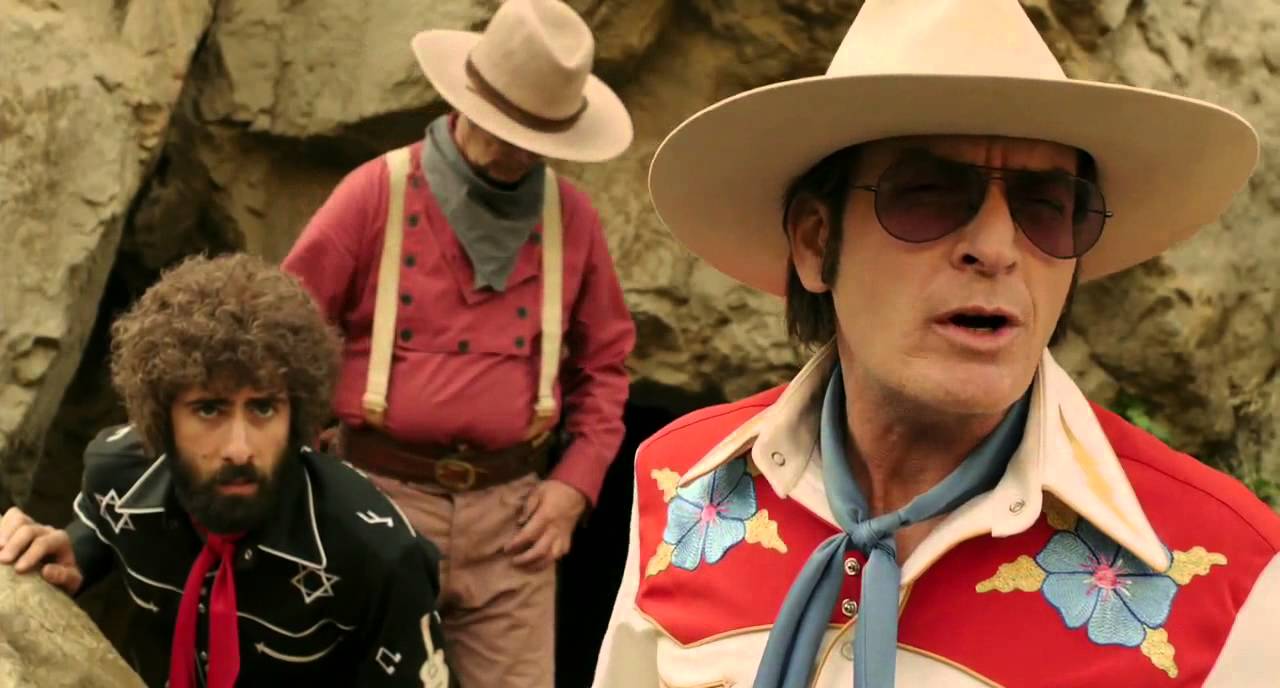
Charles Swan III is a misogynist who thinks he’s an incurable romantic hero, a middle-aged graphic designer in ’70s Los Angeles who loves neither wisely nor well, but often. His latest girlfriend (Katheryn Winnick) kicks him to the curb for cheating on her, and he wanders the movie in a funk. Writer-director Roman Coppola indeed does give us occasional glimpses into the mind of Charles Swan, and it looks like a water-damaged pile of old Playboys. Scantily-clad women run around everywhere, but what’s remarkable (and ugly) is the level of persecution that Swan feels. In one, bikini-clad women in costume-store Indian outfits go on the warpath against him; in another, a command center of busty women call down airstrikes on men who dare to flirt with other women.

The kicker is that Charles Swan is played by Charlie Sheen, himself a misogynist who thinks he’s some kind of hero — or at least he did, publicly, before his management team muzzled him. Writer-director Roman Coppola (who has co-written some of Wes Anderson’s infinitely better films) seems to think his movie can coast on Sheen’s charms. Except he doesn’t have any. He’s gotten kind of creepy in middle age, and can’t sell any of the wounded-puppy notes that the film requires of him. There’s a scene late in the film when we see a marionette version of Charlie Sheen, dancing around a party and using its little wooden arms to peek up women’s skirts. It’s actually a little less creepy than the real thing.

To see how it might have worked, watch Bill Murray in a small, thankless role as Swan’s agent. He’s also a lothario, but Murray brings such a sad-sack weariness to lines like “Desire is as close as I’ll ever come to happiness” that you kind of feel for the guy. We never feel anything for Swan except a mild revulsion, like that feeling the night before you get the flu.

Coppola dresses up his film with all kinds of ’70s Pop Art kitsch — Swan drives a Cadillac that has eggs and bacon airbrushed on the doors, and his office has a couch that looks like a giant Chicago hot dog with the works. Jason Schwartzman’s biggest contribution to the movie is his Marjoe Gortner perm, Patricia Arquette (as Swan’s sister) dresses in every scene like she’s on her way to the Golden Globes on Gil Gerard’s arm. You get the feeling that production design is really where Coppola’s heart is at, rather than character or story. He can imitate the look of a Hal Ashby movie like “Harold & Maude,” but can’t get below the sun-baked surface to anything interesting.

Swan spends the film alienating everyone around him, and then, magically he goes to the office Christmas party and everyone loves him again, without explanation. Then the movie just kind of ends after a mercifully brisk 84 minutes, and the actors start introducing themselves to the camera, which pulls back to reveal the entire cast and crew. This seems like one desperate, last-ditch attempt at audience empathy (“See, real people made this movie! Nice people! Please don’t be mad at us!”) And, like the rest of the movie, it doesn’t work.