“Stories We Tell”: Sarah Polley turns the camera on her own family

stories-we-tell-sarah-polley-super-8-cam

“Stories We Tell” opens Friday at Sundance Cinemas, and is also available to rent or buy on ITunes and other VOD services. PG-13, 1:49, four stars out of four. I’ll be doing a post-show chat at Sundance Cinemas after the 6:55 p.m. Tuesday show in the theater’s Overflow Bar.

From the beginning, Sarah Polley opens the hood of her documentary “Stories We Tell” and shows the machinery whirring inside. The film begins with her and her father entering a recording studio, and a montage of Polley and her crew setting up cameras and lighting for the film’s interview subjects.

It’s an introduction that’s tantamount to a magician’s “nothing-up-my-sleeve” insistence, because Polley has something far more interesting and unusual in mind that the typical nuts-and-bolts documentary. “Stories We Tell” is a powerful and very personal story from Polley, but she’s also constantly mindful that it’s a “story,” a mixture of facts and opinions shaped into a narrative, and as such isn’t entirely to be trusted.

And this is, in a very literal sense, Polley’s story. The film digs deep into the lives of her parents, Mick and Diane Polley, who met on the Toronto theatrical scene. Mick cut a dashing figure onstage, while Diane was beautiful and vivacious, the sort of woman who “make the record skip” when she walked into a room in more ways than one.

Diane was so dazzled by Mick’s onstage persona that she missed what an ordinary guy he really was. As Mick settled into kind of a middle-aged fog, Diane grew frustrated at middle-class Canadian life, and took an acting job in Montreal in 1978, leaving home for a couple of months. What happens next, the viewer should discover from the film, as Polley digs through layers after layers of reminiscences and rumors, interviewing her four siblings and friends of the family.

As the audience uncovers the revelations of the story — and there are some doozies, expertly revealed by Polley as she shifts from perspective from perspective — we’re also becoming aware of how each account differs. Some people have the facts a little off, others just view the same facts differently than others. One man, who seems to be just a supporting character in the drama, insists that his account and only  his is the truth, and all the others are just noise.

The closest the film has to an authority is Mick, who reads from his writing about the family history in plummy, theatrical tones throughout the film. But even he doesn’t have the full picture of his own family.
storiewetell

The perspective that is largely missing, ironically, is Polley’s — although we see B-roll footage of her about to be interviewed, it never appears in the film. Instead, she seems to be getting at the truth of her life the way a submarine uses sonar, pinging off the other people in her life until she finds a spot that overlaps. This could be potentially an unbearable exercise in post-modern cleverness, but instead Polley makes it a fascinating process, and Polley (an actress turned acclaimed director of the dramas “Away From Her” and “Take This Waltz”) blends the different voices expertly until a bigger picture emerges.

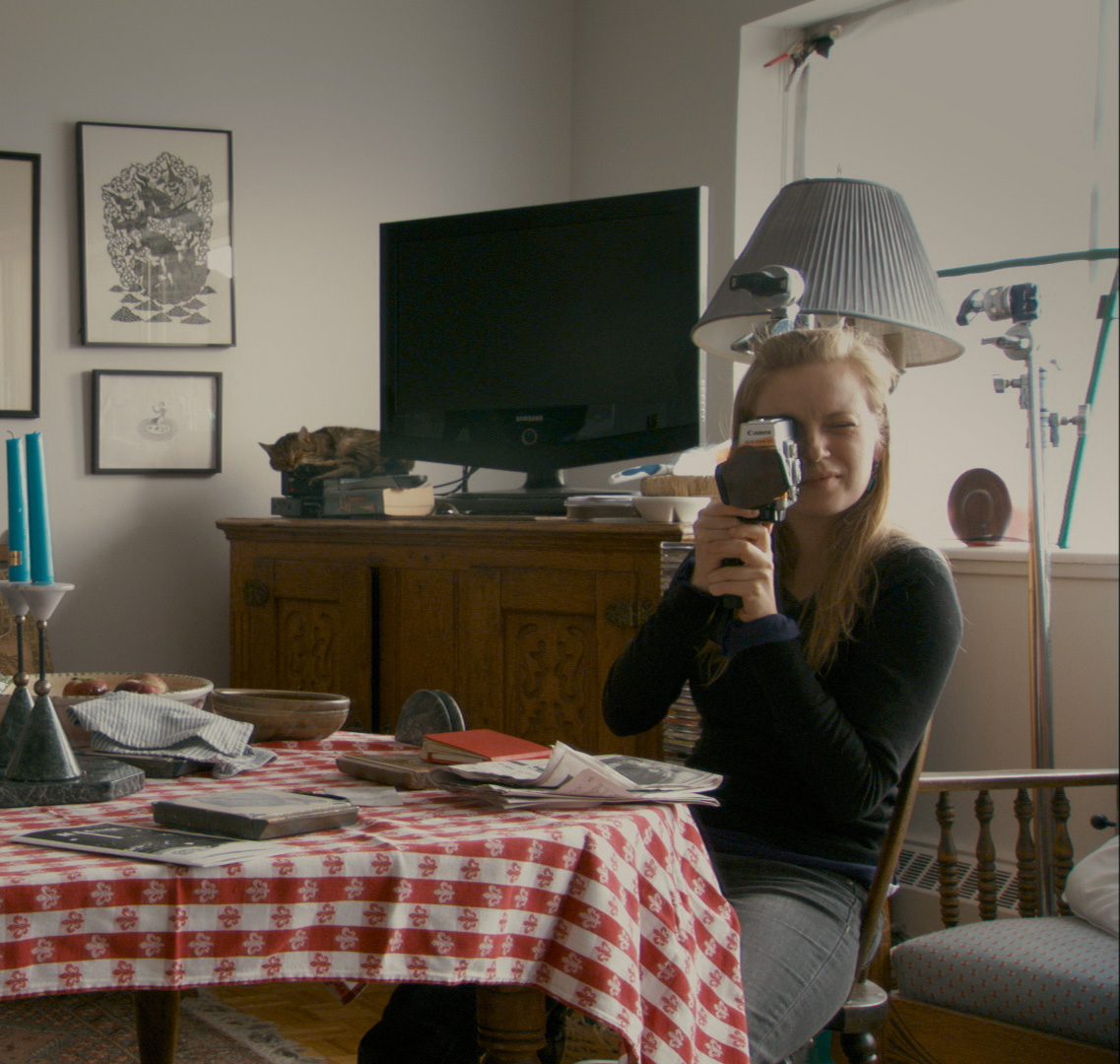
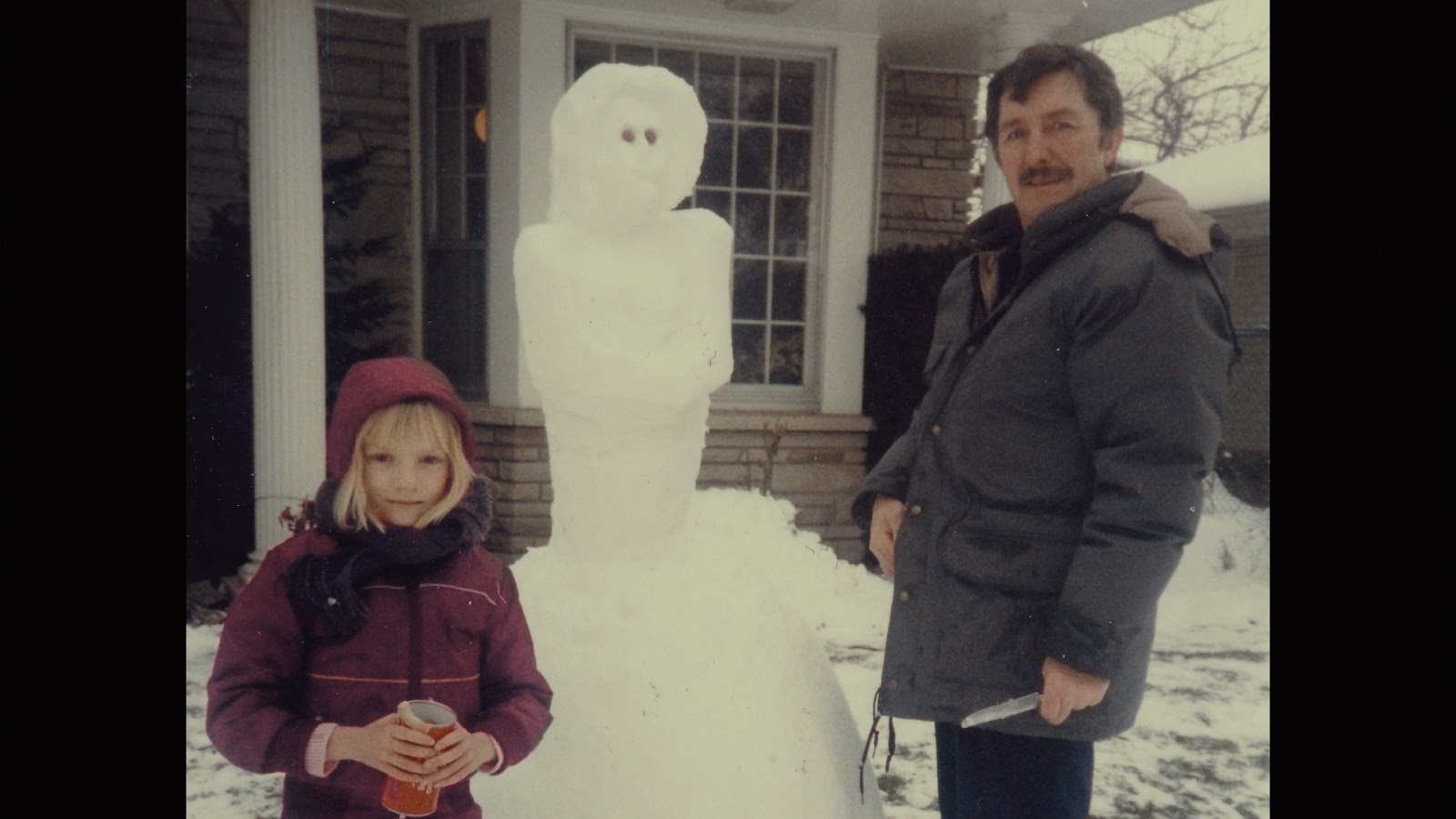
The film also weaves in Super 8 home movie footage of Diane and the family, although it turns out that the way Polley is telling the story contains as many secrets as the story itself. Put it this way; critics who like their documentaries the way Joe Friday likes his witnesses — “Just the facts, ma’am” — are going to have a big problem with this movie.

For me, it’s a brilliant film that manages to be both one family’s shared history and all families’ shared histories. Would “Stories We Tell” have been as compelling if Polley didn’t add all the post-modern devices to it? On the level of pure storytelling, probably. But the way she tells the story takes it beyond “What happened?” and forces us to examine the too-tidy narratives of the stories we tell ourselves.
Blu-ray review: “Mystery Science Theater 3000: The Movie”

drforrester

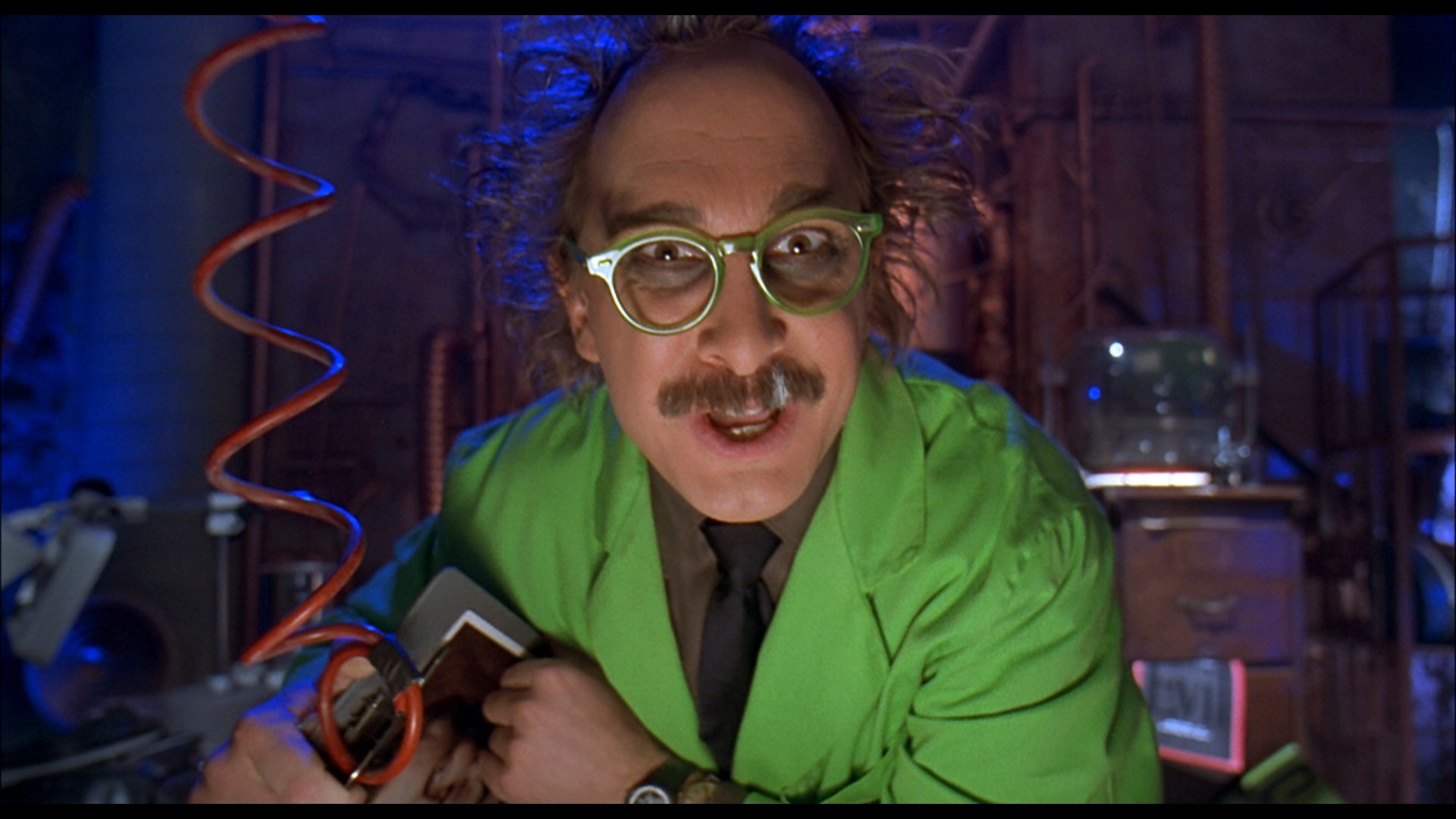
It could be the plot to some cheesy sci-fi movie that Mike and the ‘bots would make fun of on “Mystery Science Theater 3000” — two identical alternate universe, one where everything is happy and cheery, the other where we see those exact same events through a much darker and more sinister lens.

Those two universes, as it happens, are the two “making-of” featurettes that appear on the Shout! Factory DVD/Blu-ray release of “Mystery Science Theater 3000: The Movie,” which just came out this week after a long, long wait from fans. Taken together, the extras provide an instructive lesson in dabbling with potent forces of evil — in this case, a major motion picture studio.

The movie came out in 1996, somewhat bridging the gap between the cult TV show’s Comedy Central and Sci-Fi Channel years. Universal Pictures thought they could turn the TV show into a cheap but profitable franchise for themselves, while the creators of the show thought that successful live “riffs” of the show before audiences proved that it could work in a group theater setting.

The first featurette, released at the time of the film’s release, shows a Satellite of Love crew happily working on the film. The second, made for this Blu-ray release, delves into the constant struggle that the MSTies had with Universal executives to make the film. Having signed onto the film, Universal insisted on having input into seemingly every decision, including approving or vetoing individual jokes (a Bootsy Collins reference was changed, bizarrely, to a Leona Helmsley reference) and test-screening rough drafts of the film to death. (It’s grimly ironic that the movie trailer touts that the MST3K crew “can make jokes without a censor” in the film, since the meddling from Universal was much more pervasive than anything the show had gotten from Comedy Central or Sci-Fi.)

Michael J. Nelson, Trace Beaulieu and Kevin Murphy, along with showrunner (and UW-Madison grad)  Jim Mallon, complain openly about the arduous process, and it’s clear that they regard the finished product as a compromised thing. “The joy of doing this was strained terribly through this odd, arbitrary process.” Mallon said.

That said, the movie itself comes off, as Murphy puts it, as a “better-than-average” episode of the TV show, with significantly better production values given to the host segments, which were shot on a much bigger studio space. The movie that the guys riff on, “This Island Earth,” is actually a pretty good scifi movie, and overall the image pops on Blu-ray in a way most episodes of the TV show just wouldn’t. The release also includes deleted scenes (axed by the studio, naturally) and you get a taste of the cover version of the MST3K theme song done for the movie by Dave Alvin.

In the end, I’ll bet the experience of making the movie was so painful for Mike and the gang that I doubt they’ll ever pop in a copy of the Blu-ray release. But for fans, its an essential part of the collection, and a surprisingly revealing look at the hazards of letting outsiders into your strange little world in the hopes of achieving mainstream success. Better to stay on your own Satellite of Love, unreachable by the mad scientists down below, doing it on your own terms.

Instant Gratification: “Filly Brown” and four other good movies to watch on Netflix Instant

filly-brown10

Pick of the week: “FIlly Brown” — It’s the eternal showbiz cautionary tale, as a female Latino rapper must choose between her art and selling out to be successful. But the music is great, the perspective of a female in hip-hop is fresh, and Gina Rodriguez shines in the title role.

Drama of the week: “There Will Be Blood”My full review is here. Paul Thomas Anderson’s epic deconstruction of the American myth — the self-made man — is like “Citizen Kane” drenched in blood and oil and left to bake in the California sun. Daniel Day Lewis is mesmerizing as the self-made man who chases financial success and moral ruin.

Documentary of the week: “A Place at the Table”My full review is here. This thoughtful documentary looks at the state of hunger in America, where 51 people don’t get enough to eat, from the inner city to bucolic small towns and everywhere in between. It could be the start, finally, of an honest conversation of what poverty really looks like.

Comedy of the week: “Zoolander” — Incredibly, Ben Stiller hasn’t directed a film since this 2001 comedy, and his upcoming “Walter Mitty” doesn’t look nearly as funny as this bizarre and riotous send-up of the fashion world. Blue Steel lives.

Sci-fi of the week: “WarGames” — Young hacker Matthew Broderick accidentally tricks a supercomputer into thinking World War III is coming, and must undo the damage in this fun and thoughtful 1983 film.

Charles Bradley film in Madison? Let’s make it happen

charlesbradley

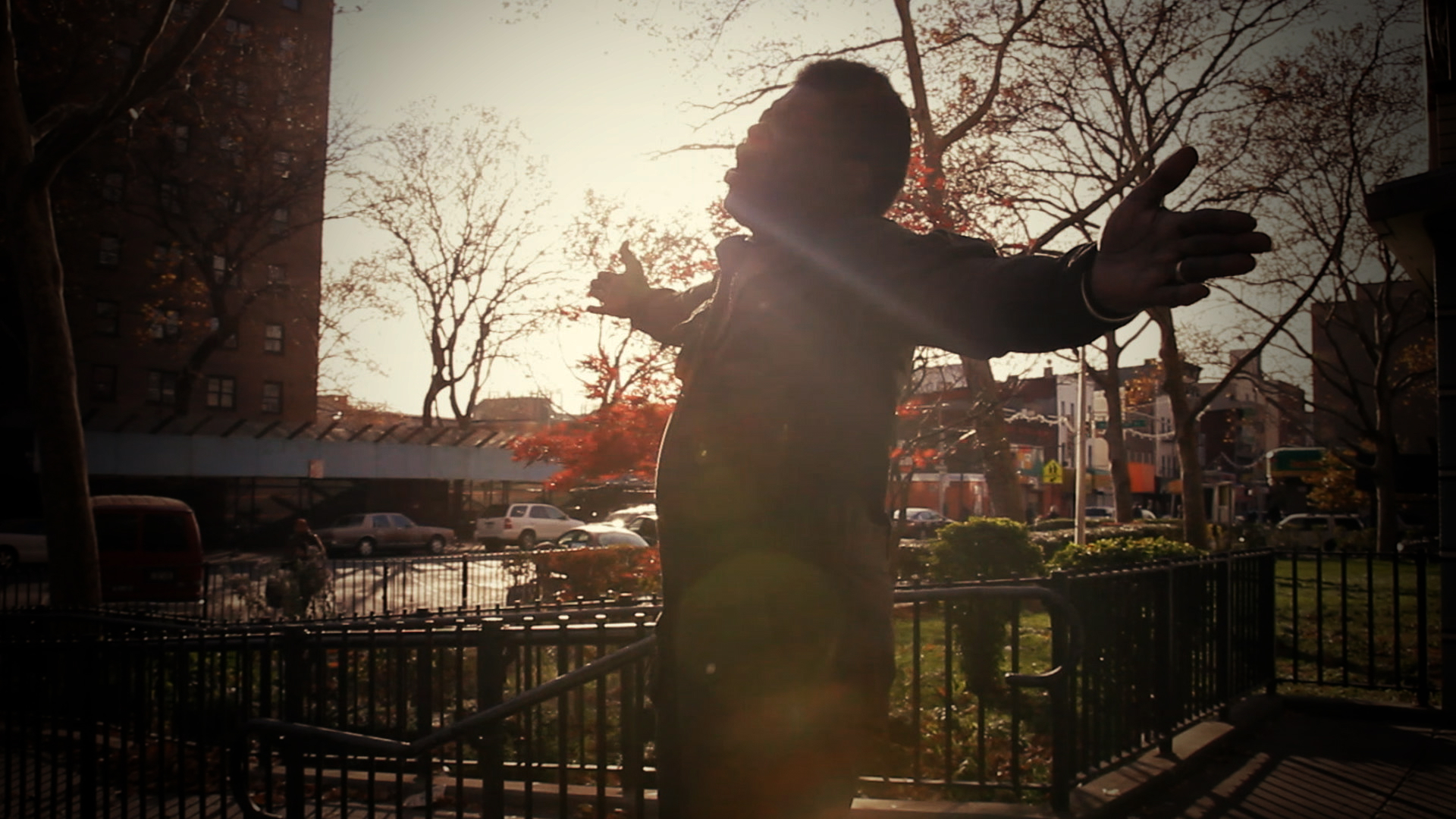
One of the most electrifying of today’s soul performers is Charles Bradley, who I saw open for Sharon Jones & The Dap Kings at the Barrymore Theatre a few years ago. Originally a James Brown impersonator, the 64-year-old Bradley has gone beyond impersonation and become an authentic and exciting soul singer.

And, as Andy Downing’s great interview for 77 Square last February showed, that road to the spotlight has been long and hard for Bradley, and he has a lot of heartache to draw from when he performs. All of which is to say that Bradley would make a great subject for a movie, and he did — the documentary “Charles Bradley: Soul of America.”

Some Madison folks are using Tugg (like Kickstarter for movies) to set up a screening of “Soul of America” on Wednesday, Sept. 18 at Star Cinema, and they need your help. The way Tugg works is that a certain number of people have to pledge to see the film. If enough pledge, then it happens. Right now, with nine days to go until the deadline, the organizers need another 47 people to reserve tickets via the website.

To sweeten the deal, True Endeavors will be raffling off four tickets to Bradley’s December 4 show at the High Noon Saloon, and Strictly Discs will also be giving away a prize package to a lucky audience member. Even without that’, it’s a worthy chance to support a great artist and a local grassroots effort to bring something different to the big screen.


What’s playing in Madison movie theaters, Aug. 31-Sept. 5, 2013

THE GRANDMASTER

All week

The Getaway” (Point, Eastgate, Star Cinema) — My full review is here. Late August seems to be a favored spot for lean, no-frills action movies (see last summer’s “Premium Rush”). But this year’s entry is a junky car-chase movie with a slumming Ethan Hawke and an in-way-over-her-head Selena Gomez.

The Grandmaster” (Star Cinema) — Far more promising an action movie is Wong Kar-Wai (“In the Mood For Love”) moving into martial arts action, with this tale of the martial arts legend who trained Bruce Lee.

One Direction: This is Us” (Point, Eastgate, Star Cinema) — Morgan Spurlock of all people made this concert documentary about the immensely popular teen band. “Don’t Look Back” it ain’t, but it should finance the next five “Greatest Movie Ever Solds.”

Ain’t Them Bodies Saints” (Sundance) — My full review is here, and my interview with writer-director David Lowery is here. This elegaic crime film starts up after a “Bonnie :& Clyde”-style outlaw couple have been captured, as the husband (Ben Affleck) escapes from prison and tries to rejoin is wife (Rooney Mara). Great performances and a beautiful, sepia-toned cinematography of a fading West.

In A World. . .” (Sundance) — My full review is here. Actress-writer-director Lake Bell delivers a hilarious comedy as well as a pointed feminist message, as a female voiceover artist tries to make it in an industry full of men (and male chauvinists). Very funny stuff.

Star Trek Into Darkness”/”World War Z” (Star Cinema) — If you didn’t catch either of these blockbusters this summer, or want to see them again, they’re being offered as a two-for-one double feature this week only. If only they’d show some cartoons and a newsreel and charge a quarter. (Here’s my original reviews of “Star Trek” and “World War Z.”)

Saturday

Bob Le Flambeur” (7 p.m., UW Cinematheque, 4070 Vilas Hall) — Cinematheque’s fall tribute to master French filmmaker Jean-Pierre Melville begins with this stylish 1956 caper film, as an aging thief assembles a team to rob a casino. (This film was remade as “The Good Thief” with Nick Nolte in 2002, which is also good.) FREE!

Girl Walk // All Day” (9:30 p.m., Memorial Union Terrace) — Read my preview here. Bring your dancing shoes as the insanely fun dance film, in which dancer Anne Marsen (seen on “The Good Wife”) takes to the streets of New York City for an epic performance choreographed to Girl Talk’s “All Day” album. FREE!

Anne-Marsen-Girl-Walk-still

Monday

Space Jam” (9:30 p.m., Memorial Union Terrace) — Let’s face it. Deep down, every Lakeside Cinema theme is just an excuse to show “Space Jam.” They did it last year and they’re doing it again this year to close out the season. FREE!

Wednesday

The French Connection” (1:20 p.m. and 7:10 p.m., Sundance Cinemas) — William Friedkin’s action classic has a fantastic car chase, a cat-and-mouse game on the subway, and an iconic Gene Hackman as hard-nosed, line-crossing detective Popeye Doyle, out to nab a French heroin smuggling ring.

The Fab Five” (7 p.m., Union South Marquee) — The highest-rated ESPN documentary of all time is this tale of the ups and downs of the legendary 1990s Michigan Wolverines team. FREE!

Thursday

The Place Beyond The Pines” (6 p.m. and 9:15 p.m., Union South Marquee) — The lives of a small-time thief (Ryan Gosling), a rookie cop (Bradley Cooper) and their sons intertwine in Derek Cianfrance’s ambitious drama. FREE!

“Ain’t Them Bodies Saints”: Do not forsake me oh my darling

ain-t-them-bodies-saints01

“Ain’t Them Bodies Saints” opens Friday at Sundance Cinemas. R, 1:45, three and a half stars out of four.

“Ain’t Them Bodies Saints” has bank robberies, but we don’t see them. It has a prison break, but we don’t see it. When a major characters gets shot, we . . . but you know where this is going.

David Lowery’s confident second feature plays the notes behind the notes of “Bonnie & Clyde,” “Badlands” and other period dramas about couples on the lam. While he wears his ’70s filmmaking influences on his sleeves, “Saints” is no pastiche, but an eloquent mood piece that leaves room for improvisation from the actors and introspection from the audience. Read my interview with Lowery here.

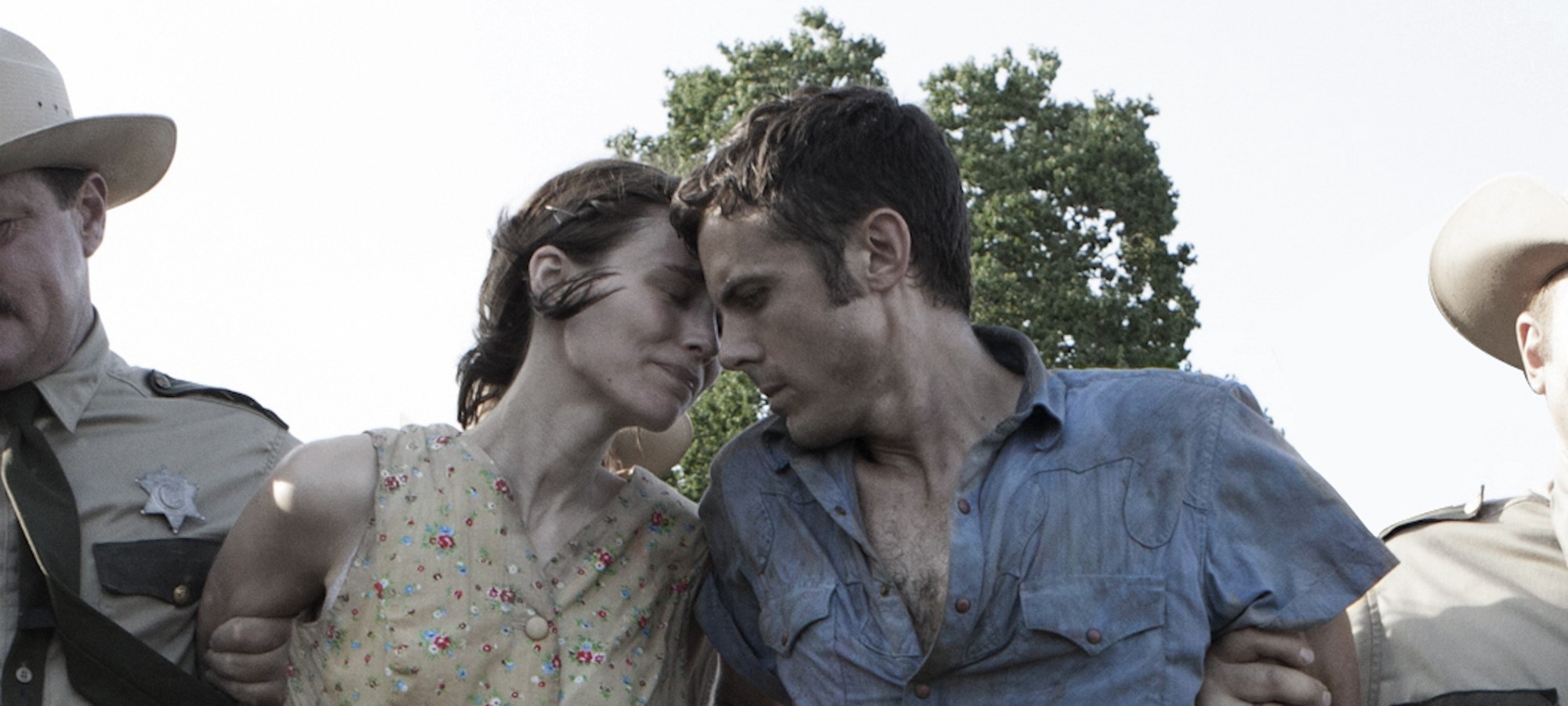
The first chapter of “Ain’t Them Bodies Saints” would be the last chapter of most movies of its ilk. Somewhere in Texas, around 1970, outlaw couple Bob Muldoon (Casey Affleck) and Ruth Guthrie (Rooney Mara) are cornered by the police. Bullets are exchanged, the pair is captured, but none of the plot developments matter quite as much as one archetypal moment, when as Bob and Ruth are led away by sheriff’s deputies, they lean into each other hard, desperately hard, knowing it may be the last time they’ll ever touch.

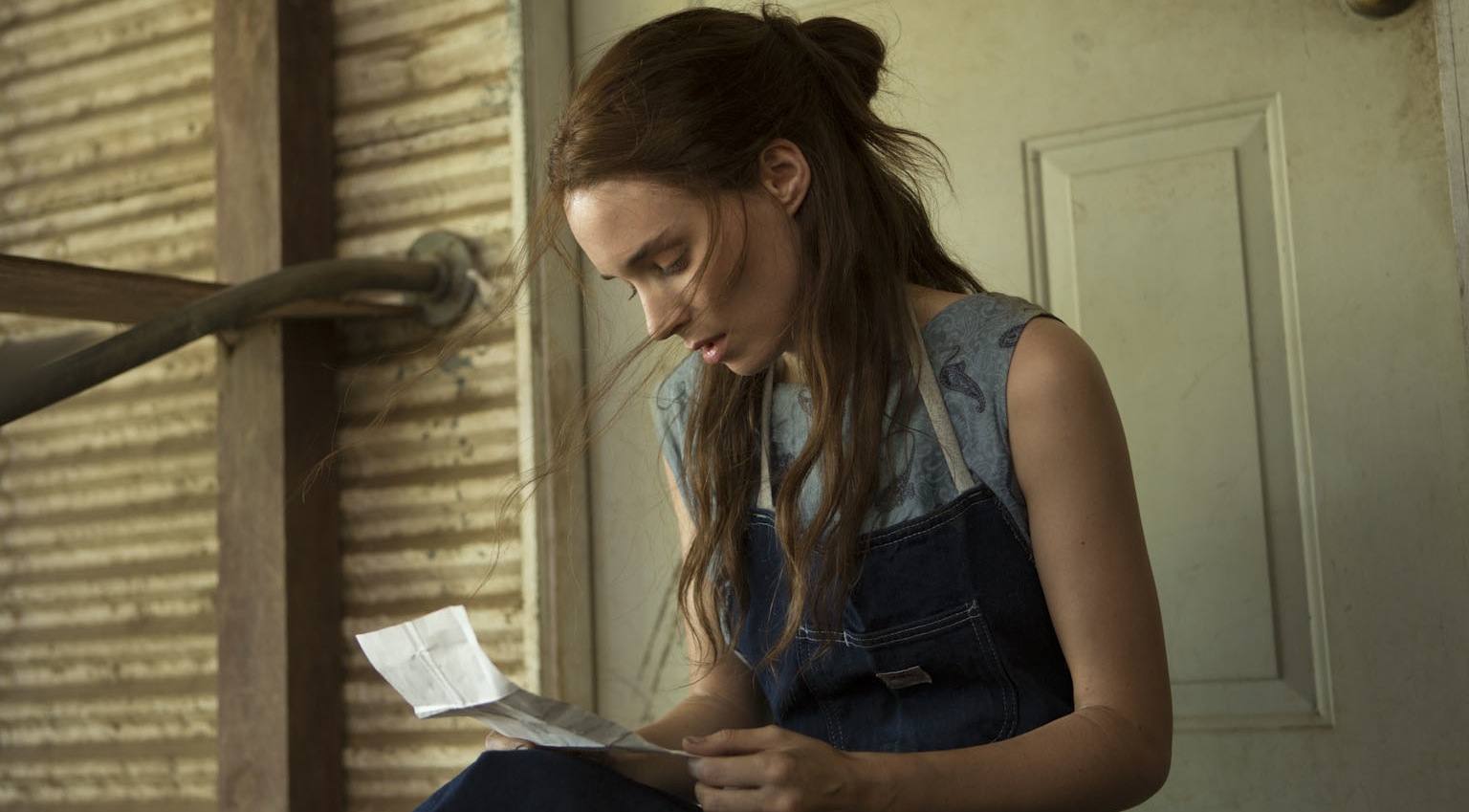
Move ahead four years, and Bob is still in jail, writing letters to Ruth. Ruth is free to take care of her four-year-old daughter, under the close watch of paternal shopkeeper Skerritt (Keith Carradine), who may be tougher than everyone else in Texas put together. Watch that scene where three mangy convicts come into Skerritt’s shop, and notice how its three armed cons who seem skittish.

Unable to be apart from Ruth any more, Bob finally breaks out of prison, and takes the long odyssey back home to reclaim Ruth. But he may not find the Ruth he left behind — being a mother seems to have changed her, made her more careful and responsible, and she’s reluctantly accepting the friendship of a kindly sheriff (Ben Foster). Whether the fact that she shot this sheriff in that standoff four years ago may or may not come up.

Aint-Them-Bodies-Saints-Rooney-Mara

Foster, who often plays loose cannons on screen, is effective as a good-hearted but not simple man, while Affleck infuses Bob with unwavering, perhaps unwise devotion. (Although the parts are superficially similar, he’s a long ways away from the polite sociopath of “The Killer Inside Me.”) But the film really turns on Mara, who completely immerses herself into the flinty, wary Ruth. You’re always wondering what she’s thinking, what’s she going to do.

Lowery gives these actors lots of room to move — he’s a disciple of Robert Altman in his believe that movies are made in the moments you didn’t expect to find. But he’s also got some Terrence Malick on him, and “Saints” is a gorgeous, sepia-toned feast for the eyes, a faded photograph to a vanishing West and an approach to filmmaking that fell out of fashion decades ago. But “Ain’t These Bodies Saints” brings it back to life again, and makes it glorious.

“Getaway”: A gullible audience gets “Taken” for a ride

GETAWAY-Image-04

“Getaway” opens Friday at Point, Eastgate and Star Cinema. PG-13, 1:33, one star out of four.

The good news about “Getaway” is that it always uses real cars and drivers. Unlike the CGI’d up action of other summer action movies, you can tell that those are real vehicles motoring at high speeds and bashing into each other.

The bad news is that it does not always use real actors or writers. The utterly ridiculous storyline (even by car-chase movie standards) attempts to leap over Snake Canyon-sized gaps of implausibility, and has a hilariously miscast Selena Gomez in a key supporting role as foul-mouthed hoodrat hacker.

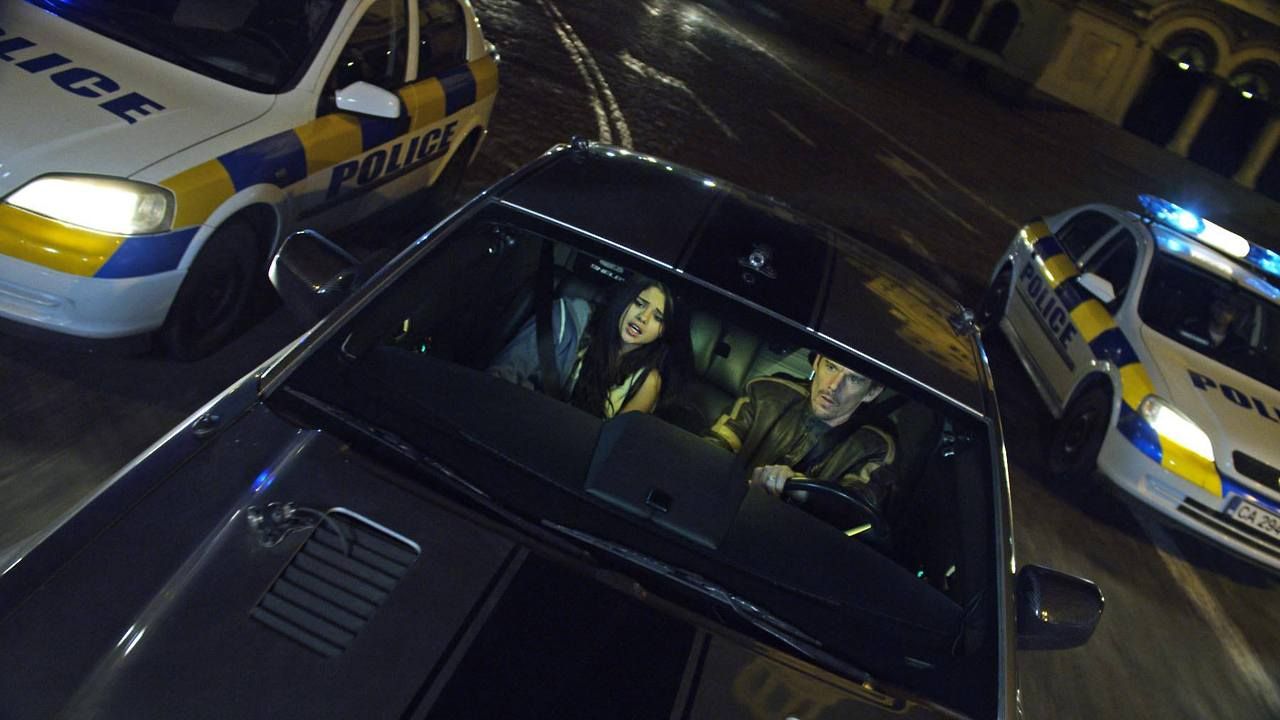
Ethan Hawke, who has mouths to feed at home, plays Brent Magna, a failed race car driver living a quiet life in Bulgaria with his wife. But then she’s kidnapped by a mysterious villain (Jon Voight’s lips) who directs him to a souped-up, armored Shelby with cameras mounted on the inside and out. Over the course of one night, Brent has to drive that car and do everything that Jon Voight’s lips tell him to do, or Jon Voight’s lips will kill his wife.

Most of this involves seemingly random mayhem, where Brent smashes through parks, sending innocent people fleeing for cover, or smashing into Sofia’s endless supply of police cars, who pop up reliably every five to 10 minutes, like in a “Grand Theft Auto” game. Brent picks up streetwise hacker AND megabanker’s daughter Gomez, who is so burdened by the weight of this overwrought backstory that she can only muster out yelling “I hate you!” and “Let me out of here!” throughout the film. (Between her and Jon Voight’s lips’ constant directions to “Speed up” or “Turn left,” “Getaway” could be renamed “Backseat Driver: The Movie.”)

Of course, Jon Voight’s lips has a more nefarious scheme in the works, but nobody comes to a movie like “Getaway” for the plot. The film is the non-stop car chase delivery system as advertised, and while the chases are freneticallly, desperately edited to within an inch of their lives, that’s not the real problem. The real problem is director Courtney Solomon’s mystifying decision to use so much dashboard cams and other cruddy digital video, so that he’s cutting from one muddy, washed-out image to the next. Maybe he’s intending to capture the immediacy of a YouTube video, but it looks awful.

Except for one scene that shows what might have been, a beautiful, rolling first-person shot that last several minutes of cars weaving and dodging through suburban streets at dawn. I’d like to think it’s an homage to Claude LeLouch’s short film  “Rendez-Vous,’ which is poetry in fast motion. The rest of “Getaway” is clunky technical writing in motion.

“Prince Avalanche”: Two likable eccentrics drift across the center line

PrinceAvalanche2_0

“Prince Avalanche” screens for free at 7 p.m. Friday, Aug. 30 only at the UW-Cinematheque screening room, 4070 Vilas Hall, 821 University Ave. R, 1:33, three stars out of four.

After “Your Highness,” any movie director David Gordon Green made that didn’t feature Danny McBride with a minotaur’s penis around his neck would have been considered a step up. After a trio of bracing indie films (including his debut, “George Washington,” which Green brought to the 2001 Wisconsin Film Festival), Green fell in with the Rogenverse and made stoner comedies like “Pineapple Express” and the huge misfires “Your Highness” and “The Sitter.”

“Prince Avalanche” is unquestionably a return to form for Green, fusing the contemplative beauty of his earlier features with the character-driven comedy of his commercial films. Adapted from the Icelandic comedy “Either Way” (which screened at this year’s Wisconsin Film Festival), “Avalanche” will have Green’s earlier fans heaving a sigh of relief.

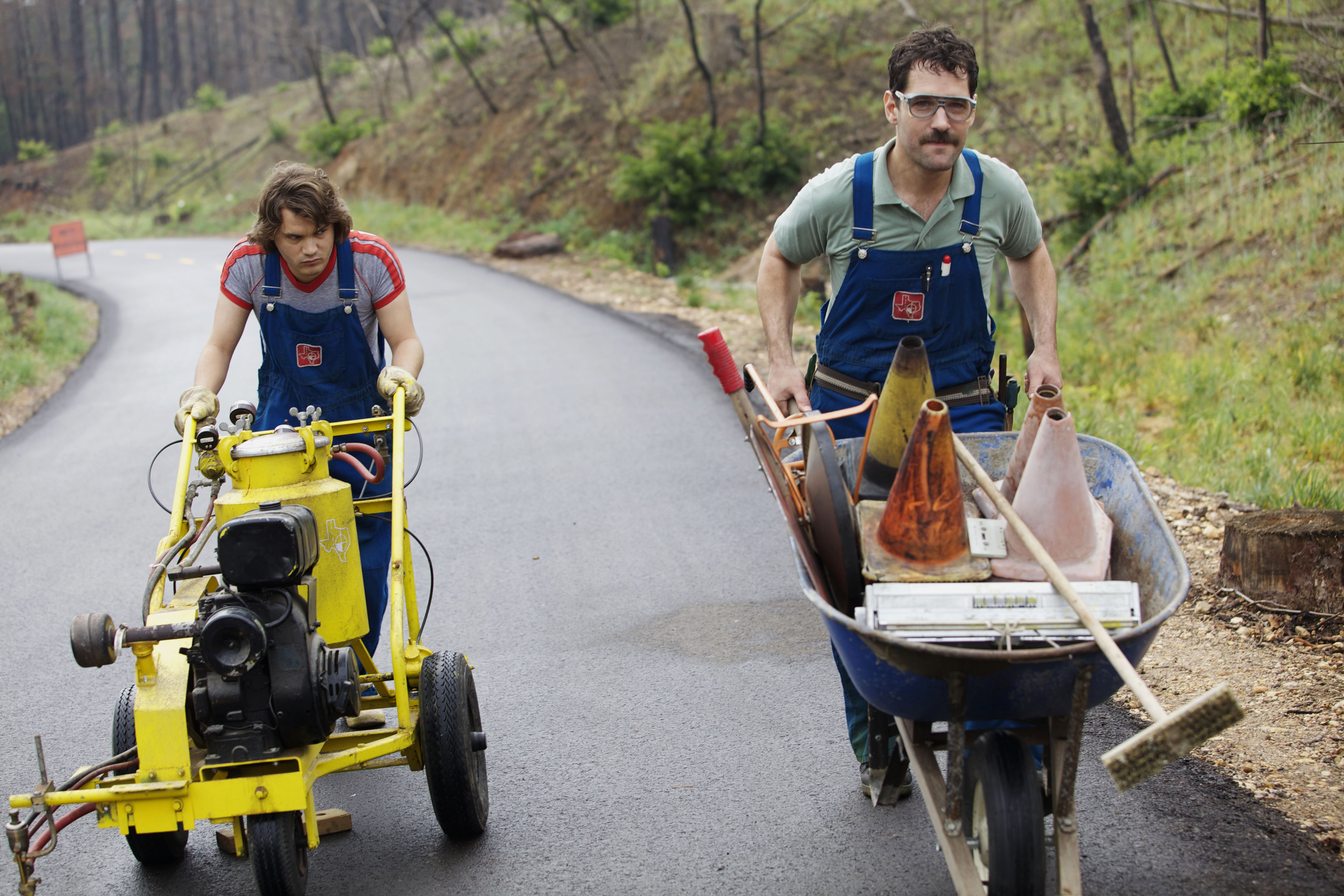
Alvin (Paul Rudd) and Lance (Emile Hirsch) are two men given the Sisyphean task of painting the yellow lines on a winding road through a forest devastated by fires. (The film is set after a real blaze in 1988, but was filmed in central Texas after another wildfire.)

The beautiful but desolate landscape, new life pushing its way past the scarred dead trees, illustrates the tenuous psychological balance of Alvin. He fancies himself a sort of Thoreau-ian frontier philosopher, able to write eloquent letters to his girlfriend Madison while cooking a squirrel on his Coleman stove. In reality, though, Alvin likely craves the solitude of nature because he’s just not that good at people; he’s like the one Boy Scout who has a sash full of badges, but nobody in the troop to call a friend. Rudd’s natural charms help us root for this strange, sometimes prickly man.

Lance is the younger brother of Madison, a mulleted goofball who can’t wait for the workday to be over so he can head back into town and “get the little man squeezed,” as he says. Alvin treats Lance as if he were some sort of project, a delinquent he needs to save through the healing powers of hard work and nature, but of course Lance knows himself a lot better than Alvin does.

As they trudge down the road, painting line after line after line, the tensions between the two men start to grow (there’s a hilarious spat over their “equal time boombox agreement”). When Alvin gets bad news from home, he snaps, his shaky man’s man facade in tatters. The two men bicker, have a little slap-fight, and then start finally bonding on an honest level.

Rudd and Hirsch are often very funny, with Alvin’s righteousness scraping enjoyably against Lance’s sullen party-hearty rebellion. Green plays their struggle out against striking exteriors, shot by Tim Orr and scored by Explosions in the Sky and David Wingo. The result is a strange and satisfying contradiction, an intimate two-man play with acres and acres of stark natural beauty as its stage.

There’s definitely a “Waiting For Godot”-like vibe to “Prince Avalanche,” including a mysterious traveler (the late Lance Le Gault) who shows up from time to time. But if “Godot” was about the eternal, existential paralysis of life, “Avalanche” is more hopeful, suggesting that we can move forward — one tiny yellow line at a time.

“In A World . . .”: Sisters are enunciating it for themselves

inaworld

“In a World . . .” opens Friday at Sundance Cinemas. R, 1:33, three and a half stars out of four.

“Lean in,” Facebook executive Sheryl Sandberg famously advised women this year. To which Lake Bell would add, “Speak up. And not with a sexy-baby voice either.”

Bell’s sparkling debut as a writer-director, “In A World . . .” is a both a riotously funny screwball comedy set in post-production Hollywood and a pointed takedown of male chauvinism and the marginalizing of women. In one film, Bell, previously best known as an actress, has established herself firmly as a filmmaker with a distinctive, um, voice.

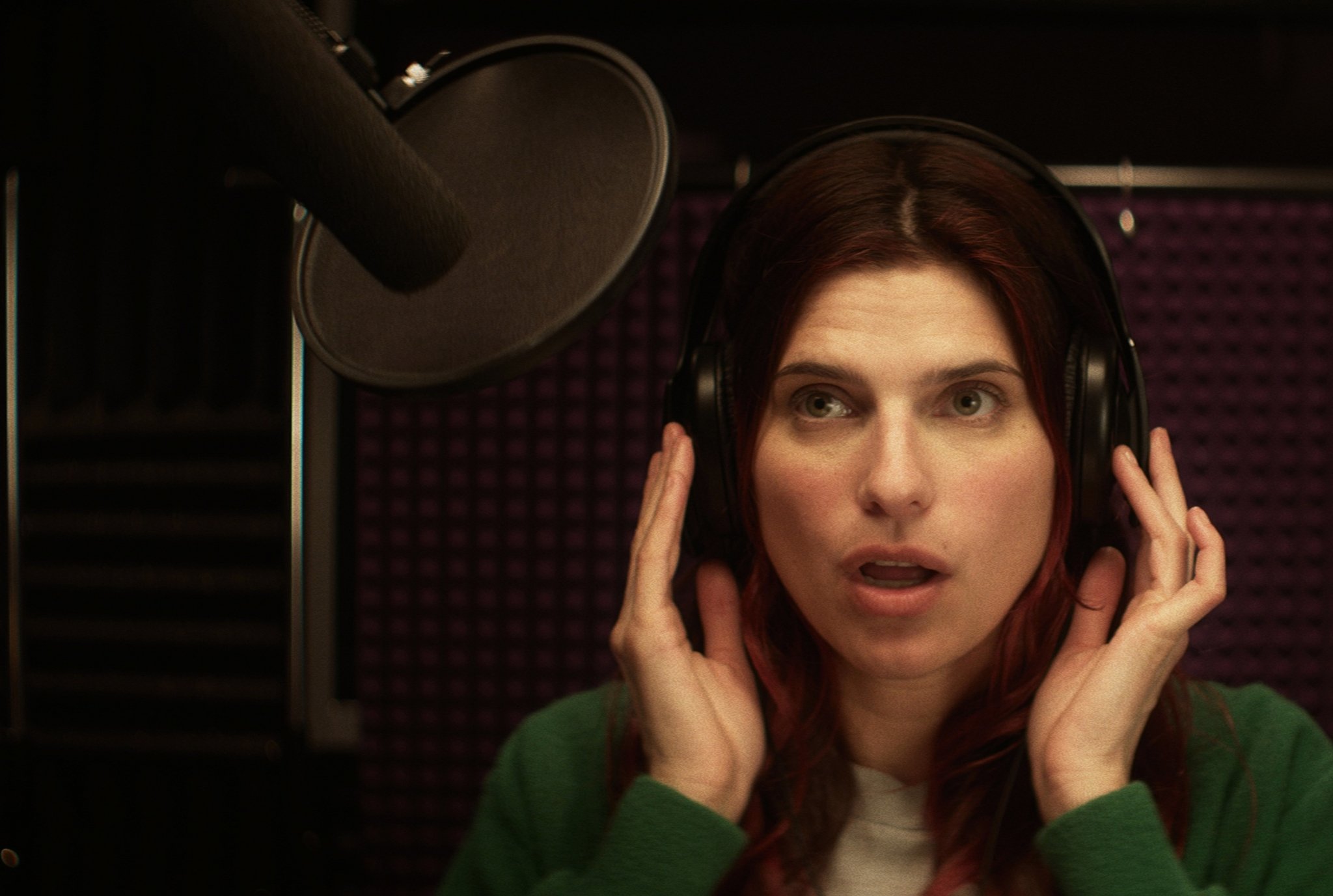
The “world” that Carol (Bell) lives in is the one of voiceover acting, in particular those voice-of-God narrators who used to be ubiquitous in movie trailers. Carol’s father Sam Sotto (Fred Melamed) used to be one of the giants of the industry, but also came second to the real-life Don LaFontaine, famous for the “in a world . . .” line, which he often seemed to be intoning from the bottom of a well.

LaFontaine really passed away in 2008, and the film suggests that his silence left a vacuum in Hollywood that every other voiceover artist wanted to fill. A job doing the trailer for a blockbuster “Hunger Games”-like “quadrilogy” has come up, and the studio wants to revive the “In a world . . .” line with a new voiceover artist. Sam, resting his golden pipes in retirement with a groupie second wife (Alexandra Holden) is considering getting back in the biz, but LaFontaine’s heir apparent seems to be the mellifluous Gustav Turner (Ken Marino).

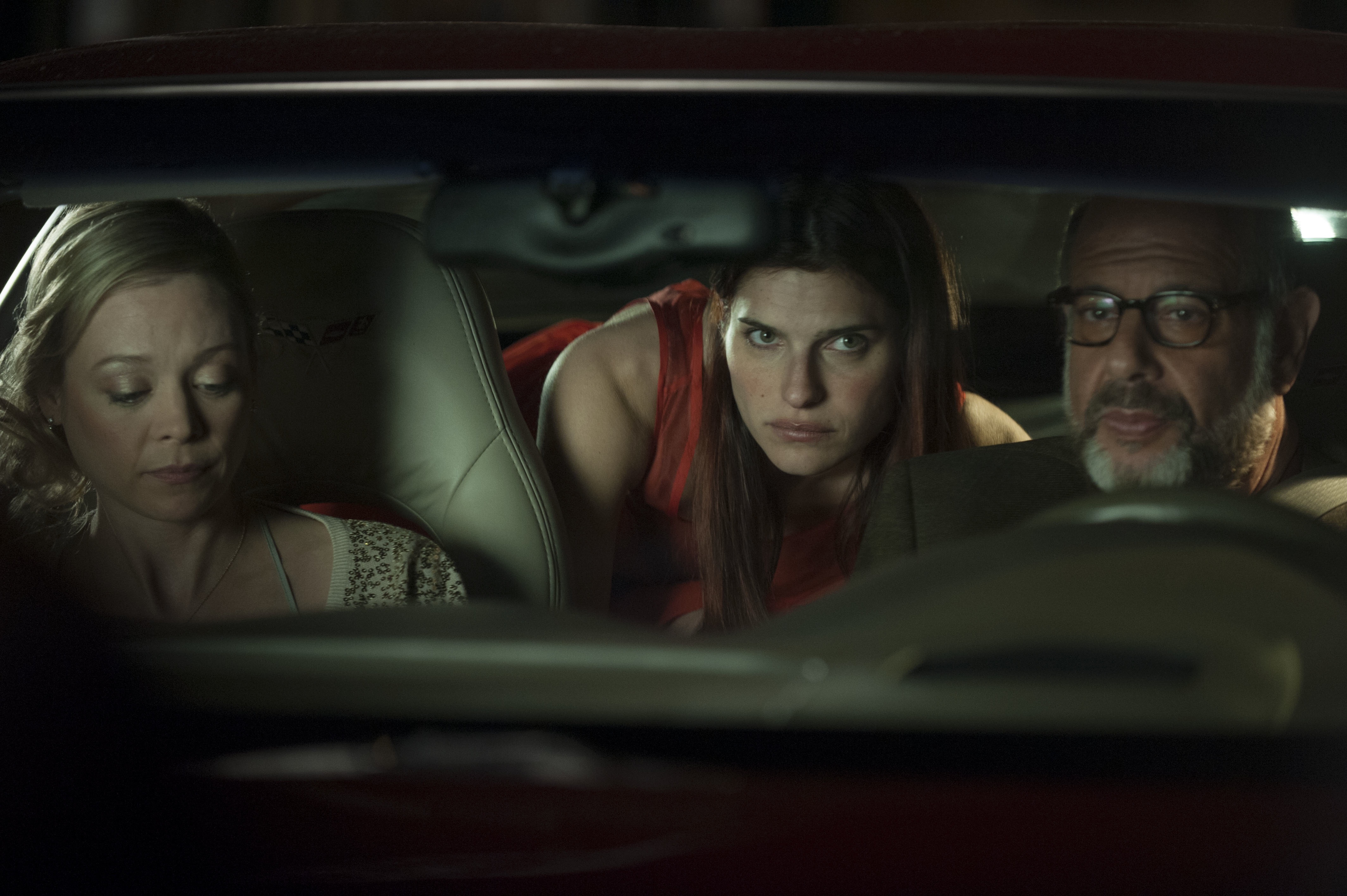
Except, Carol wonders, why can’t a woman do movie voiceovers? Why do so many of the women around her speak in high-pitched baby doll voices, infantilized by the culture? Having been relegated to doing voice coaching for actresses (you try and teach Eva Longoria how to do a Cockney accent), she starts pursuing the quadrilogy gig, and runs into a wave of chauvinism. Especially from her father, a master of dulcet-toned mansplaining.

inaworld2

Bell is an engaging actress, and one who has a deft command of all sorts of dialects and accents, and her movie puts all her charms and talents on full display. But “In a World . . .” really sizzles in the writing, in its fast-paced dialogue, subtle feminist message and large cast of interesting characters, such as Carol’s tightly-wound sister Dani (Michaela Watkins) and her doting husband (Rob Corddry), and her lovesick sound engineer pal (Demetri Martin). There’s a lot of funny people in this movie who get to be really funny, and Bell knows just how and how much to use them, never letting one element of her sprawling story overpower the rest.

And I just love this insider’s look at the real Hollywood, far from the glitz, where engineers and editors toil behind the scenes in sound booths and editing bays, all those names you see midway through the credits. Bell also cleverly shows how the chauvinism of old Hollywood still lives, how old men with young girlfriends and fast cars still seem to get to make all the decisions.

By the end of “In a World . . .,” the film has delivered a smart and subtle message of female empowerment. reminding that the world’s a better place when hear from a wide range of voices, old and young, male and female. Bell is a filmmaker to be listened to.

Interview with “Ain’t Them Bodies Saints” director (and not Cracker frontman) David Lowery

saints

David Lowery shares my pain.

The writer-director of the elegiac period drama “Ain’t Them Bodies Saints” and I both share a name with a musician much more well-known than us.

“It’s just something that over the past five or six years has become a frequent thing,” he said in a phone interview from New York City a couple of weeks ago. “I had to change the bio on my Twitter account to read, ‘Not the one who sings.’”

Lowery has never met his namesake, although, based on the reaction that “Ain’t Them Bodies Saints” is getting, maybe someday the Camper Van Beethoven/Cracker frontman will have to change his Twitter bio to read “Not the one who makes elegiac modern Westerns that have been compared to Malick and Altman.”

“Saints,” which opens in Madison this Friday at Sundance Cinemas, is a love story in which the lovers are only together at the very beginning and very end of the film. It’s also a crime story that takes place after the crimes have already occurred.

The film opens with husband-and-wife outlaws Bob Muldoon and Ruth Guthrie (Casey Affleck and Rooney Mara) cornered by police in Texas and eventually captured. Bob pines for his wife, who is pregnant with her daughter, and years later finally breaks out to reclaim his family. But while he has stayed in a state of romantic swoon, Ruth may have moved on, with the help of a kindly sheriff (Ben Foster) who was involved in their capture.

“Saints’ has been compared to Malick’s debut “Badlands” and Altman’s “Thieves Like Us” for its tale of lovers on the lam, but Lowery’s film is more interested in the moments between the ones we normally see in these films. Frequently the action happens off-screen, and whatever action we do see has an odd, contemplative rhythm to it.

“I initially start to write a movie that was more of a strangeforward genre film,” Lowery said. “I was writing action scenes and I couldn’t think of a way to do it – we’ve seen the jailbreak scene already, and there have been some really great movies about bank robbers. I found myself really interested in what would happen after that.

“There’s nothing you haven’t seen in other movies, but the way in which we tell it is hopefully what makes it vital,” he added. “The thing that I can bring to it is that sense of rhythm and juxtaposition that are distinctly mine.”

Lowery entered the world of filmmaking primarily as an editor, working on the movies of his friends (he edited Shane Carruth’s “Upstream Color.”) He made his first film, “St. Nick,” in 2009, and the short film “Pioneer” in 2011.

“Saints” feels like a whole order of magnitude larger, both in its star power with Mara and Affleck and in its ambition. But Lowery said that while the scope of the film was bigger, the essence of making a movie remained the same.

“I was really surprised on the first day of shooting how it felt like everything I made before,” he said. “My first feature was a $12,000 movie and you’d think that making a $3 million movie would be a seismic shift. It’s really not. There’s  a lot more people and there’s rules you have to follow. But at the end, you’re sitting there with a camera and you’ve got some actors and you’ve got a scene you need.”

Lowery especially wanted to retain a feeling of intimacy and improvisation on the set, allowing the actors to experiment and be alive to unplanned things that might happen in the moment.

“One of the ways that you do that is you plan a lot in advance,” he said. “You create a very tight structure and you have your shot list. And then you don’t feel beholden to that. You know that if things get tricky you can fall back on this plan, but you’re creating an environment in which you can be alert to changes.”

His experience in the editing bay turns out to be an asset as a director and even as a writer, as he’s always thinking about how one moment or shot will line up with the others.

“I looked at the shots that I imagined getting and thinking really hard about what I really needed. I tried to simplify and find the most concise and direct way to get the heart of the scene.”

With the success of “Saints,” Lowery’s name has been attached to a number of projects, including writing the remake of Disney’s “Pete’s Dragon” to writing and directing “The Old Man and the Gun” with Robert Redford. Lowery said he wouldn’t rule out going back and editing someone else’s film sometime. But not in the near future.

“I’m immediately excited about directing,” he said. “I just had so much fun making this movie.”