Instant Gratification: “What We Do in the Shadows” and four other good movies new to Netflix and Amazon Prime

what-we-do-in-the-shadows

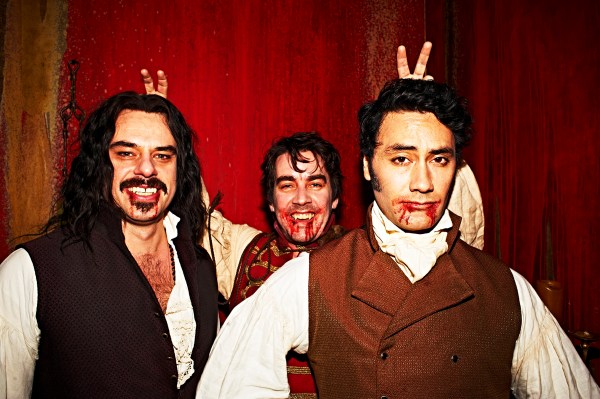
Pick of the Week: “What We Do in the Shadows (Amazon Prime) — My full review is here. Before “Hunt for the Wilderpeople” and making Thor funny in the upcoming “Ragnarok,” New Zealand filmmaker Taika Waititi co-created and starred in this hilarious mockumentary about a group of vampires living together in a flat. The usual roommate run-ins are heightened when all of the tenants are immortal, and not cleaning up after yourself involves geysers of blood all over the walls. Jemaine Clement and Rhys Darby of “Flight of the Conchords” also appear.

Continue reading

“Always Shine”: An unnerving film is ready for its closeup

alwaysshine

“Always Shine” screens at 10:30 p.m. Friday night at the Union South Marquee Theatre, 1208 W. Dayton St. as part of the Directress Film Festival. FREE.

And you thought Emma Stone’s auditions in “La La Land” were rough. In the opening scene of Sophie Takal’s “Always Shine,” an actress named Beth (Caitlin FitzGerald) is auditioning for a sexually humiliating part in a lousy horror movie, sobbing as she offers an unseen killer her body in exchange for sparing her life. We hear the producers leering off-camera as she debases herself, chortling as she all but strips in front of them to get the part.

Then we see what’s shot like another audition, this time an actress named Anna (Mackenzie Davis) seeming to audition for the part of a pissed-off customer at an auto repair shop. Only, when the scene ends, we realize that she’s not auditioning for role — she really is at an auto shop, really is pissed off.

The pairing of those two scenes is key. “Always Shine” comes off in many ways like a brutal commentary on Hollywood sexism, on the way the industry uses and disposes of women. And that’s part of it. But, ultimately, “Always Shine” is about the way society in general looks at women, how they are often forced to perform roles for men in certain ways — to play submissive, or flirty, or the “cool girl” — in order to be seen and heard.

Continue reading

Instant Gratification: “Captain Fantastic” and four other good movies new to streaming

CFday25-580.jpg

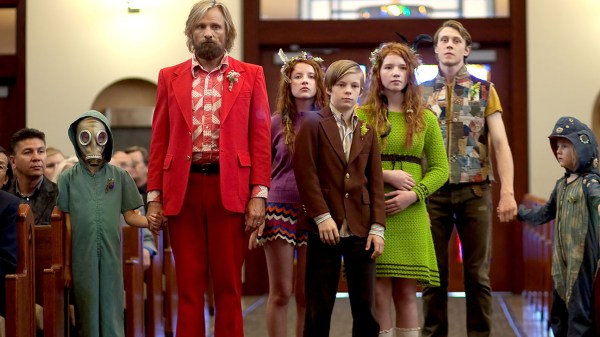
Pick of the Week: “Captain Fantastic” (Amazon Prime) — My full review is here. Jimmy Kimmel joked at the Oscars about how few people had seen this movie that got Viggo Mortensen a Best Actor nomination — now you can rectify that. Mortensen is terrific, both majestic and wounded, as a widower who has raised his five kids off the grid in the wilds of the Pacific Northwest. It’s a tough but idyllic existence — but when his late wife’s parents attempt to take custody of the kids and bring them into the modern world, he has to reckon with how he’s raised them. He’s both like no parent ever and like every parent.

Continue reading

Beloit International Film Festival: “End of Fall” serves up revenge down on the farm

endoffall

“End of Fall” has its Wisconsin premiere at 7:30 p.m. Saturday at the Beloit International Film Festival, with an encore showing at 2:30 p.m. Sunday. For more information on the festival, which runs through March 5, visit beloitfilmfest.org.

Something wicked is happening out in those Wisconsin woods. In addition to the finely wrought revenge drama “Uncle John,” shot near Lodi, comes the rural noir “End of Fall,” shot near Lake Geneva. Both films eschew big plot twists or excessive violence for an almost meditative look at crimes and punishments.

Continue reading

“Cameraperson”: Looking at the world through a lens, and the world looks back

cameraperson-1600x900-c-default

Included on the Criterion Collection edition of Kirsten Johnson’s documentary “Cameraperson” is a 2015 short film she made from her time in Afghanistan, “The Above.” The documentary profiles not a person but a thing — a whale-sized surveillance balloon that the U.S. military put into the air over Kabul for reasons that remain classified.

In shot after shot, we see Afghan residents going about their daily lives, all with this big white blimp hanging in the background, watching. The balloon is meant to be inobtrusive, but once you notice it, you can’t unnotice it, and knowing it’s there over your shoulder must color everything done by the watched. It could be the eye of God — or the lens of a cameraperson.

Continue reading

Instant Gratification: “Big Eyes” and four other good movies new to streaming

bgi-big-eyes-movie-review

“Big Eyes” (Netflix) — Tim Burton took a break from making Tim Burton Movies last year with the refreshing drama “Big Eyes,” the biopic of ’60s kitsch artist Walter Keane (Christoph Waltz) and his wife, Margaret (Amy Adams), who really did all the paintings while her abusive husband took all the credit. Likely that Burton was initially attracted to the ironic appeal of the saucer-eyed Keane portraits, but he, perhaps by accident, ended up making an affecting film about an ignored and overlooked woman who finally finds her strength.

Continue reading

“The Asphalt Jungle”: The best laid plans of some very tough men go awry

ASPHALT JUNGLE, THE

John Huston’s “The Asphalt Jungle” was one of the first great heist films, paving the way for “Rififi,” “Bob Le Flambeur” and later “Ocean’s 11” and a ton more.

But those viewers used to the fun of a heist movie will be surprised by how melancholy “The Asphalt Jungle,” now out in a new Blu-ray from the Criterion Collection, Consider the end of Steven Soderbergh’s “11” remake, where Danny Ocean and his 10 confederates take a moment in front of the fountains at the Bellagio, “Clare de Lune” playing, to wordlessly celebrate a job well done before they smile and part ways.

In “Jungle,” there is no such moment of victory. Each of the conspirators play out their own string separately, ending in quiet failure, alone, the world largely indifferent.

Set in an unnamed Midwestern city (it was filmed in Cincinnati), the caper to steal over a million dollars in jewels is masterminded by Doc (Sam Jaffe), an avuncular German just out of prison. He gets wealthy lawyer Emmerich (Louis Calhern) to agree to fund the robbery and fence the jewels afterwards. The team includes a getaway driver (James Whitmore), a safecracker (Anthony Caruso) and some muscle in the form of Dix (Sterling Hayden), a snarling ex-country boy who hopes to buy his family’s horse farm back with the proceeds.

But what we know even before the heist begins, but the players don’t, is that Emmerich is deep in debt and plans to double cross the team after the heist is over. That foreknowledge adds an air of fatalism to the movie’s crisp 11-minute heist sequence, in which the criminals meticulously and flawlessly steal the jewels. Well, almost meticulously — the safecracker is accidentally gutshot during a skirmish with a policeman.

That one mishap ends up spelling doom for the entire team, and the real tension in “The Asphalt Jungle” is watching how, one by one, they fail. Each man’s fate is like it’s own mordant little short story.  Emmerich is found out by the police and ends up taking his own life, but not before writing a tender suicide note to his wife — and then tearing it to bits. A bleeding Dix makes it back to the horse farm, and dies in the pasture, the horses idly sniffing at his corpse.

And, in the ending that haunts me the most, Doc very nearly gets away when he inexplicably gets distracted by a teenage girl dancing in a roadhouse, giving the cops the precious few minutes they need to catch up with him. In the end, law enforcement seems to play a very minor role in the film and in the criminals’ capture — what gets them in the end is their own human nature, the weaknesses and obsessions they can’t get away scot-free from.

The Criterion Collection Blu-ray looks exceptional, capturing how Huston and cinematographer Harold Rosson mix empty, expressionistic long shots of the city with tight, claustrophobic shots of the conspirators in small rooms, their faces often looming into the foreground. The Criterion disc also includes a lengthy inteview with film noir historian Eddie Muller and a commentary track from historian Drew Casper, along with archival interviews with Huston.

In the end, what’s so striking about “The Asphalt Jungle” isn’t the clockwork heist at its center, but the tenderness with which the film treats these tough, doomed men. After all, as Emmerich says ruefully, “Crime is only a left-handed form of human endeavor.”
“Christine”: A reporter’s meltdown, live and in living color

Production still from set of CHRISTINE, 2015

The folks at Madison Film Forum, LakeFrontRow and Four Star Video Cooperative had a ball this week with the 2nd Annual Missed Madison Film Festival, a “virtual festival” focusing on 20 strong independent movies that didn’t (or haven’t) played Madison yet. The full roster of movies is here, and you can find most of them in a special display at Four Star if they’re out on DVD already.

I thought I’d piggyback onto the party since I’ve seen Antonio Campos’ “Christine,” and it doesn’t look like it will be making it to Madison theaters despite strong reviews. It’s currently available on video-on-demand on iTunes and Amazon, and will be out on DVD on Valentine’s Day.

“Christine” is the second movie this year to tackle the true story of Christine Chubbuck, a Sarasota TV news reporter who shot and killed herself on-air in 1974. Robert Greene’s “Kate Plays Christine” (reviewed by David Klein at LakeFrontRow during the MMFF) is a documentary-fiction hybrid which captures actress Kate Lyn Sheil in the act of portraying Chubbuck.

“Christine,” meanwhile, is more of a straightforward drama that recounts Chubbuck’s last few weeks. Campos resolutely refuses to sensationalize this horrible story, instead opting for a straightforward, empathetic look at Chubbuck and the personal and professional pressures that drove her to suicide. It is extremely hard to watch, especially during the last half hour as the film recounts Chubbuck’s final day with almost agonizing matter-of-factness, but extremely rewarding.

With her flat, skeptical Ohio accent and tightly-wound demeanor, Chubbuck already feels like an outcast in the Florida community. Her brand of public affairs journalism, substantive but stodgy, is also out of step with sort of news her exasperated station manager (the terrific Tracy Letts) wants. If she had only been born a generation later, her approach to news — personal stories with an eye towards social justice — might have found an audience on outlets like public radio.

Campos’ camera revels in the tawdriness of the news station, the greasy fingerprint smudges on the tape machines and the frayed carpet located just out of camera’s view at the news desk. But if this is a dead end for Chubbuck (we come to learn that she was previously working at a station in the much larger Boston market but had some sort of nervous collapse), she doesn’t show it. She pushes herself hard, carrying the weight of her self-imposed responsibility to serve the community on her shoulders.

Chubbuck is approaching her 30th birthday and plagued with self-doubt, her personal life at a standstill as she watches her free-wheeling mother bringing men home. A dalliance with the station’s handsome anchor (Michael C. Hall) goes nowhere, and, afraid of being vulnerable, turns prickly and abrasive when co-workers offer overtures of friendship.

“Christine” is a slow burn, held together by Hall’s magnificently controlled performance. We feel for this talented, driven woman who can’t get out of her own way, and holds herself to expectations impossible to meet. In a way, her life shows the cruel underside of the life of a career woman, expected to juggle it all and still smile at the casual sexist jokes the men toss around the office.

In a bit of sad irony, especially given this week’s news, the movie ends with another female co-worker coming home to watch “The Mary Tyler Moore Show,” the show embodying all the possibilities of being a ’70s career woman that were so hard to achieve in reality. Plagued by mental health issues, thrust into a high-pressure, unfeeling business that didn’t appreciate her talents, Christine couldn’t make it after all.


Slamdance: Grieving does funny things to a person in sparkling “Suck It Up”

suckitup

I’m not attending this year’s Sundance Film Festival in Park City, but I was graciously sent screeners for a couple of films premiering at both the Sundance Film Festival and its young upstart, Slamdance. I’ll post reviews of those films here on my blog in concurrence with their premieres in Park City. 

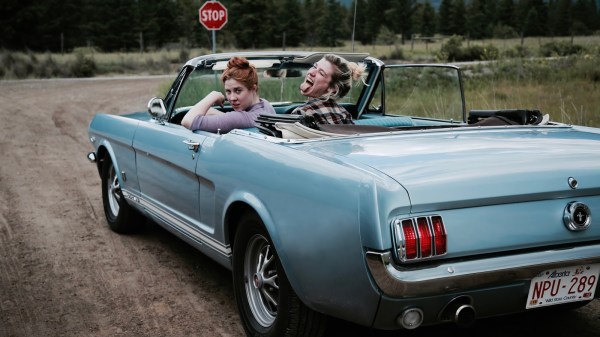
I had two moments of sudden realization while watching director Jordan Canning’s comedy-drama “Suck It Up” that just knocked me flat. The film premiered Monday night at Slamdance in Park City, Utah.

The first moment came about halfway through the film, when the characters sneak into a bowling alley to get high and bowl a few frames. But it was the five-pin bowling I remembered from when I was a kid growing up in Canada, when we would spend summers in Invermere, British Columbia.

Abruptly, I realized that not only was “Suck It Up” shot in Canada, but it was shot in picturesque Invermere itself. My kids and I had just been in a candy shop featured in the film a couple of summers ago. (We didn’t smoke pot in the bowling alley, though.) It gave me such a strange jolt, that this indie film I had more or less at random gotten the chance to watch and write about had such a powerful personal connection for me.

Continue reading

Sundance Film Festival: “Rumble” rattles rock ‘n’ roll history by celebrating Native Americans’ contributions

RUMBLE: The Indians Who Rocked The World - Still 1

I’m not attending this year’s Sundance Film Festival in Park City, but I was graciously sent screeners for a couple of films premiering at both the Sundance Film Festival and its young upstart, Slamdance. I’ll post reviews of those films here on my blog in concurrence with their premieres in Park City. 

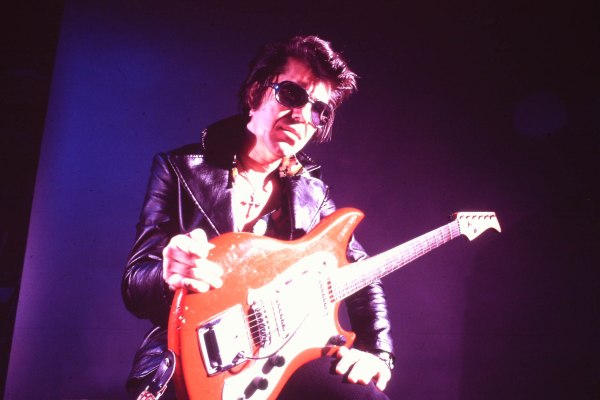
If you could distill all of ’50s teenage rebellion into three chords, those three chords would be Link Wray’s “Rumble.” The sleepy swagger of Wray’s guitar (trust me, you’ve heard it) was so provocative that authorities banned the single from radio stations for fear it would incite violence — even though it was an instrumental.

A lot of great rock music — from The Who to the MC5 to Led Zeppelin, and then the bands they influenced — flowed from those three chords. But relatively few music lovers know of Link Wray, and very few of them know that he was a Native American.

Continue reading