“Stories We Tell”: Sarah Polley turns the camera on her own family

stories-we-tell-sarah-polley-super-8-cam

“Stories We Tell” opens Friday at Sundance Cinemas, and is also available to rent or buy on ITunes and other VOD services. PG-13, 1:49, four stars out of four. I’ll be doing a post-show chat at Sundance Cinemas after the 6:55 p.m. Tuesday show in the theater’s Overflow Bar.

From the beginning, Sarah Polley opens the hood of her documentary “Stories We Tell” and shows the machinery whirring inside. The film begins with her and her father entering a recording studio, and a montage of Polley and her crew setting up cameras and lighting for the film’s interview subjects.

It’s an introduction that’s tantamount to a magician’s “nothing-up-my-sleeve” insistence, because Polley has something far more interesting and unusual in mind that the typical nuts-and-bolts documentary. “Stories We Tell” is a powerful and very personal story from Polley, but she’s also constantly mindful that it’s a “story,” a mixture of facts and opinions shaped into a narrative, and as such isn’t entirely to be trusted.

And this is, in a very literal sense, Polley’s story. The film digs deep into the lives of her parents, Mick and Diane Polley, who met on the Toronto theatrical scene. Mick cut a dashing figure onstage, while Diane was beautiful and vivacious, the sort of woman who “make the record skip” when she walked into a room in more ways than one.

Diane was so dazzled by Mick’s onstage persona that she missed what an ordinary guy he really was. As Mick settled into kind of a middle-aged fog, Diane grew frustrated at middle-class Canadian life, and took an acting job in Montreal in 1978, leaving home for a couple of months. What happens next, the viewer should discover from the film, as Polley digs through layers after layers of reminiscences and rumors, interviewing her four siblings and friends of the family.

As the audience uncovers the revelations of the story — and there are some doozies, expertly revealed by Polley as she shifts from perspective from perspective — we’re also becoming aware of how each account differs. Some people have the facts a little off, others just view the same facts differently than others. One man, who seems to be just a supporting character in the drama, insists that his account and only  his is the truth, and all the others are just noise.

The closest the film has to an authority is Mick, who reads from his writing about the family history in plummy, theatrical tones throughout the film. But even he doesn’t have the full picture of his own family.

storiewetell

The perspective that is largely missing, ironically, is Polley’s — although we see B-roll footage of her about to be interviewed, it never appears in the film. Instead, she seems to be getting at the truth of her life the way a submarine uses sonar, pinging off the other people in her life until she finds a spot that overlaps. This could be potentially an unbearable exercise in post-modern cleverness, but instead Polley makes it a fascinating process, and Polley (an actress turned acclaimed director of the dramas “Away From Her” and “Take This Waltz”) blends the different voices expertly until a bigger picture emerges.

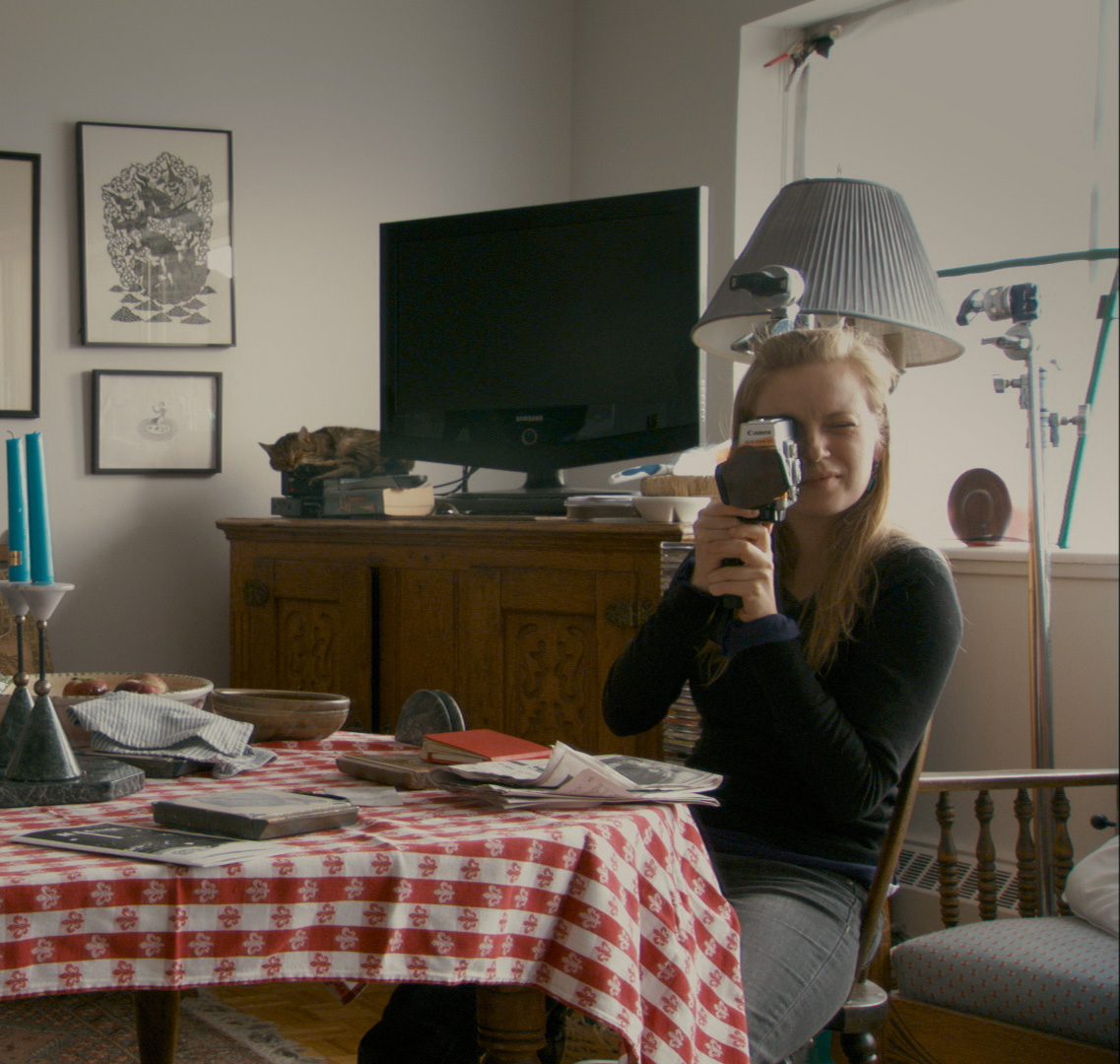
The film also weaves in Super 8 home movie footage of Diane and the family, although it turns out that the way Polley is telling the story contains as many secrets as the story itself. Put it this way; critics who like their documentaries the way Joe Friday likes his witnesses — “Just the facts, ma’am” — are going to have a big problem with this movie.

For me, it’s a brilliant film that manages to be both one family’s shared history and all families’ shared histories. Would “Stories We Tell” have been as compelling if Polley didn’t add all the post-modern devices to it? On the level of pure storytelling, probably. But the way she tells the story takes it beyond “What happened?” and forces us to examine the too-tidy narratives of the stories we tell ourselves.

“Ain’t Them Bodies Saints”: Do not forsake me oh my darling

ain-t-them-bodies-saints01

“Ain’t Them Bodies Saints” opens Friday at Sundance Cinemas. R, 1:45, three and a half stars out of four.

“Ain’t Them Bodies Saints” has bank robberies, but we don’t see them. It has a prison break, but we don’t see it. When a major characters gets shot, we . . . but you know where this is going.

David Lowery’s confident second feature plays the notes behind the notes of “Bonnie & Clyde,” “Badlands” and other period dramas about couples on the lam. While he wears his ’70s filmmaking influences on his sleeves, “Saints” is no pastiche, but an eloquent mood piece that leaves room for improvisation from the actors and introspection from the audience. Read my interview with Lowery here.

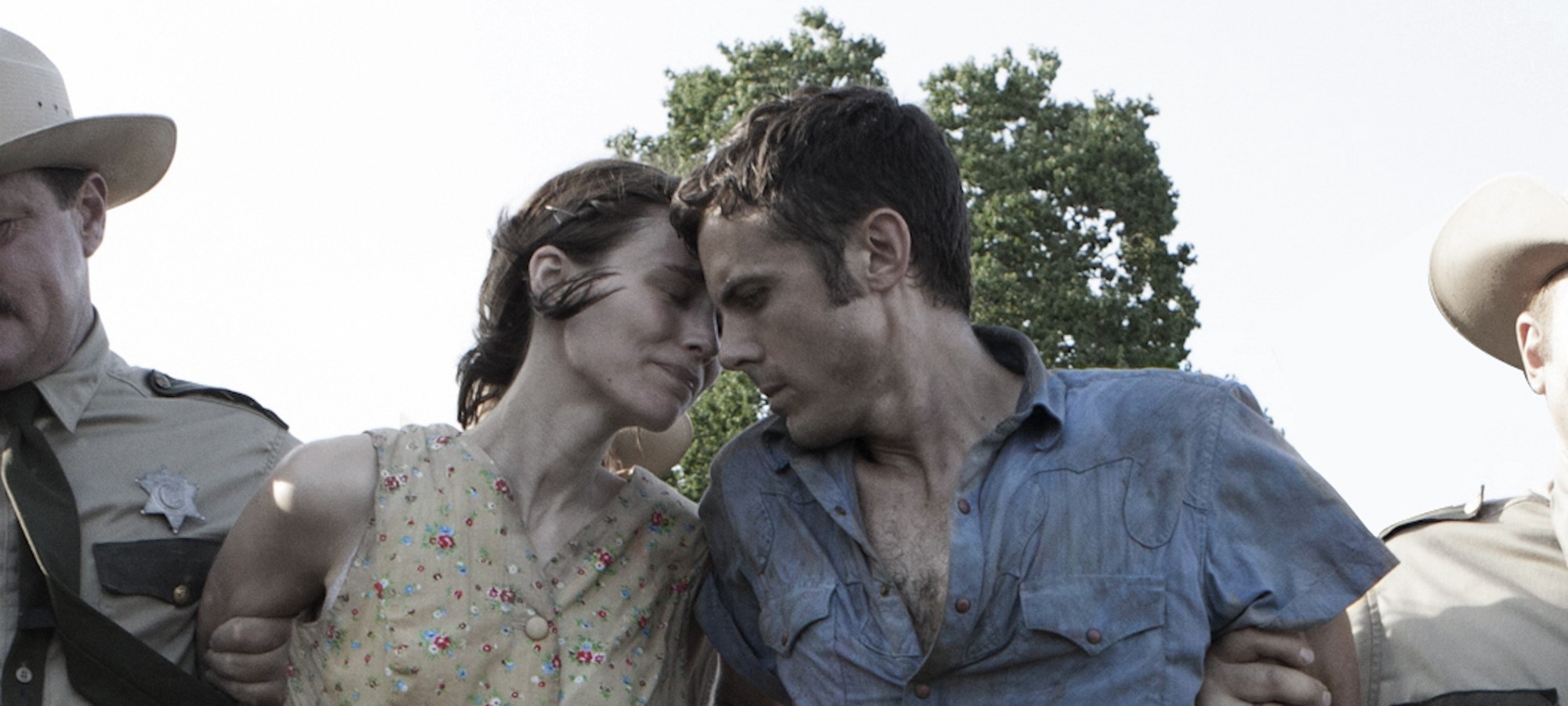
The first chapter of “Ain’t Them Bodies Saints” would be the last chapter of most movies of its ilk. Somewhere in Texas, around 1970, outlaw couple Bob Muldoon (Casey Affleck) and Ruth Guthrie (Rooney Mara) are cornered by the police. Bullets are exchanged, the pair is captured, but none of the plot developments matter quite as much as one archetypal moment, when as Bob and Ruth are led away by sheriff’s deputies, they lean into each other hard, desperately hard, knowing it may be the last time they’ll ever touch.

Move ahead four years, and Bob is still in jail, writing letters to Ruth. Ruth is free to take care of her four-year-old daughter, under the close watch of paternal shopkeeper Skerritt (Keith Carradine), who may be tougher than everyone else in Texas put together. Watch that scene where three mangy convicts come into Skerritt’s shop, and notice how its three armed cons who seem skittish.

Unable to be apart from Ruth any more, Bob finally breaks out of prison, and takes the long odyssey back home to reclaim Ruth. But he may not find the Ruth he left behind — being a mother seems to have changed her, made her more careful and responsible, and she’s reluctantly accepting the friendship of a kindly sheriff (Ben Foster). Whether the fact that she shot this sheriff in that standoff four years ago may or may not come up.

Aint-Them-Bodies-Saints-Rooney-Mara

Foster, who often plays loose cannons on screen, is effective as a good-hearted but not simple man, while Affleck infuses Bob with unwavering, perhaps unwise devotion. (Although the parts are superficially similar, he’s a long ways away from the polite sociopath of “The Killer Inside Me.”) But the film really turns on Mara, who completely immerses herself into the flinty, wary Ruth. You’re always wondering what she’s thinking, what’s she going to do.

Lowery gives these actors lots of room to move — he’s a disciple of Robert Altman in his believe that movies are made in the moments you didn’t expect to find. But he’s also got some Terrence Malick on him, and “Saints” is a gorgeous, sepia-toned feast for the eyes, a faded photograph to a vanishing West and an approach to filmmaking that fell out of fashion decades ago. But “Ain’t These Bodies Saints” brings it back to life again, and makes it glorious.

“Getaway”: A gullible audience gets “Taken” for a ride

GETAWAY-Image-04

“Getaway” opens Friday at Point, Eastgate and Star Cinema. PG-13, 1:33, one star out of four.

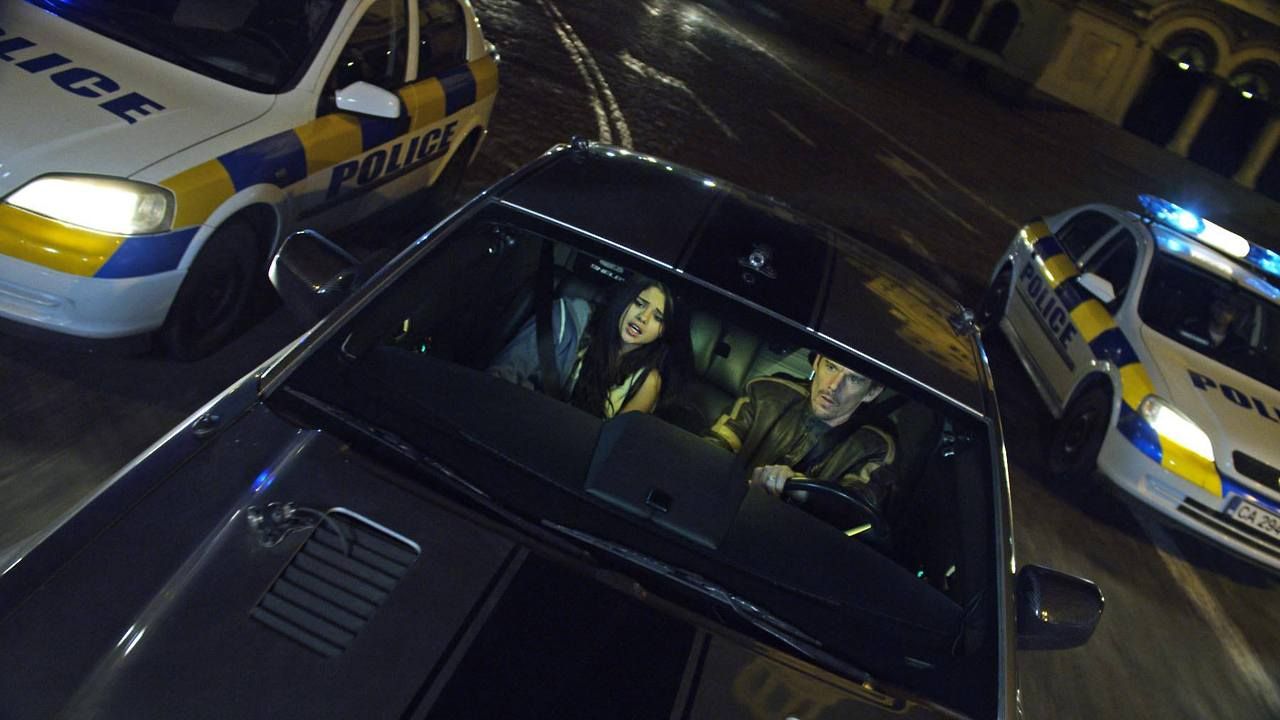
The good news about “Getaway” is that it always uses real cars and drivers. Unlike the CGI’d up action of other summer action movies, you can tell that those are real vehicles motoring at high speeds and bashing into each other.

The bad news is that it does not always use real actors or writers. The utterly ridiculous storyline (even by car-chase movie standards) attempts to leap over Snake Canyon-sized gaps of implausibility, and has a hilariously miscast Selena Gomez in a key supporting role as foul-mouthed hoodrat hacker.

Ethan Hawke, who has mouths to feed at home, plays Brent Magna, a failed race car driver living a quiet life in Bulgaria with his wife. But then she’s kidnapped by a mysterious villain (Jon Voight’s lips) who directs him to a souped-up, armored Shelby with cameras mounted on the inside and out. Over the course of one night, Brent has to drive that car and do everything that Jon Voight’s lips tell him to do, or Jon Voight’s lips will kill his wife.

Most of this involves seemingly random mayhem, where Brent smashes through parks, sending innocent people fleeing for cover, or smashing into Sofia’s endless supply of police cars, who pop up reliably every five to 10 minutes, like in a “Grand Theft Auto” game. Brent picks up streetwise hacker AND megabanker’s daughter Gomez, who is so burdened by the weight of this overwrought backstory that she can only muster out yelling “I hate you!” and “Let me out of here!” throughout the film. (Between her and Jon Voight’s lips’ constant directions to “Speed up” or “Turn left,” “Getaway” could be renamed “Backseat Driver: The Movie.”)

Of course, Jon Voight’s lips has a more nefarious scheme in the works, but nobody comes to a movie like “Getaway” for the plot. The film is the non-stop car chase delivery system as advertised, and while the chases are freneticallly, desperately edited to within an inch of their lives, that’s not the real problem. The real problem is director Courtney Solomon’s mystifying decision to use so much dashboard cams and other cruddy digital video, so that he’s cutting from one muddy, washed-out image to the next. Maybe he’s intending to capture the immediacy of a YouTube video, but it looks awful.

Except for one scene that shows what might have been, a beautiful, rolling first-person shot that last several minutes of cars weaving and dodging through suburban streets at dawn. I’d like to think it’s an homage to Claude LeLouch’s short film  “Rendez-Vous,’ which is poetry in fast motion. The rest of “Getaway” is clunky technical writing in motion.

“Prince Avalanche”: Two likable eccentrics drift across the center line

PrinceAvalanche2_0

“Prince Avalanche” screens for free at 7 p.m. Friday, Aug. 30 only at the UW-Cinematheque screening room, 4070 Vilas Hall, 821 University Ave. R, 1:33, three stars out of four.

After “Your Highness,” any movie director David Gordon Green made that didn’t feature Danny McBride with a minotaur’s penis around his neck would have been considered a step up. After a trio of bracing indie films (including his debut, “George Washington,” which Green brought to the 2001 Wisconsin Film Festival), Green fell in with the Rogenverse and made stoner comedies like “Pineapple Express” and the huge misfires “Your Highness” and “The Sitter.”

“Prince Avalanche” is unquestionably a return to form for Green, fusing the contemplative beauty of his earlier features with the character-driven comedy of his commercial films. Adapted from the Icelandic comedy “Either Way” (which screened at this year’s Wisconsin Film Festival), “Avalanche” will have Green’s earlier fans heaving a sigh of relief.

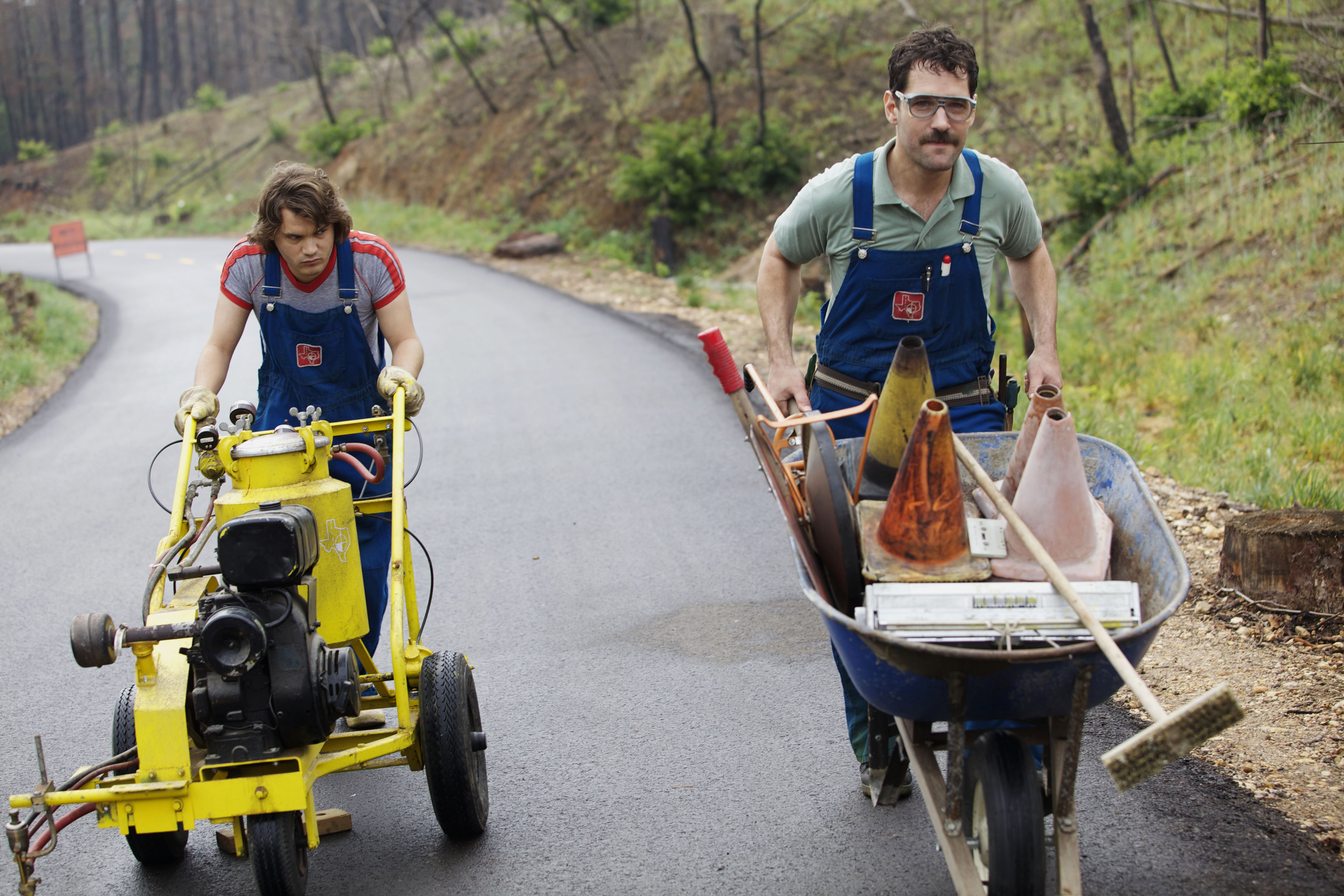
Alvin (Paul Rudd) and Lance (Emile Hirsch) are two men given the Sisyphean task of painting the yellow lines on a winding road through a forest devastated by fires. (The film is set after a real blaze in 1988, but was filmed in central Texas after another wildfire.)

The beautiful but desolate landscape, new life pushing its way past the scarred dead trees, illustrates the tenuous psychological balance of Alvin. He fancies himself a sort of Thoreau-ian frontier philosopher, able to write eloquent letters to his girlfriend Madison while cooking a squirrel on his Coleman stove. In reality, though, Alvin likely craves the solitude of nature because he’s just not that good at people; he’s like the one Boy Scout who has a sash full of badges, but nobody in the troop to call a friend. Rudd’s natural charms help us root for this strange, sometimes prickly man.

Lance is the younger brother of Madison, a mulleted goofball who can’t wait for the workday to be over so he can head back into town and “get the little man squeezed,” as he says. Alvin treats Lance as if he were some sort of project, a delinquent he needs to save through the healing powers of hard work and nature, but of course Lance knows himself a lot better than Alvin does.

As they trudge down the road, painting line after line after line, the tensions between the two men start to grow (there’s a hilarious spat over their “equal time boombox agreement”). When Alvin gets bad news from home, he snaps, his shaky man’s man facade in tatters. The two men bicker, have a little slap-fight, and then start finally bonding on an honest level.

Rudd and Hirsch are often very funny, with Alvin’s righteousness scraping enjoyably against Lance’s sullen party-hearty rebellion. Green plays their struggle out against striking exteriors, shot by Tim Orr and scored by Explosions in the Sky and David Wingo. The result is a strange and satisfying contradiction, an intimate two-man play with acres and acres of stark natural beauty as its stage.

There’s definitely a “Waiting For Godot”-like vibe to “Prince Avalanche,” including a mysterious traveler (the late Lance Le Gault) who shows up from time to time. But if “Godot” was about the eternal, existential paralysis of life, “Avalanche” is more hopeful, suggesting that we can move forward — one tiny yellow line at a time.

“The World’s End”: One more round with the “Shaun of the Dead” boys

The-Worlds-End-2050284

“The World’s End” opens Friday at Point, Eastgate and Star Cinema. R, 1:49, three stars out of four.

Edgar Wright’s three films with Simon Pegg and Nick Frost has been called his “Cornetto Trilogy,” named after a popular brand of ice cream in Britain. It’s an apt title for films that are meant to be pure, sugary entertainment, whether a zombie movie parody (“Shaun of the Dead”) or action movie pastiche (“Hot Fuzz”).

But there’s a bittersweet ripple in “The World’s End,” the third and supposedly final of the films, that gives it an extra poignancy. First off, Wright holds off the fantastical elements of the movie as long as he possibly can, instead focusing on the flailing attempts of five middle-aged friends to reconnect with their younger, happier selves.

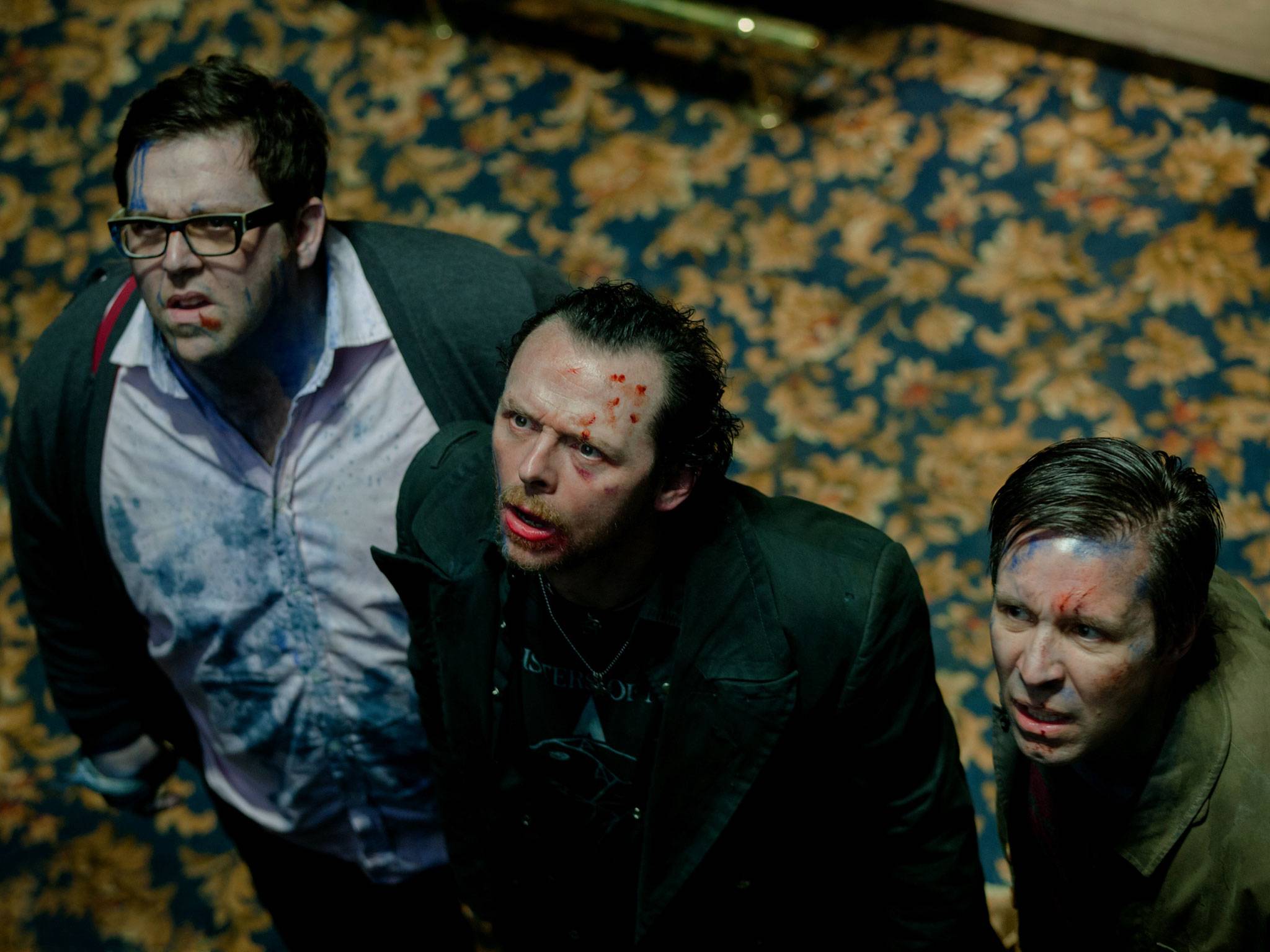
In particular, Gary King (Pegg) is a train wreck — he was the coolest guy in high school back in the boys’ hometown of Newton Haven, sporting sunglasses, a black trenchcoat and a Sisters of Mercy T-shirt.  Twenty years later, he’s a middle-aged man, still wearing those sunglasses, trench coat and T-shirt. Not as cool.

Life has passed Gary by — his friends (Nick Frost, Paddy Considine, Eddie Marsan and Frost) all have careers, families, lives. Gary has hazy memories of better days. They look at Gary with a disdainful pity, which is why, when Gary cajoles them into returning to Newton Haven for an epic 12-pub pub crawl nicknamed the Golden Mile, they reluctantly agree.

This all isn’t just prologue — it’s nearly the first half of the movie, and it’s tremendous fun to watch five top British actors ping-ponging witty lines off each other, as the pathetic depths of Gary’s life is revealed to the other four. He wants to go back to those heady teenage days, but Newton Haven has changed since they all left — nobody remembers them, and the town feels cleaner, nicer, “Starbucked.” If you’ve ever gone back to your hometown, and tried to reconcile that street map in your head with the one in front of you, you’ll know the feeling.

“World’s End” makes a canny move in flipping the usual Pegg-Frost dynamic — this time Frost is the level-headed straight man, and Pegg the manic screw-up. Add in Considine, Marsan and Freeman as middle-aged men who slowly reveal their own regrets, and Rosamund Pike as the girl at least two of them were pining for, and you already have enough for a good movie.

And then the fantastical elements kick in, which I won’t reveal even though the trailer pretty clearly does. Suffice to say that what was a mordant comedy about getting old turns into an action romp, complete with frenetic fight scenes, explosions and lots of blue goo flying about. The hilarious thing is that in the midst of all the mayhem, Gary doggedly insists on seeing the pub crawl through to the end, so as the threat grows larger and larger, the lads get drunker and drunker. Maybe not the worst plan.

The-Worlds-End-Confusion

LIkewise, Wright and Pegg’s screenplay never loses that emotional thread they started with. If “Shaun” was about the aimlessness of misspent youth, and “Fuzz” was about rebelling against the stuffiness of small-town life, “End” is about the fragility of friendship over time, and the dangers of living entirely in the past. Between these films and “Scott Pilgrim Versus the World,” Wright has become very deft at using genre conventions to illustrate the human comedy while still giving his audience a ripping good time.

“World’s End” is decidedly less bloody and more sentimental than its predecessors, suggesting a certain mellowing with age. It’s not perfect — its denouement tries to hastily cram about an hour’s worth of exposition into the last five minutes — but it never loses its cheeky charm. If this the last of the “Cornetto trilogy”, time to hoist a pint to a fun, fruitful collaboration. Cheers.

“Blue Jasmine”: A streetcar named Desire meets a train wreck named Cate

jasmine02.jpg

“Blue Jasmine” opens Friday at Point, Star Cinema and Sundance in Madison. PG-13, 1:38, four stars out of four.”

“Blue Jasmine” opens with a disgraced woman fleeing New York City for San Francisco. Yes, only Woody Allen would think a fall from grace would involve relocating from the most expensive city in American to the second-most expensive city in America.

But if Allen is outside his element shooting in San Francisco, so is his heroine Jasmine (Cate Blanchett), and the result is one of the nerviest, freshest films he’s made in a long time. Whereas some of Allen’s films seemed frozen in time (last year’s “To Rome With Love” could have been made any time in the last 50 years), this one feels rooted in the here and now, in the anxieties of the class struggle and the unmooring of social and financial institutions.

Jasmine was the wife of a smooth-talking financier (Alec Baldwin at his oiliest) who turns out to have been a Bernie Madoff-style fraud. Having ripped off all of their friends, Jasmine is forced to flee to San Francisco and her adoptive sister Ginger (Sally Hawkins). Who he also ripped off, but at least she’s family and can’t turn Jasmine away.

The scandal has deeply rattled Jasmine, who probably already had emotional issues, but kept them safely cushioned in the cocoon of wealth and privilege. Alone and exposed, crammed into her sister’s apartment with noisy kids and a hotheated suitor named Chile (Bobby Cannavale), Jasmine is slowly losing her grip. Sometimes, she’s determined to make a new life for herself, taking a job as a dentist’s receptionist and studying to be a interior designer. But she’s fragile, brittle, and the tiniest setback sends her off, prattling on about her old life as if she was still at a charity ball in Manhattan. But her rich friends are ghosts now, haunting her with memories of the life she lost.

Blue-Jasmine-9-Cate-Blanchett-and-Sally-Hawkins

Blanchett is flat-out amazing as Jasmine, a woman of exquisite culture and breeding on the outside, a bottomless well of nervous need inside. At times, buffeted by the rigors of ordinary life, she seems almost catatonic, her big blue eyes searching desperately for escape. We should hate this woman, but we pity her. At one point, she meets an attractive diplomat (Peter Sarsgaard) who offers her the chance to rejoin the ruling class. For her own sanity, we start to wish that would happen, even as we recognize her capacity for self-sabotage.

This is one of those Allen films like “Midnight in Paris” where everything just clicks, from his confident staging and seamless uses of flashbacks to his impeccable casting. Hawkins gives her sister character a kind of brassy nobility, and Andrew “Dice” Clay is effective as her ex-husband, who is a voice of conscience in the film. That’s right: Andrew “Dice” Clay, voice of conscience.

The resemblance to “A Streetcar Named Desire” is intentional, but also inessential, as “Blue Jasmine” charts its own course through post-meltdown America, and how the rich really are so different than you and me. Or, at least, you can hide the differences with enough money.

“The Spectacular Now”: Two American kids doing the best they can

spectacular

“The Spectacular Now” opens Friday at Sundance Cinemas. 1:35, PG-13, three and a half stars out of four.

About once a year, if we’re lucky, we get a great teen movie, one that eloquently, honestly tells adolescence like it is. Last year it was “The Perks of Being a Wallflower,” and this year it’s James Ponsoldt’s wonderful and soulful “The Spectacular Now.”

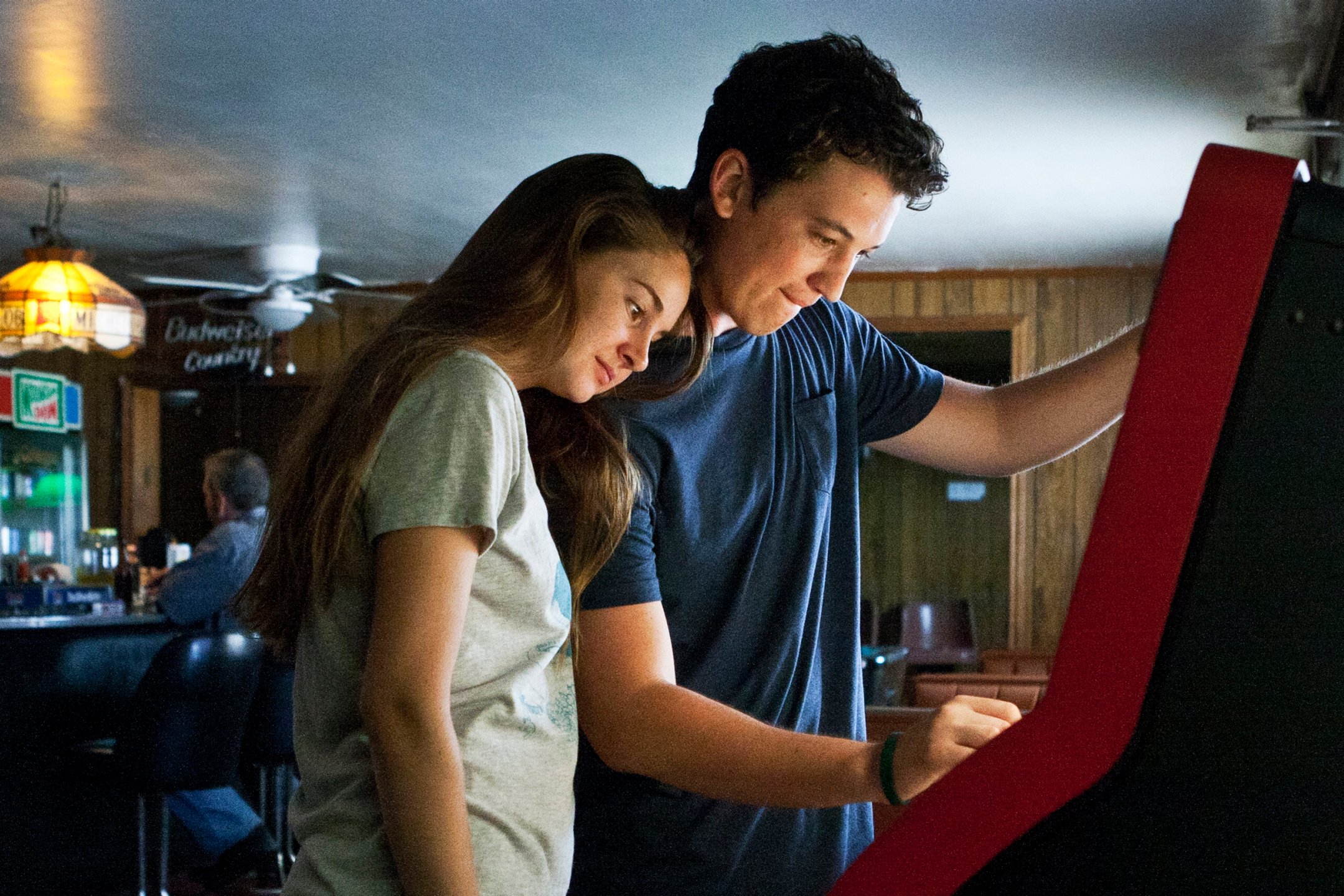
The movie is a love story between small-town seniors Sutter (Miles Teller) and Aimee (Shailene Woodley), and the first thing the film gets right is to make them complete, complex human beings before each other even enters the picture. Sutter is a good-time underachiever, strutting down the halls with a kind word for everyone and a flash in his back pocket. He’s like a Manic Pixie Dream Boy, someone who lives to enjoy life and solve other people’s problems so he doesn’t have to face his own, especially an absent dad.

Aimee is the opposite — a brilliant student, naive in some ways but wiser than her peers in others, she’s going places, but it’s not clear whether she’ll enjoy herself when she gets there. Their meet-cute comes when Sutter passes out on her lawn. He’s medicating his sorrows after a bad break-up with the popular Cassidy (Brie Larson), and could use the company of a nice, non-threatening girl like Aimee. Their relationship moves slowly, cautiously, with Sutter always having one eye on Cassidy at parties, Aimee too thrilled at having his other eye to complain. Writers Scott Neustadter and Michael H. Weber wrote “(500) Days of Summer” for Madison native Marc Webb, so they know how to chart the arc of a love affair, how it will stall and then lurch forward, and how both people bring the sum of their experiences and fears with them.

When Sutter and Aimee finally, fully commit, it’s like a heady rush of adrenaline has entered the movie’s bloodstream — not movie-love magic, but some kind of heightened reality. That feeling is perfectly encapsulated in a scene where, at window overlooking the football field, the pair discuss their future together, and the golden reflection in the glass looks like some kind of shimmering halo behind them. Damn.

the-spectacular-now

Of course, the golden glow can’t last, and the film takes a darker turn in the last half hour, and Sutter starts wrestling with his feelings of worthlessness, that he’s destined to become his deadbeat dad (Kyle Chandler), the friendliest drunk in the bar. Interesting that Ponsoldt’s last feature, “Smashed,” also featured a likable protagonist coming to terms with her boozing, although that film dealt more with the hard road of sobriety. If “(500) Days” was perhaps a bit too clever (and there’s a touch of that in the college admissions letter Sutter is writing that frames the movie), Ponsoldt scuffs it up with the messiness uncertainty of real life.

Teller and Woodley have vaguely familiar faces (he was the best friend in the “Footloose” remake, she was the oldest daughter in “The Descendants”), and both bring such truth and complexity to their roles. You just care for them, instinctively even as you recognize their capacity to wound each other.

The film has been compared to teen movies of the ’80s, especially “Say Anything,” and I suppose there’s something of the John Cusack-Ione Skye dynamic at work here. But I think the fact that these lovers are teenagers is a bit of a distraction. This is a relationship every bit as exhilarating and thorny as any adult relationship we’ll see on a movie screen, and the movie deals with it earnestly and respectfully.

That’s not nostalgia for an earlier era of filmmaking — that’s just great contemporary filmmaking, spectacular and now.

“The Act of Killing”: Vicious murderers are ready for their close-up

actofkilling

“The Act of Killing” opens Friday at Sundance Cinemas. Not rated, 1:56, three and a half stars out of four. I’ll be doing a post-show discussion in Sundance’s Overflow Bar following the 6:50 p.m. Tuesday, Aug. 27 screening.

Most documentaries about brutal regimes tell their story from the perspective of the victims, their tales of tragedy finally surfacing to the light decades later after the regime has been toppled. Filmmaker Joshua Oppenheimer didn’t have that luxury while making his film about the coup in Indonesia in 1966, when over a million leftists, college students, union workers and others were murdered by government-sanctioned thugs. That regime is still in power, those thugs are still strutting around free. For victims or their families to speak out now would be a death sentence.

So Oppenheimer turns his cameras on the perpetrators in “The Act of Killing,” and the result is one of the strangest and most haunting documentaries I’ve ever seen. The killers, now grandfatherly types in their 50s and 60s, reminisce fondly about their youth spent torturing and murdering innocents, the violence often inspired by what they saw in American movies. Most don’t feel any remorse, because the official record in Indonesia is that they were heroes, stamping out a Communist threat to the nation. And everyone is too scared to say otherwise. “The winner decides what is ‘war crimes’,” one killer says. “And I’m the winner.”

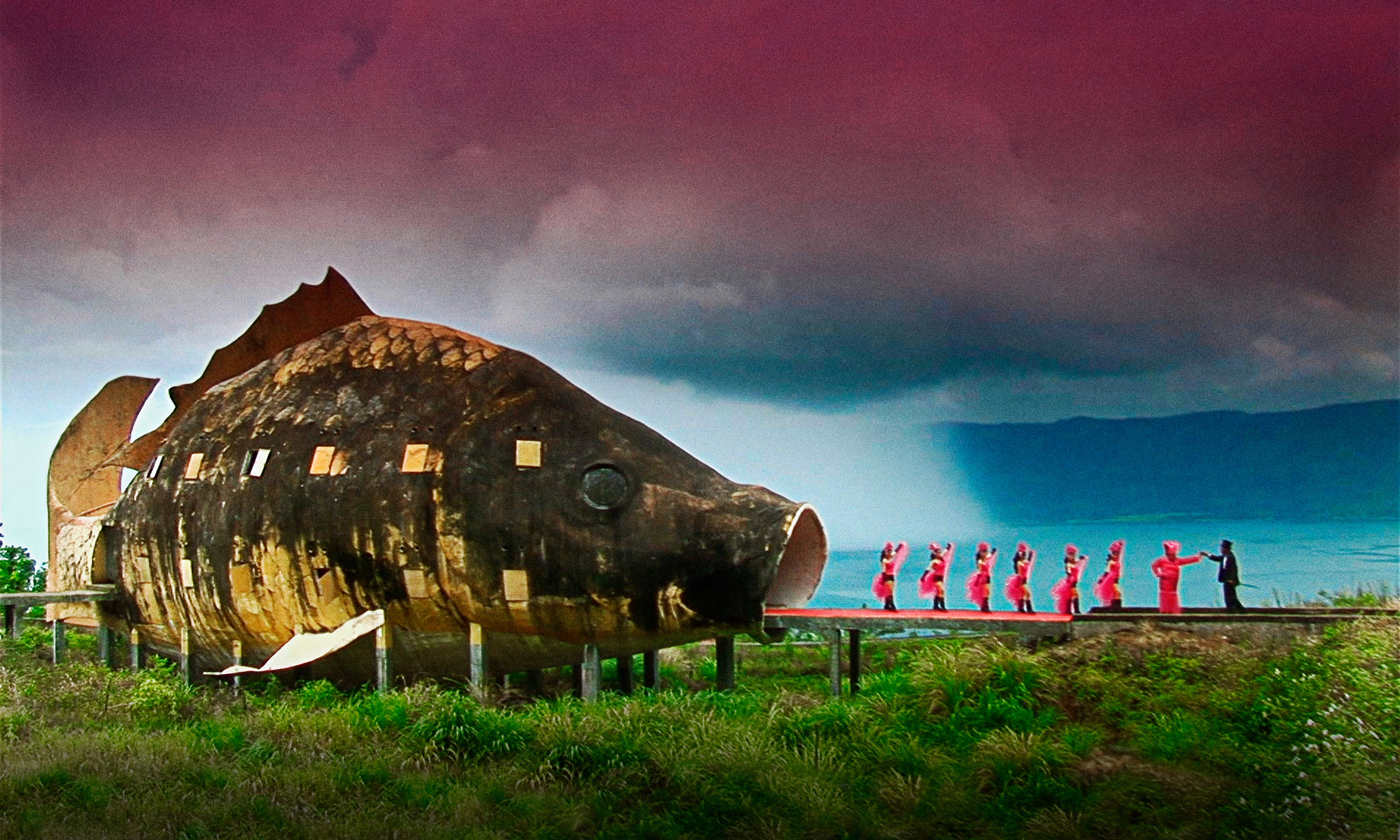
Drawing off that love of movies, Oppenheimer invites the killers to recreate their crimes for the camera in any manner they wish, using sets, costumes, even stage blood. The “re-enactments” are positively surreal, as we the men dress up as movie gangsters in a noir film, or dance under a waterfall in a bizarre music video, the ghosts of the murdered coming forward to thank the killers and present them with medals. It’s so ridiculous that it’s almost laughable, but the laughs stick in your throat.

the-act-of-killing

It’s madness. By turning murder into performance, “The Act of Killing” dramatizes the perverted hearts of these men, the twisted mental leaps they needed to feel okay, and even proud, of what they’ve done. It’s a collective madness that infects the entire country — at one point, one of the men likens his country to a nation of “soap opera stars,” all playing the part of patriotic, happy citizens, none of them believing it.

The one possible exception is Anwar Congo, a dapper man in mustard-yellow suits who has admitted to have killed hundreds of people. He cautiously reveals that his dreams are haunted by the ghosts of the people he strangled, and as he performs in his films, with extras playing the part of screaming women and children, it starts to cut too close to home. If there is a glimmer of hope in “The Act of Killing,” it is in Congo’s slowly growing realization of the horror of what he’s done.

His unease isn’t enough, not nearly enough, to atone for the suffering he caused. But as he revisits a rooftop where he killed his victims, and is suddenly seized by a bout of uncontrollable retching, we’re grateful for this tiny measure of justice. This is an unforgettable film.

“Paranoia”: I have the strangest feeling someone is watching a bad movie

PARANOIA

“Paranoia” opens Friday at Point, Eastgate, and Star Cinema. PG-13, 1:42, one and a half stars out of four.

“Good artists copy,” someone in “Paranoia” quotes Pablo Picasso as saying. “Great artists steal.” By that measure, “Paranoia” must be a great movie.

Robert Luketic’s limp adaptation of the bestselling novel by Joseph Finder cribs shamelessly from every corporate-techno-thriller of the last 20 years, from “The Firm” to “Duplicity.” It’s like one of those cheap knockoff phones you might buy on a streetcorner in Manhattan — the “IPhoen 5” of thrillers.

Liam Hemsworth is deeply miscast as Adam Cassidy, a hotshot tech wizard who just happens to look like an Olympic diver. (Seriously, who knew tech nerds took their shirts off this much?) A low-level striver in the Wyatt Corporation, run by the arrogant Nicolas Wyatt (Gary Oldman), Adam dreams of making it to a corner office. Instead, Wyatt fires him after a lousy pitch meeting, and then threatens to arrest him when Adam uses the company credit card to finance a night on the town for him and his friends.

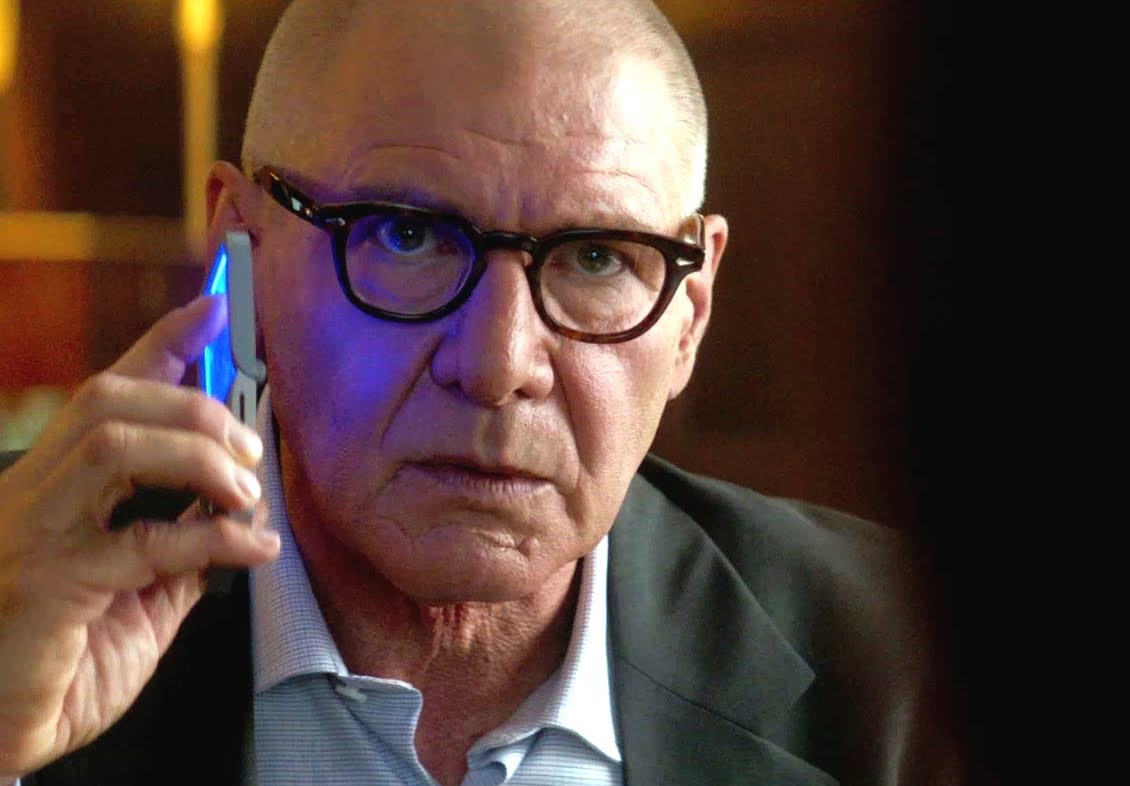
But Wyatt has another offer. He wants Adam to become a corporate spy at Eikon, another tech company run by his rival and mentor, Jock Goddard (Harrison Ford). If Adam can get details on the revolutionary new smartphone that Eikon has in the works, Wyatt will forgive the debt and throw a million dollars in to boot.

So Andrew goes to work for Goddard, who seems much more avuncular and paternal than the devious Wyatt, and the central tension of the film is supposed to be watching Adam decide which billionaire he’ll screw over for the sake of the other. This kind of movie needs zippy, smart pacing and style to get past the plot inconsistencies, but “Paranoia” moves at a leaden march, using ominous music and needless visual trickery (jump cuts and super slo-mo) to try and convince the audience that what they’re watching is cool and suspenseful. Luketic used the same tricks in his last film “21” (which has essentially the same plot, of a handsome young hero trying to outsmart two character actors), it had a more appealing lead actor in Jim Sturgess, and a more interesting environment in Vegas.

paranoia

The only time “Paranoia” comes to life is when Ford or Oldman are on screen, but each gets only about 20 minutes of screentime, despite their prominence on the movie poster. Oldman, slipping into his native British accent for the first time in a while, plays Wyatt as a Cockney tough who somehow made it to the penthouse suite. And Ford, his head shaved, seems to revel in playing a guy who might be nastier than the father figure he appears to be.

When those two clash, finally, “Paranoia” is kinda fun. But they’re largely backgrounded in favor of Hemsworth, who is neither convincing as a tech guy nor, more crucially, as an ambitious guy from the sticks who will do anything to get ahead. Instead, he’s a bland hunk who ambles from scene to scene, furrowing his brow or flashing a confident grin when the scene calls for it,, without any sense that there’s anything going on behind that handsome mug. You kind of want Oldman or Ford to crush him like a bug in the first act and get together themselves for a little “Air Force One” reunion (“Get off my skyscraper!”)

“Love is All You Need”: Although a villa in Italy doesn’t hurt, either

Love-Is-All-You-Need-Movie

“Love is All You Need” opens Friday at Sundance Cinemas in Madison. R, 1:50, three stars out of four.

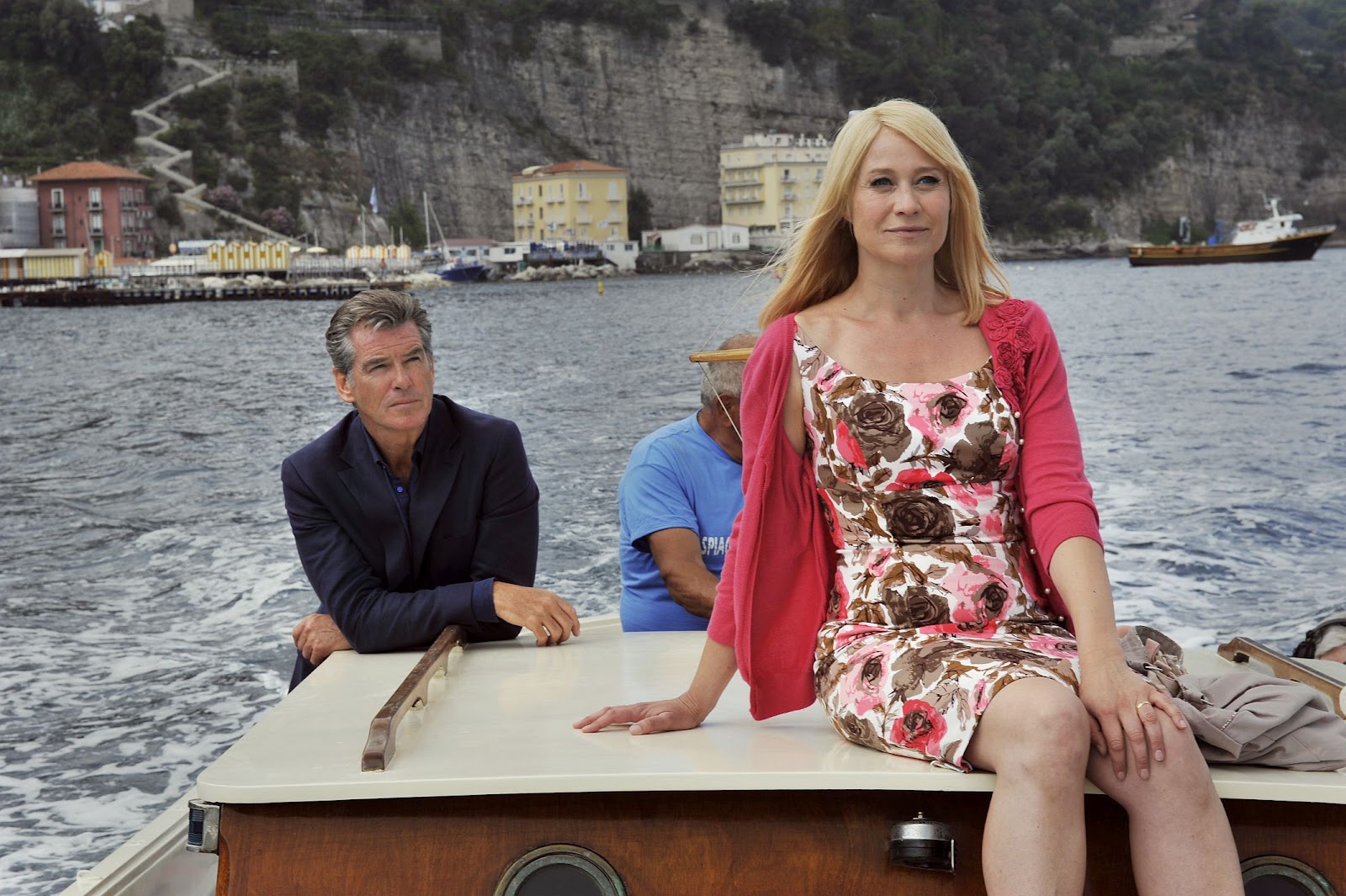
Honestly, I didn’t trust the poster for “Love is All You Need.” It looks like a typically flluffy romantic drama, with Pierce Brosnan and Trine Dyrholm embracing in front of an Italian landscape — “Something’s Gotta Give” with subtitles. But the director is Danish filmmaker Susannah Bier, known for some pretty dark dramas (“Brothers,” “In a Better World.” It would be just like her to pull the rug out from underneath our middle-aged lovers, and the audience.

But, no, “Love is All You Need” comes mostly as advertised, a fluffy and warm romance about characters finding love in the Italian countryside. But Bier and longtime screenwriter Anders Thomas Jensen do introduce sadder notes into their brightly-colored landscapes, which deepen the characters enough that we root for them.

Ida (Dyrholm) has just undergone cancer treatment, her bald head hidden by a long blonde wig. Her daughter is getting married in Sorrento, so as she waits for the final word on whether the treatment worked, she tries to throw herself into the celebration. But when she catches her doughy husband on top of a female employee, she heads to Italy with a pained look, wondering if she’s beating cancer only to win a lifetime of loneliness.

Then she meets Philip (Brosnan), an executive who has thrown himself into his work following the death of his wife. Philip is also the father of the man Ida’s daughter is marrying, and owns the sumptuous villa where the wedding is taking place. He’s brusque and arrogant, flat-out rude to Ida at first, but slowly starts warming up to her charms. Leaving behind the Danish blues and grays of her past films, Bier seems to revel in the warm, bright colors at her disposal here, the bright yellow lemons in the villa’s grove playing off against the deep blues of Philip’s shirts.

LoveIsAllYouNeed_PIC1 (Large)-69872

On one level, this is only one or two notches deeper than a Nancy Meyers flick, but Bier does play with darker themes. Ida is terrified to hear what her doctor has to tell her, and masks her fear with a dazzling smile. Similarly, the return to the villa is dredging up Philip’s bitterness and grief over his wife’s death, which he’s tamping down under a no-nonsense exterior. Ida and Philip are opposites on the surface but very alike underneath, and the film is very appealing as the couple slowly open up and share themselves to each other.

There are other aspects of “Love” that feel overplotted, like a guilty secret that the groom holds, or the grating presence of an aunt who has designs on Philip herself. But when the film gets back to that central relationship, it’s a treat. I think Bier might be a little too acute an observer of human behavior to agree with the simple premise of her film’s title, but she makes us believe it for a while, anyway.