Charles Bradley film in Madison? Let’s make it happen

charlesbradley

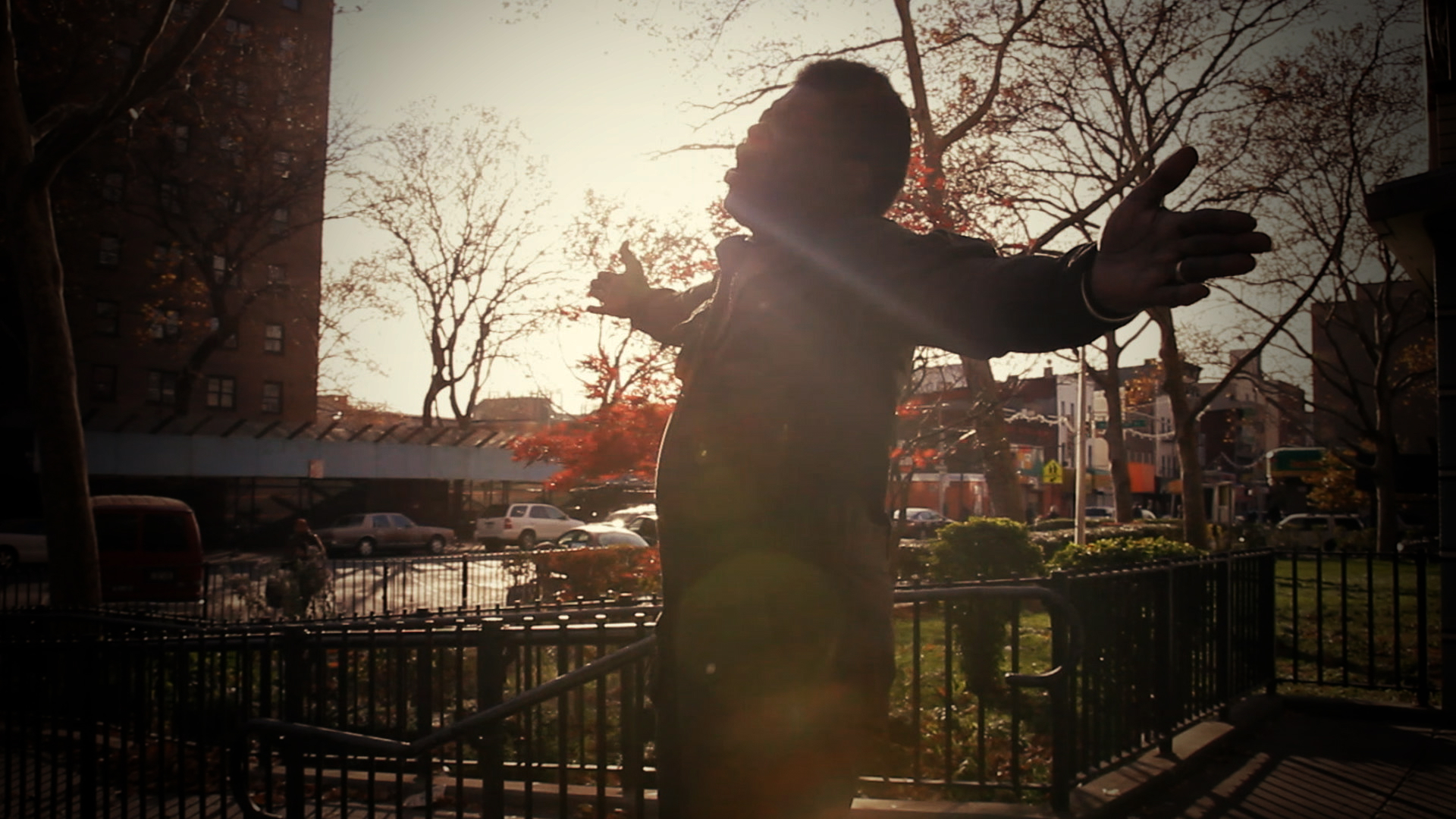
One of the most electrifying of today’s soul performers is Charles Bradley, who I saw open for Sharon Jones & The Dap Kings at the Barrymore Theatre a few years ago. Originally a James Brown impersonator, the 64-year-old Bradley has gone beyond impersonation and become an authentic and exciting soul singer.

And, as Andy Downing’s great interview for 77 Square last February showed, that road to the spotlight has been long and hard for Bradley, and he has a lot of heartache to draw from when he performs. All of which is to say that Bradley would make a great subject for a movie, and he did — the documentary “Charles Bradley: Soul of America.”

Some Madison folks are using Tugg (like Kickstarter for movies) to set up a screening of “Soul of America” on Wednesday, Sept. 18 at Star Cinema, and they need your help. The way Tugg works is that a certain number of people have to pledge to see the film. If enough pledge, then it happens. Right now, with nine days to go until the deadline, the organizers need another 47 people to reserve tickets via the website.

To sweeten the deal, True Endeavors will be raffling off four tickets to Bradley’s December 4 show at the High Noon Saloon, and Strictly Discs will also be giving away a prize package to a lucky audience member. Even without that’, it’s a worthy chance to support a great artist and a local grassroots effort to bring something different to the big screen.


Interview with “Ain’t Them Bodies Saints” director (and not Cracker frontman) David Lowery

saints

David Lowery shares my pain.

The writer-director of the elegiac period drama “Ain’t Them Bodies Saints” and I both share a name with a musician much more well-known than us.

“It’s just something that over the past five or six years has become a frequent thing,” he said in a phone interview from New York City a couple of weeks ago. “I had to change the bio on my Twitter account to read, ‘Not the one who sings.’”

Lowery has never met his namesake, although, based on the reaction that “Ain’t Them Bodies Saints” is getting, maybe someday the Camper Van Beethoven/Cracker frontman will have to change his Twitter bio to read “Not the one who makes elegiac modern Westerns that have been compared to Malick and Altman.”

“Saints,” which opens in Madison this Friday at Sundance Cinemas, is a love story in which the lovers are only together at the very beginning and very end of the film. It’s also a crime story that takes place after the crimes have already occurred.

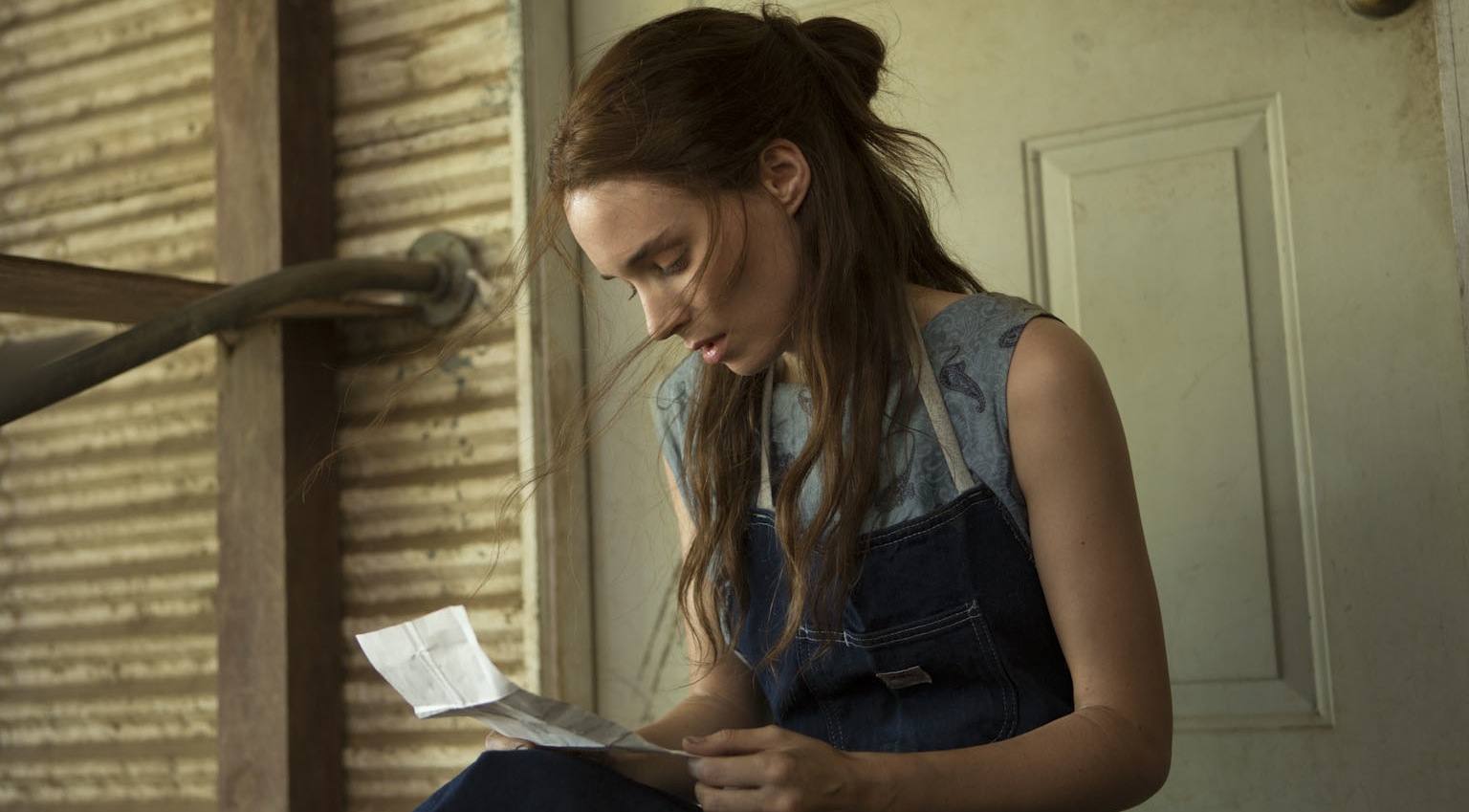
The film opens with husband-and-wife outlaws Bob Muldoon and Ruth Guthrie (Casey Affleck and Rooney Mara) cornered by police in Texas and eventually captured. Bob pines for his wife, who is pregnant with her daughter, and years later finally breaks out to reclaim his family. But while he has stayed in a state of romantic swoon, Ruth may have moved on, with the help of a kindly sheriff (Ben Foster) who was involved in their capture.

“Saints’ has been compared to Malick’s debut “Badlands” and Altman’s “Thieves Like Us” for its tale of lovers on the lam, but Lowery’s film is more interested in the moments between the ones we normally see in these films. Frequently the action happens off-screen, and whatever action we do see has an odd, contemplative rhythm to it.

“I initially start to write a movie that was more of a strangeforward genre film,” Lowery said. “I was writing action scenes and I couldn’t think of a way to do it – we’ve seen the jailbreak scene already, and there have been some really great movies about bank robbers. I found myself really interested in what would happen after that.

“There’s nothing you haven’t seen in other movies, but the way in which we tell it is hopefully what makes it vital,” he added. “The thing that I can bring to it is that sense of rhythm and juxtaposition that are distinctly mine.”

Lowery entered the world of filmmaking primarily as an editor, working on the movies of his friends (he edited Shane Carruth’s “Upstream Color.”) He made his first film, “St. Nick,” in 2009, and the short film “Pioneer” in 2011.

“Saints” feels like a whole order of magnitude larger, both in its star power with Mara and Affleck and in its ambition. But Lowery said that while the scope of the film was bigger, the essence of making a movie remained the same.

“I was really surprised on the first day of shooting how it felt like everything I made before,” he said. “My first feature was a $12,000 movie and you’d think that making a $3 million movie would be a seismic shift. It’s really not. There’s  a lot more people and there’s rules you have to follow. But at the end, you’re sitting there with a camera and you’ve got some actors and you’ve got a scene you need.”

Lowery especially wanted to retain a feeling of intimacy and improvisation on the set, allowing the actors to experiment and be alive to unplanned things that might happen in the moment.

“One of the ways that you do that is you plan a lot in advance,” he said. “You create a very tight structure and you have your shot list. And then you don’t feel beholden to that. You know that if things get tricky you can fall back on this plan, but you’re creating an environment in which you can be alert to changes.”

His experience in the editing bay turns out to be an asset as a director and even as a writer, as he’s always thinking about how one moment or shot will line up with the others.

“I looked at the shots that I imagined getting and thinking really hard about what I really needed. I tried to simplify and find the most concise and direct way to get the heart of the scene.”

With the success of “Saints,” Lowery’s name has been attached to a number of projects, including writing the remake of Disney’s “Pete’s Dragon” to writing and directing “The Old Man and the Gun” with Robert Redford. Lowery said he wouldn’t rule out going back and editing someone else’s film sometime. But not in the near future.

“I’m immediately excited about directing,” he said. “I just had so much fun making this movie.”

So you think you can dance (and watch a movie at the same time?)

Anne-Marsen-Girl-Walk-still

I’m pretty much a purist when it comes to talking or texting during a movie. If i see that little blue-white square of light come on in my peripheral vision, I’ll say something.

But dancing during a movie ? No problem.

I mean, it’s well-nigh impossible not to dance to the insanely fun “Girl Walk//All Day,” a feature-length “street-dancing” movie that’s playing for free at the Memorial Union Terrace on Saturday, Aug. 31 at 9:30 p.m. As a matter of fact, I’ll be mightily disappointed if a crowd of people don’t start dancing.

The movie is like one extended music video, scored to musical mixologist Girl Talk’s “All Day” mixtape, which is a mash-up of over 300 samples, most of them instantly recognizable, from the Ramones “Blitzkrieg Bop” to Missy Elliott’s “Get ur Freak On,” all gloriously combined into an extended, thumping dance-music opus.

That album provides the soundtrack to Jacob Krupnick’s “Girl Walk//All Day,” which follows a professional dancer (Anne Marsen) who, after a frustrating day at the barre, dances her way through New York City, making the sidewalks, subway turnstiles and public parks her stage, other dancers joining her from time to time, onlookers wearing expressions of bafflement and delight. It’s pure cinematic joy, kinetic and playful.

“Girl Walk” first screened as part of the Madison Museum of Contemporary Art’s Rooftop Cinema series in May 2012, and it was one of the most memorable screenings of my life. As the film played, a small crowd of audience members gathered to the side of the screen to dance along. As the film went along, you could sense people around you in the seats one by one finally hit that tipping point, where the urge to dance outweighed their inhibitions, and they’d get up to join them. (My tipping point was apparently a lot farther along than most people, but I finally worked up the nerve to join them for the last 15 minutes or so. As someone who has spent a lifetime in the seats, observing, I can’t tell you how strange, how exhilarating it was, to be up there.)

All of which is to say that “Girl Walk//All Day” is a very special thing to see live, and should be a wonderful film to see on the Terrace, on a Saturday night, with a crowd full of students on the eve of a new fall semester. Just make sure to bring comfy shoes, and leave your inhibitions at home.

“Prince Avalanche” leads landslide of new films in UW Cinematheque fall season

PrinceAvalanche2_0

Without skipping a week from its summer-long tribute to Roger Ebert (which concludes with Ingmar Bergman’s “Smiles of a Summer Night” at 7 p.m. Thursday and Mel Brooks’ “The Producers” at 7 p.m. Friday), the UW Cinematheque’s free on-campus film series jumps right into its fall series next week.

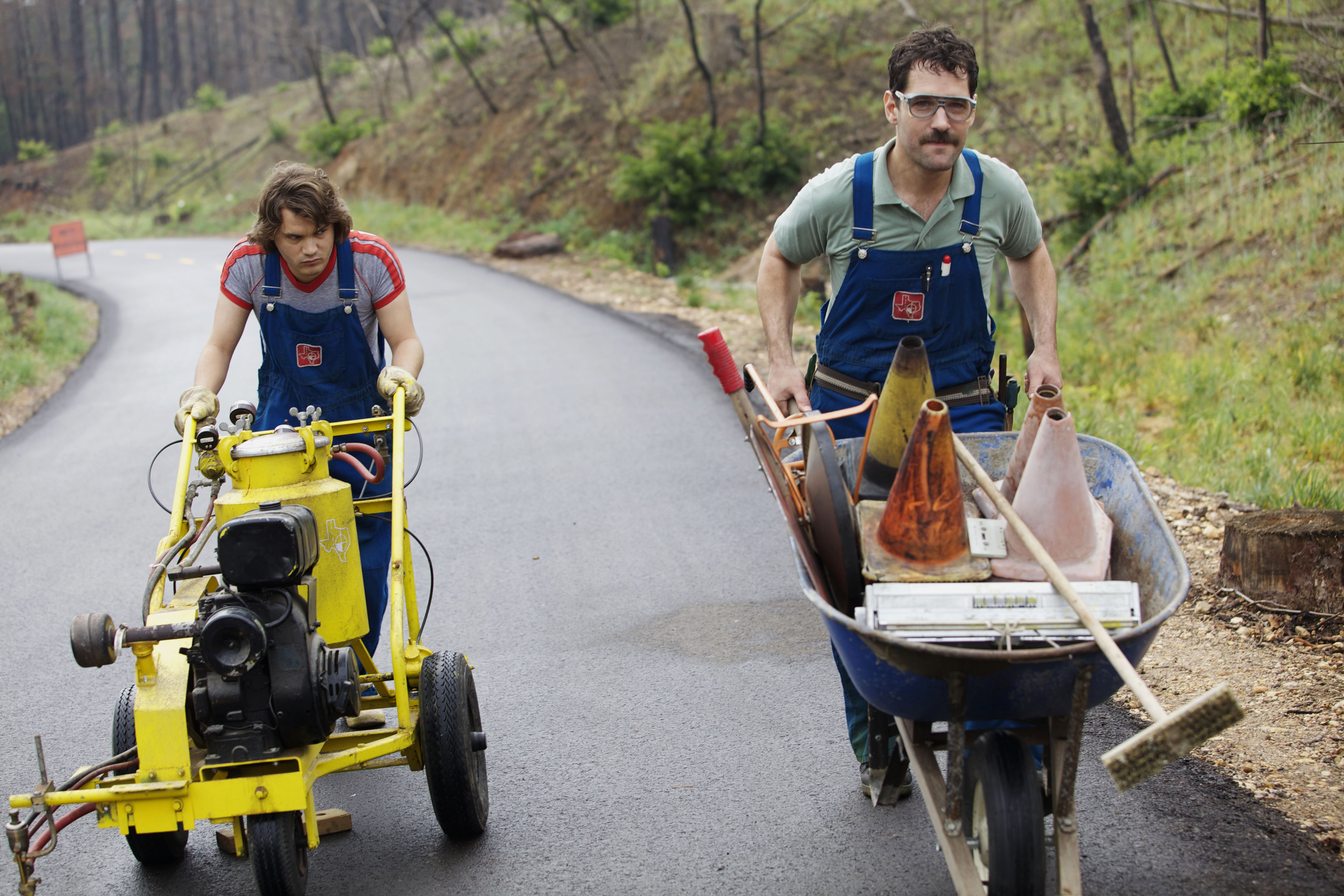
The fall schedule begins with the much-anticipated Madison premiere of “Prince Avalanche” at 7 p.m. Friday, Aug. 30 at 4070 Vilas Hall. The film, a comedy-drama featuring Paul Rudd and Emile Hirsch as two lonely men painting the yellow stripes on a remote stretch of highway, has two indirect connections to the Wisconsin Film Festival. Director David Gordon Green brought his first film, “George Washington,” to the festival in 2001, and the 2013 festival featured “Either Way,” the Icelandic comedy that “Prince” is based on.

On Saturday, Aug. 31 at 7 p.m., Cinematheque will begin a fantastic series of crime films by French director Jean-Pierre Melville, beginning with “Bob Le Flambeur,” which was remade into “The Good Thief” with Nick Nolte about a decade ago. The Melville series will also include his masterful French resistance drama “Army of Shadows” (Sept. 14) and stylish heist film “Le Cercle Rouge” (Sept. 21).

I’ll be digging much deeper into the schedule as the season gets underway, but here’s a taste of what’s in store. Remember that all films are free and screen at 4070 Vilas Hall unless otherwise noted. Visit cinema.wisc.edu for more information.

Madison premieres: In addition to “Prince Avalanche,” Cinematheque will host the Madison premiere of Johnnie To’s new gangster drama “Drug War” (just named “Essential Cinema” by The Dissolve.com) on Sept. 27, Joe Swanberg’s acclaimed comedy “Drinking Buddies” on Oct. 3, and filmmaker Jill Soloway will be in person to present her debut feature “Afternoon Delight” on Nov. 14.

International horror: The full range of global chills and thrills will be represented in the weeks leading up to Halloween, from the J-horror of “Kwaidan” (Oct. 4) to the creepy French horror film “Eyes Without a Face” (Oct. 11) to the Italian giallo of Dario Fulci’s “The Beyond” (Oct. 25).

Werner Herzog tribute: The Cinematheque presents four films by the legendary Herzog, including “Stroszek” (Oct. 19), which was filmed in Wisconsin, and “Encounters at the End of the World” (Oct. 26), a documentary filmed in Antarctica.

Cinemascope at 60: “The Sunday Cinematheque at the Chazen” series has been a huge hit, and this salute to anamorphic widescreen classics looks to continue that trend, with 13 films ranging from Jean-Luc Godard’s “Contempt” (Sept. 8) to Max Ophuls’ sublime “Lola Montes” (Oct. 13) to Akira Kurosawa’s “The Hidden Fortress” (Nov. 24.)

Marquee Mondays: The Cinematheque takes over the Marquee Theater at Union South one Monday a month to present less critically acclaimed but undeniably entertaining  films, including the nutty “An American Hippie in Israel” (Oct. 21) and the Hammer Films heist thriller “Cash on Demand” (Dec. 10).

What Elmore Leonard taught us about getting old

Elmore-Leonard

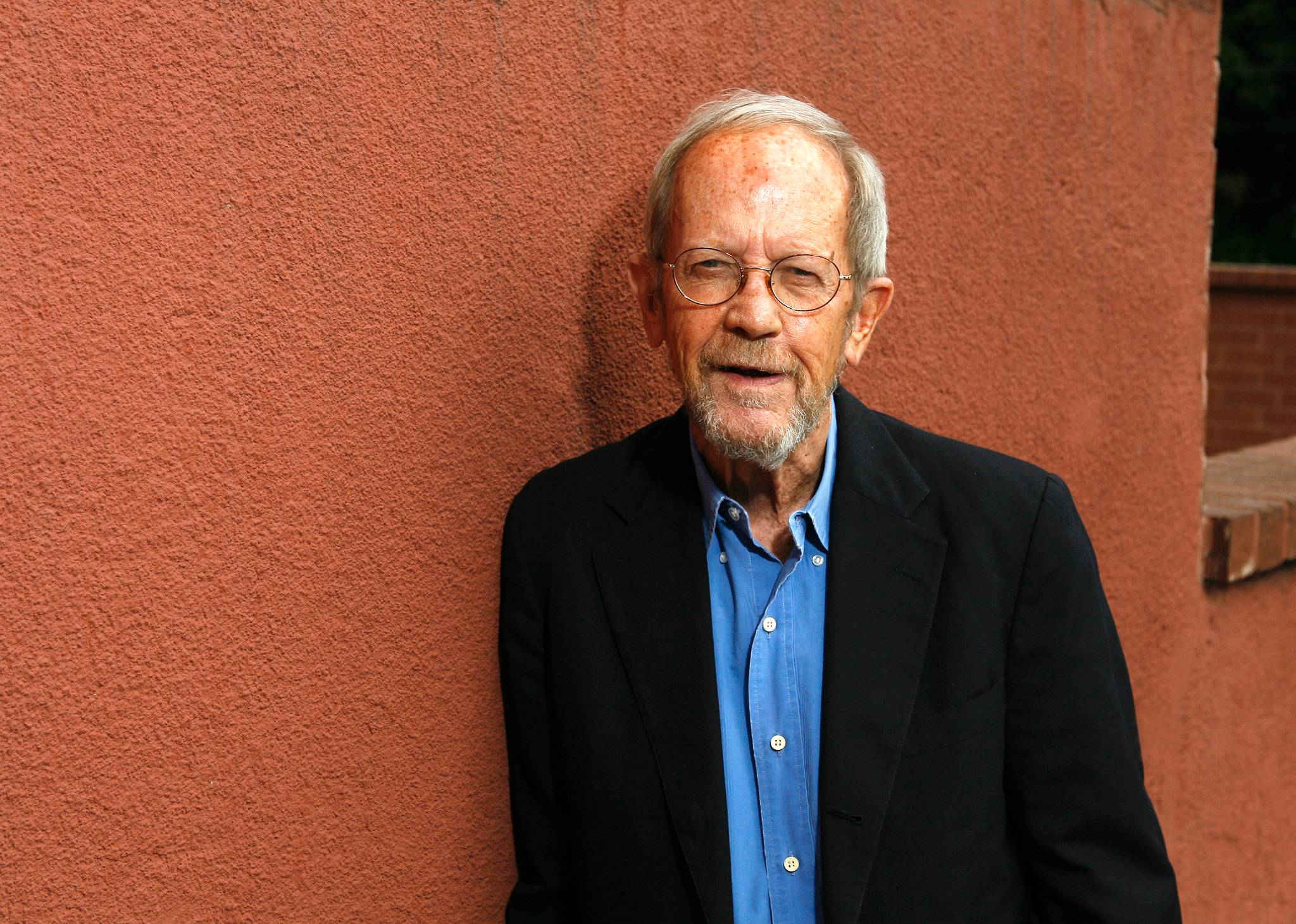
The Internet is full of great writing about the passing of Elmore Leonard — not as great as he would have written of course, but those who salute him acknowledge that up front. A career of over 40 books in nearly 60 years, some of which sparked wonderful movies and television shows (and some didn’t). There’s lots to salute.

So this is one small corner of Leonard’s genius, but what struck me as different about his characters than about those of most crime novelists — most novelists, actually — is their capacity to grow and change, and not necessarily in a good way. Leonard would revisit characters from previous books, and he wrote a couple of later novels that could be considered proper sequels, such as “Be Cool” and “Road Dogs.” But what I found fascinating is when a character would change on us from book to book, and what that said about the way Leonard saw his fellow man.

So here’s three things Elmore Leonard taught us through his books about getting old:

1. People change. In 1978, Leonard wrote a book called “The Switch,” in which two ex-cons, Ordell Robbie and Louis Gara, kidnap the wife of a Detroit auto magnate. Only the husband is a bastard who doesn’t want to pay, and the kidnappers end up colluding with the housewife to rip the guy off for millions. Robbie and Gara are classic antiheroes.

In 1992, Leonard brought them back for “Rum Punch,” which became the basis for Quentin Tarantino’s “Jackie Brown,” with Samuel L. Jackson as Ordell and Robert De Niro as Louis. Only now, they’ve changed. Ordell used his loot to build a drug empire, and is a criminal as ruthless as they come. Meanwhile, Louis frittered his share away, knocked around, and never made anything of himself. Success made Ordell hard, failure made Louis soft

They were the heroes of one Elmore Leonard novel, and now they’re the villains  of another. I can’t think of another writer who pulled that off. I still remember the shock of that, getting the chance to revisit a pair of fondly-remembered characters (“Ordell and Louis are back!” read the back cover blurb) only to have seen them changed, for the worse.  What happened to them says a lot, I think, about how Leonard viewed people, that they don’t stay the same, but they get changed by circumstances, especially as they get older and life takes them down different paths.

2. Be careful what you wish for. Leonard wrote two books that featured Miami bookmaker Harry Amo, 1993’s “Pronto” and 1995’s “Riding the Rap.” It’s “Pronto” that I remember best, especially Amo, who is near retirement age, planning to get out of the bookmaking game and retire to a villa in Italy. It’s what he’s dreamed about all his life, since he was a soldier there in World War II. Finally, he makes it to his dream retirement villa — and he hates it. The place is drafty, it’s lonely, he misses everything about his old, busy life in Miami.

You could see Harry’s story as a sly wink at the audience (Leonard was about the same age as Harry at the time) about the prospects of Leonard retiring himself. Retirement, resting, wasn’t for guys like him and Harry. It was the act of doing, of living your life, that was the real reward for life itself, the thing that really gave pleasure, not some mythical castle in the sky that, in the end, turned out to be dull and drafty.

3. Do what you love, right now, and keep doing it until further notice. And that’s the final lesson, taken of course from Leonard’s life itself. He started writing in his 20s, and he was good. Then he kept writing and he got even better. Then he got great. Then he got famous, but he never chased fame, and never let that distract him from being great. And then he never stopped being great until his time was up.

Leonard’s fiction was full of guys hungry for one big score, one big payday that would change their lives, make them happy. Usually they messed it up, sometimes they died. Sometimes, in the case of Harry or Louis, they got what they wanted and it didn’t change anything. Sometimes it made things worse. Leonard saw it all with an amused eye, refusing to judge, as he merrily kept on doing the thing that he loved to do, the thing that he was best at, for 60 years.

Now that’s a big payday. Rest in peace, Dutch.

Michael Gilio’s little film “Kwik Stop” needed a champion, and got Roger Ebert

kwikstop

Of all the films playing in the UW-Cinematheque summer-long tribute to the late Roger Ebert, from “The Third Man” to “The Producers,” the one you’re most likely not to have heard of is “Kwik Stop.”

But Ebert wanted you to know it.

So, while the Chicago Sun-Times’ film critic’s passing in April is an unfortunate occasion to revisit “Kwik Stop,” he would probably have liked the fact that the sparkling and surprising 2001 indie film is getting another shot on the big screen. The film will screen for free at 7 p.m. Friday at the Union South Marquee Theater, 1208 W. Dayton St., with writer-director-star Michael Gilio talking about the film and Ebert’s impact on it.

For Gilio, now a screenwriter living in Los Angeles, it will be the first time he’s seen “Kwik Stop” on the big screen since Ebert screened it at the Gene Siskel Center in Chicago in 2005.

“It’s going to be fun,” Gilio said in a phone interview Wednesday. “I’m looking forward to talking about Ebert and remembering the whole thing.”

Ebert’s impact on Gilio’s appreciation for film came at an early age, growing up in the Chicago suburb of Arlington Heights and watching “At the Movies” with Gene Siskel on Saturday nights.

“I would read his movie book every year,” Gilio said. “I would read all the reviews and being kind of in rural Illinois, you didn’t have access to all these films. A lot of the introduction to film for me was just reading his reviews, and I would imagine the movie in my head when I would read them.”

As an actor and screenwriter, Gilio moved back and forth between Chicago and Los Angeles. For his first feature, “Kwik Stop,” he decided to film in his home city, using the convenience stores and motels and corner bars of working-class suburbs as his landscape.

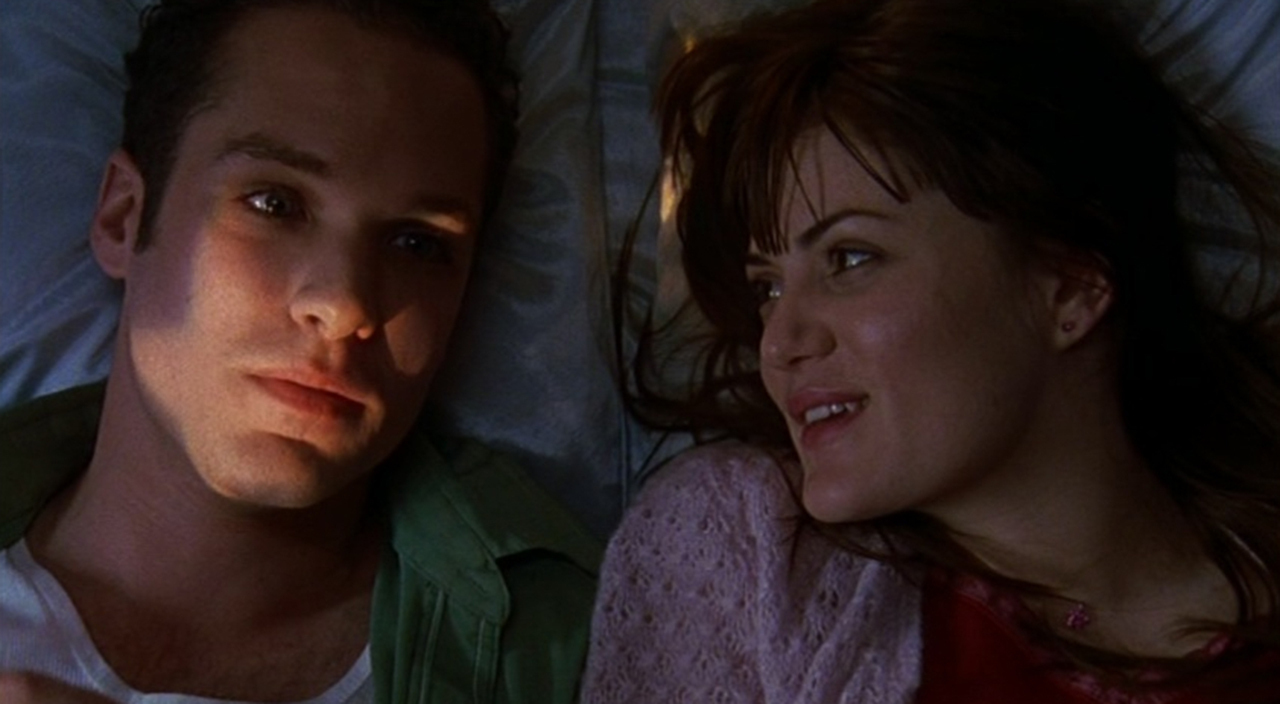
The film kicks off in a way that makes the viewer think this will be a Calumet City update of “Breathless.” A teenager named Didi (Lara Williams) catches a sharp-eyed drifter named Mike (Gilio) stealing a tube of tartar-control toothpaste from a Kwik Stop. Mike brags that he’s heading to Hollywood to become a famous actor (in a car that seems like something out of a movie, with a cutout of Harvey Keitel in the rear-view mirror). Didi begs to go along.

But instead of being a road movie, or a crime movie, or a love story, “Kwik Stop” contains pieces of all of them, playing with genres before subverting expectations. Mike and Didi’s journey together goes to unexpected places, eventually involving Mike’s ex-girlfriend Ruthie (Karin Anglin, who may be at Friday’s screening) and a surly widower (Rich Komenich).

“Poignancy comes into the movie from an unexpected source,” Ebert wrote in his 2002 review. “Depths are revealed where we did not think to find them. The ending is like the last paragraph of a short story, redefining everything that went before.”

Looking back, Gilio says “Kwik Stop” was made in one era in American movies and released in another. When he began making the film, independent films were hot, and in addition to independent distribution houses like ThinkFilm or Newmarket, studios had their own thriving distribution arms like Warner Independent or Paramount Vantage.

“It was just a totally different age,” Gilio said.  “The narrative went if you could get a couple of dentists to contribute you could od a little movie on the cheap, and then you could break out at Sundance and get picked up by one of the independent companies, and you’d be on your way.”

By the time the film was released in 2001, that independent market had largely collapsed, and distribution sources dried up. Even “Kwik Stop” looked different than the other films it would play with at festivals, shot on Super 16 film rather than low-quality digital video.

“It was already a dinosaur,” he said. “Most of the films being shown were all on video. But this was before HD even, so the quality of the movies wasn’t that great, but everyone was shooting on the cheap. And our movie was still on film. It was a weird time. The movie premiered at a time when things were radically changing.”

It also didn’t help Gilio’s cause that “Kwik Stop” was so hard to identify, mixing comic and dramatic elements, following one character and then the next. It’s a hard film to sum up in a movie poster slogan.

“The things that I feel make the film special and unique were the very things that made the film difficult and challenging to get seen and marketed,” he said.

Luckily for Gilio, the film was accepted into the Chicago International Film Festival, and when Ebert got a private screening ahead of time, he loved the film. He began talking it up to other critics and film people, and Gilio began getting invited to more and more film festivals in the United States and Europe.
ebert-award

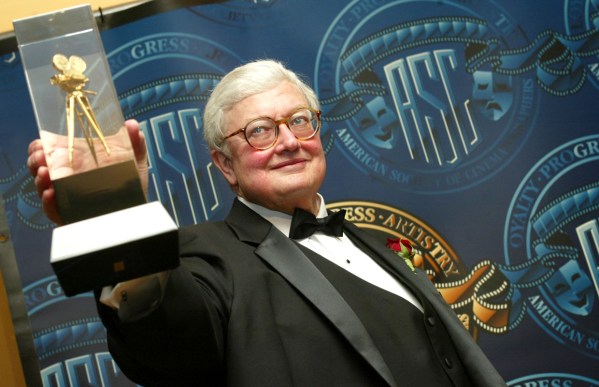
“He just became a huge champion for us,” he said. “He had such a large national and international voice that it brought a lot of attention to this little film that could.”

Unfortunately, it wasn’t enough for “Kwik Stop” to get a broad distribution deal. It had a small theatrical release, enough that Ebert could then write a formal review praising the film and Gilio. He invited it to play at his Overlooked Film Festival in Champaign-Urbana, which Gilio says was one of the best professional experiences of his life. When Chicago’s Siskel Center asked Ebert to select one of his Overlooked films to play there, he chose “Kwik Stop.”

The film finally came out on DVD in 2005, and Charles Taylor wrote in Slate that the shabby treatment such a good film received in the industry underscored how much had gone wrong with the independent film scene.

Still, Gilio remains grateful to Ebert for his unwavering support of the film, and has fond memories of spending time with Ebert onstage and off, talking about movies.

“When he embraced the movie, it was a really big deal for me and my family,” Gilio said. “Just a very kind, generous guy who went well beyond. He was very passionate about film and about the little guy.”
Sundance Classics gets serious with “Pulp Fiction,” “Fight Club,” “French Connection”

pulp_fiction_uma_thurman

Summer’s winding down, folks. And with it goes the fluffy summer classic movies that Sundance Cinemas in Madison had been programming, like “Ghostbusters” and “Dirty Dancing” (which plays Wednesday (today) at 1:20 p.m. and 6:45 p.m.

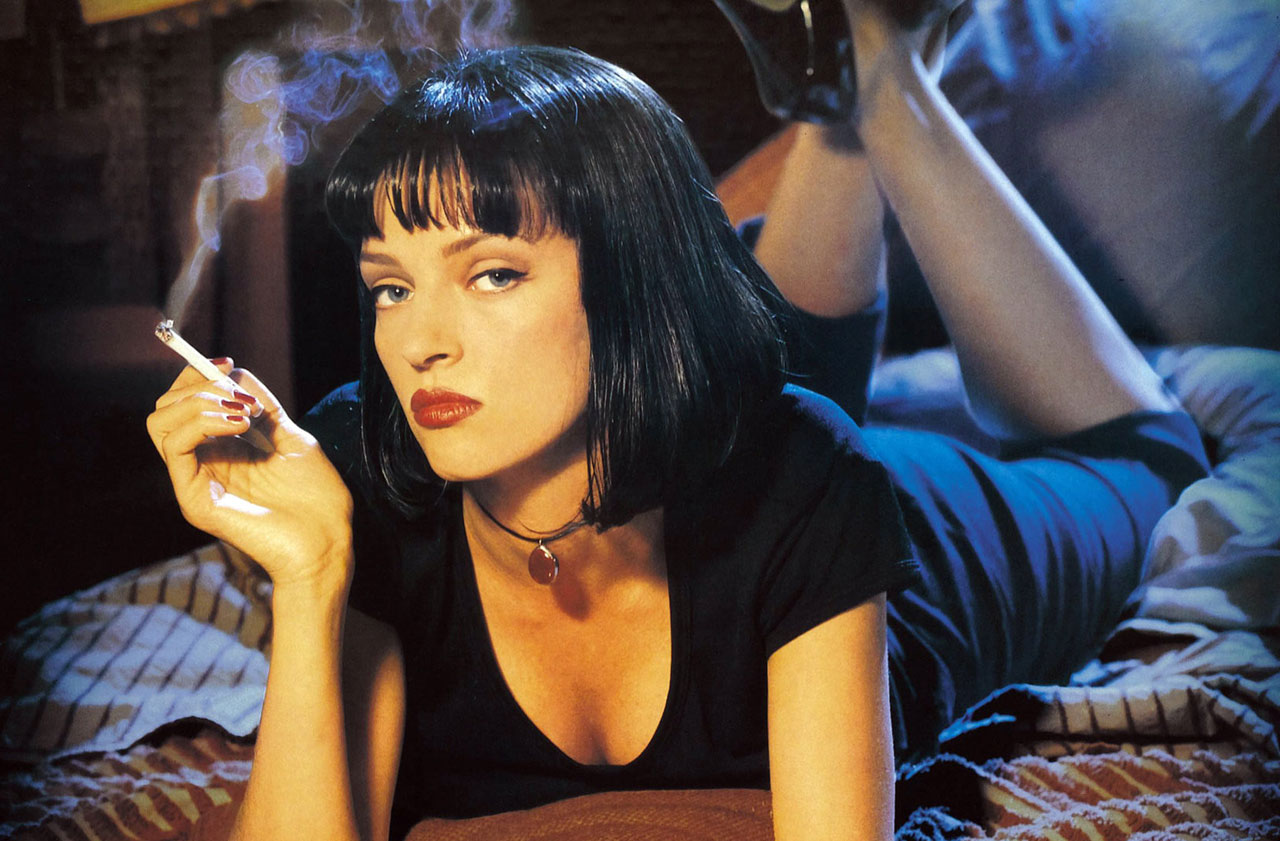
When the series returns for another run on Wednesday, Aug. 28, things are going to get more serious. They’re going to get medieval, even, starting with Quentin Tarantino’s 1994 classic “Pulp Fiction.” I still viscerally remember seeing it opening night in Springfield, Illinois with some grad-student friends, crammed down into the front row, left side, because the theater was so packed, and feeling almost electrified by what I was seeing.

All of which is to say that, even if you’ve seen “Pulp Fiction” a dozen times since, it’s a movie that demands a big-screen experience with a crowd, which is why the Sundance Classics series is so valuable. And Madison audiences have definitely responded, selling out several screenings (such as “Raiders of the Lost Ark” in May) while, in other cities, the classics series has been discontinued for lack of interest.

Here’s the full schedule for the next Sundance Classics series:

Aug. 28 — “Pulp Fiction” — I loved “Django Unchained,” but this is still Tarantino at the height of his powers, a time-jumping, blood-pumping crime epic in which he seems also desperate to make every moment entertaining.

Sept. 4 — “The French Connection” — Everybody remembers the car chase, of course, but William Friedkin’s 1971 thriller is full of great scenes, from the cat-and-mouse game on the subway to Gene Hackman’s take-no-guff Popeye Doyle, a cop who skates uneasily close to the line between right and wrong.

Sept. 11 — “Some Like it Hot” — Okay, Billy Wilder’s comedy, about musicians Tony Curtis and Jack Lemmon hiding out from the mob in an all-girl band, doesn’t fit with the “serious” theme of this post. Nobody’s perfect.

Sept. 18 — “To Kill a Mockingbird” — Harper Lee’s autobiographical novel became both a riveting courtroom drama and a resonant portrait about good versus evil in a Southern town, as seen through the eyes of the indefatigable Scout.

Sept. 25 — “Fight Club” — First rule of “Fight Club” is that you tell everyone to go see David Fincher’s bloody satire of masculinity in the age of corporate America.

Oct. 2 — “Vertigo” — You can’t do a classic series without a little Hitchcock, and his twisty, twisted tale of obsession and guilt in San Francisco turns the private eye drama into something much darker.

On “destruction porn” in summer blockbusters, and in praise of the third-act downshift

World-War-Z

I was reasonably depressed by this article from New York magazine’s Vulture site last week, an interview with Damien Lindelof about the “new rules of blockbuster screenwriting.” The paramount rule seems to be to wage a war of escalation against every other blockbuster out there, going for splashier effects, bigger stakes, and even grander scale of destruction. That’s why the Earth has been destroyed or nearly destroyed a dozen times over at the movie theater this summer.

“We live in a commercial world, where you’ve gotta come up with ‘trailer moments’ and make the thing feel big and impressive and satisfying, especially in that summer-movie-theater construct,” Lindelof says. “Did ‘Star Trek Into Darkness‘ need to have a giant starship crashing into San Francisco? I’ll never know. But it sure felt like it did.”

Lindelof, who co-wrote “Into Darkness,” seems to have at least mild misgivings about this approach, especially the proliferation of what he called “destruction porn” in movie trailers. But he should have even bigger misgivings, because this seems like an unsustainable model to me.

First of all, and most importantly to Hollywood, it seems unsustainable from a pure business perspective. At some point, you can only go so big. At some point, one smashed building pretty much looks like another. And we seem to be seeing audiences getting exhausted at the prospect of box-office apocalypse week after week — they turned out big for “Iron Man 3” and “Star Trek” earlier in the summer, but bailed on “R.I.P.D.” and even “Pacific Rim” to some extent as the months wore on.

Secondly, and more importantly, it seems unsustainable from a creative perspective. If your focus is only on getting bigger and louder moments in your film, you run the risk of exhausting or turning off your audience. You start pushing out things like character or story or humor, and in the end, it’s still those things that hook audiences. “Man of Steel,” which I liked more than a lot of critics, is a quintessential example of this. It had a great battle in Smallville, then moved to the large-scale destruction of Metropolis, with skyscrapers falling down all around Perry White and Co. It was a big, epic, barnburner of a climax.

And it wasn’t enough. We still had another protracted, landscape-wrecking fight between Superman and General Zod to go. Maybe there are moviegoers who love that kind of excess, nonstop action and CGI destruction, but that’s not the vibe I felt from that “Man of Steel” audience. The vibe I felt was “Geez, enough already.” There’s nothing wrong with a little meaningless spectacle, but meaningful spectacle is preferable.

Which is why I’m happy to see something of a backlash brewing in some blockbusters — not a big one, but enough to make me think that there are some filmmakers that are tired of being stuck in an arms race of constant, endless escalation at the movies. Instead, I’m starting to notice more “third-act downshifts,” where big summer movies build to a climax that’s unexpectedly low-key.

This summer, that movie was “World War Z.” Here’s a movie that had some big setpieces — the zombies scaling the walls in Israel, the attack in Philadelphia — and was supposed to end on the biggest one of all, a battle between humans and zombies in Moscow. Instead, that ending was scrapped and “Z” went another way. The climax was instead a protracted, rather elegantly executed piece of suspense, where Brad Pitt slips into a World Health Organization lab where all the scientists have gone zombie to steal a potential cure.

After all the large-scale, top-down carnage throughout the film, it was an absolutely unexpected and refreshing way to end a big summer movie. And “World War Z” ended up being one of the big hits of the summer.

daniel-craig-skyfall3

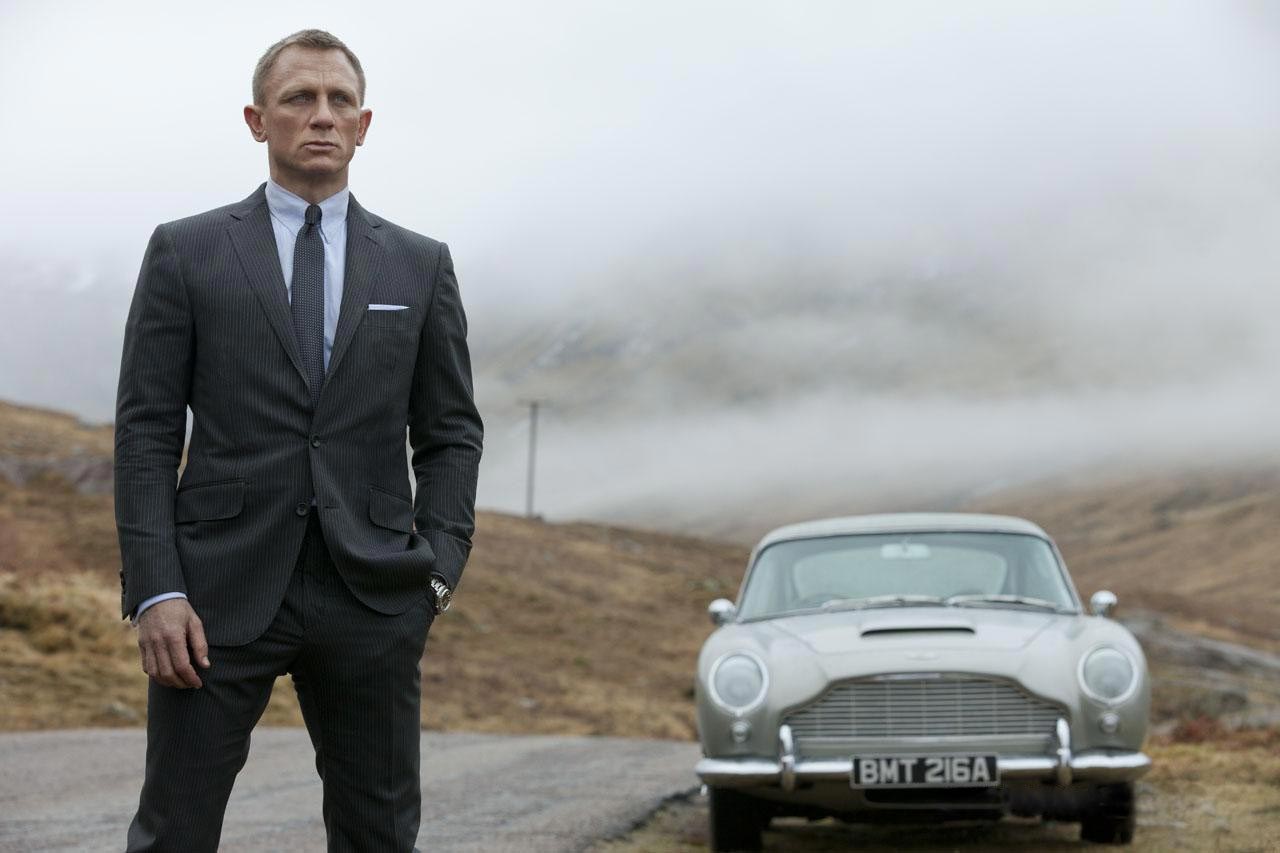
Another franchise that has perfected the third-act downshift in recent years is the James Bond franchise, which is weird, because Bond films always used to end with 007 saving the world, usually by infiltrating the villain’s secret base. But look at how the Daniel Craig 007 films have ended, with a gun battle over a briefcase of money in a collapsing Venice apartment building (“Casino Royale”), a gun battle in a highly-flammable hotel (“Quantum of Solace”) and a showdown at Bond’s ancestral home, where the only thing at stake is the lives of Bond and M (“Skyfall“).

All exciting sequences, all action-packed, but none of them have the expected fate-of-the-world-at-stake hijinks. The Bond films have realized, especially with “Skyfall,” that the smart movie is to escalate the personal stakes, not the global stakes. You can still have your excitement and good-versus-evil struggle, but it will mean something to the audience.

Because, honestly, Damon and company? Part of being entertained is being surprised, and audiences have come to expect that “destruction porn,” like the last big hill on a roller coaster. And while both might provide a momentary thrill, it dissipates awfully quickly.

Sundance Screening Room returns with ‘Dirty Wars,’ ‘Stories We Tell,’ ‘At Any Price’ and more

atanyprice

With the summer blockbuster season winding down (or, in the case of “R.I.P.D.,” grinding to a halt), the Sundance Screening Room calendar is re-launching for the first time since May. The series features foreign films, independent films and documentaries, all exempt from the theater’s usual amenities fees. Coming out and seeing these films is a great way to show Sundance that there’s still a healthy audience for challenging, smaller movies in Madison.

And I’m happy to announced that I’ve been invited back to host some Screening Room films and post-show discussions in the theater’s Overflow Bar. Those are always a lot of fun. I haven’t yet figure out which movies I’ll be hosting, but I will let you know soon in this space.

Looking at the schedule, which starts next Friday, it looks like there’ll be lots for us to talk about.

Friday, Aug. 2-8 — “At Any Price” — Just filmed over the border in the DeKalb, Illinois area, this new film from Ramin Bahraini (“Goodbye Solo”) is a suprisingly unsentimental look at modern farming, with Dennis Quaid playing a smooth-talking farmer desperate to hold on to what’s his, and Zac Efron as his disaffected son.

Aug. 9-15 — “Dirty Wars” — Investigative journalist (and Wisconsin native) Jeremy Scahill made this documentary about his dogged hunt for information on America’s covert wars.

Aug. 16-22 — “Love is All You Need” — A lighter film from Danish director Susannah Bier (“Brothers”), with Pierce Brosnan and Trine Dyrholm playing a widower and a divorced woman who fall for each other at their children’s wedding in Italy.

Aug. 23-29 — “The Act of Killing” — Werner Herzog and UW grad Errol Morris collaborated as executive producers on this disturbing documentary about death squads in Indonesia.

Aug. 30-Sept. 5 — “Ain’t Them Bodies Saints” — An outlaw (Casey Affleck), a sheriff (Ben Foster) and his wife (Rooney Mara) collide in this acclaimed film from the 2013 Sundance Film Festival.

Aint-Them-Bodies-Saints-Rooney-Mara

Sept. 6-12 — “Stories We Tell” — This 2013 Wisconsin Film Festival sellout is one of the best films of the year, as actress-director Sarah Polley’s investigation into her own family’s secrets reveals insights about how we shape our own personal narratives.

Sept. 13-19 — “Crystal Fairy” — Michael Cera plays a callow tourist seeking a mysterious drug in Chile whose plans are waylaid by a free-spirited hippie (Gaby Hoffman).

Sept. 20-26 — “Hannah Arendt” — This documentary looks at the life of the acclaimed German-Jewish philosopher and theorist, whose coverage of the Eichmann trial shaped much of how we perceive the Third Reich.

Pierre Etaix: The French comic genius you’ve never heard of

pierre etaix

There’s a scene in Pierre Etaix’s “Le Grand Amour” where a middle-aged businessman is lying in bed. As he begins to slip into dreamland, his bed glides out of the bedroom and out of the house, and is soon zipping down a French country lane, the man riding in it serenely, like he was on a Sunday afternoon drive in his Peugeot.

That’s a funny scene, both clever and lyrical. But it was when the man passed another bed stalled out by the side of the road, its grease-stained owner looking perplexedly under the hood, that I know I was in the presence of a zany comic genius.

I had never heard of Etaix prior to the UW-Cinematheque’s announcement that it would show all five of his feature films (plus all his shorts) during its summer series, beginning with “Le Grand Amour” this Thursday, July 11 at 7 p.m. (All the Etaix films are free and will play at 4070 Vilas Hall, 821 University Ave.)  Even then, I was understandably more focused on the main Cinematheque series this summer, a tribute to Roger Ebert through the movies he loved.

But now that I’ve seen two of Etaix’s movies, “Le Grand Amour” and “The Suitor,” I’m excited. This is a master of movie comedy, someone who combines the physical antics of Buster Keaton with the visual absurdities of Monty Python and the social satire of Jacques Tati, along with a healthy dollop of humor all his own. Don’t miss these films.

Etaix made five films between 1963 and 1971 that went largely unseen for decades because they got tangled in an unwise distribution deal he couldn’t extract them from. Finally, last year, Etaix was able to get the films back and supervise their restoration, and after an arthouse revival tour from Janus Films last year, Criterion released a boxed set in April.

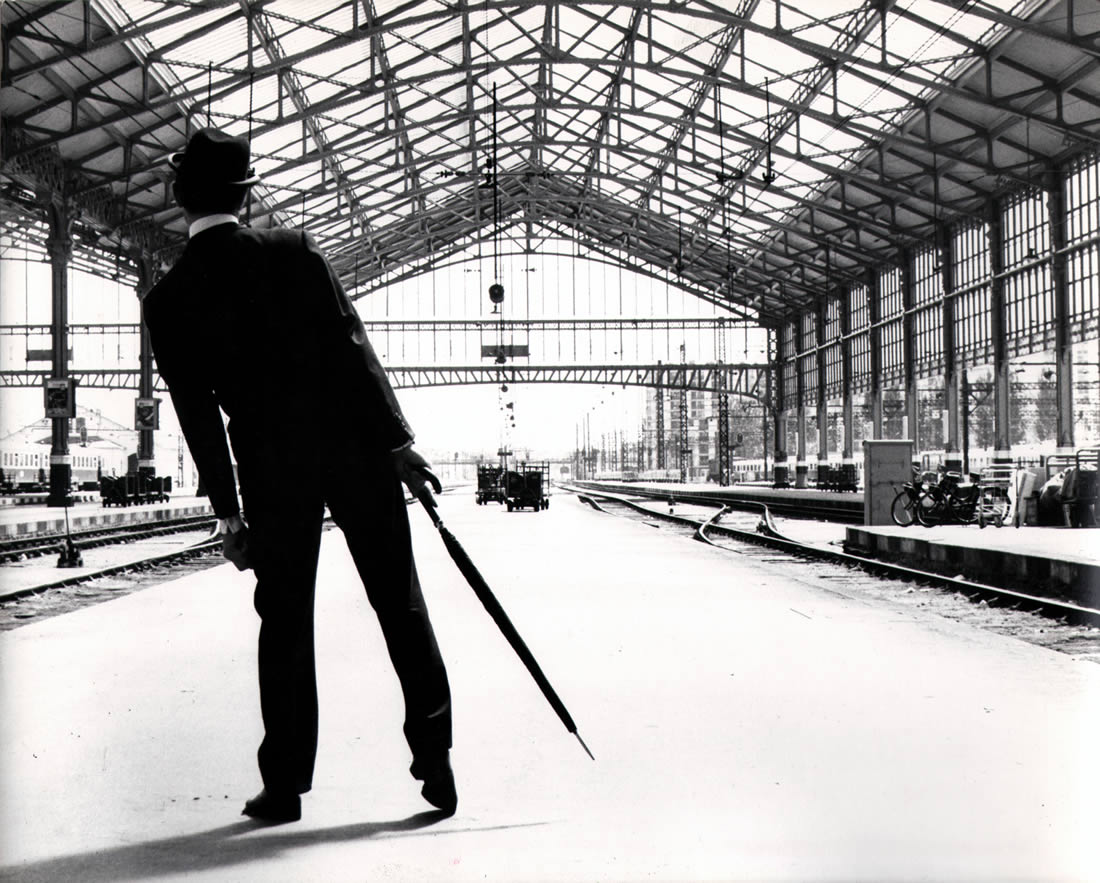
Before he got into filmmaking, Etaix was a clown and acrobat, and his first feature “The Suitor” (July 25, 7 p.m.) pays loving homage to his silent comedy heroes. The blankly handsome Etaix plays a Frenchman unlucky in love who, after striking out with one real woman after another, zeroes in on a singing star he sees on television. (In one sequence worthy of Chaplin, he absent-mindedly tries to make a cup of tea as he watches her, transfixed, pouring the milk in the sugar bowl and spreading jam on his empty plate.) When the action finally does move to a circus, we get a tour de force of Etaix’s comic skills on screen.

The hero in 1969’s “Le Grand Amour” should be less likable, but there’s something so elegant and engaging about Etaix’s befuddled screen presence that he somehow wins you over in the role of a mild-mannered businessman who pines for his beautiful young secretary. Part of the charm may be that the man is so befuddled that he poses no kind of romantic threat, and part may be how Etaix’s satirizes his obsession with a freewheeling cavalcade of  dream sequences and other surreal touches. By “Amour,” he had gotten more adept at using filmmaking techniques, and not just his antics wit in the frame, to get laughs; in one dinner scene between the man and his secretary, every time Etaix cuts to the man he looks progressively older, until he’s a doddering old geezer.

The other films in the series are Etaix’s personal favorite “Yoyo” (July 18), followed by a double bill of “As Long As You’re Healthy” and “The Land of Milk and Honey” on Aug. 1.  The latter was a departure for Etaix, a bold documentary satirizing French life. It was not received well by audiences or critics, and essentially ended his career as a filmmaker.

I couldn’t find any Ebert reviews of Etaix’s films, although I bet he would have loved them, and he included links to a couple of his shorts in his “Ebert Movie Club” newsletter. That the world is finally discovering these films within Etaix’s lifetime must be a gift for him; his gift to us is five nearly perfect comic gems.