“Koch”: A tale of two mayors

koch

“Koch” opens Friday at Sundance Cinemas. Not rated, 1:40, three stars out of four.

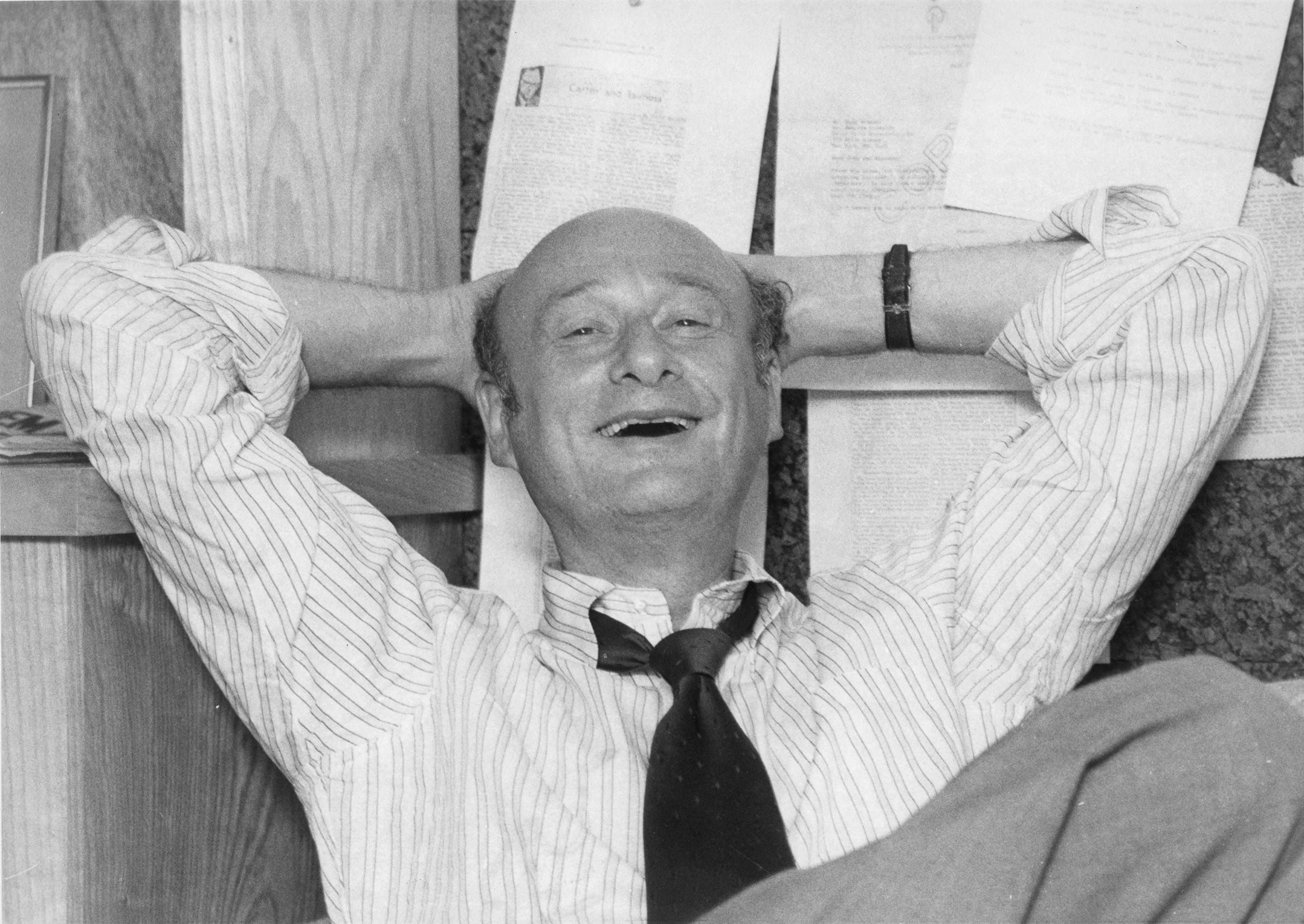
Ed Koch, the recently deceased mayor of New York City, was a man of contradictions so obvious that he must have secretly reveled in them. He was an arrogant man who famously asked everybody “How’m I doing?”, a man who could be generous and gregarious with crowds but petty and arrogant at the one-on-one level. Even at the end of his life, his politics were tricky — supporting of same-sex marriage, opponent of the so-called “Ground Zero Mosque.”

Forget “A Tale of Two Cities:” — the documentary “Koch” is a tale of two mayors. At least two.

Neil Barsky’s first film does an entertaining job capturing the many facets of Ed Koch — or at least as many as Koch has ever been willing to reveal to the world. Barsky keeps the focus almost exclusively on Koch’s three terms as mayor in the 1980s, how his tenure both revived the strengths of the city he loved as well as exposed its flaws.

When he took office in 1978, Koch was handed a city on the brink of financial ruin. With a strange combination of fervent social liberalism and brutal fiscal conservatism, he slashed budgets, alienated some constituencies (especially African-Americans) while forging alliances with others. He also launched major rebuilding projects — the New York we see today is in many ways his vision, from the newly sanitized and corporatized Times Square to the gentrified Lower East Side.

Koch was never one to shy away from a camera, and Barsky has a wealth of archival footage to choose from — Koch on a street corner, parrying merrily with his citizens, or on television news, sharply dressing down an interviewer. Interviews with former staffers, political rivals and journalists who covered Koch offer context to his decisions — some masterful, some disastrous. Even those who opposed him seem to regard him with a kind of wonder.

But if “Koch” offers context, it never really offers explanation for what made him tick, what drove him. The closest Barsky gets is a quote from Koch on how a bigger-than-life city needed a bigger-than-life mayor. So was it all an act by a savvy career politician? If so, it was a remarkably consistent one, continued long after the cameras had turned away. Barsky also touches on the long-standing rumors that Koch was a closeted gay man, but handles it discreetly (and Koch shuts down the questioning with a “It’s none of their f—— business.”

Barsky intercuts the archival Koch with present-day footage of the former mayor, stumping for local candidates, going to fundraisers, arguing politics with family members at Yom Kippur, an elder statesman who seems ill at ease on the sidelines. Mellowing with age did not seem to be an option. Barsky takes us inside Koch’s apartment, and it’s a surprisingly spare place, the walls covered in photos and outsized caricatures of Koch.

What he truly saw in those portraits we’ll never know, but “Koch” is an engaging film about what New Yorkers saw in them. Had Koch lived to see it (he died this spring just a week before it opened in New York City), I think he would have found much to like and much to complain about. But he would have enjoyed the complaining, too.


Blimey! It’s the Union South British Invasion Film Series, guv’na!

monty-python-and-the-holy-grail-original1

First off, I just want to apologize to every British person everywhere for that headline. But I couldn’t help but go a little overboard with the news that the Union South Marquee Theatre will finish out the semester with a free British Invasion series of films running Wednesday through Sunday.

All screenings take place at the Marquee, 1208 W. Dayton Ave., and are free. Visit union.wisc.edu/film for more details.

The Italian Job” (7 p.m. Wednesday) — Not he Mark Wahlberg remake, but the swingin’ 60s classic heist film, with Michael Caine leading an eccentric team and three Mini Coopers on a caper to shut down traffic in Torino and steal some gold.

Tommy” (6:45 p.m. Thursday) — The Who’s phantasmagorical 1975 musical about the kid who plays a mean pinball, featuring an all-star cast of ’70s rockers.

Gimme Shelter” (6:30 p.m. Friday) — The landmark tour documentary follows the Rolling Stones on tour in the late ’60s, up to the notorious Altamont concert where a fan was stabbed to death by a Hell’s Angels member working as a security guard.

Trainspotting” (8:30 p.m. Friday) — Danny Boyle’s breakthrough film about some likable heroin addicts in Edinburgh.

Monty Python and the Holy Grail” (midnight Friday) — Shall I quote this movie verbatim for you? The British comedy troupe’s hilarious take on the King Arthur legend had that kind of effect on generations of comedy nerds.

“Billy Elliot” (3 p.m. Sunday) — Amid the turmoil of a coal miners’ strike, a young Welsh boy pursues his dream of becoming a ballet dancer.

Instant Gratification: “John Dies at the End” and four other good movies to watch on Netflix

john_dies_at_the_end_teaser_2

Every Tuesday, Instant Gratification brings you five good options for movies to watch on Netflix Instant or other streaming services.

Netflix giveth, and Netflix taketh away. Last week, we were complaining that Netflix was removing hundreds of movies from its streaming library because of rights issues. Well, according to InstantWatcher.com, they just added hundreds of new ones, mostly older titles. Granted, some of them are forgettable-looking titles like “Dagmar’s Hot Pants, Inc.,” but there are some gems to be found.

Pick of the week:John Dies at the End” — This may be Don Coscarelli’s loopiest film ever, and he’s the guy who made “Bubba Ho-Tep,” about a geriatric Elvis battling an ancient mummy. Here, two slackers have to stop a new drug nicknamed Soy Sauce which promises its users time-space hopping powers — but at a price.

Musical of the week: “Lagaan” — The best Bollywood movies mash all kinds of genres into one epic, and that’s certainly true of this four-hour 2001 epic, in which a small town rallies for a crucial cricket match against an arrogant British commander’s team. Seriously, this movie makes cricket seem exciting.

Comedy of the week:Broadway Danny Rose” — After last week’s “Manhattan,” my black-and-white Woody Allen kick continues with this lovable 1984 film about a talent agent who can’t let go of his untalented clients.

Classic of the week:Chinatown” — Roman Polanski’s landmark ode to L.A. noir takes the conventions of the private-eye genre and adds an extra layer of cynicism to the mix.

Drama of the week:Diamond Men” — The great Robert Forster plays an aging diamond salesman who must train his cocky replacement (Donnie Wahlberg). The two men form an unexpected bond, and hatch an unexpected plan.

“Iron Man 3,” and why all superhero movies should visit rural Tennessee

iron-man-3-iron-patriot-don-cheadle

Note: This article contains spoilers. Don’t read it if you haven’t seen “Iron Man 3,” especially since the film has more surprises than your average superhero movie.

The first half-hour or so of “Iron Man 3” is fine. Certainly better than the sloppy “Iron Man 2,” but just fine. It’s familiar in its set-ups, giving us backstory, the introduction of a cut-and-dried villain in The Mandarin, the start of a dramatic arc for Tony Stark in his post-“Avengers” anxiety attacks. When Tony’s seaside home is destroyed, it’s the typical summer movie end-of-Act-I visual effects sequence that we expect to see in a modern blockbuster.

It’s fine. At that point I thought “Iron Man 3” was going to be a decent but unnecessary third installment

And then director and co-writer Shane Black throws the first big switchback of the film, and lets us know “Iron Man 3” is going to be a little different than what we expect from superhero movies. For example, big-budget action movies all take place in major cities, right? Batman cruises Gotham, and The Avengers fought the aliens in the heart of Manhattan because — it’s Manhattan.

Welcome to Rose Hill, Tennessee.

Following a lead, Tony Stark crash-lands in the small town, where he spends the next half-hour of the movie, his suit useless (that shot of him dragging it behind him in the show, like a kid with his sled, is classic), his defenses down. The only costume he has is a plaid vest and a camo cap.

And it’s awesome. It’s exactly what this movie, and what most superhero movies need — some grounding. After the spectacle of the first act, it takes some confidence in a filmmaker to pull back like that when the conventional wisdom is to keep piling spectacle on top of spectacle. But he doesn’t.

Instead, the Tennessee section focuses on humor — the scene with Adam Pally of “Happy Endings” as a superfan (“A Hispanic Scott Baio?” — a callback to “Kiss Kiss Bang Bang” maybe?) is a riot, and the back-and-forth with the kid who takes him in is great.

It’s great because it’s funny, but also because the kid is not just some cute tyke, but in many ways a young Tony Stark. Note how he describes his parents: “My mom just left for the diner, and my dad went out for scratchers. He must have won, because it’s been six years.” The way that line is written and delivered is classic Tony Stark, right? Sardonic humor masking pain. Stark immediately recognizes a kindred spirit (similar to his affectionate teasing of Bruce Banner in “The Avengers”) and responds in affably caustic style. It’s a strong relationship — despite the joke, they really are “connected.”

That’s the other value of the Tennessee section, focusing on character. Without the distractions of his usual toys, we really get to see Stark up close, out of his usual franchise cocoon, interacting with strangers, whether it’s the kid or the grieving mom at the bar. How do you make a movie about a man in an invincible suit interesting? Take him out of the suit, and leave him out for as long as possible. (That’s what helps make that one action scene in Rose Hill so effective — out of the suit, Stark seems unusually vulnerable.) And Black knows to ease him slowly back into the suit — even when he goes to Miami, he’s got a bunch of jury-rigged gadgets, and has to fight a big battle with only an Iron Man glove and one boot. It’s smart filmmaking — rather than make the villains bigger and bigger, make the hero smaller.

Which brings me to the third important part of the Tennessee section — it alerts the audience not to rely too comfortably on its expectations, paving the way for the surprisingly fun third-act reveals. (Ah, Trevor, we can’t help but love you!) As a result, the third act for me is a lot more fun than the first, with unexpectedly funny lines (“Seriously, I just work here. These people are so weird!”) and plot turns I never saw coming. Because plot turns aren’t supposed to be part of superhero movies. You set up the hero, you set up the villain, and you send them into epic battle. Black gets there, with that oil rig battle at the end (back to the familiar) but the path he takes is much more idiosyncratic and satisfying. Because it goes through a small town in Tennessee.

“Renoir”: Colored perceptions between father and son

renoir

“Renoir” opens Friday at Sundance Cinemas. R, 1:51, three stars out of four

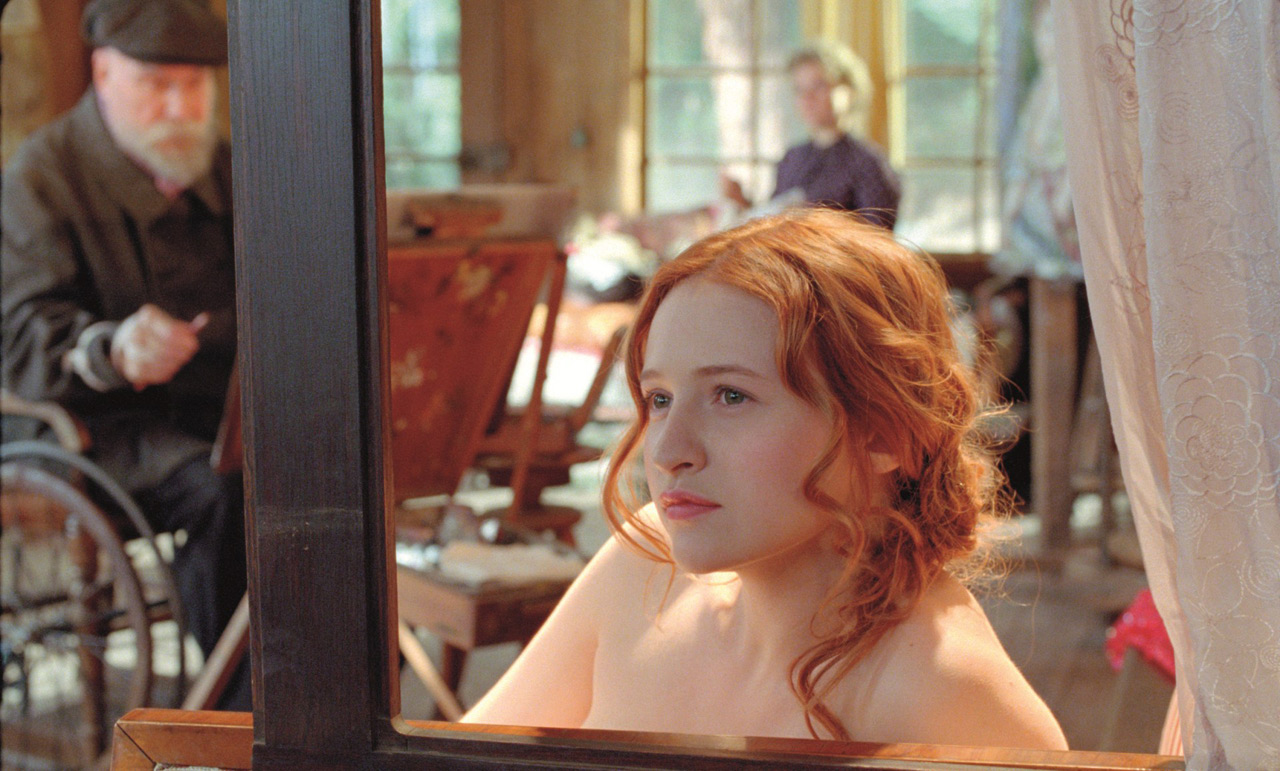
If only Pierre-Auguste Renoir had the colors at his disposal that director Gilles Bourdos has in making a movie about him. The French drama, set at Renoir’s country estate on the French Riviera, practically vibrates with beautiful colors, mostly bright oranges intertwining with deep greens. One shot, in which the famous Impressionist painter dips a dirty brush in a clear glass of water, and the vermillion paint swirls like flames inside the glass, is so gorgeous you almost have to look away.

It’s that eye-popping surface that is the real star of “Renoir,” although the film is an agreeable if shallow look at the great artist in the twilight of his years. At 74, Renoir (Michel Bouquet) is confined to a wheelchair; he could probably still walk, but it would take a lot of effort, and that effort he wants to pour into his last paintings. Renoir is prone to grand pronouncements about the nature of art, such as the prettiness of his paintings (“There are enough disagreeable things in life. I don’t need to create more.”) but beneath that crusty facade is a man with a purely carnal streak, obsessed with the glow and texture of a woman’s skin. His household is full of former models, who became maids as they aged, and it’s understood that Renoir knew more than one of them in an artistic sense.

The latest model to come to him is Andree (Christa Theret), a beautiful and tempestuous young woman who inspires him on the canvas and in his heart. The film lingers on scenes of Renoir painting her, and the process is quite fascinating to watch, as he draws quick brushstroke curves on the canvas, seeming to will them to converge into the natural curves of the human form.

Then Renoir gets another visitor, his middle son Jean (Vincent Rottiers). Jean is on leave after being injured in World War I, and yearns to be back with his comrades on the front lines. Cinephiles will know that Jean someday becomes a great film director (“Rules of the Game,” which just played at UW Cinematheque a couple of weeks ago). But there’s not really much more than a hint of that in “Renoir,” other than the dreamy look Jean gets on his face when he sees a silent film projected on the wall.

Jean and Andree fall for each other, of course, and I found their whole romance kind of trite, especially when they tussle about whether he should go back to the war. Pierre-Auguste is by far the most interesting Renoir of the bunch, and “Renoir” is much better in those quiet, lovely scenes of him painting, his crinkled eyes observing, the occasional pronouncement croaking forth from somewhere deep beyond that majestic beard. Bouquet makes him an imposing figure, but finds a twinkling humor beneath his fearsomeness.

When his doctor asks him what he’ll do when his hands are too old and shaky to paint with, Renoir responds flatly, “I’ll paint with my dick.” Which, the film suggests, he always has.

What’s playing in Madison theaters: May 3-9, 2013

iron-man-3-iron-patriot-don-cheadle

I don’t care if it is dropping 14 inches of snow on northern Wisconsin. It’s May 3, and dang it, we’re going to start the summer movie season whether the weather is on board or not!

All week

Iron Man 3” (Point, Eastgate, Star Cinema, Sundance, Cinema Cafe) – I couldn’t have felt more let down by “Iron Man 2” (“Bring me bird.”), which combined two uninspired villains, some weak action, and some labored set-ups for the big Marvel crossover. But “The Avengers” was a ton of fun that restored my faith in Robert Downey Jr.’s Tony Stark, and the fact that “Kiss Kiss Bang Bang”‘s Shane Black is behind this one has my hopes pretty high.

The Angels’ Share” (Sundance) — My full review is here. Ken Loach’s latest film starts off as a miserablist drama about deliquent Scotsmen, then turns into a zippy heist film involving a precious cask of whisky halfway through. It’s not his best, but it’s an endearing film nonetheless, right down to the subtitles to help us get through those thick Scottish burrs.

Renoir” (Sundance) — The name in this French drama, fresh from the Wisconsin Film Festival, refers to both the impressionist painter Philippe-August and his filmmaker son Jean. At the family home on the French Riviera that’s almost too achingly beautiful to behold, father and son reunite and spar over the mysterious young woman who comes to inspire both.

Friday

Amour” (Union South Marquee, 6:30 p.m.) — My full review is here. The closest thing Michael Haneke will ever make to a sentimental film is this largely unsentimental look at an elderly Parisian couple, and what happens when the wife falls chronically ill. Haneke wants his audience to face the fact that we’re all going to die, many of us badly, but love might provide a little comfort along the way. Free!

Classe Tous Risques” (UW Cinematheque, 7 p.m.) — In this 1960 French film noir, a thief (Lino Ventura) teams up with a new partner (Jean-Paul Belmondo) but learns too late that there’s more to life than crime. Free!

Silver Linings Playbook” (Union South Marquee, 9:30 p.m.) — My full review is here. Writer-director David O. Russell messes with the romantic comedy genre much as he did with the sports movie in “The Fighter,” roughing up the formula even as he still delivers the same beats. The result is a screwball comedy for the age of anti-depressants, with winning performances and a generosity of spirit all around. Free!

Birdemic: Shock and Terror” (Union South Marquee, midnight) –This shockingly inept low-budget horror film rips off “The Birds” in its ecologically-minded tale of avians gone amok, which make noises like World War II fighter planes as they dive-bomb citizens, spitting acid. The film is an unintentional riot, full of terrible acting and cheap special effects. I kind of love it. Free!

Saturday

Silver Linings Playbook” (Union South, 7 and 9:30 p.m.) — See Friday listing

Marriage Italian Style” (UW Cinematheque, 7 p.m.) — One of the classics of Italian cinema, Vittorio De Sica’s caustic film about marriage and infidelity stars screen legends Marcello Mastrioianni and Sophia Loren. Free!

The World’s Fastest Indian” (Barrymore Theatre, 8 p.m.) — Anthony Hopkins plays a bit against type as Burt Munro, a New Zealander obsessed with tinkering with motorcycles and making them faster, and dreaming of entering a race. Tickets are $8 in advance through barrymorelive.com or $10 at the door, and there’s a party with a cash bar afterward.

Birdemic; Shock and Terror” (Union South Marquee, midnight) — See Friday listing

Sunday

The Cat Returns” (UW Chazen, 2 p.m.) — The UW Cinematheque at the Chazen series on Studio Ghibli is winding down, but not before this charming animated film about a bored teenager who must stop the cat king from turning her into a feline. Free!

Silver Linings Playbook” (Union South Marquee, 3 p.m.) — See Friday listing

Forward” (Sundance Cinemas, 4 p.m.) — The premiere was sold out, but tickets remain for this encore presentation of this stirring documentary about the 2011 Capitol protests, mixing interviews with participants and time-lapse photos of the event itself.

Monday

Bag It!” (Barrymore Theatre, 7 p.m.) — Madison East High’s Mass Media class presents this thoughtful documentary about the impact of using plastic bags on the environment, and the value of using cloth ones instead. Tickets are only $5 for students, $10 for all others.

Wednesday

Alien” (Sundance Cinemas, 1:30 and 6:45 p.m.) — This film was reliable nightmare fuel for me as a kid, putting a nasty twist on familiar science-fiction themes.

The Italian Job” (Union South Marquee, 7 p.m.) — The original heist film features Michael Caine, Benny Hill and three Mini Coopers in a daffy caper plot. Free!

Thursday

Tommy” (Union South Marquee, 6:45 p.m.) — That deaf, dumb and blind kid still plays a mean pinball in The Who’s phantasmagoric 1975 musical, packed with all-stars. Free!

Django Unchained” (Union South Marquee, 9:15 p.m.) — Quentin Tarantino mashes up the Western and the blaxploitation film to intense and funny effect in this dizzyingly entertaining film, his best since “Jackie Brown.” Free!

“The Angels’ Share”: Just a drop of the hard stuff

The-Angels-Share

“The Angels’ Share” opens Friday at Sundance. Not rated, 1:46, three stars out of four.

We think we’re in familiar Ken Loach territory from the outset of “The Angels’ Share.” From his 1970 debut “Kes” onward, Loach has excelled in showing the gritty truths of life in working-class England, favoring realism over sentimentality. But Loach’s new film, written by his longtime collaborator Paul Laverty (“The Wind That Shakes the Barley”), has some surprises up its sleeve.

“The Angels’ Share” starts in a courtroom, where we see a succession of petty criminals getting their sentences for shoplifting, public drunkenness and the like. The worst of them seems to be Robbie (Paul Brannigan), a jug-eared young man with a nasty scar on his face. We hear about his violent crimes, including a brutal beating during a traffic altercation, and figure he’s the worst of the bunch. He avoids incarceration by the skin of his teeth, sentenced to community service.

But then Loach and Laverty show us Robbie’s life; he’d like to go straight, especially for the sake of  his pregnant girlfriend (Siobhan Reilly), but is involved in a violent feud with other locals that he can’t avoid. He seems destined to loop right back around to that courthouse, only this time to be sentenced to prison.

The film’s view of the social underpinnings of crime is complex, and doesn’t offer any easy answers or opinions about Robbie. Just when we’ve grudgingly warmed to him, Loach flashes back to the traffic beating that got him arrested, and it’s horrible to watch. Robbie is forced to meet the victim of his crime, psychologically as well as physically damaged, and he weeps, vowing never to harm another person again. But good intentions only get you so far.

But Robbie finds an unlikely angel in his case worker Harry (John Henshaw), a big-hearted man who seems to see his job less as parole officer and more as camp counselor. He drives Robbie and the other parolees around town to do odd jobs for the city. At the end of the day, like a little field trip, he takes them to a local distillery.

Robbie has never tried whisky before, but he’s smitten with the romance around the history of Scottish distilling, and it turns out he has a natural nose for discerning the different varieties of whisky. He’s also very intrigued by a rare cask of whisky, the Malt Mill, which is scheduled to be auctioned off for a million pounds or more. That kind of money could help a young man truly start a new life.

And it’s here that “Angels Share” reveals its big surprise to the audience — it’s a caper film. Robbie and his band of delightful deliquents plot to steal the whisky right out of the cask and sell it on the side to a broker (Roger Allam). It’s an interesting turn for the film, which becomes much more of a lark in the second half, funnier and somewhat suspenseful, as we wonder if the crew can pull off such a daring liquid heist. Loach comes as close to hitting Hollywood movie beats as he ever has — if you had told me I’d see a Ken Loach film where the heroes speed across the Scottish countryside as the Proclaimers’ jaunty “500 Miles” plays on the soundtrack, I’d say you were nuts. But it happens here (twice), and it works, in large part because Loach has laid a foundation of social realism underneath the hijinks.

Whether Robbie pulls off his caper should be left for the audience to discover. But Loach’s great cinematic switcheroo goes off almost without a hitch.

Can a movie have too many famous actors in it?

the-company-you-keep-image

When Brendan Gleeson shows up about two-thirds of the way through Robert Redford’s “The Company You Keep,” I actually burst out laughing at his dour Irish mug. Not that there’s anything funny about Gleeson’s performance in a small role. It’s just that the film had been such a cavalcade of veteran actors that it was like “Well, who else can we fit into this movie?”

I mean, in addition to Redford, “Company” has Stanley Tucci, Chris Cooper, Julie Christie, Sam Elliott, Susan Sarandon, Nick Nolte, Stephen Root and Terrence Howard, not to mention Shia LaBeouf, Brit Marling, Anna Kendrick and “American Idol” fave Jackie Evancho representing the younger generations. I called it the “It’s a Mad, Mad, Mad, Mad World” of political thrillers in my review, and joked on my Facebook page that any actor you can think of over 50 has a decent shot of being in the movie. (My friends helpfully pointed out that Abe Vigoda and Emmanuelle Riva were not among the cast.)

Now, it would seem self-evident that a filmmaker would want the best cast possible for his movie, and Redford obviously has the clout to get who he wants for his movie. (His last movie, “The Conspirator,” had a similarly heavyweight cast.) Recognizable actors not only attract audiences in theaters, but in the pre-production phase can attract financial backers and studio distributors.

But there is such a thing as a tipping point, and I think “Company” is one of those films that tips over. It’s just so loaded with familiar faces in every part large and small that it keeps throwing you out of the film, making you think “Hey, there’s so-and-so” rather than sinking into the story and identifiying the characters. I think that’s why Gleeson’s presence made me laugh. The other problem is having a great actor in a small part and not giving them anything to do with it — Gleeson largely exists to further the plot along, and while Sarandon and Christie each get a couple of nice scenes, Nolte and Elliott are largely wasted.

An “all-star” cast has been a hallmark of Hollywood movie advertising back to the Golden Age. Think of something like the 1962 D-Day drama “The Longest Day,” which had Richard Burton, Henry Fonda and John Wayne among a cast too numerous to mention. Or “How the West Was Won,” which had Fonda again, plus Jimmy Stewart, Gregory Peck and many more. Or all those Irwin Allen disaster movies of the ’70s, like “The Towering Inferno,” with Paul Newman, Steve McQueen, Fred Astaire and O.J. Simpson, among others. Their names looked great together on a poster. But can anybody say any of them did their best work in those films?

Woody Allen is another one who seems to like top-heavy casts. When a film of his connects, I don’t notice it as much; “Midnight in Paris” has a pretty strong cast that includes Owen Wilson, Marion Cotillard, Kathy Bates and Rachel McAdams, but each one of them seems perfectly cast in their role. Meanwhile, last year’s ungainly “To Rome with Love” got kind of exhausting with its big cast, including Alec Baldwin, Diane Keaton, Jesse Eisenberg and Woody himself, I think largely because most of them didn’t have that much interesting to do besides look good in Italian cafes.

One movie that I think did the big cast right was “Margin Call.” I remember seeing the premiere at the 2011 Sundance Film Festival and being agog at seeing Tucci, Jeremy Irons, Kevin Spacey, Dylan Baker, Paul Bettany and Demi Moore on one stage. But that film made it work because it broke the story down into a lot of two- and three-character scenes, giving everybody a turn to make an impression. It was a very egalitarian way to handle it.

Also successful, but in a completely different way, are the new “Ocean’s 11” movies. They handle their large casts because there’s a clear hierarchy to the cast, with George Clooney, Brad Pitt and Matt Damon at the top and the other eight (or nine, or 10) members of the team kind of orbiting around them, appearing and then disappearing. Carl Reiner is great in his role, but if he got as much screen time as Clooney it’d throw the balance of the film off.

For a sports team, there’s nothing like a deep bench. But the same doesn’t always hold true for movies — sometimes a Dream Team isn’t all it’s cracked up to be.