What’s playing in Madison theaters: March 8-14, 2013

airplane-movie-image-leslie-nielsen-01

So I was reading other publications and appreciating how their event listings are broken down day-by-day, so if you were free on a Tuesday night, you could easily see all your options for things to do.

It took me a little while longer before I realized that if I appreciated it so much, I should probably do it too. So I’m tweaking the format of the weekly Friday “What’s Playing” column a little here. This seems to make sense in an especially busy week like this one. Let me know what you think.

All Week

Oz: The Great And Powerful” (Point, Eastgate, Star Cinema, Cinema Cafe) — Did you ever wonder how the Wizard of Oz got to be the Wizard? Me neither, but Sam Raimi will tell us with this eye-popping prequel, with James Franco as the Once and Future Wiz. Reviews have been meh, but Raimi is too inventive a filmmaker to count out.

Dead Man Down” (Point, Eastgate, Star Cinema) — Despite the redundant title, I’m interested in this R-rated action film because it’s the English-language debut of Swedish director Niels Ander Oplev,, who did the superbly creepy original “Girl with the Dragon Tattoo.” (Just watch the underwhelming next two in the trilogy, done by a different director, to properly appreciate it.) So I have high hopes it’ll be stylish and unusual.

Emperor” (Sundance) — A war drama that takes place after the war is over, “Emperor” stars Tommy Lee Jones as Gen. Douglas MacArthur, who has dispatched subordinate Matthew Fox to investigate whether Emperor Hirohito should be arrested for war crimes or not. It’s a little dry, but illuminates a small but important corner of American history. And Jones as MacArthur is a lot of fun.

Happy People: A Year in the Taiga” (Sundance) — Read my review here. The happy people in question are a group of Siberian villagers living a harsh but self-sufficient life on the edge of the tundra. In the eyes of documentary filmmaker Werner Herzog, this counts as happiness. Your bliss may vary.

Friday

The Master” (6 p.m. and 9:15 p.m., Union South Marquee Theatre, 1308 W. Dayton St.) Read my review here.  My favorite movie of 2012 was Paul Thomas Anderson’s cryptic, exquisitely controlled drama about the complicated relationship between an L. Ron Hubbard-like cult leader (Philip Seymour Hoffman) and a troubled acolyte (Joaquin Phoenix) he brings into the fold. Free!

Edvard Munch” (7 p.m., UW Cinematheque, 4070 Vilas Hall, 821 University Ave.) The on-campus series concludes its two-night look at the films of Peter Watkins with his highly unorthodox biopic of the notorious painter behind “The Scream.” Free!

Drunken Master” (midnight, Union South Marquee Theatre) If you only know Jackie Chan from the “Rush Hour” movies, you ought to see him in his prime in this martial arts classic, one of the first to play to Chan’s comedic as well as physical gifts. Free!

Saturday

The Master” (6 p.m. and 9:15 p.m., Union South Marquee Theatre) See Friday listing.

The Mercenary” (7 p.m., UW Cinematheque) Remember that scene in “Django Unchained” where a character gets shot above the heart, and the blood turns his white carnation pink? That was a direct homage to this spaghetti Western classic, starring Jack Palance as a ruthless government agent trying to put down a revolution in 1915 Mexico. Free!

The Host” (midnight, Union South Marquee Theatre) Read my review here. It’s a monster movie, a family drama, a screwball comedy and a political film all rolled up into one wildly entertaining movie from South Korean director Joon-ho Bong. “Packs an emotional kick that we don’t expect from a movie where a giant iguana is running around with human legs dangling out of his mouth like stray pieces of  linguini,” I wrote back in 2007.

Sunday

Pom Poko: ( 2 p.m., Chazen Museum of Art, 800 University Ave.) The “Cinematheque at the Chazen” Sunday afternoon series of films by the hallowed Studio Ghibli continues with this take of raccoon-like creatures and their war with developers. Free!

The Master” (3 p.m., Union South Marquee Theatre) See Friday listing.

Monday

No shows

Tuesday

Girl Rising” (7:30 p.m. Barrymore Theatre, 2090 Atwood Ave.) To underscore the importance of education for girls in developing countries, this project features nine stories of nine young women in nine different countries, each narrated by a different actress, including Anne Hathaway, Meryl Streep and Cate Blanchett. Tickets are $10 at the door.

Wednesday

West Side Story” (1:10 p.m. and 6:40 p.m., Sundance Cinemas, 430 N. Midvale Blvd.) If you enjoyed the reimagined Broadway version that just played at Overture Center, check out the original 1962 film version, that brings the tragic romance of “Romeo & Juliet” to the barrio. Tickets are $7.50 for the 1:10 p.m. show and $12 for the 6:40 p.m.

Roman Holiday” (7 p.m., Union South Marquee Theatre) Audrey Hepburn and Gregory Peck star in the 1953 classic romance about a princess and a foreign correspondent who find adventure and love together in Rome. Free!

True Wolf” (7 p.m., Barrymore Theatre)  The Timber Wolf Alliance is co-sponsoring this documentary about the plight of the wolf in the United States. After the film, a panel of wolf researchers will hold a post-show Q&A. $10 at the door.

Thursday

Ek Tha Tiger” (7 p.m., Union South Marquee Theatre) Intrigue, romance, action and, of course, dancing collide in this Bollywood thriller about a secret agent and a dancer in a globe-hopping adventure. Free!

The 6th Annual Wild & Scenic Film Festival (7 p.m., Barrymore Theatre) This popular series features short films from within and beyond Wisconsin’s borders about the natural world. Tickets are $10 in advance through barrymorelive.com., $13 at the door, or a $25 VIP ticket includes a one-year membership with the sponsor, River Alliance of Wisconsin.

The President Vanishes” ( 7 p.m. Chazen Museum of Art) In an attempt to thwart warmongers in his cabinet, the President fakes his own disappearance. This film is one of a series of 1934 films screened by the Chazen and UW-Cinematheque in conjunction with the “1934: A New Deal For Artists” exhibit at the museum. Free!

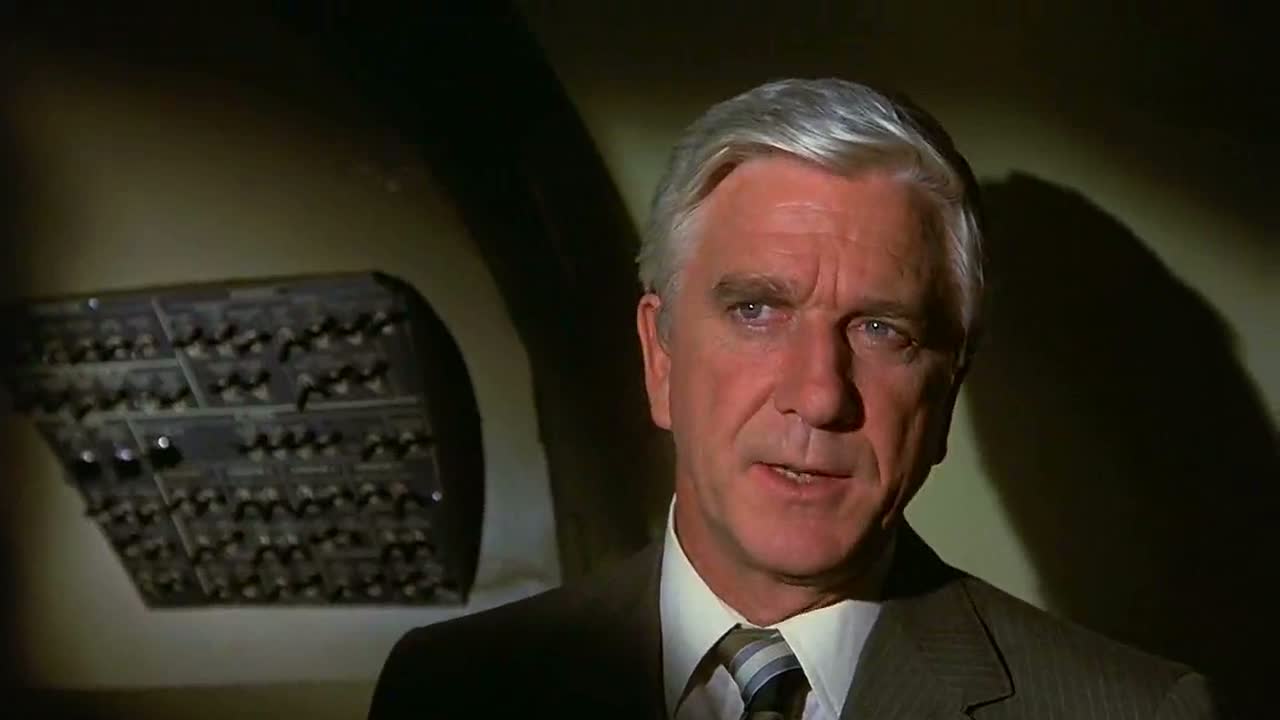
Brew & View: A Tribute To Leslie Nielsen” (7:30 p.m. and 9:30 p.m., Majestic Theatre, 115 King St.) You mean to tell me that the Majestic is honoring the deadpan comic actor by presenting his two iconic movies, “Airplane!” and “The Naked Gun,” in a double feature with a ticket price of $5 for both movies? Surely you can’t be serious!

“Emperor”: What did you do in the peace, daddy?

EMPEROR

“Emperor” opens Friday at Sundance Cinemas; PG-13, 1:45, three stars out of four.

“Emperor” is a war movie with no war in it (well, barely — got to have something to put in the trailer.) In fact, it’s a movie about the uneasy peace that occurs right after the cessation of hostilities, when one side has surrendered, and yesterday’s combatants becomes . . . what, exactly? Equals? Occupied and occupiers? Liberators and the liberated?

In this case, the war is World War II. Japan has just surrendered to the Americans, and Gen. Douglas MacArthur (Tommy Lee Jones, and is that ever great casting) strides the ruins of Tokyo like a Colossus. Having been responsible for the devastation all around, the Americans have to shift into a postwar occupation phase. They have to punish the guilty, but help the innocent rebuild. It’s not an easy distinction, not an easy task.

Chief among them is the prosecution of war criminals, and in particular whether Emperor Hirohito should be charged, particularly with ordering the attack on Pearl Harbor. MacArthur is in a dicey spot; politicians in Washington want vengeance over their former enemies. But MacArthur also needs the peaceful occupation of Japan to succeed, and if he hauls a leader that the Japanese people consider a god before a tribunal, that will be awfully difficult. Jones plays MacArthur as a cagey man with presidential ambitions, but with a humane side that might trump those aspirations.

So he tasks Gen. Sellers (Matthew Fox of “Lost”) with finding out the truth. Much of “Emperor” plays like a dry procedural, as the stifffly formal Sellers interviews higher-ups in the Japanese command, trying to ascertain what people knew and when they knew it. He finds Japanese culture to be a confounding one — the most modern of all Asian nations, yet with traditions and a mindset that stretches back 2,000 years. “If you understand devotion, then you will understand Japan,” he is told.

But Sellers is undertaking another investigation as well. His Japanese girlfriend (Eriko Hatsune) was left behind before the war started, and he’s trying to find out what happened to her. On their own, each of the investigations might be too slender to sustain a movie, but screenwriter Vera Blasi and director Peter Webber (“The Girl With a Pearl Earring”) successfully blend the political with the personal. At first, I thought Fox was playing Sellers as too stiff to be the film’s lead, but by jumping back and forth between the storylines, we see that’s his public self. His private self is more gentle, more wounded, and the deeper I got into the movie the more drawn in I was.

Fox’s internal performance makes a nice complement to Jones’ outsized MacArthur (corncob pipe and all), and although we want to see more of Jones, Webber uses him efficiently and effectively throughout the film. The film ends with a spot-on recreation of MacArthur’s actual meeting with Hirohito, who proves to be charming and decidedly ungodlike. (For the reverse view, check out Aleksandr Sokurov’s 2005 film “The Sun,” which tells the same events from Hirohito’s perspective.)

Overall, “Emperor” isn’t much of a mystery or a war movie. But it is a sober and affecting meditation on the lasting effects on war, with an understated but still-relevant message that America may reveal its best self not in its moment of military victory, but in the moments that happen afterward.

“Happy People: A Year in the Taiga”: Werner and the husky Siberians

Happy People - A Year in the Taiga

“Happy People: A Year in the Taiga,” Not rated, 1:34, opens Friday at Sundance Cinemas. Three stars (out of four).

You can tell a lot about a person by who they envy. That filmmaker Werner Herzog would look at the subjects of his new documentary “Happy People” with something approaching jealousy says a lot about the man.

Because, as rough as you think it might be living in Siberia, the reality is even harsher. The film looks at the residents of a small village in the snow-smothered region that’s 1.5 times the size of the United States. In the summer, the landscape is beautiful but inhospitable. In winter, the 300 or so residents are cut off entirely from civilization, and had better hope they’ve properly prepared for the months of isolation and survival.

In many ways, life for these denizens hasn’t changed in the last century. While modern conveniences like snowmobiles and chainsaws are employed, they do many things the way their ancestors did — they build traps the same way, they carve boats and skis out of trees. Dogs are constant — sometimes sole — companions, but they are work animals, not pets. When a snowmobiler makes the long journey from the forest to the village, the dog has to run alongside.

We spend a lot of time with one bearded gentleman, who travels from hut to hut trapping sables for their fur. The windows of the hut are filled not with glass, but heavy plastic — because bears can break glass. In one scene, he arrives late in the day to a hut, only to find it’s been crushed by a falling tree. With not enough time to travel to the next one, he has to quickly repair the hut before the subzero night falls.

This is Herzog’s idea of paradise, apparently. “They are truly free,” he rhapsodizes in his unmistakable accent on the voiceover narration. “No taxes, no governnment, no rules. Equipped only with their own individual values and standards of conduct.” Self-sufficiency is bliss for Herzog, and in a way the Siberians are as preserved in amber for him as the prehistoric artists he mused about in “Cave of Forgotten Dreams.”

In fact, Herzog is so smitten with his “Happy People” that he didn’t actually shoot the film. The footage comes from a four-hour Russian television series, which he has cut down to a brisk 94-minute travelogue and added his own narration. So, in a very real sense, we are watching Herzog watch this film, his rapturous reaction illuminating as much about himself as his subjects.

“Happy People” is not top-tier Herzog; it doesn’t have a narrative thread or a dramatic arc, content to observe and report. It’s an engrossing ethnographic study, but I have to think that if Herzog was wielding the camera himself, the film would have dug deeper into these people’s lives and why they choose the life they’ve chosen. Also, after 90 minutes in the Taiga, enduring this Wisconsin winter feels like a breeze.

DVD review: “Collaborator”

collaborator

When someone says a movie feels “stagey,” they usually are referring to the setting, with the movie confined to a single or few locations.

But other times that can refer to the characters; for some reason, in theater you can get away with creating outsized characters that are archetypes in a way that you rarely can in movies. On stage, the actors are at a distance from the audience, so the acting almost has to be bigger, clearer. But the movie camera creates intimacy with the audience, and having a stereotype that close up often doesn’t work as well.

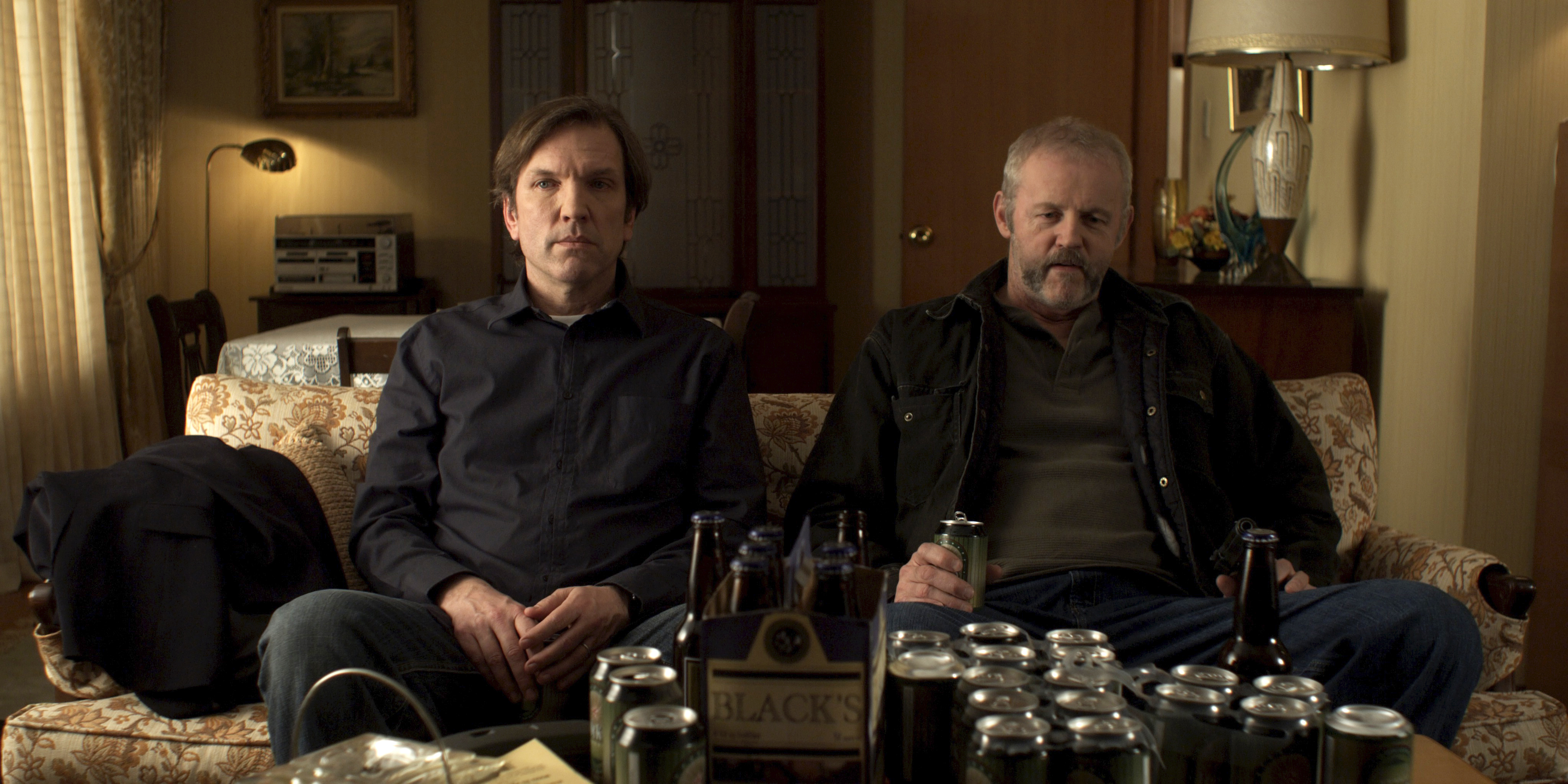
Canadian actor Martin Donovan’s debut as a writer-director, the thriller “Collaborator,” is stagey on both counts. I didn’t mind the confined locations at all, since the movie follows a hostage situation between two very different middle-aged men. What worked less well for me was Donovan’s insistence on making the two men each “stand” for half of America, or at least the halves of America he sees.

Donovan plays a Robert Longfellow, a once-promising playwright whose career has sunk to the point where he’s considering doing touch-up jobs on Hollywood horror screenplays. He returns to his childhood home in Reseda, California, where he meets an old childhood acquaintance, Gus (David Morse).

Gus is a hard-drinking, blue-collar right-winger, the polar opposite of the soft-spoken, liberal Robert. Gus also has some trouble with the law, and when the cops come a-knocking, Gus panicks and takes Robert hostage.

What follows is what’s know in theater as a “two-hander,” as the two characters drink beer and talk, Gus waves his gun around, and the two deliberately different men find common ground in their shared disappointments about how life has turned out.

“Collaborator” would have been much better if it had dropped the hostage subplot altogether. Donovan doesn’t seem interested in generating any tension from the situation, and the heart of the movie is really just the two men shooting the breeze. Both Donovan and Morse qualify for me as character actors I’d watch in anything, and they’re both good here, with Donovan’s paper-dry delivery playing off against the florid, raging Gus. Morse actually manages to make Gus both sympathetic and even funny, as when he gleefully agrees to talk on the phone with a famous Hollywood actress (Olivia Williams) who Robert knows.

But Donovan’s skill as a filmmaker is less proven; as I said, the screenplay draws both men fairly broad, defining them mostly by their red-state or blue-state tendencies. And the filmmaking is pretty uninspired, the camera often held still in a medium shot as he switches back and forth from one character in a conversation to the other.

The special features on “Collaborator” consist of a couple of interviews with Donovan and Williams that don’t tell you anything about their characters that you couldn’t glean from the film.

Deleted scenes of your favorite movie: Watch or don’t watch?

the-master_image_1

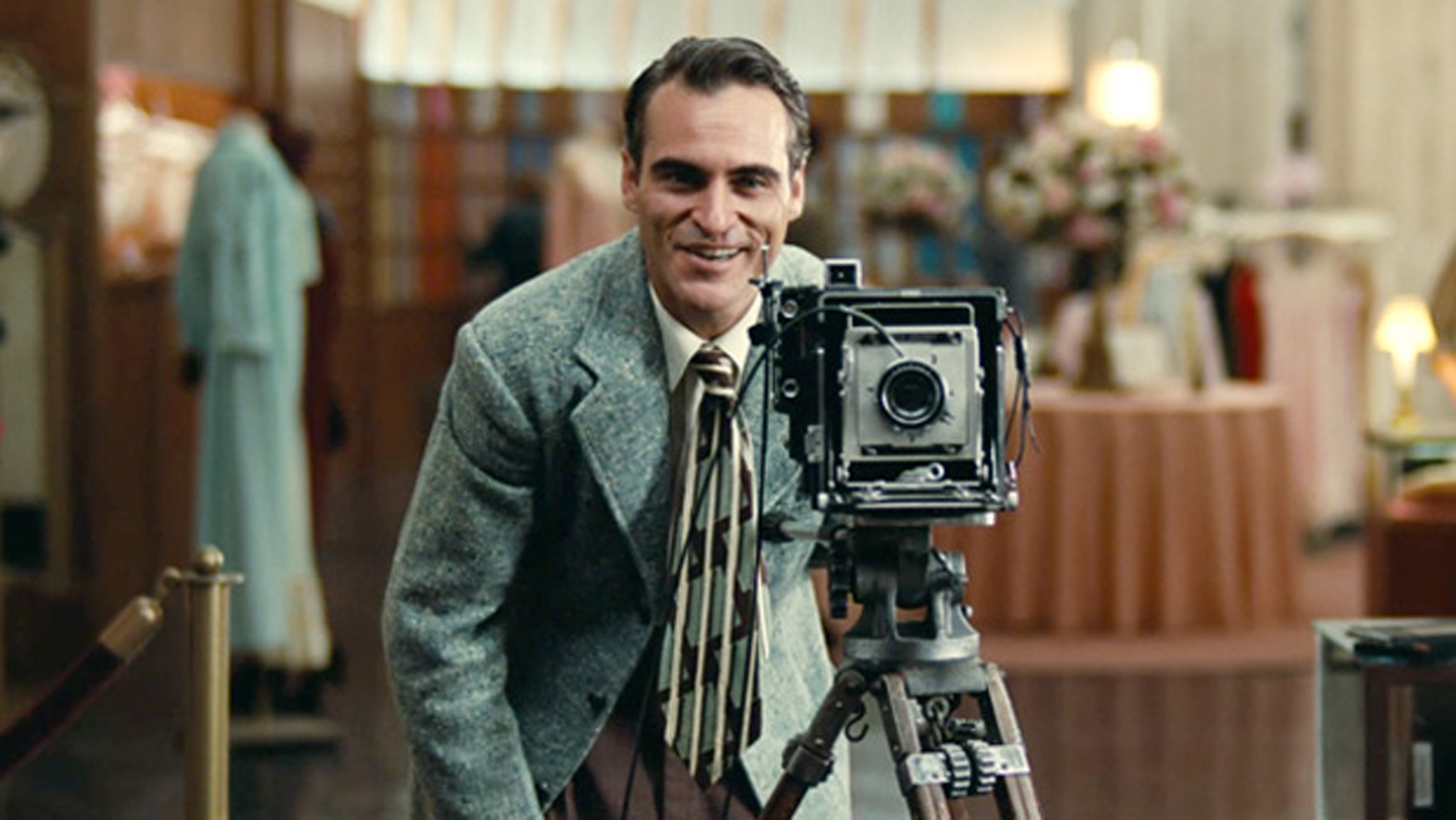
Keith Phipps had a delightful piece in the Atlantic Online this week about the “irresistible perils” of watching deleted scenes. The occasion was the release of “The Master” on DVD and Blu-ray, and the Blu-ray edition has a 20-minute collection of deleted scenes called “Back Beyond.” The most arresting seems to be a scene where Freddie (Joaquin Phoenix opens the mysterious case that Lancaster Dodd (Philip Seymour Hoffman) opens in the desert, only to see flames.

Phipps’ article is about, in a nut shell, “Do deleted scenes count?” That is, should we accept or reject them as part of what we know about the movie, that the missing pieces of information found within those scenes should be connected up to the rest of the story?

“Deleted scenes belong to a space that’s neither part of the film nor removed from it, one perhaps better left unexplored,” Phipps writes. “I’ve come to think of deleted scenes features as the equivalent of that box given to Freddie to guard (or the one given to Pandora): a thing better left unexamined but impossible to resist.”

I have the same love-hate relationship with deleted scenes. Some, like for comedies, are pure fun; Judd Apatow always shoots way more than he can use on his films, so the DVDs are a treasure trove of ad-libs, alternate takes, even entire characters who couldn’t make it into the finished product. But they feel “bonus” in every sense of the word — fun, and extranous, like those deluxe-edition tracks on CDs that exist in a separate place from the main album.

Other deleted scenes are more problematic. The worst is when a scene is so wrongheaded that it can’t help tarnish the original movie a little, like that awful original ending to “Clerks,” in which Dante is abruptly shot and killed by a robber. It’s the kind of disastrous, faux-“edgy” choice that only a first-time filmmaker can make, and thankfully Kevin Smith was talked out of it before “Clerks” came to Sundance.

But even if the new footage doesn’t hurt the film, it never quite fits right. I watched the new extended cut of “The Good, the Bad and The Ugly,” which includes about 12 minutes of restored footage (with actors Eli Wallach and Clint Eastwood dubbing in their dialogue just a couple of years ago, which is jarring to say the least.) It’s one of my favorite movies, so what’s wrong with a little bit more? And the scenes do fill in some gaps, such as explaining how one character got from Point A or Point B.

The problem was that I had seen the original version so many times (at least twice a year on my local Fox affiliate’s “Eastwood Week” as a kid in Denver) that I had the rhythms of the movie down cold, almost on a subconscious level. To add in that extra stuff disrupted those rhythms. I couldn’t just sink into that movie the way I had done so many times before.

I won’t go as far as Indiewire critic Matt Singer did on his recent piece, succinctly titled “Why I Hate Deleted Scenes.” Singer hates them not just because of how they alter his perception of the movie, but of how they alter his perception of the moviemaker. He lives in fear of scenes like the “Clerks” ending that show filmmakers making mistakes, stumbling down blind alleys and back again before they somehow put together a movie that works.

“Making small tweaks to a movie is one thing; completely changing the content and tone of an ending is another. These sorts of deleted scenes recall the classic William Goldman line that ‘Nobody knows anything.’ In these cases, deleted scenes make great movies look like some kind of cosmic fluke — a random happenstance of timing and focus group scores.”

See, I have the exact opposte reaction. Because those scenes, to me, show the creative process in all its messy glory. It can be incredibly inspiring to see that your favorite movie didn’t come to your favorite director via a bolt of pure instinctive genius, but was hammered out made through a series of false starts, catastrophic errors, unnecessary scenes, blown chances. And yet somehow, in the editing process, all the chaff was finally stripped away, the rough edges smoothed over, the thing somehow finally coming together.

Sometimes, when you’re stuck in your own creative process, sandblasting with your forehead (to steal a great line from novelist Richard Bausch) inch by inch through a project, what pushes you forward isn’t seeing someone else’s sculpture up on the pedestal. It’s the scraps on the floor.

“The Frankenstein Theory”: The found-footage horror genre is still alive . . . alive!

Image

“The Frankenstein Theory” is now playing at AMC Star Cinema. 1:25, and not rated, but would likely be rated R for pervasive language and violent images.

Almost 14 years after “The Blair Witch Project,” you’d think the found-footage horror genre would be played out by now. But every few years, some filmmaker with a lot of ingenuity and a little money comes along to reinvent the genre. Oren Peli did wonders with $10,000 and some in-camera special effects for the first “Paranormal Activity,” and Barry Levinson made an effective eco-horror thriller with last fall’s “The Bay” by drawing in multiple “found” sources, from local news B-roll to Skype chats. Heck, “Trollhunter” even made the genre hilarious.

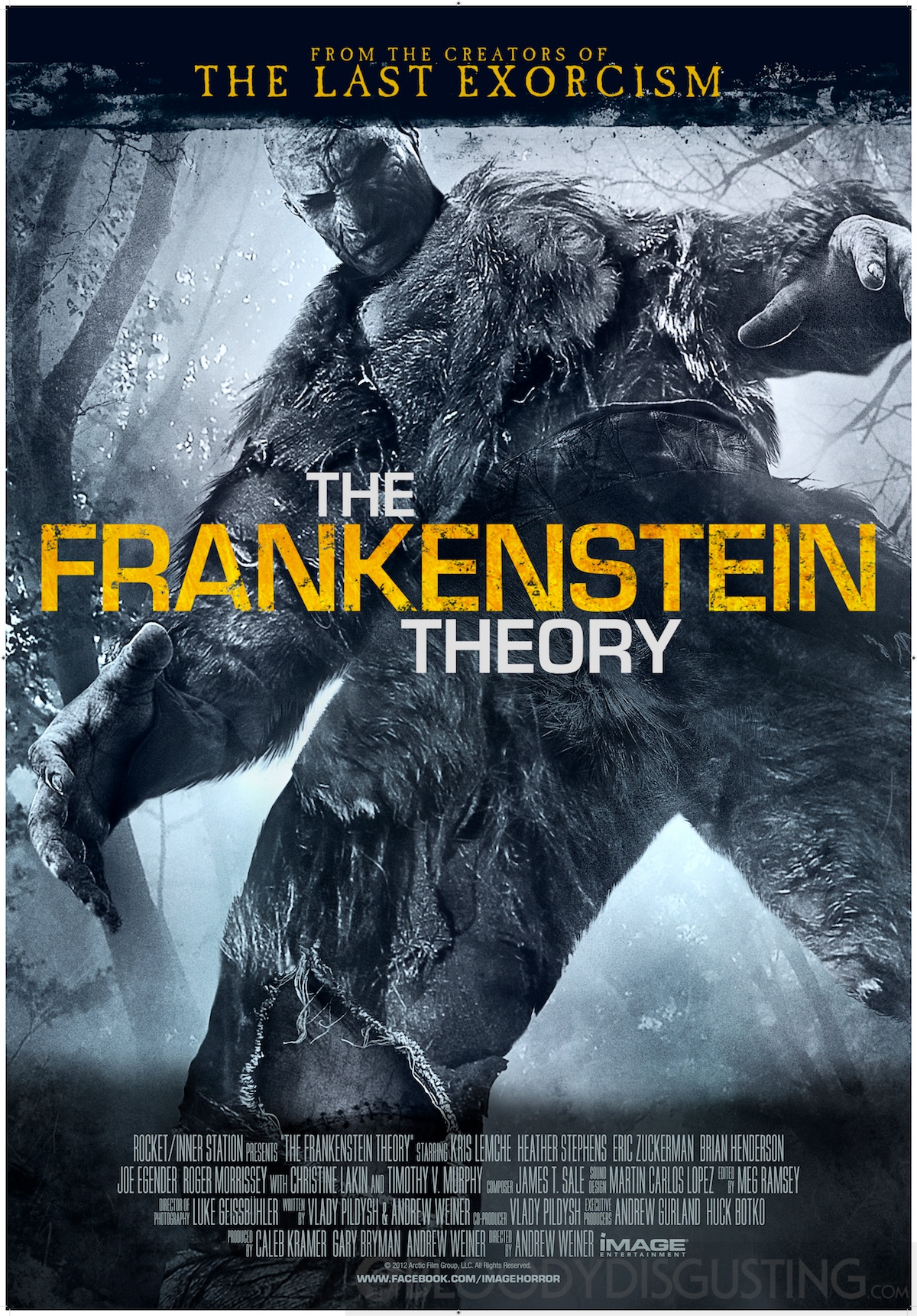
Andrew Weiner’s “The Frankenstein Theory” definitely does not reinvent the genre; it very much follows the “Blair Witch” template, as a group of unwary documentary filmmakers go after a mysterious creature, and don’t come back.

But it’s the first found-footage film I can remember to marry the 21st-century horror genre to classic horror from a century ago, and that makes it at least worth a look. The film is getting a very small cinematic rollout before it comes out on DVD on March 26, and among the 15 theaters it’s playing in is Fitchburg’ s AMC Star Cinema.

Arrogant young Jonathan Venkenheim (Kris Lemche) believes Shelley’s classic tale was a fictionalized account of real events, and that his ancestor was the real Mad Scientist. The book leaves Frankenstein and his creature stranded on an ice floe in the Arctic, and Venkenheim believes the creature is still roaming the tundra somewhere.

He bankrolls a documentary filmmaker (Heather Stephens) and her crew to chronicle his exploits, and off they go.

The film takes a while to get to the creepy stuff, and Weiner isn’t able to always hold the viewer’s interest until then. The movie’s saving grace are the two deeply skeptical film crew (Brian Henderson and Eric Zuckerman), who spend the first half of the movie giving each other Wet Willies and snickering behind Venkenheim. They’re genuinely funny, especially when things start to get a little scary in the frozen north (“I don’t want some bear to be making fun of me while he’s eating my leg!”)

Unfortunately, they’re also genuinely expendable, and “Theory” follows a familiar path as the characters are picked off one by one. Weiner keeps most of the mayhem offscreen, using unnerving sound effects and famliiarfound-horror visual touches (like night vision) to enhance the spooks. (Unfortunately, the effect is lessened a little by the fact that, for the monster’s roars, he seems to have cribbed sound effects from the video game “Doom.”)

Still, it’s an engaging debut, and possibly points the way forward for found-horror — backwards, to horror’s classic tales. I’m sure a shaky-cam visit to Dracula’s castle is in the works somewhere.

“Jack the Giant Slayer”: Fee fie fo fumble

Jack-the-Giant-Slayer_20

“Jack the Giant Slayer” opens Friday at Point, Eastgate, Star Cinema and Cinema Cafe in Stoughton. PG-13, 1:56.

It was just a little over a month ago that “Hansel & Gretel: Witch Hunters” opened, and I joked to a colleague that “Jack and the Beanstalk” would be the next storybook tale to get the IMAX 3D treatment. I thought I was joking, but here it is, “Jack the Giant Slayer.” I would quip that next up will be a PG-13 “Little Miss Muffet,” with Amanda Seyfried battling armies of giant spiders, but I don’t want to give anybody any ideas.

Suffice to say that “Jack” isn’t the worst of the fairytale trend (“Little Miss Riding Hood” owns that) nor is it the best (the gonzo stylish “Snow White and the Huntsman”). But the story of Jack does present a tricky question for director Bryan Singer and his team of writers (including Singer’s “The Usual Suspects” collaborator, Christopher McQuarrie); who’s the movie for, exactly?

You can’t just make a kids’ movie, since the studio is demanding a PG-13 action film that will bring in the teens. But there’s only so dark and violent you can go in a movie that has magic beans as a key plot element. So “Jack,” although energetic and prone to some moments of giddy visual wit, never settles on a consistent tone. It’s too scary for your youngest kid and too silly for your oldest.

A lengthy animated prologue (in which the giants don’t look much different than in the “live-action” film) explains how there’s a world of giants living in the clouds above ours, and how magic beans can build beanstalks to bridge the two worlds, so the giants can come down and kick our asses. (No real upside to the magic beans, methinks.) Luckily, a magic crown is forged that allows the wearer to control the giants.

The human sent the giants upstairs generations ago, but the king’s right-hand man Roderick (a gap-toothed Stanley Tucci) gets his hands on both the beans and the crown, with plans to use the giants to conquer the kingdom. Except farmboy Jack (Nicholas Hoult) gets ahold of the beans, accidentally sprouting a stalk in his living room that sends his house — with princess Isabelle (Eleanor Tomlinson) inside it — shooting up to the heavens.

The king (Ian McShane) sends a few good knights, along with Jack and the sneaky Roderick up to find her. It’s here, I think, that “Jack the Giant Slayer” makes its first major misstep. What I remember of previous fairytale iterations was the tension of Jack sneaking around the giant’s lair, trying not to be discovered, hearing the rumble as the giant gets closer and closer. Here, the humans are caught almost immediately, and the CGI giants are presented almost immediately. Wouldn’t want to waste any of that visual-effects money on actually building a little suspense.

And, honestly, the giants are a little boring. Visually and personality-wise, it’s hard to tell them apart, aside from one that looks like Harvey Keitel for some reason, and another that looks like either Kid or Play from “House Party” (I can never remember which is which.) Otherwise, they’re basically just one-dimensional brutes that like to munch humans like they were at Buffalo Wild Wings.

There’s one clever action sequence, in which gallant knight Elmont (Ewan McGregor) has to avoid being baked into the giant equivalent of a Hot Pocket. But Singer otherwise doesn’t get much mileage out of his villains — other than their size, they’re just generic “Lord of the Rings”-knockoff bad guys. Just imagine the mischief that a more daring filmmaker like Terry Gilliam would have had with this story.

But then, the studio likely couldn’t have trusted Gilliam to hit all the expected notes of big-budget fantasy-action, including the obligatory endless battle between humans and giants. It’s not awful, but for a movie about 40-foot behemoths, “Jack the Giant Slayer” has pretty small aspirations.

What’s playing in Madison movie theaters: March 1-7, 2013

21-and-Over-_-Miles-Teller-Justin-Chon-Skylar-Astin

It may not feel like spring outside, but the calendar does say March 1. And that’s all the excuse Hollywood needs to kick of the spring movie season. So the low-profile dramas and comedies of January and February that the studios had little hope for will start giving way to some semi-blockbusters that the studios hope will generate some big box office.

Jack the Giant Slayer” (Point, Eastgate, Star Cinema) — When “Hansel & Gretel: Witch Hunters” came out in January, the 77 Square graphic designer Brandon and and I were joking about what fairytale would be next. And I jokingly suggested “Jack and the Beanstalk,” imagining a poster with the tag line “Fee Fi Fo Summer 2013.” They took everything but the tagline.

The Last Exorcism Part II” (Point, Eastgate, Star Cinema) — My favorite movie title in quite some time. If the first movie had the last exorcism, then how can there be a Part II? Unless “last” didn’t refer to “final,” but merely “The Previous Exorcism,” or “The Most Recent Exorcism.” And that didn’t look too good on a poster.

21 & Over” (Point, Eastgate, Star Cinema) — The writers of the “Hangover” movies make a raunchy R-rated comedy about three buddies out on a night of drunken debauchery, in which their straight-laced buddy ends up getting the wildest. But this time, the friends are college-age. So it’s completely different.

Phantom” (Point, Eastgate, Star Cinema) — It’s been ages since we had a good submarine movie, and I had high hopes for this one, in which the great Ed Harris plays a Russian sub captain who takes aboard a covert ops team led by David Duchovny on a mysterious mission during the Cold War. Alas, early reviews have not been kind.

A Place at the Table” (Sundance) — This revealing documentary looks at the 51 million people (including 1 in 6 children) who live with hunger in America. I’ll be doing a post-show chat after the 7:05 p.m. Tuesday showing, and it looks like, as a very special bonus, I’ll be joined by Capital Times food writer LIndsay Christians, who recently did the Food Stamp Challenge. Come join us! Here’s my review.

The Frankenstein Theory” (Star Cinema) — Mary Shelley meets “Blair Witch” in this found-footage horror tale of a scientist in the Arctic out to prove Shelley’s tale was non-fiction, and the monster is out there. If handled well, it could be a lot of fun.

“Punishment Park” (UW Cinematheque, 4070 Vilas Hall, 7 p.m. Friday )  — The free on-campus film series presents a pair of films by button-pushing “mockumentary” filmmaker Peter Watkins with this disturbing 1971 film, in which antiwar protesters are rounded up for deadly exercises for the National Guard. It still has the power to shock over 40 years later. FREE!

Death Rides a Horse” (UW Cinematheque, 7 p.m. Saturday) — Oh yeah. The Cinematheque’s big spring series of spaghetti Westerns (which will spill over into the Wisconsin Film Festival) begins with this violent classic about a teenager (John Phillip Law) searching for his parents’ killers with the help of an outlaw (Sergio Leone favorite Lee Van Cleef.) Free!

Porco Rosso” (Chazen Museum of Art, 800 University Ave., 2 p.m. Saturday) — In this charming animated film from Studio Ghibli, a flying ace doesn’t let the fact that he’s turned into a pig keep him grounded. Free, but get there early, because the Ghibli series has been selling out every Sunday.

Middle of Nowhere” (Union South Marquee Theater, 1208 W. Dayton St., 7 p.m. Friday) — In this 2012 Sundance Film Festival award winner, a promising med student sees her life change when her husband is sent to prison for eight years. Free!

Skyfall” (Union South, 9:30 p.m. Friday, 6 p.m. and 9:15 p.m. Saturday, 3 p.m. Sunday). — I love it. Free!

Planet Terror” (Union South, midnight Friday and Saturday) — Watch the full version of Robert Rodriguez’s half of “Grindhouse,” in which toxic sludge turns folks into killer zombies. Weird they’re showing the other half, Tarantino’s “Death Proof” as well, no? Free!

Broken On All Sides” (Union South, 7 p.m. Monday) — Co-sponsored by UW Athletics, this documentary looks at mass incarceration in America and the role that poverty and race play. Free!

High Ground” (Union South, 7 p.m. Tuesday) — Vets for Vets co-sponsored the screening of this triumphant documentary about 11 veterans of the wars in Iraq and Afghanistan who climb a 20,000-foot peak in the Himalayas. Free!

Margin Call” (Union South, 7 p.m. Wednesday) — An all-star cast (no, really — Kevin Spacey, Jeremy Irons, Stanley Tucci, Demi Moore and more) turn the 2008 financial meltdown into the stuff of high drama, as we spend one tense night in a Goldman Sachs-like company facing Armageddon. Here’s my review. Free!