DVD review: “The Thief of Bagdad”

thiefofbagdad

I don’t know what the newest film will be to play at this year’s Wisconsin Film Festival, but I’ll bet I know the oldest.  The festival will show a digitally-restored print of the 1924 swashbuckling classic “The Thief of Bagdad,” starring screen legend Douglas Fairbanks.

It’ll likely be one of the most memorable screenings at the festival (April 11-18), akin to the Milwaukee Film Festival screening the restored “Metropolis” a couple of years back. But until then, the 2K restored version is out on Blu-ray this week from Cohen Media and is, in no uncertain terms, a stunner.

The restoration process, based off two original 35mm prints, took two months, and the result is a positively vivid picture. The sharp detail and depth of focus makes it look like one of those careful silent film recreations in “The Artist,” not a film that’s genuinely 89 years old. This may sound strange, but watching it, I could almost feel the wonder of early cinema, imagine how amazing it would have been for a 1924 audience to see lifelike characters moving around on a flat screen.

And the characters do a lot of moving around, especially Fairbanks; in the behind-the-scenes featurette accompanying the disc, historian Jeffrey Vance explains that there are relatively few on-set photos of Fairbanks simply because he was always in motion, moving too fast and too much for the still camera to capture him. His barrel-chested, broad-grinning dynamism shines through in “Thief,” considered his masterpiece, as he plays a lowly street thief who gets embroiled in a scheme involving a beautiful princess and an evil suitor. Fairbanks is lithe and graceful throughout — watch him shinny up a rope to a balcony to steal some food, or hang on the underside of a carriage, insouciantly grinning as he plucks the rings off the fingers of the unwise royal passenger snoozing within.

Using gigantic, expressionistic sets to invoke the palaces and minarets of a Bagdad that only exists in the imagination, along with state-of-the-1920s-art visual effects for the flying carpets, invisibility cloaks and other flights of fancy, this may be one of the first Hollywood films to justify the overused term “epic.” (Raoul Walsh is credited with directing, although it’s widely perceived that Fairbanks was the actual man in control.) Instead of stark black-and-white, the images recreate the original tints of the theatrical release, which means that the outdoor scenes have the yellow of old parchment, the night scenes a steely blue, the indoor scenes a lustrous pink.

Add in an absolutely fantastic full-orchestra score by composer Carl Davis that quotes liberally from the works of Rimsky-Korsakov, and you’ve got a true classic of early cinema brought back to its original glory.
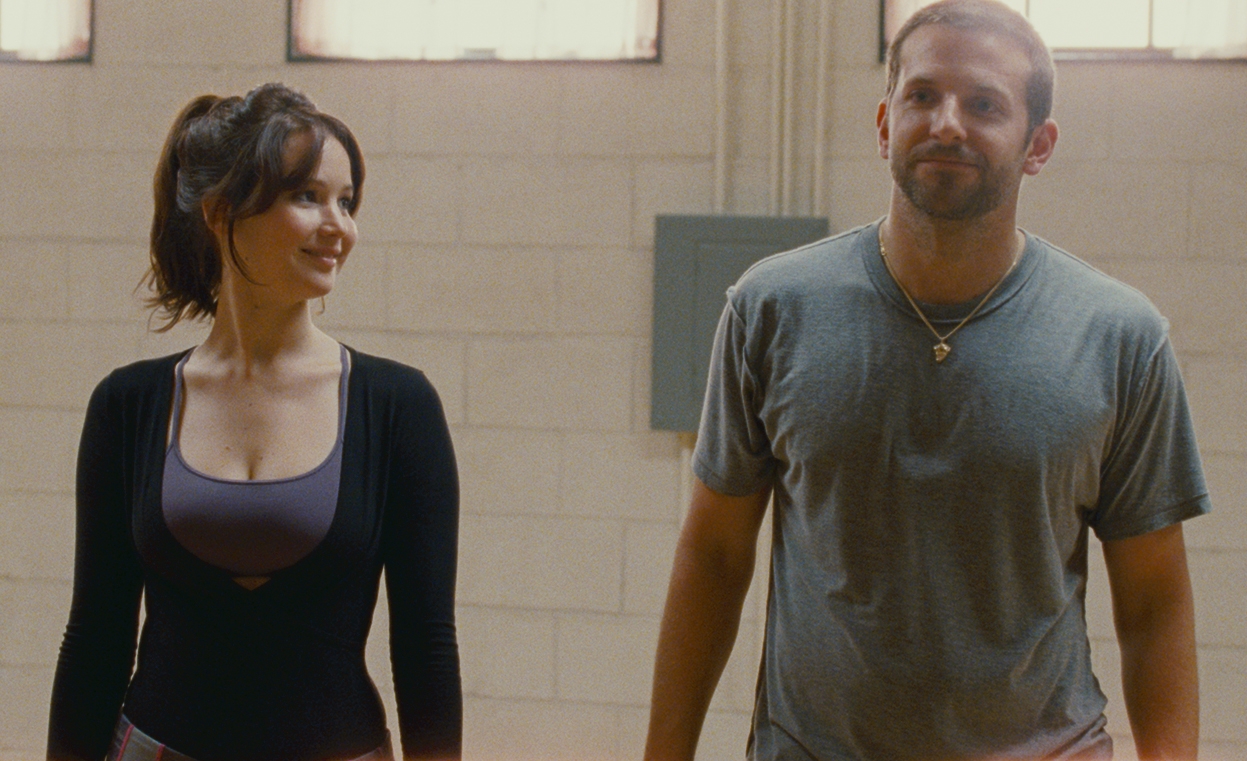
Could “Silver Linings Playbook” pull the mother of all Oscar upsets?

JENNIFER LAWRENCE and BRADLEY COOPER star in SILVER LININGS PLAYBOOK

I want to preface this by saying that I don’t know what I’m talking about.

There are movie blogs out there that have been tracking awards season since late last summer, talking to insiders, tallying up all the myriad critics’ awards and third-string nominations, updating the odds daily on who will win on Oscar night. They are the Nate Silvers of Oscar blogging, or at least they try to be.

This ain’t that place. I love the Oscars, and look forward to my friend Lyn’s Oscar party every year. I’ll be live-tweeting my tail off this Sunday at @robt77 if you’d care to join us. I do pretty well in her Oscar pool, but I’ve never won, and I don’t pretend to be some kind of wunderkind at this sort of thing.

And yet. This Oscar season has been so chaotic, with the perceived frontrunner changing several times in the run-up to Feb. 24, that I have to wonder if Oscar doesn’t have one more big surprise up that place where his sleeve would be if he wasn’t naked.

Just to recap, last fall everybody thought “Lincoln” was going to walk away with it. And while Daniel Day-Lewis surely has it in the bag for Best Actor, that heat cooled a little in December, as the conventional wisdom shifted. Now “Zero Dark Thirty” was going to come out and blow everyone away, seize control of the race.

Then some quibbles about accuracy (unfair ones in my book) came along and hobbled the “Zero” momentum a little. Director Kathryn Bigelow was shut out of a nomination for Best Director when the Oscars were announced Jan. 12, and the “Zero” moment seemed to have past.

Then the Golden Globes came around and awarded “Argo” with Best Drama and Ben Affleck (also overlooked by the Oscars) as Best Director. The Golden Globes are usually a terrible predictor of the Oscars, but all of a sudden “Argo” started picking up awards, from the all-important writing, directing and editing guilds. Whose members, of course, also vote for the Oscars. Seemed like “Argo” had finally achieved frontrunner status and was here to stay.

So, on your Oscar ballot, “Argo” is definitely the safe choice. No question. If anybody would seem likely to pull an upset, it would be “Lincoln” surging back.

Except.

Except that this year has been so chaotic (as opposed to other years when a frontrunner is anointed and never looks back) that I have to think “Argo” isn’t as secure as it looks. And the movie that looks in the best position to pull a last-minute upset is David O. Russell’s “Silver Linings Playbook.” Here’s my reasoning:

1. “Silver Linings” is much stronger than it looks. It has eight nominations, third behind “Life of Pi’ (11) and “Lincoln” (12). More importantly, it has all nominations for all four acting categories, the first time that’s happened since “Reds” in 1981. It’s also the first movie since 2004’s “Million Dollar Baby” to have nominations in what’s known as the “Big Five” — Picture, Director, Screenplay, and Actor and Actress. I think Jennifer Lawrence is a lock for Best Actress, and Robert DeNiro is the frontrunner for Best Supporting Actor.

2. “Silver Linings” is peaking at just the right time. Last fall, I groused for weeks about how “Silver Linings” had opened in 440 theaters on Thanksgiving, but didn’t make it until Madison until Christmas Day. But the slow rollout seems to have worked. That’s the film that everybody I know has seen, that everybody comes into the office Monday morning talking about, week after week.

3. “Silver Linings” is connecting with people. There’s something about “Silver Linings” that just works for an audience, be they mainstream or arthouse, in a way that sticks out in a relatively grim year of “Argo,” “Lincoln,” “Zero” and “Django Unchained.” It’s the mix of comedy, romance and drama, almost the perfect amounts of each, really, and the way the film plays with romantic comedy genre conventions, subverts them in places, but ultimately takes the audience exactly where it wants the movie to go, with a double-backflip happy ending that kind of teases us for wanting happy endings before it gives us one. I think there’s also something powerful about the way the film handles mental illness that really resonates with people. Almost everybody I talk to, it seems, has a brother like Bradley Cooper’s character, or a friend, or a neighbor’s kid. There’s somebody we know who needs some help. There’s something so ultimately hopeful about the message of “Silver Linings,” that if people do the work (and take their meds) and have a strong support system, they can get better. They can be okay. That’s strong stuff.

4. “Silver Linings” was made by the Weinstein Company, and the Weinstein Company knows how to do Oscar campaigns. Sorry to veer abruptly from the most emotional reason to the most cynical, but there it is. The Oscar race is a campaign, and Harvey Weinstein has proven exceptionally good at waging that campaign. I’m seeing ads everywhere for “Silver Linings,” using extended quotes that aren’t from critics, but from writers and commentators and others, often striking those same points that I mentioned in No. 3.  And that’s only what I see, and I’m not even a member of the academy.

The smart money is still on “Argo” or “Lincoln,” both movies I love and would be delighted to see win. But at the end of a crazy awards season, a “Silver Linings” upset would be a triple-backflip of a happy ending, wouldn’t it?

What’s playing in Madison theaters: Feb. 15-21, 2013

A-GOOD-DAY-TO-DIE-HARD-Official-Trailer-2-2013-H-1684

It’s the semi-triumphant return of the “What’s Playing” column! Each Friday, I survey the Madison movie landscape and let you know what’s on around town, from the big multiplexes to the smaller campus theaters.

A Good Day to Die Hard” (Point, Eastgate, Star Cinema, Sundance, Cinema Cafe) — Oh, I so wanted this to be good, but judging by the reviews (13 percent Fresh on Rotten Tomatoes), this is neither “good,” nor “Die Hard,” and feels like it takes about a day to watch. Discuss.

Safe Haven” (Point, Eastgate, Star Cinema, Sundance, Cinema Cafe) — Yet another romantic drama from novelist Nicholas Sparks, directed by Lasse Hallstrom (“My Life as a Dog”), which makes me a little sad. So Julianne Hough is a thing now, right? Have to get used to that.

Beautiful Creatures” (Point, Eastgate, Star Cinema) — A Southern-fried “Twilight” (pronounced “Twa-laahtt”?) with witches and warlocks and Emma Thompson as the villain, which is intriguing.

Escape From Planet Earth” (Point, Eastgate, Star Cinema) — It’s never a good sign when animated films aren’t screened for critics ahead of time.

The Other Son” (Sundance) — An Israeli teen and a Palestinian teen discover they were switched at birth in this humane drama that isn’t at all like “Celebrity Wife Swap.” My full review is here. Sundance is also keeping the Oscar-nominated live action and animated shorts around for at least another week.

Le Port Du Nord” (UW Cinematheque, 4070 Vilas Hall, 7 p.m. Friday, FREE) — A mystery without a solution, a riddle without an answer, this little-seen 1981 gem from French director Jacques Rivette follows two women on a mysterious quest around Paris, collecting cryptic clues and dodging traps. It was never released in the United States.

Hail the Conquering Hero” (UW Cinematheque, 7 p.m. Saturday, FREE) — An ordinary discharged soldier is mistaken for a war hero in Preston Sturges’ riotous comedy about blind patriotism and celebrity, part of a series of classic Sturges films this semester.

Only Yesterday” (Chazen Museum of Art, 2 p.m. Sunday, FREE) — The Cinematheque’s amazing series of Studio Ghibli films at the Chazen continues with “Only Yesterday,” a surprisingly nuanced and humane look at the life of an ordinary office worker against the backdrop of a changing Japan.

Beasts of the Southern Wild” (Union South Marquee Theater, 7 p.m. Friday and 9 p.m. Saturday, FREE) — The undisputed underdog of the Best Picture race is this gritty and lyrical fable about the denizens of a forgotten Louisiana community called the Bathtub, and one plucky little girl’s quest to find her mother.

Life of Pi” (Union South Marquee Theater, 9:30 p.m. Friday and 3 p.m. Sunday, FREE) — At first I thought Ang Lee’s adaptation of Yann Martel’s novel might be a little too squishy for my tastes, but it is a beautiful and understated fable as well as a riveting survival story. It may make you rethink that sailing trip you were planning with your favorite tiger, though.

Dredd” (Union South Marquee Theater, midnight Friday, FREE) — Karl Urban plays the comic-book judge, jury and executioner in a dystopian action film that doesn’t look any better than that Stallone version from the 1990s (although at least this one doesn’t have Rob Schneider).

Sleep Tight” (Union South Marquee Theater, 7 p.m. Saturday, FREE) — And you think you have landlord issues. In this Spanish chiller, the doorman at an apartment building develops an unhealthy fixation on one of the tenants.

Bad Lieutenant: Port of Call New Orleans” (Union South Marquee Theater, midnight Saturday, FREE) — The combustible combination of director Werner Herzog and actor Nicolas Cage leads to one of the strangest police procedurals in memory, marching to the beat of its own jittery, crack-addled drummer. My full review from 2010 is here.

Bill Cunningham New York” (Union South Marquee Theater, 7 p.m. Tuesday, FREE) — A series of fashion-related films co-sponsored by the Textile and Apparel Student Association continues with this lovely documentary about the New York Times “On the Street” photographer, who prowls the streets by bicycle looking for beauty. My full review is here.

Soul Food Junkies” (Union South Marquee Theater, 7 p.m. Thursday, FREE) — This documentary looks at the health benefits and costs of soul food, a quintessential American cuisine.

“The Other Son”: An Israeli and a Palestinian, switched at birth

the-other-son-the-boys-meet-each-other

“The Other Son” opens today at Sundance Cinemas; PG-13, 1:45, 3 stars (out of 4).

Joseph is a Dylan-loving Jewish teenager living in Tel Aviv. Yacine is a Palestinian medical student living on the other side of the wall. Under normal circumstances, they would never meet.

Except that they did cross paths once, as newborn babies born in the same hospital during the tumult of the first Gulf War. And, in the midst of that turmoil, they were switched at birth.

The premise for Lorraine Levy’s “The Other Son” sounds like something out of a soap opera, or an unusually political-minded episode of “Celebrity Wife Swap.” But the film, which opens at Sundance Cinemas today as part of the Screening Room calendar, goes to great lengths to make us believe its premise, and then use it to make a humane and surprisingly hopeful film about Israeli-Palestinian relations.

When Joseph (Jules Sitruk) applies for his mandatory military service, his physical shows that his blood type doesn’t match his parents. His mother, a French doctor (Emmanuelle Devos), discovers that her son isn’t really hers. She’s raising the son of a Palestinian couple on the West Bank, while they have her son, Yacine (Mehdi Dehbi).

Of course, it’s not so easy to simply switch them back 18 years later. Both Joseph and Yacine are devoted to their families, and perhaps more keenly devoted to their cultures. As the news sinks in, Joseph says, “I don’t feel Jewish, but I don’t feel Arab either. I don’t feel anything.” He goes to his rabbi, who, tears in his eyes, says that Joseph must now convert to Judaism, the religion he has lived since birth.

The Palestinian parents, especially the father, are more angered at the news; harboring resentment against the Israeli government, he sees it as one more attempt by the Israelis to take away what’s his. It’s at this point “The Other Son” faces a choice — it could have been a bleak message movie about the intractability of tribal identity and ethnic strife, or it could have been a film about our ability to transcend those identities.

Levy chooses the latter path, which is moving without always being convincing. The view of the Israeli-Palestinian divide seems milder than we’ve seen in other movies, the checkpoints more of a mild nuisance than a true insult. Or maybe it’s that we’re so used to seeing the conflict heightened in other films that the sight of everyday, uneventful life in the occupation is so striking.

And I think there is some truth to the idea that politics can fall by the wayside once your family is involved. Look at the conservative politicians who embraced gay marriage once they learned a son or daughter was gay, or went to bat for stem-cell research after they learned an ailing granddaugher could benefit. Levy is smart to make this transformation hesitant and awkward, with the two sons quicker to bond than their parents.

“Isaac and Ishmael,” Yacine says as the two boys look at themselves in the mirror. Go back far enough, past centuries of strife, and they are part of the same family after all.

DVD review: “Skyfall”

daniel-craig-skyfall3

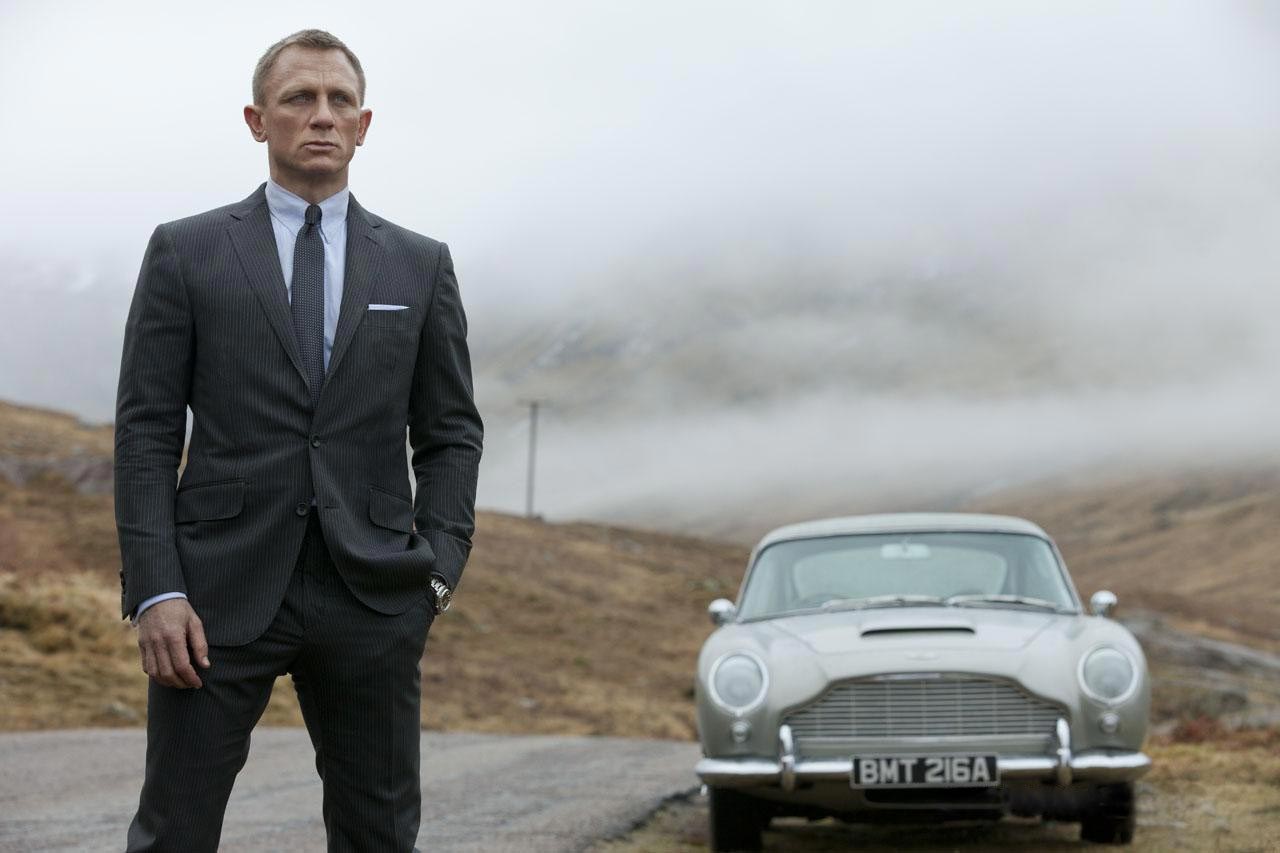
The James Bond franchise decided to celebrate the 50th anniversary of 007 on film by making a lot of those other Bond movies look bad.

I say that with a lot of affection and respect, as a kid who taped “Thunderball” and “The Spy Who Loved Me” and all the rest off the “ABC Friday Night Movie” and watched them over and over and OVER again. There are some great Bond movies and some not-so-great ones, but none are less than entertaining. But “Skyfall” is a great James Bond movie, and it’s a great movie to boot. (Here’s my original review from last November.)

The key, oddly enough, wsa the financial troubles going on at MGM Studios, which delayed the production of “Skyfall” by some two years (Bond movies tend to come out every two years, the last being 2008’s “Quantum of Solace,” which had the opposite problem — it was rushed into production because of the writers’ strike.) But that extra time was used well, as the producers were able to attract Oscar winner Sam Mendes (“American Beauty,” “Road to Perdition”) and screenwriter John Logan (“Gladiator”). Their presence meant the movie was able to attract a cast much stronger than the usual Bond movie, including Javier Bardem, Ralph Fiennes and Albert Finney, and a much stronger filmmaking crew, including the legendary Roger Deakins as cinematographer.

The result is a film that has all the hallmarks of great Bond — gangbusters opening action sequence, exotic locations, and one of the best villains in decades — but with a lot more. The film is more daring visually — that one fight in the Shanghai high-rise, shot in one take in silhouette, neon jellyfish undulating behind the fighters, is something else — but more more daring narratively. Left for dead by M and MI6 (the closest thing to a mother and his family), Bond spends the first half of the movie hesitant, vulnerable, emotionally brittle. Watch it again on DVD, and you see how marvelously subtle Daniel Craig’s performance is — he plays Bond trying to project the invulnerable 007 to everyone around him, yet clues the audience in on how much damage he’s really trying to recover from.

“Skyfall” came out on DVD and Blu-ray this week, and the Blu-ray is the one to pick up, not just for the superior visual quality, but because it has a lot more extras. There are over two hours of “Shooting Bond” featurettes detailing everything from the characters to the locations to the opening and closing sequences. And there are two commentary tracks, one by the producers and one by Mendes.

I really like the chatty and informative Mendes track, which has some of the usual isn’t-this-best-boy-great glad-handing but is pretty insightful in digging into the inspiration behind certain scenes, isolating moments in the performances that might otherwise fly by. On the first day of shooting for Bardem, at Charing Cross Station, Mendes recalls standing with Craig watching Bardem’s performance, specifically how he adds a delighted giggle at one moment that wasn’t in the script. “This is going to be fun,” Craig murmured. He was right.

John McClane, a Timex watch in a digital age

die-hard-original

There are some moviegoing experiences you vividly remember, even aside from what you thought aobut the movie. Seeing “Die Hard” in the summer of 1988 was one of them. I went with a couple of friends to see it at the old Continental in Denver, as a joke really, thinking we’d make fun of it in the way that teenage boys do. Come on, the guy from “Moonlighting” in an action movie? He looked ridiculous in the trailer. Should be good for a laugh, anyway.

And, as we’re in the lobby, heading towards the theaters, we see the crowd from the previous screening letting out. In the midst of the throng is another friend of ours, Kevin. He sees us, and has this dazed look in his eyes. “Best action movie ever” he says fervently. Really? Couldn’t be.

Of course, we undoubtedly had that same glazed happy look when we left the theater two hours later. And the “Die Hard” franchise was born.  So, with AMC Star Cinema hosting an all-day “Die Hard” marathon today, and with the fifth installment in the franchise, “A Good Day To Die Hard,” opening Thursday, it seems like a good time to look back at the very eventful life of John McClane, terrorist magnet.

First off, the original “Die Hard” is just an incredibly well-made action movie that holds up beautifully today — watching it is a Christmas tradition for more than one family I know. A large part of that is its economy, how it uses the confined space of a few upper floors of an office building as a battlefield. You always know exactly where McClane is, exactly where the bad guys are. And, of course, the movie has perfect opposites in its hero and villain — the sweaty, bloody, blue-collar cop and the refined, amused, suit-coveting German villain. “Die Hard” is one of those movies where every element works (well, aside from that last from-the-dead appearance by Alexander Godunov — that felt a little tacked on, right?)

A sequel is amost inevitably a step down, but it was clear right from the get-go that “Die Hard 2” would be a big step down. First off, William Sadler’s psychotic super-soldier is just no match for Alan Rickman’s Hans Gruber. Doing naked tai chi in your hotel room, then aiming your TV remote like a gun? That’s actually not scary at all, dude. Kind of lame, actually.

The sudden deaths of innocents in the first “Die Hard” were genuinely shocking at the time, such as Gruber coldly executing Mr. Takagi. But Renny Harlin’s “Die Hard 2” just tried too hard to make its villains seem villainous, resulting in some gratuitous cruelty that really saps the fun out of the movie. How could anyone possibly think it would be a good idea to crash a planeload of innocent passengers — killing more people than were even in the original “Die Hard” — just to establish the bad guy’s bona fides? It’s a grievous miscalculation, as are the laborious attempts to fit in minor characters, like William Atherton’s slimy reporter, into the film somehow.

For me, the “Die Hard” movies work best when they have a clear sense of their environment, that you have good guys and bad guys maneuvering within a defined space, an arena. What’s surprising about 1995’s “Die Hard with a Vengeance” is that “arena” is really all of New York City. But it still works because returning director John McTiernan uses the geography of Manhattan much as he did the top 5 floors of Nakatomi Plaza. If you’re a New Yorker, you know exactly where Bruce Willis and Samuel L. Jackson are at all times. One of my favorite moments is that pell-mell car ride down the length of Manhattan, when McClane not only thinks to call in a fake 911 call so he’ll have an ambulance to use “as a blocker,” but he knows which hospital to call, and how far the ambulance’s call area is.

If there’s anything that today’s modern CGI action movies lack, it’s that sense of spatial grounding. Once you can use digital effects to show anything, from any angle, a director can sometimes forget about those parameters in a hunt for something that just looks cool. What’s funny is that, at the time, “Vengeance” was considered over-the-top, and for years Willis would insist that a fourth “Die Hard” would return to the original’s gritty roots, possibly with McClane using only his wits to survive bad guys in the South American jungle. So much for that.

Which brings us to “Live Free or Die Hard.” The bad guy in this 2007 film (a miscast Timothy Olyphant) calls McClane a “Timex watch in a digital age,” which sums up both the problems with the fourth installment, but also its saving graces. Director Len Wiseman chases bigger, better, more implausible stunts at every turn — John McClane jumps on the wing of a fighter jet! John McClane knocks a helicopter out of the sky with a police car! — because that’s the way action movies are done now. The film rushes headlong from one setpiece to the next, one effect to the next. For minutes at a time, it could be any action movie.

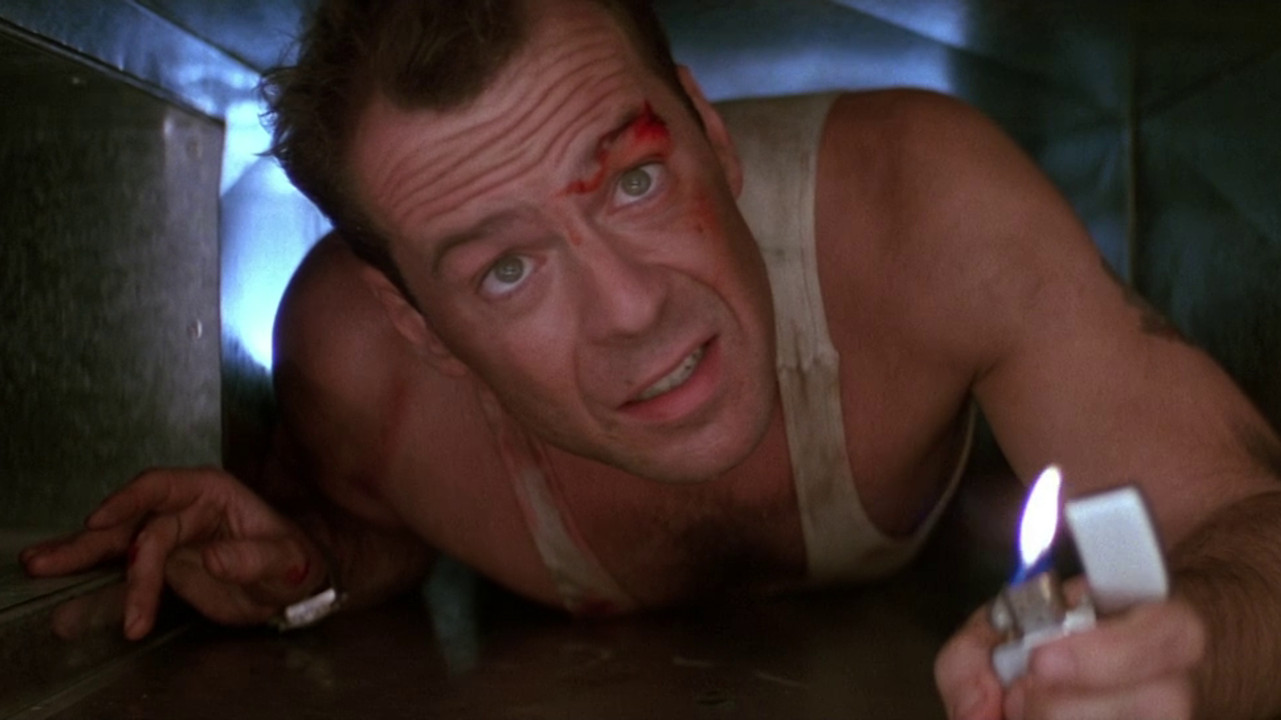
What saves it, and what makes it pretty fun, is Willis as McClane, still beaten and bedraggled as he was crawling through those air ducts almost 20 years earlier, still smirking away at all the mayhem around him. That the movie ends not with a big blockbuster climax, but with a quick, violent shootout, showed that the “Live Free” did keep its connection, however tenuous, to the series.

Which brings us to “A Good Day to Die Hard,” which sends McClane to Moscow to battle a new army of baddies with his estranged son. The previews showcase big, implausible action that makes “Live Free” look like a modest little thriller, and now the fate of the world rests on his shoulders.

It could be fun. But I can’t help but miss the guy crawling through the air ducts, the perfectly-wound Timex watch of action heroes.

Wisconsin director’s action thriller “A Lonely Place for Dying” banned in Russia

lonelyplacefordying

In Russia, Cold War spy thrillers watch you.

Okay, that may not make much sense, but I’ve never been one to pass up a quality Yakov Smirnoff reference. And it is true that, in the case of one Cold War thriller with Wisconsin ties, Russians won’t be able to watch it.

New Berlin-based writer-director Justin Eugene Evans said last week that his film “A Lonely Place for Dying,” which screened at the Barrymore Theatre last May, has been banned by censors from playing on movie streaming websites in Russia. No reason for the ban was given by government censors, but the government also knocked back Evans visa application to visit Russia to promote the film. That suggest to Evans that the government finds the film’s content to be objectionable.

“This film is about a time and place in history that no longer exists,” Evans told Crave Online. “I don’t see why anyone in the Russian Federation would be offended by our observations of the Soviet Union and the KGB.”

Which is weird, because the KGB agent in “A Lonely Place for Dying” is arguably the most sympathetic character in the movie. The film takes place in 1972, and a KGB double agent working for the CIA discovers that the agency is illegally bombing the country of Laos with deadly sarin gas. He arranges a meeting with a reporter at an abandoned Mexican prison, but the CIA gets wind of the leak and sends an agent to kill him.

Evans, a videogame art director and stay-at-home dad, made “A Lonely Place For Dying” for a paltry (by Hollywood standards) $200,000, using an array of digital tricks to make the film look more expensive than it is. Although it has some clunky moments, it’s overall an entertaining and engrossing film. American audiences will be able to see the film — it begins streaming on ITunes today (Feb. 12).

By sheer coincidence, the movie has one other Wisconsin connection this week. The newspaper editor that the KGB agent contacts is played by James Cromwell, who made headlines last week when he stormed into a UW Board of Regents meeting lsat Thursday to protest research experiments being conducted on cats.

Diana Vreeland doc kicks off fashionable film series at UW

Image

“Diana Vreeland: The Eye Has To Travel” plays for free at 7 p.m. Tuesday at Union South Marquee Theater, 1308 W. Dayton St. Not rated; 1:25.

I had pen and paper in hand while watching “Diana Vreeland: The Eye Has To Travel,” ready to catch the money quote that would sum up the life and philosophy of the iconic fashion magazine editor.

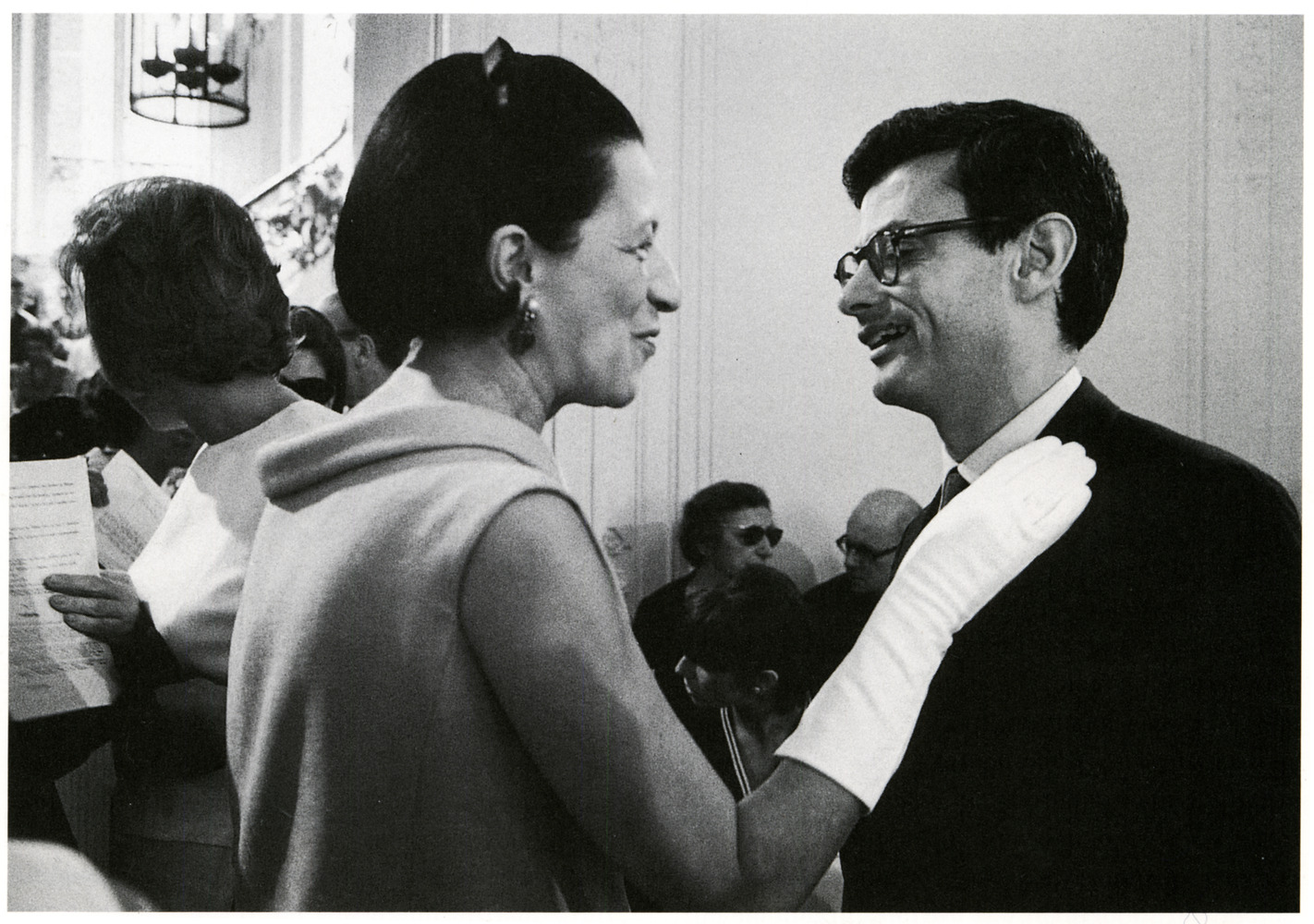
Eventually, I gave up. Every sentence out of the woman’s mouth was eminently quotable, as if she was always being interviewed. That eternal public persona was appropriate, I suppose, for a woman who celebrated the beauty of artifice, who didn’t think a woman was truly herself until she was completely dolled up in her haute couture armor, ready to take on the world.

“The Eye Has To Travel” is an entertaining and brisk walk through Vreeland’s long life, mostly letting her tell her own story because, really, who would have the temerity to interrupt her? It’s out on DVD from EOne Entertainment, plays for free Tuesday night at Union South, the first of a series of fashion-related films co-sponsored by the Wisconsin Union Directorate and the Textile and Apparel Student Association.

The documentary uses as its backbone a transcript from a lengthy 1983 interview Vreeland did with George Plimpton at the age of 80. Soundalike actors read the transcript, so Vreeland gets to tell her own story of growing up in France during the Belle Epoque. (“Arrange to be born in Paris,” she advises. “Everything else follows quite naturally.”) She had a knack for being in the right place at the right time almost since birth, aside from summers spent in the Rocky Mountains as a girl. She loved horses, but the frontier life wasn’t for her.

From there, she spent a quarter-century as fashion editor of Harper’s Bazaar, then went on to become editor-in-chief of Vogue. She hobnobbed with celebrities, oversaw outrageous fashion shoots where money was no expense, and embraced high culture as well as low, the latest trends as well as historical costumes.

Producer and director Lisa Immordino Vreeland (Diana’s granddaughter-in-law) interviews dozens of her friends and colleagues, from Calvin Klein to Anjelica Huston, to paint a portrait of a woman who was joyfully driven. But the film treads lightly over Diana’s personal life; we learn that her mother was a difficult woman who treated Diana as an ugly duckling, but she firmly brushes off any attempt to psychoanalyze her.

The closest we get to Vreeland’s personal life is in her lifelong devoted marriage to Reed Vreeland. But when he dies in 1966, we learn that Diana wore white to the funeral. Even in her darkest hour, it seems, she couldn’t resist making a fashion statement.

The series continues next Tuesday, Feb. 19, with the fascinating documentary “Bill Cunningham New York,” about the eccentric and humanist photographer for the New York TImes’ Sunday Style section. On Tuesday, Feb. 26, the series will show “Funny Face” with Audrey Hepburn as a bookstore clerk who just happens to fall into the world of modeling.

“Hyde Park on Hudson”: The only thing we have to fear is an uninspired biopic

Hyde-Park-on-Hudson

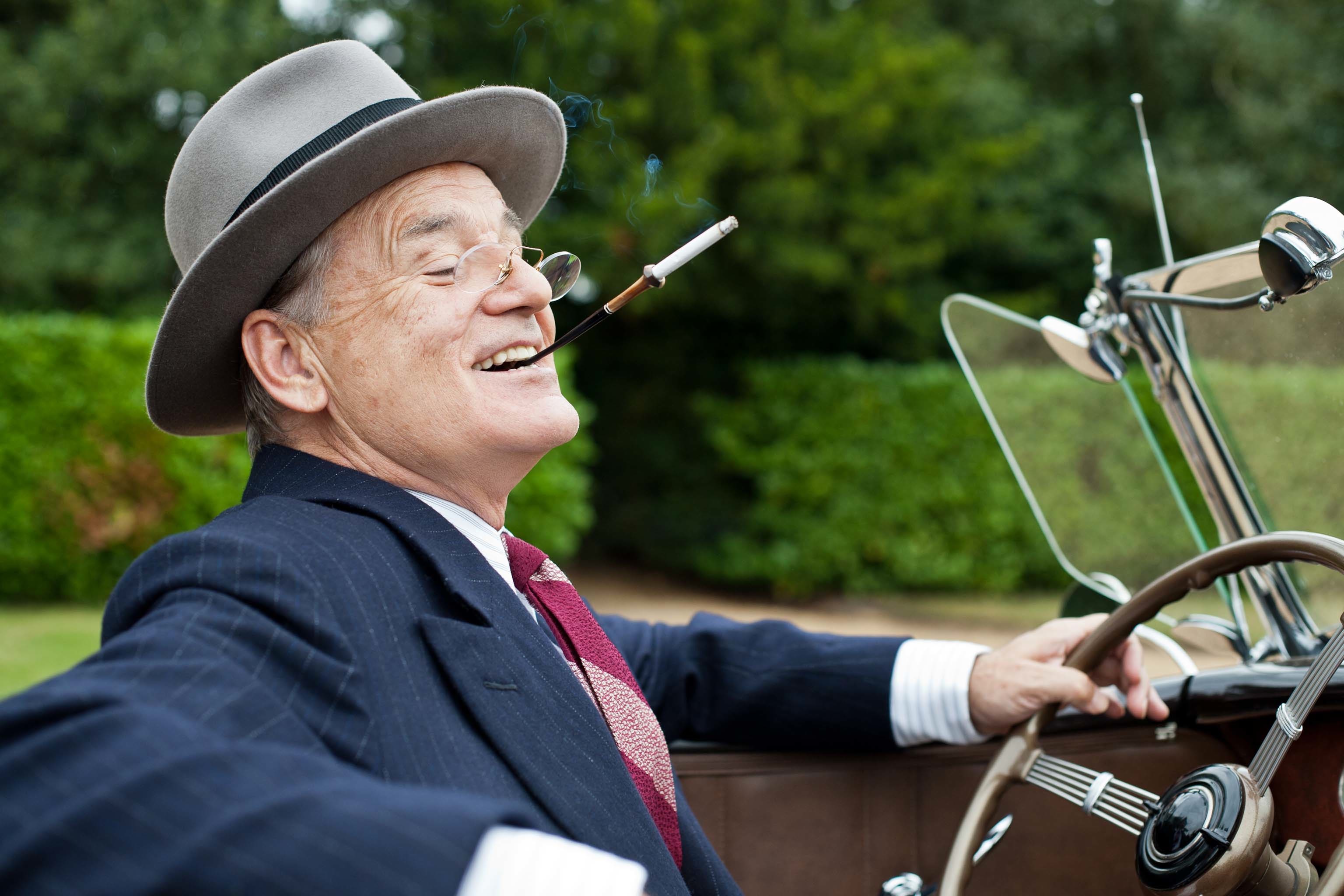
Boy, what happened to this movie? When I first started seeing the trailer for “Hyde Park on Hudson,” I thought for sure it looked like a big Oscar contender. Historical drama, a little overlap with “The King’s Speech,” and one of Hollywood’s most beloved actors, Bill Murray, stretching himself in what looked like a convincing fashion playing FDR. At the very least, I thought, we’d have two ex-Presidents duking it out for the Best Actor Oscar.

Instead, “Hyde Park” didn’t get any Oscar nominations, little love from critics and audiences, and now finally limps into Madison in February for less than a week (Sundance Cinemas is pulling it Thursday to make room for “A Good Day to Die Hard” — the indignity!). What happened?

Unfortunately, the movie happened. Although Murray is good as FDR, the movie around him is a mess, never sure whether it’s a historical drama or a comedy, and way too tentative about its subject matter, watching events from a careful, dull distance. The two subjects — FDR’s invite of the King and Queen to American to discuss America’s possible intervention in World War II, and FDR’s many affairs, including with a distant cousin (Laura Linney) — never fit together at all. In the end, “Hyde Park” reminded me a lot of “The Iron Lady” or “My Week With Marilyn,” in which a great act of historical impersonation is surrounded by a middling movie that doesn’t live up to it.

My review for the Capital Times is here.

Terrific 2012 Oscar animated shorts nominees are hard to keep quiet about

Paperman_still_1

“2012 Oscar Shorts: Animated” opens Friday at Sundance Cinemas. Not rated (fine for kids), 1:28.

Sometimes, when you’re good and you know it, you don’t have to say a word.

That’s certainly the case with the five animated short films nominated this year for an Oscar. It’s the strongest collection of nominees in years — and all five of them are totally dialogue-free. While that seems to be an ongoing trend in animated shorts (I can’t remember a Pixar short that had spoken dialogue), it’s telling that so many animators are opting to tell their stories entirely visually, and doing so so well and so cleverly.

Pixar’s entry this year is the enchanting “Paperman,” which screened in theaters before “Brave.” It wears its romantic heart-on-its-sleeve, a typical boy-meets-girl, boy-loses-track-of-girl, boy-finds-girl-with-help-of-magical-paper-airplanes sort of tale. In the storytelling, it captures that mix of wry humor and emotion that the best Pixar films balance, but it’s the execution that’s so unexpected here. Director John Kahrs has opted to make a film that’s entirely black and white (with one notable exception), and employs an engaging mix of 3D and hand-drawn 2D animation. It really feels like a traditional, lovingly-drawn 2D cartoon that somehow fills the space of a computer-generated cartoon.

Judge for yourself: Pixar posted “Paperman” online last week:

At the other end of the relationship arc is the British stop-motion animated film “Head Over Heels,” which looks at a middle-aged couple in a loveless marriage, living in the same house but barely acknowledging each other’s existence. Writer-director Timothy Reckart devised a simple but brilliant visual metaphor for the couple growing apart — in the house, the wife lives on the floor while the husband lives on the ceiling, upside down. If and how they manage to get on the same plane makes for a very affecting little film.

It says something about the strength of a set of animated films when “The Simpsons” is the weakest link. And “The Longest Daycare” is still pretty good, following young Maggie Simpson as she enters a dodgy day care center and has to protect a butterfly from the playroom bully. It’s full of little in-jokes and well-animated — good Simpsons but not exactly transcendent.

Writer-director Minkyu Lee’s “Adam and Dog” takes a simple concept — what if there was a dog in the Garden of Eden — and spins it out with flat-out gorgeous hand-painted visuals of forests and meadows. The story is fairly simple, but the animation is evocative, especially at capturing how dogs really explore the world around them.

http://youtu.be/hq0-i8GQbgw

Lastly, PES’ “Fresh Guacamole” is a two-minute explosion of creativity and ingenuity, a stop-motion marvel using everyday objects to simulate the making of guacamole — the avocado is a grenade, half a golf ball becomes the lime, and the diced tomatoes and onions are, well, dice.

In addition, the theatrical screening of “2012 Oscar Shorts — Animated” includes three more animated films that weren’t nominated, including “The Gruffalo’s Child,” the sequel to the delightful Oscar winner from a couple of years back. At under 90 minutes, the collection is suitable for family viewing but inventive and engaging enough for their parents as well.