“Ginger & Rosa”: A special friendship goes nuclear

ginger-and-rosa_01

Ginger & Rosa” opens Friday at Sundance Cinemas. PG-13, 1:29, three stars out of four.

Elle Fanning has one of those faces you can’t help but watch. Her expression can become opaque and thoughtful, and then suddenly blossom into a smile that seems so unforced and unexpected that it seems to surprise even her.  She was good in “Somewhere” and even “We Bought A Zoo,” but you almost can’t wait for her to grow up to see what kind of actress she’ll be when she gets older, more complex parts.

She gets her most fully realized role to date in “Ginger & Rosa,” a delicate coming-of-age drama from writer-director Sally Potter. Potter is known for making more experimental and daring films like “Yes”: “Ginger & Rosa” is much more conventional, a finely-observed tale of friendship tested and outgrown.

Ginger (Fanning) and Rosa (Alice Englert) were fated to be friends from the day they were born, when their mothers met in a maternity ward in London in 1945. Both mothers knew their share of disappointment; Rosa’s mother (Jodhi May) raised her children on her own, while Ginger’s mother (Christina Hendricks of “Mad Men”) may as well have; her philosopher husband Roland (Alessandro Nivola), a pacifist and writer, was often too busy chasing after a cause (or a girl he met through the cause) to be a father. He doesn’t even like Ginger calling him “Dad.”

Now it’s 1962, and the girls are inseparable. Potter opens the film with gorgeous images of friendship — perhaps made all the more beautiful because they’re set against the ruins of post-Blitz London. The girls, now teenagers, sneak cigarettes together, shrink their jeans in the tub, hang out with Mod boys in fast cars. At first it seems like Potter is going to make “Ginger & Rosa” a nostalgia trip to adolescence and an England long gone.

But the bond between Ginger and Rosa starts to crack a little. The Cuban Missile Crisis looms, and Ginger starts to become more worried about the threat of nuclear war. That unforced smile vanishes, and she goes to anti-nuke rallies and meetings. Rosa, meanwhile, is sexually maturing much faster than the more tentative Ginger, and begins flirting with the dashing Roland. To everyone’s surprise (including the audience), he reciprocates, and Ginger is forced to accept this development with an air of false sophistication, as if it was natural for her best friend and her father to become romantically involved.

The title of the movie is misleading, because this is really Ginger’s story, and Fanning’s show. She manages the British accent convincingly (her bright orange dye job slightly less so), but is even better at showing the contradictions and complexities of adolescence, careering from confusion to anger, trying to play the part of a world-weary adult while still a trusting child at heart. She has some especially lovely scenes with Oliver Platt and Timothy Spall, who play a gay couple she befriends, and some raw emotional scenes with Hendricks as her mother.

“Ginger & Rosa” flirts with melodrama, especially as the Roland-Rosa relationship plays itself out. But Fanning brings such a groundedness and authenticity to the film’s central role that you stick with her every step of the way.

What’s playing in Madison theaters: April 5 to 11, 2013

jurassic-park-large-picture

It’s a sad week for movie lovers with the passing of Roger Ebert. Over at the Capital Times, I reposted a 2003 interview I did with Ebert along with a few thoughts about his generosity and his passing. For some, going to see a movie might feel a little strange, especially without a review from Ebert to guide them. For others, what better way to say goodbye; after all, his last written words for us were “I’ll see you at the movies.”

All week

Jurassic Park 3D” (Point, Eastgate, Star Cinema) — Steven Spielberg’s dinosaur thriller gets a 3D upgrade for its 20th anniversary, but for me, what I still remember about that film was the sound, the roar of the T. rex or the sound of his footsteps growing closer. Definitely one to catch in the theater again.

Evil Dead” (Point, Eastgate, Star Cinema) — Or “Cabin in the Woods” without the jokes. Folks who only know the “Evil Dead” movies from the jokey last two would be surprised to learn how unfunny and nasty Sam Raimi’s no-budget original was, and this remake seems to follow in those footsteps.

No” (Sundance) — The best movie out this week is Pablo Larrain’s highly entertaining film about an advertising executive (Gael Garcia Bernal) who devises a campaign to oust Chilean dictator Augusto Pinochet. Inspiring, but wise about the power of television to sway public opinion. Read my full review here.

Ginger & Rosa” (Sundance) — Elle Fanning convincingly adopts a British accent for this tale of two teens in 1962 London whose friendship is tested both by maturity, and by the threat of nuclear war.

On the Road” (Sundance) — Walter Salles (“The Motorcycle Diaries”) was perhaps the logical choice to try and adapt Jack Kerouac’s stubbornly unfilmable novel for the big screen. Sam Riley and Garrett Hedlund play his counterculture road-tripping heroes.

Friday

Lincoln” (6 p.m., Union South Marquee Theatre) — I expected another “War Horse” from Steven Spielberg, a gauzy paean that was as much a monument as a movie. Instead, I found “Lincoln” to be incredibly engrossing and even suspenseful, about a man living at the intersection of myth and mortal, idealism and pragmatism, and trying to pull off an audacious political masterstroke. Free!

Mini Film Festival (6 p.m., Madison Public Library Pinney Branch) — Get your cinematic appetite whetted for next week’s Wisconsin Film Festival with some local films and filmmakers. Ben Reiser will present his feature “The Grapes of Madison,” and Marc Kornblatt will present a pair of his short films. Film festival managing director Christina Martin-Wright will also talk about the films and the upcoming festival. Free!

“Tchoupitoulas” (7 p.m., UW Cinematheque) — Fittingly following on the heels of two films by documentary filmmaker Shirley Clarke, this film blurs the line between narrative and documentary, following three young brothers who spend the night soaking up the sounds and sights of New Orleans after they miss the last ferry home to Mississippi. Free!

Footnote” (9:30 p.m., Union South) — The Coen Brothers must be kicking themselves for having not made this wry Israeli comedy, about rival Talmudic scholars who also happen to be father and son. When one gets an award meant for the other, chaos ensues. My full review is here. Free!

Pulp Fiction” (midnight, Union South) — Come on, it’s a midnight screening of “Pulp Fiction.” What else need be said? I will say that there are a few moviegoing experiences I remember vividly as experiences, and one of them was being packed into a sold-out theater on opening night for “Pulp Fiction” (I even remember where I was sitting — front row, left side) and coming out of that theater feeling like I had been pleasantly electrocuted. (“Django” gave me a similar rush.) Free!

Saturday

Lincoln” (6 and 9:15 p.m., Union South) — See Friday listing

Navajo Joe” (7 p.m., UW Cinematheque) — Burt Reynolds (yes, Burt Reynolds) plays a Native American on a mission of vengeance in his only spaghetti Western, directed by the great Sergio Corbucci. Free!

Donnie Darko” (midnight, Union South) — Another quintessential midnight movie, Richard Kelly’s mindbending debut mixes time travel and ’80s angst for a strange and haunting sci-fi tale of fate and consequences. Free!

Sunday

Ocean Waves” (2 p.m., UW Chazen) — I’m guessing the nicer weather won’t slow the crowds for the wildly popular Studio Ghibli series at Cinematheque at the Chazen. This weekend, it’s a tender coming-of-age story never seen on home video in America, about two school friends who find their bond tested by the arrival of a new transfer student. Free!

Lincoln” (3 p.m., Union South) — See Friday listing

Monday

No special screenings

Tuesday

Half the Sky — Part 2” (7 p.m., Union South) — Catch the second half of the full version of the PBS documentary, in which New York Times columnist Nicholas Kristoff joins some famous actresses in traveling to the third world and seeing how women and girls are fighting for change there. Free!

Wednesday

Trigger” (7  p.m., Union South) — This documentary looks squarely at gun violence — what really causes it, what the impact really is, and how it can be stopped. Filmmaker David Barnhart will be at the screening and will take part in a post-show panel discussion. Free!

Thursday

Ferris Bueller’s Day Off” (8:30 p.m., Majestic Theatre) — The Majestic picks the best day of hooky ever for its latest Brew ‘n’ View. Admission is $5.

Wisconsin Film Festival — The eight-day festival kicks off at several on-campus venues tonight and then expands to Sundance for the weekend. Watch this space for lots of previews and reviews, and follow me on Twitter (@robt77) for even more.

“No”: And now a word from our sponsor — freedom

no-gael-garcia-bernal-2

“No” opens Friday at Sundance Cinemas. 1:50, R, four stars out of four.

In 2009, one of the last films to get a first run at the Orpheum Theatre was a strange and unsettling little movie from Chile called “Tony Manero.” It followed a sad-eyed serial killer named Raul, who was obsessed with “Saturday Night Fever” and dreamed of winning a John Travolta lookalike contest on TV. In a Chile under the thumb of General Augusto Pinochet, where the police were more concerned with quelling dissidents than protecting the citizenry, Raul was free to indulge in both of his obsessions — murder and disco dancing — with impunity.

Director Pablo Larrain made Raul’s ridiculousness intertwined with his depravity, which is part of what made “Tony Manero” so disturbing. “Manero” ended up being the first part of a trilogy by Larrain about life under Pinochet, and the third part, the Oscar-nominated “No,” arrives in Madisn this week. It’s also a strange mix of the horrific and the silly, but this time silliness is on the side of the angels in a brilliant and highly entertaining film that’s part political thriller, part media satire.

The year is 1987, and Pinochet has been in power for 15 years. He wants the country to look forward, forget about the dead and the disappeared, and he wants the rest of the world to recognize him as a legitimate political leader, not a brutal thug. So he takes the unusual step of scheduling a referendum, a simple “YES” or “NO” on Pinochet’s rule. He figures he can’t lose — most of his opponents think the election is a sham, anyway. The entire election campaign will last 28 days, and every day both sides will get 15 minutes of airtime on Chilean television to make their case. (Say what you will about Pinochet’s crimes, but that sounds awfully refreshing in a country where we’re already talking about candidates for 2016.)

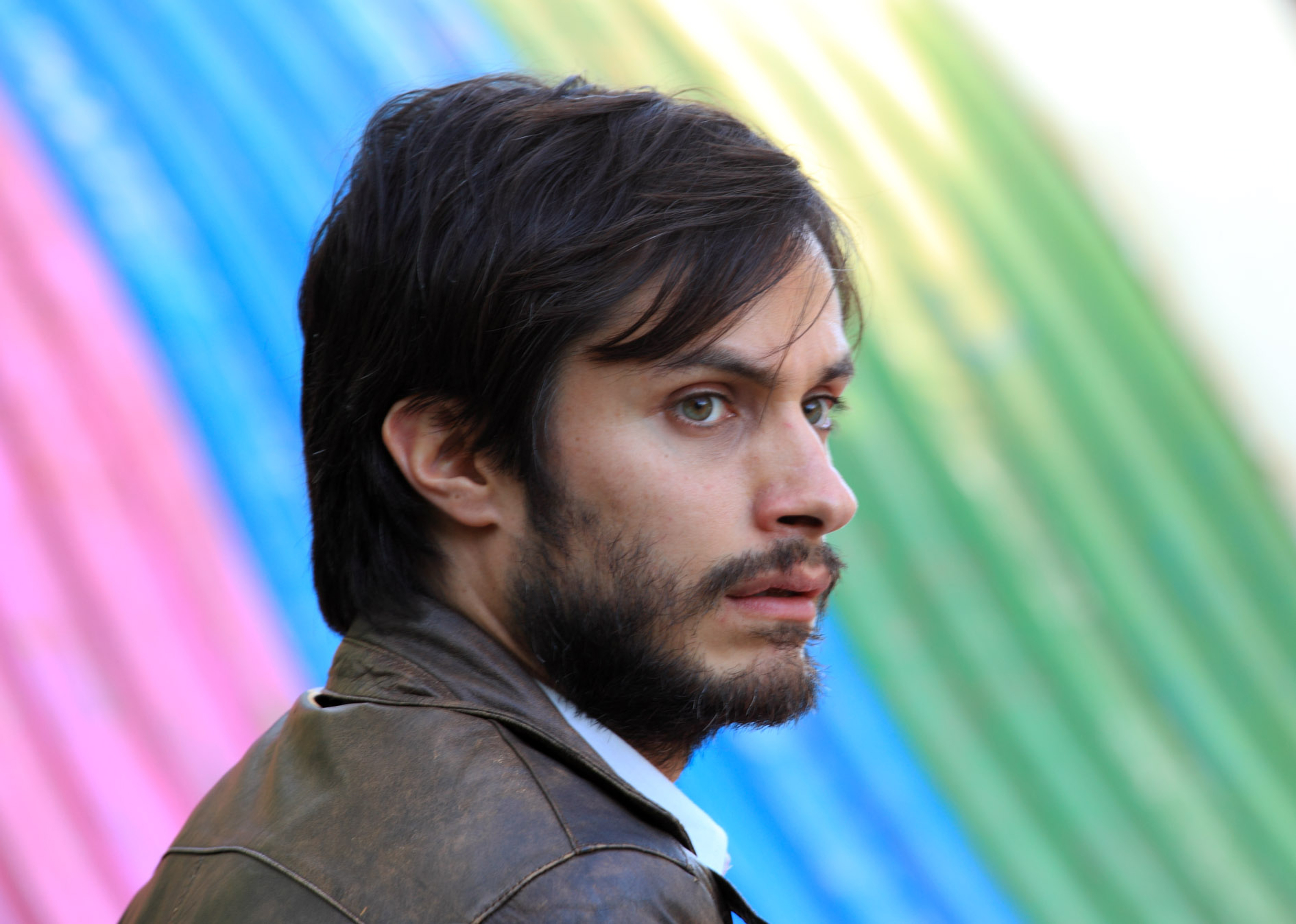
To make their case on television, the “NO” camp reaches out to a flashy young advertising executive, Rene Saaverda (Gael Garcia Bernal). Rene’s father is a political dissident exiled in Mexico, and Rene has steered clear of politics, making flashy, cheesy commercials for soft drinks. At first, he’s reluctant to have anything to do with “NO” campaign, but eventually signs on. His boss, played by Alfredo Castro, who was Raul in “Tony Manero,” is already working for the “YES” campaign.

The central joke of “No” is that Rene is a creature of advertising, of jingles and slogans, cute puppies and cleavage, into a deadly serious political campaign. When the “NO” camp shows him their first attempt at an ad, featuring horrific footage and statistics of all those Chileans tortured and murdered, his response is unequivocal: “It doesn’t sell.” Instead, he comes up with a hliarious mash-up of Coke and fried chicken commercials to sell democracy to the people. Bernal very deftly and amusingly plays Rene as sort of a vacuous advertising guy, a divorced dad who still rides a skateboard to work, whose political consciousness slowly gets reawakened.

From there, “No” is by turns comic and dramatic as it shows the escalating media arms race between the “YES” and “NO” camps, as Rene’s simple, optimistic campaign starts to gain traction with the population. On the one hand, Larrain is clearly making fun of the banality of advertising, how even the most serious issues have to be reduced to easy-to-digest sound bites for a population — you want to depose a dictator, but you don’t want to bum anybody out. On the other hand, there is skill and craft involved in advertising, and as silly as some of the images that Raul comes up with are, when we see them on the TV screen, they’re effective. Finally, the people get a turn to create their own propaganda.

Larrain made the intriguing decision to film “No” as if it was made for 1987 television, shot in pre-letterbox full frame on crummy video. The effect is jarring at first, but ends up being very clever, because it makes the transitions from new to archival footage (much of the original ad campaign is used in the film) absolutely seamless. By the time we get to a scene where a “NO” rally is attacked by truncheon-carrying police officers, we’ve been so immersed in this world that the horror and chaos of the moment feels even more immediate.

In the end, “No” leaves us with a satisfying mix of emotions. The film ends on a triumphant note, but is it a triumph of freedom over totalitarianism, or of one catchy slogan over another? Even Rene doesn’t seem to be sure.

Wisconsin Film Festival preview: “Awful Nice”

Awful_Nice_credit_

“Awful Nice” screens at 9:15 p.m. Thursday, April 18 at Sundance Cinemas. Writer-director Todd Sklar and co-writer and star Alex Rennie will attend. Advance tickets are available at wifilmfest.com.

If the title “Awful Nice” doesn’t sound familiar to you from your first mad dash through the 2013 festival calendar, that’s because it probably wasn’t there. Festival programmers just booked Todd Sklar’s film last week, after the calendar had gone to press.

It shouldn’t get lost in the shuffle, because this has to be one of the funniest films at the festival. And not just the sort of knowing-chuckle funny that one expects from indie comedies about estranged brothers, but huge, rolling waves of laughs. I watched “Awful Nice” in probably the most unfriendly environment for a comedy — on Vimeo, alone, on my desktop — and I was rendered helpless from laughing again and again. Sklar and Rennie have connected indie comedy to the tradition of broad slapstick humor, of punches thrown and windows smashed, and it’s just a riot.

“Awful Nice” is at heart rooted in a familiar tale of estranged adult brothers. Jim (James Pumphrey)  is the responsible one, a failed author with a family to support. Dave (co-writer Alex Rennie) has always been the family screw-up, drifting from one failed scheme to another, convince that his childhood collection of sports memorabilia will make him rich someday. How’s that plan working out for him? In the opening scene, Jim descovers Dave passed out naked in a wigwam, surrounded by strewn peanuts and a live tarantula.

Their father (nicknamed “The Colonel” for unspecified reasons) has just died, and Jim wants to drag Dave back to Kansas City for the funeral. For $150, Dave agrees. They haven’t seen each other in years, and always seem one careless remark away from a drag-out fistfight. Unfortunately, it seems the only remarks Dave knows is careless remarks, and the two grown men keep erupting into hilarious scuffles, looking like two kids wrestling in their parents’ rec room. The first act of “Awful Nice” is hilarious because of that constant button-pushing tension between the two brothers. There’s one fantastic, bizarre scene at a family dinner when Jim and Dave suddenly get into this bizarre drinking contest, madly gulping down every liquid on the table — beer, water, gravy — before devolving into the expected fisticuffs. They’ve never evolved past the “he did it first!” phase of brotherly relations.

The boys have to go down to Branson, Missouri to sell the family lake house, and find it trashed beyond belief. Dave decides it’ll be a great bonding experience if the brothers fix up the place, and Jim reluctantly agrees. The only problem (okay, one problem among many) is that neither has any idea how to do home repair. So instead they putter around the house and then head out on the town, getting sucked into Branson’s seamy underbelly (as opposed to its seamy overbelly), including British prostitutes and Russian mobsters.

“Awful Nice” plays it really broad at times, and Jim and Dave often reminded me of nothing more than classic slapstick comedy duos — the slow-burn straight man Jim as Bud Abbott, excitable loser Dave as Lou Costello. And, come to think of it, there has to be a “Three Stooges” short where the numbskulls had to fix up a house, right? Also, the supporting characters play things gleefully over the top, including comedians and podcast favorites DC Pierson and Brett Gelman as Russian mobsters, and “Law & Order: SVU” star Christopher Meloni, wearing the worst hairpiece you will see at the Wisconsin Film Festival, as The Colonel’s old business partner.

But as wild and silly as the movie gets, it still connects to the age-old tale of sibling rivalry, of how family relations bring out the worst and best in everyone. It’ll be a blast to see with a full house at the festival.

UPDATED: 50 Wisconsin Film Festival sellouts; fourth screening for “56 Up” added

56-up

If you were one of the many who couldn’t get tickets to see the documentary “56 Up” at this year’s Wisconsin Film Festival, and you don’t mind getting up early on a Saturday morning, you’re in luck. Late last week, the festival added a special fourth screening for Michael Apted’s documentary at 9:15 a.m. Saturday, April 13 at Union South. Advance tickets are available at wifilmfest.org.

“56 Up” was one of the first sellouts of the festival; not only is the “Up” series, following a group of British people every seven years of their lives, immensely acclaimed, but one of the subjects is a Madison resident, UW professor Nick Hitchon. Hitchon will be at the 6 p.m. Saturday screening only.

In past years, films normally only got one or two screenings during the festival, but the longer eight-day festival this year has given programmers the space to book films three (and, in this case, four) times if the film’s distributor is amenable. Festival director of programming Jim Healy said there likely won’t be any more films that get last-minute bonus screenings like “56 Up.” For example, Joss Whedon’s “Much Ado About Nothing,” which sold out in less than an hour, won’t get a second screening because the arrangement with the distributor, Roadside Attractions, only allows for one.

Otherwise, by my count, there are 50 movies at this year’s festival that have all or some of their screenings sold out. Here’s my updated list:

56 Up” — all three original screenings are sold out, but a fourth screening has been added at 9:15 a.m. Saturday at Sundance, and advance tickets remain for that. One of the subjects of the doc, Nick Hitchon, will be speaking at the 6 p.m. Saturday screening only.

7 Boxes” — The 5:15 p.m. Friday show and 9 p.m. Tuesday shows are both sold out.

All the Light in the Sky” — 4:45 p.m. Sunday sold out.

Augustine” — 7 p.m. Thursday (April 18) sold out, tickets remain for 9:15 p.m. Tuesday.

Beyond the Hills” — 5:45 p.m. Sunday sold out.

Blancanieves” — 7:45 p.m. Friday sold out, but tickets remain for 6:30 p.m. Thursday.

“Breakfast with Curtis” — 11:30 a.m. Saturday is sold out, but tickets remain the 12:15 p.m. Friday show.

The Bronte Sisters” — 1 p.m. Wednesday is sold out, but tickets remain for 9:15 p.m. Monday.

Citizen Koch” — 11 a.m. Sunday is sold out, but tickets remain for 7:15 p.m. Saturday.

Computer Chess” — 6:15 p.m. Tuesday sold out, but tickets remain for 11:15 a.m. Sunday.

Consuming Spirits” — 2:15 p.m. Saturday sold out.

“Dear Mr. Watterson” — Both screenings are sold out.

Dragon Inn” — 11:45 a.m. Saturday sold out.

Either Way” — both screenings sold out.

The End of Time” — both screenings sold out.

Flicker” — 7:45 p.m. Saturday and 4 p.m. Monday are sold out, but tickets for 12:15 p.m. Friday remain.

Grave of the Fireflies” — 2:30 p.m. Sunday is sold out, but tickets remain for 4:45 p.m. Thursday, April 18.

A Hijacking” — 9:30 p.m. Saturday is sold out, but tickets remain for 3 p.m. Friday.

I Am Divine” — Both screenings are sold out.

In the Fog” — 4:30 p.m. Sunday is sold out, but tickets remain for 2:30 p.m. Friday.

Kauwboy” — 2:15 p.m. Saturday is sold out, but tickets remain for 4:15 p.m. Wednesday.

“Key of Life” –  7 p.m. Wednesday is sold out, but tickets for 1:30 p.m. Thursday remain.

Kon-Tiki” — 6:30 p.m. Sunday sold out

Leviathan” — 6:30 p.m. Thursday, April 18 sold out, but tickets remain for 4:45 p.m. Friday.

The Librarian and the Banjo” — 4:30 p.m. Sunday sold out

Lore” — both screenings sold out

M” — 7:30 p.m. Saturday sold out

Much Ado About Nothing” — 9 p.m. Thursday sold out

Mussels in Love” — 7:30 p.m. Friday sold out, but tickets remain for 7 p.m. Monday.

Only the Young” — 7:45 p.m. Friday sold out, but tickets remain for 4 p.m. Sunday

Ornette: Made in America” — 7:15 p.m. Thursday sold out, but tickets remain for 9:30 p.m. Sunday.

The Painting” — 11:15 a.m. Saturday sold out, but tickets remain for 11:45 a.m. Sunday.

Phase IV” — 11:30 a.m. Saturday sold out

Present Tense” — 6 p.m. Sunday sold out, but tickets remain for 1:30 p.m. Monday.

Pretty Funny Stories” — 5 p.m. Saturday sold out

Radio Unnameable” — Both screenings sold out.

Renoir” — Both screenings sold out.

Room 237” — 6:30 p.m. Wednesday sold out

Shepard and Dark” — 6:30 p.m. Monday sold out, but tickets remain for 1:15 p.m. Tuesday

Short Films From Wisconsin’s Own” — 2 p.m. Sunday sold out

Stories We Tell” — 6:45 p.m. Thursday sold out

Street Pulse” — 4 p.m. Saturday screening sold out

This is Martin Bonner” — 6:30 p.m. Saturday sold out, but tickets remain for 2 p.m. Sunday.

Tiger Tail in Blue” — 7:15 p.m. Sunday sold out.

A Touch of Zen” — 11 a.m. Sunday sold out.

Unfinished Song” — 5 p.m. Saturday sold out.

The World Before Her” — 7:30 p.m. Friday and 11 a.m. Saturday both sold out

This is Martin Bonner” — 6:30 p.m. Saturday sold out, but tickets remain for 2 p.m. Sunday

Unfinished Song” — 5 p.m. Saturday sold out

Winter Nomads” — 4:30 p.m. Thursday sold out, but tickets remain for 12:30 p.m. Friday

“The Gatekeepers”: Victory is to see you suffer

thegatekeepers_med

“The Gatekeepers” is now playing at Sundance Cinemas. PG-13, 1:41, three stars out of four

The six men featured in the Oscar-nominated documentary “The Gatekeepers” all agree: the current political strategy in Israeli has been a failure, and the state needs to open constructive dialogues with Palestine and the other Arab states.

That those six men are all former heads of Shin Bet, Israeli’s internal security agency, the ones who have been implementing that strategy against the Palestinians, is striking.

Much like Errol Morris’ “The Fog of War,” Dror Moreh’s film is a sobering inside look inside history, at mistakes made and opportunities missed. In this case, it was the mistaken belief that Israel could occupy Palestine indefinitely, with a long-term permanent solution to be determined later. As one security head puts it, it was there job to keep Palestinian unrest at a “low flame” — 20 attacks per year instead of 20 per week — to give the politicians the breathing room they needed to pursue a solution.

But that solution never came. Instead, Moreh shows from the inside of Shin Bet how they saw the conflict got worse and worse — bus bombings on one side, targeted assassinations and interrogations on the other. It’s an endless cycle, with every victory only setting the stage for the next defeat. For example, Moreh tells the story of one “elegant” assassination against a Palestinian terrorist, in which a bomb was hidden inside the terrorist’s cell phone, and detonated remotely when he’s talking to his father. The bomb goes off, and one terrorist gets taken off the board. But then the others are enraged, and the attacks worsen.

“Gatekeepers” looks into several key incidents, including an incident in which two terrorists are beaten to death while in custody. (The Shin Bet head in charge at the time is cagey, telling Moreh he regrets that the incident happened — because a reporter was there and the story got out.) In addition to the interviews, Moreh uses a wealth of archival footage, from horrific images of terrorist bombings to eerily antiseptic satellite footage of a terrorist killed by a missile.

But perhaps the most dispiriting for the Shin Bet heads is when the agency also had to start contending with a far-right Israeli faction that wants to trigger a holy war by blowing up a Muslim shrine, the Dome on the Rock. And, in 1995, when a young assassin kills Prime Minister Yitzhak Rabin for signing the Oslo Accords, it’s a body blow to Shin Bet. Not only as an intelligence failure, but it’s a recognition that, as one head puts it, “we can win every battle and still lose the war.” One head quotes a Palestinian physician who tells him that, even as the Israelis use their superior firepower and intelligence, they can’t ever claim victory. For the Palestinians, he says, “Victory is to see you suffer.”

If there’s a ray of hope in the otherwise dispiriting history lesson of “The Gatekeepers,” it’s that these six men saw and know more about the situation than most, and they’ve come to the conclusion that peace is the only option.

“The Host”: What’s gotten into you lately? A day-glo alien caterpillar?

Image

“The Host” opens Friday at Point, Eastgate and Star Cinemas. PG-13, 2:05, One and a half out of four stars.

Character actors ought to get a special rate when they’re required to make complete nonsense sound convincing in a movie. Even the silliest movie calls in a Stanley Tucci (“Jack the Giant Slayer” and the upcoming “Percy Jackson: Sea of Monsters”) or a Tim Robbins (“Green Lantern”) to try and peddle the ridiculous.

William Hurt ought to get triple the going rate for making “The Host” a little better than it ought to be, right from the prologue, in which we see a shot of Earth, as Hurt says, “The world had never been more perfect. But it wasn’t our world anymore.” Ka-ching!

The world, in the silly and drippy sci-fi romance based on Stephenie (“Twilight”) Meyer’s novel, is now largely controlled by aliens, little thingies that look like fibre-optic caterpillars. They burrow into a human’s body and control them; outwardly, the only sign a human has been “occupied” is that his eyes glow like the power button on my Dell, and he forgets how to use contractions.

Meyer’s books have always had something of a conservative streak lurking beneath their supernatural mash sessions (what’s “Twilight” but not an extended pro-abstinence metaphor?), and it feels a little more overt in “The Host.” The aliens’ idea of a perfect society looks a lot like a latte-sipping liberal’s, with no war, the environment “healed” and a suspicious amount of Volvos and VW beetles on the road. With its tale of “real’ humans fighting against a collective that thinks it knows best, “The Host” overlaps with those “one world order’ Christian thrillers that Kirk Cameron keeps starring in.

Fighting these aliens, who favor white suits and shiny cars in the tradition of sci-fi aliens for generations of bad movies, is a ragtag human resistance. Melanie (Saoirse Ronan) is one of the still-humans; she’s captured by the aliens and has a squiggly new roommate implanted into her brain.

But this alien (named Wanderer, lately shortened to Wanda) hadn’t reckoned on Melanie’s force of will, and this turns into an internal tug of war, with Melanie’s angry thoughts and retorts to Wanda heard in voiceover. This might have worked in the novel, where dialogue can overlap seamlessly, but it’s a terrible decision for a movie, with the nagging Melanie coming across like the Great Gazoo to Wanda’s Fred Flintstone (“Don’t steal my boyfriend, dum-dum!”)

Melanie convinces Wanda to escape the aliens, and together Melanie/Wanda head to the resistance hideout in the desert, run by Hurt in full old-coot mode. (I mean, his name’s Uncle Jeb, he can’t help but be coot-ish.) The humans see Wanda’s glowing eyes and peg her as an alien, but eventually accept her into the camp because . . . there’s no movie otherwise? I honestly couldn’t figure that part out, or why Melanie insists that Wanda not tell the humans that she’s in there too.

The trailers show action-packed car chases and gunfights, but that’s just one extraneous scene. Most of “The Host” is a long, leisurely-paced hang in the resistance hang, as the humans learn to like and trust Wanda, and together Wanda and Melanie try and figure out how to reverse the alien infestation. Melanie reconnects with her old boyfriend, while Wanda starts flirting with another boy, which, since they’re in the same body, should make double-dating super awkward. Oh, and a bunch of aliens in shiny cars and helicopters, led by Diane Kruger, tool around the desert looking for them without much success. I guess nobody told the aliens how the satellites worked.

I like Ronan, and I feel a little bad that the movie requires to do so much frenzied arguing iwth herself, eliciting titters from the audience. Hurt is always fun to watch, and Niccol does have a distinctive visual style, best shown in the surreal image of a golden field of wheat growing  deep inside a cave.

But the source material is just too thin and mushy, with Meyer more interested in a tired love triangle than the narrative possibilities of the world she created. The aliens are kind of interesting — they’re not evil, and genuinely think they’re doing the planet a favor by occupying it. But the film is more interested in attractive teens getting all moony-eyed with each other (even if some of those moony eyes are glowing) and trying to start the inevitable franchise. Good luck with that; “The Host” is a movie about a girl with two minds, and it barely has one.

What’s playing in Madison theaters: March 29-April 4, 2013

BERGMAN BOGART

With the UW still on spring break, it’s a pretty dead weekend for movies around town. Things will pick up again during the middle of next week, but take heart — the Wisconsin Film Festival is less than two weeks away!

All week

The Host” (Point, Eastgate, Star Cinema) — Having come to the end of her “Twilight” movies, Hollywood attempts to continue author Stephenie Meyer’s winning streak with this sci-fi film about aliens who control minds, and the ragtag group of hot teenage rebels fighting them. It’s adapted and directed by Andrew Niccol, which could be great news (“Gattaca”) or awful (“In Time”).

GI Joe: Retaliation” (Point, Eastgate, Star Cinema) — Dwayne Johnson continues his successful strategy of jumping into sequels to movies he wasn’t in (“Fast and Furious,” “Journey 2 the Mysterious Island”) with this action sequel. Bruce Willis is also in there, and the shocking thing is that this is probably better than the last “Die Hard” movie.

Tyler Perry’s Temptation” (Point, Eastgate, Star Cinema) — Tyler Perry’s temptation is that he can’t resist putting his name above the title. His latest is an attempt at “Fatal Attraction”-style romantic thriller about a woman who strays outside her marriage. Perry obviously wants to make a message about the importance of fidelity and taking marriage seriously — which is why he cast Kim Kardashian in a supporting role.

The Gatekeepers” (Sundance) — This illuminating Oscar-nominated documentary looks at the heads of Shin Bet, Israel’s secret service, as they tell the inside story of 40 years of counter-terrorism. It’s a fascinating look as well as a sobering reminder of how futile even a well-managed occupation ultimately is.

“Like Someone in Love” (Sundance) — After filming “Certified Copy” in Italy, legendary Iranian director Abbas Kiarostami moves to Tokyo for this drama about a call girl and the three men in her life. My review is here.

Wednesday

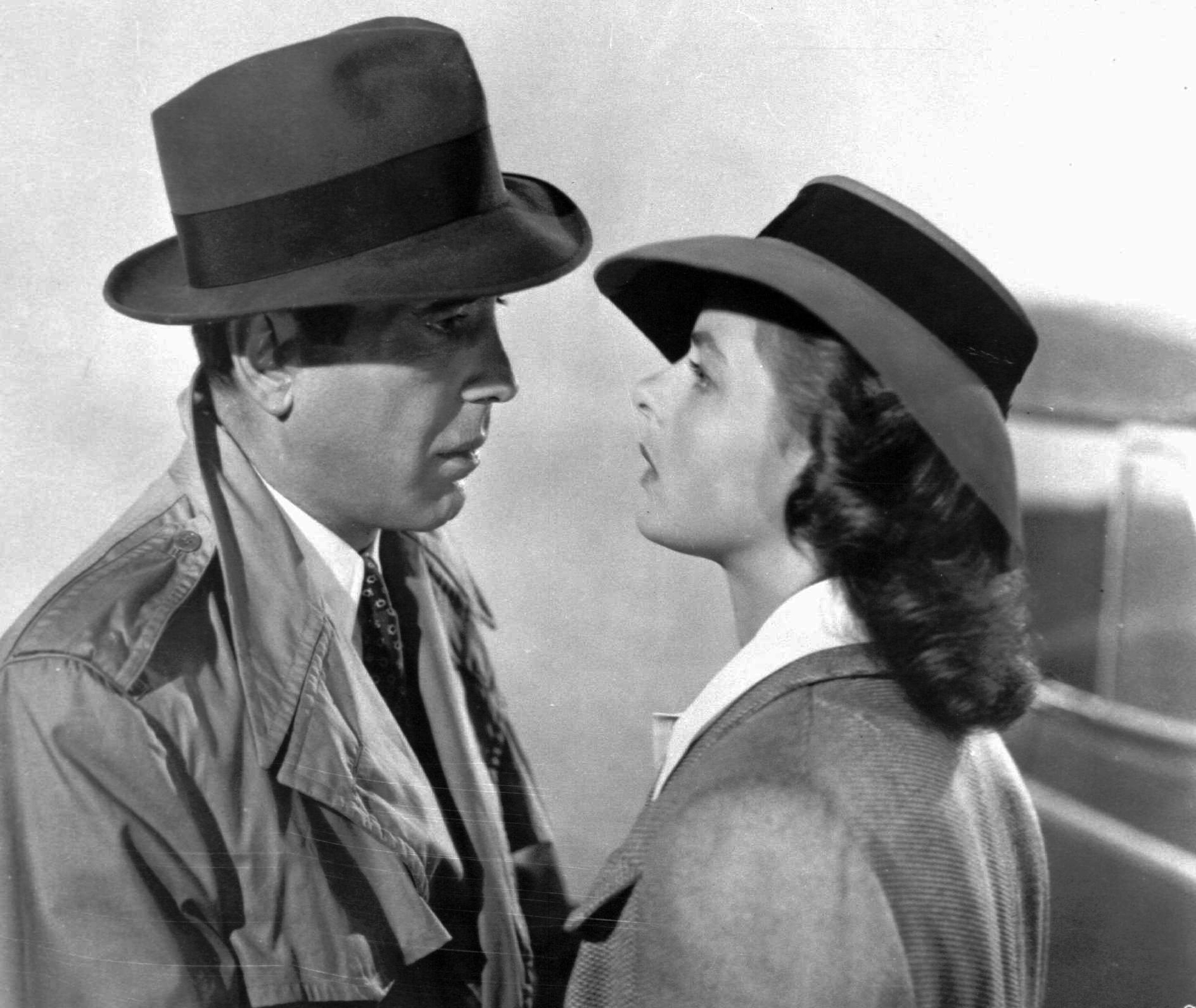
Casablanca” (Sundance) — Come on, it’s “Casablanca,” only one of the most quoted (and misquoted) movies of all time. If you know it only by reputation, check it out — it’s actually a highly entertaining melodrama, full of colorful characters, intrigue and a wounded romanticism. Not only is it a great film, it’s a good one, too.

The Fade” (Union South Marquee Theatre, 7 p.m.) — This intriguing-sounding documentary looks at a week in the life of four barbers, all either African or of African descent, in America, Britain, Ghana and Jamaica. Free!

Thursday

Lincoln” (Union South, 6 p.m.) — I expected another “War Horse” from Steven Spielberg, a gauzy paean that was as much a monument as a movie. Instead, I found “Lincoln” to be incredibly engrossing and even suspenseful, about a man living at the intersection of myth and mortal, idealism and pragmatism, and trying to pull off an audacious political masterstroke. Free!

“Like Someone in Love”: Tokyo as a gleaming city of exteriors

likesomeone

“Like Someone in Love” opens Friday at Sundance Cinemas. Not rated, 1:49, two stars out of four.

In his new feature, “Like Someone in Love,” expatriate Iranian director Abbas Kiarostami aims to put the viewer in the shoes of his characters.

Literally. The opening scene is shot from the viewpoint of someone sitting in a restaurant, fielding phone calls from a jealous boyfriend, exchanging chitchat with a friend at the next table. It’s only after a few minutes that we see whose eyes we’re looking through — a Japanese college student named Akiko (Rin Takanashi) who moonlights as a call girl.

The implication, I suppose, is that the men in her life don’t really see her, but the women they wish to see in her. Her pimp, who looks like an overworked banker, sees her as a commodity to be used. Her boyfriend Noriaki (Ryo Kase) sees her as an idealized, faithful supplicant, and of course flies into a rage upon realizing that isn’t true.

The third man she meets in the film is a customer, an elderly professor named Takashi (Tadashi Oduno). He sees Akiko as more of a surrogate granddaughter than a prostitute, preferring to eat and converse with her. When she heads for the bedroom, he seems to crumple quietly inside, his self-created illusion punctured.

Kiarostami returns several times to this first-person perspective with other characters, but the problem with “Like Someone in Love” is that, while we can see the world through their eyes, we rarely access how they think or feel about it. They remain frustratingly opaque, slipping into broad stereotype (kindly old man, angry young man, hooker with a heart of gold) rather than deepening.

Coming on the heels of last year’s dazzling and confounding “Certified Copy,” Kiarostami’s new film feels  like a bit of a step down. Having escaped his native Iran when the mullahs were cracking down on artists and filmmakers there, Kiarostami seems to have entered a new period as a “world director.” “Certified Copy” was set in Italy, “Like Someone in Love” in Tokyo.

The best scenes in the film use Tokyo, such as a long wordless taxi ride where the cool exteriors of the city glide by as Akiko looks on. But the film is all exteriors; where “Certified Copy” explored the deep, contradictory mysteries of the human heart, there doesn’t feel like much going on beneath the surface here.

After skimming along these surfaces, “Like Someone in Love” ends with a moment of sudden, shocking violence. It  doesn’t feel organic, more like Kiarostami figured he had to end his film somehow, and this jarring choice was as good as any. “Like Someone in Love” feels like a minor effort, an exercise in style rather than an experience.

Wisconsin Film Festival preview: “Sister”

sister2

“Sister” screens at the Wisconsin Film Festival at noon Saturday April 13, at the Union South Marquee Theatre, and 4:30 p.m. Tuesday, April 16, at Sundance Cinemas. Advance tickets are available for both screenings. Visit wifilmfest.org for tickets and other information.

At first, the boy looks like any other on the ski slope. Decked out in a snow suit, his skis thrown over his shoulder, making chit-chat about the conditions on the slope. He could be the  youngest son in any wealthy and European family spending the holidays in the Swiss Alps.

And then we see him duck furtively into the chalet, into the locker room where skiers’ backpacks are kept. He rifles through the bag quickly, efficiently, and when comes across food, cookies or sandwiches, he stuffs them into his mouth like a starving man.

So begins “Sister,” a thoughtful and quietly wrenching drama from director Ursula Meier, one of several new Swiss films playing at this year’s Wisconsin Film Festival with assistance from the Consulate General of Switzerland’s Chicago office.

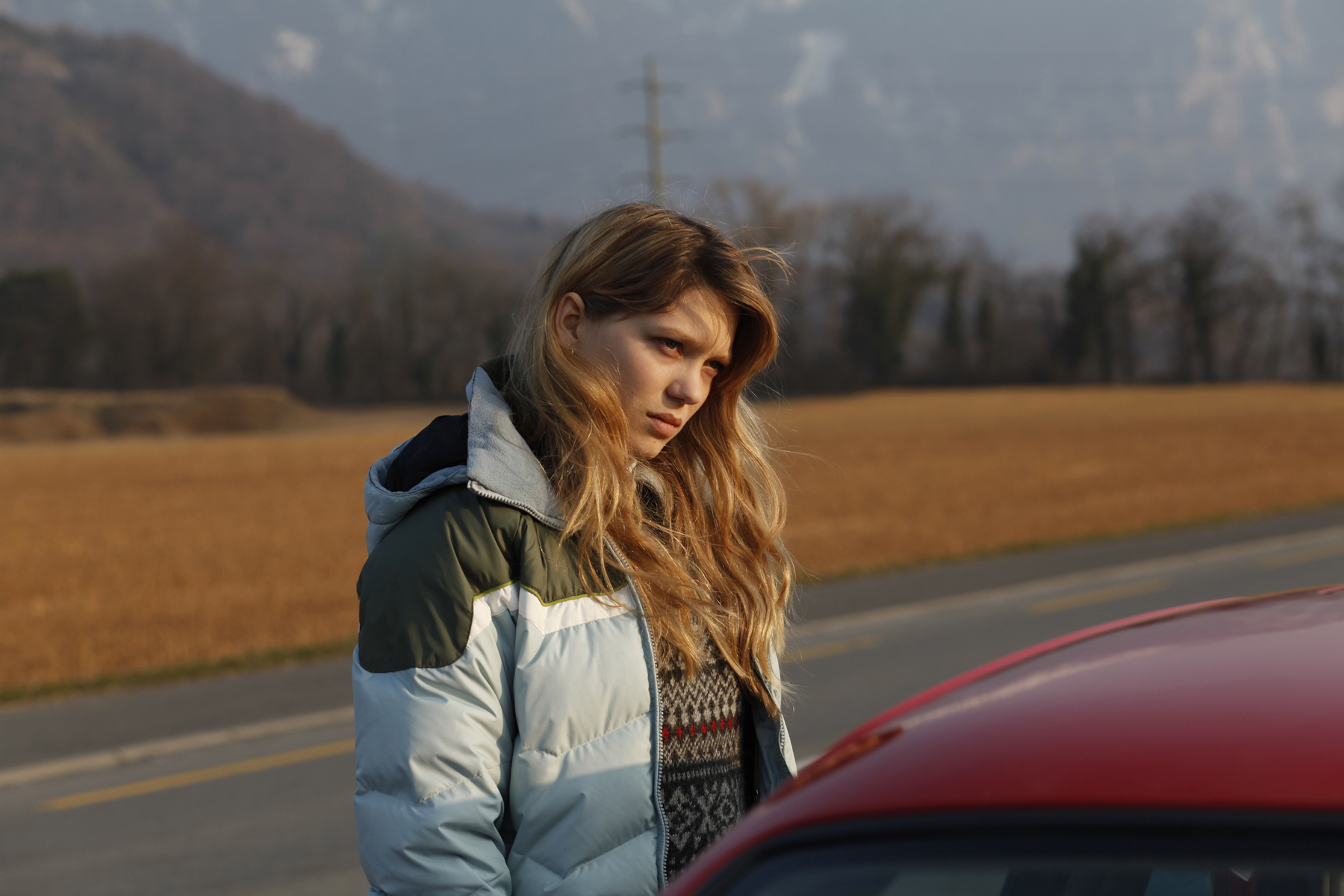
The boy is Simon (Kacey Mottet Klein), and he isn’t a tourist. He lives in town in a grubby housing complex with his sister Louise (Lea Seydoux). Louise is in her early 20s, but is basically a child, spending her days chasing after unsuitable men, and then relying on 12-year-old Simon to pick up the pieces.

In fact, Simon is the one keeping them afloat through petty thievery and cons, stealing skis and goggles off the slopes and then selling them to the next batch of tourists who come into town. He’s cynical and streetwise — young Klein gives an amazing performance — but his sister is his weak spot. He’s hopelessly devoted to her, even if its her irresponsible ways that keep them from getting out of that filthy little apartment.

Meier very deftly shows the two worlds of this Swiss resort — the rich tourists who blithely sail in and out, reveling in the beauty of the Alps, and the working-class townies who live below, oblivious to the mountains, focused on making just enough money to live on. Separating the two worlds is the gondola, which Simon rides to “work” each day, and becomes a symbol for the yawning gulf between rich and poor. Gillian Anderson, of “X-Files” fame, has a small role as a wealthy mother who Simon briefly cons, and as much as Simon wants to steal from her, it seems more important for him to have her affection, to be treated, briefly, like someone who belongs there.

Back at home, the relationship with Louise is much more volatile (and contains secrets we don’t learn until late in the movie). Louise is helpless, until she finds the next man she thinks will take care of her, and then all but ignores Simon. In one heartbreaking scene, Simon offers her a fistful of his ill-gotten euros if she’ll just cuddle with him for one night. It’s hard to know whether it would have been worse for her to take the money, or refuse.

But these two people are a family, somehow, and “Sister” ends with a beautiful, wordless final shot that symbolizes their bond, always linked, never quite connecting.