14 films already sold out at Wisconsin Film Festival

stories-we-tell

One thing you learn fast about those Wisconsin Film Festival fans — do not dilly-dally around them.

Tickets went on sale at noon Saturday at the 15th annual festival’s box office in Union South (and online at wifilmfest.org), and in less than an hour folks were already reporting the first sellout.

Ahem. Called it!

While I was correct in prognosticating that the much talked-about “Much Ado About Nothing” was the first film to sell out (prompting one follower on Twitter to accuse me of witchcraft), take heart. The film opens in its regular theatrical run on June 21, making a return to Sundance Cinemas this summer a certainty.

Here’s the other films that, based on a Monday morning perusal of the online schedule at wifilmfest.org, sold out over the weekend. Where possible I’ve tried to denote which films have alternate screenings for which tickets are still available. In addition, the festival has left some programming wiggle room in the back half of the festival so it can book additional showings of hot films. I’ll update this list periodically, so keep an eye here and, of course, at wifilmfest.org.

56 Up” — all three screenings are sold out. One of the subjects of the doc, Nick Hitchon, will be speaking at the Saturday screening only.

7 Boxes” — The 5:15 p.m. Friday show is sold out, but tickets remain for the 9 p.m. Tuesday.

“Breakfast with Curtis” — 11:30 a.m. Saturday is sold out, but tickets remain the 12:15 p.m. Friday show.

The End of Time” — 11:15 a.m. Saturday is sold out, but tickets remain for 12:30 p.m. Friday.

Flicker” — 7:45 p.m. Saturday is sold out, but tickets for 12:15 p.m. Friday and 4 p.m. Monday remain.

“Key of Life” —  7 p.m. Wednesday is sold out, but tickets for 1:30 p.m. Thursday remain.

Kon-Tiki” — 6:30 p.m. Sunday sold out

Lore” — both screenings sold out

M” — 7:30 p.m. Saturday sold out

Much Ado About Nothing” — 9 p.m. Thursday sold out

Pretty Funny Stories” — 5 p.m. Saturday sold out

Short Films From Wisconsin’s Own” — 2 p.m. Sunday sold out

Stories We Tell” — 6:45 p.m. Thursday sold out

The World Before Her” — 7:30 p.m. Friday sold out

By my count, that leaves tickets available for 12 of the 15 movies on my can’t-wait-to-see list still available.

What’s playing in Madison theaters: March 15-21, 2013

Kumiko Oba ("Fantasy")

Attention  Hollywood: the crummy weather is lasting extra long out here in the upper Midwest, so instead of cavorting outside in the spring weather, we’re staying inside. So please send us better movies. Thank you.

In the meantime . . .

All week:

The Incredible Burt Wonderstone” (Point, Eastgate, Star Cinema, Cinema Cafe, Sundance) — Rival magicians (Steve Carell and Jim Carrey) try to outdo each other on the Vegas strip in this comedy. It could have been funnier, although Carrey commits himself fully to a role as a Criss Angel-like “street magician.” My full review is here.

The Call” (Point, Eastgate, Star Cinema) — I really like director Brad Anderson, who can do horror (“Session 9”) or romantic comedy (“Next Stop Wonderland”) with equal effectiveness. So I’m hoping he elevates this mediocre-looking thriller starring Halle Berry as a 911 operator trying to catch a serial killer she has a history with.

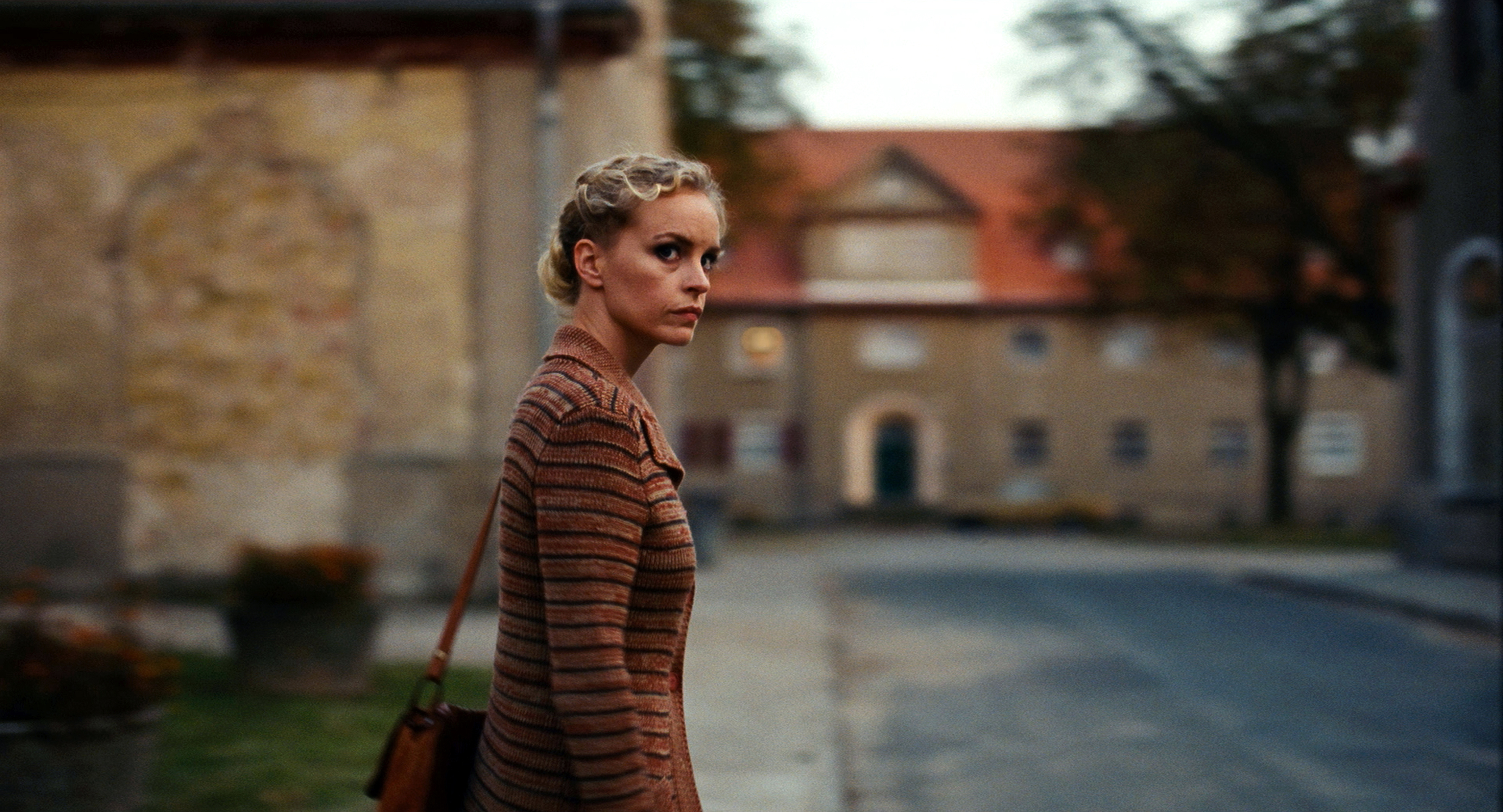
Barbara” (Sundance) — This week’s Screening Room offering is a quietly tense Cold War thriller, set in a small East German town in the early ’80s. Nina Foss plays a doctor torn between defecting to the West and caring for her patients. Highly recommended.

Mindless Behavior: All Over the World” (Star Cinema) — The popular teen R&B group gets a concert documentary the same week that their album hits the streets. Yes, I’m completely out of my depth here.

Friday

Portrait of Jason” (7 p.m. UW Cinematheque, 4070 Vilas Hall, 821 University Ave.) — A very special screening of independent filmmaker Shirley Clarke’s 1967 film about a black gay hustler, the film is as much about the power struggle between filmmaker and subject as it is about its subject. The film has been restored by Milestone Films, and not only will Dennis Doros of Milestone be on hand to talk about the film, but Shirley Clarke’s daughter, Wendy, will talk about her mother and present samples of her own filmmaking. Free!

The Hobbit: An Unexpected Journey” (8 p.m., Union South, 1208 W. Dayton St.) Unexpectedly long, maybe. Peter Jackson’s decision to stretch Tolkien’s nimble adventure yarn into three elephantine epics saps the story of much of its charm and momentum. My full review is here. Free!

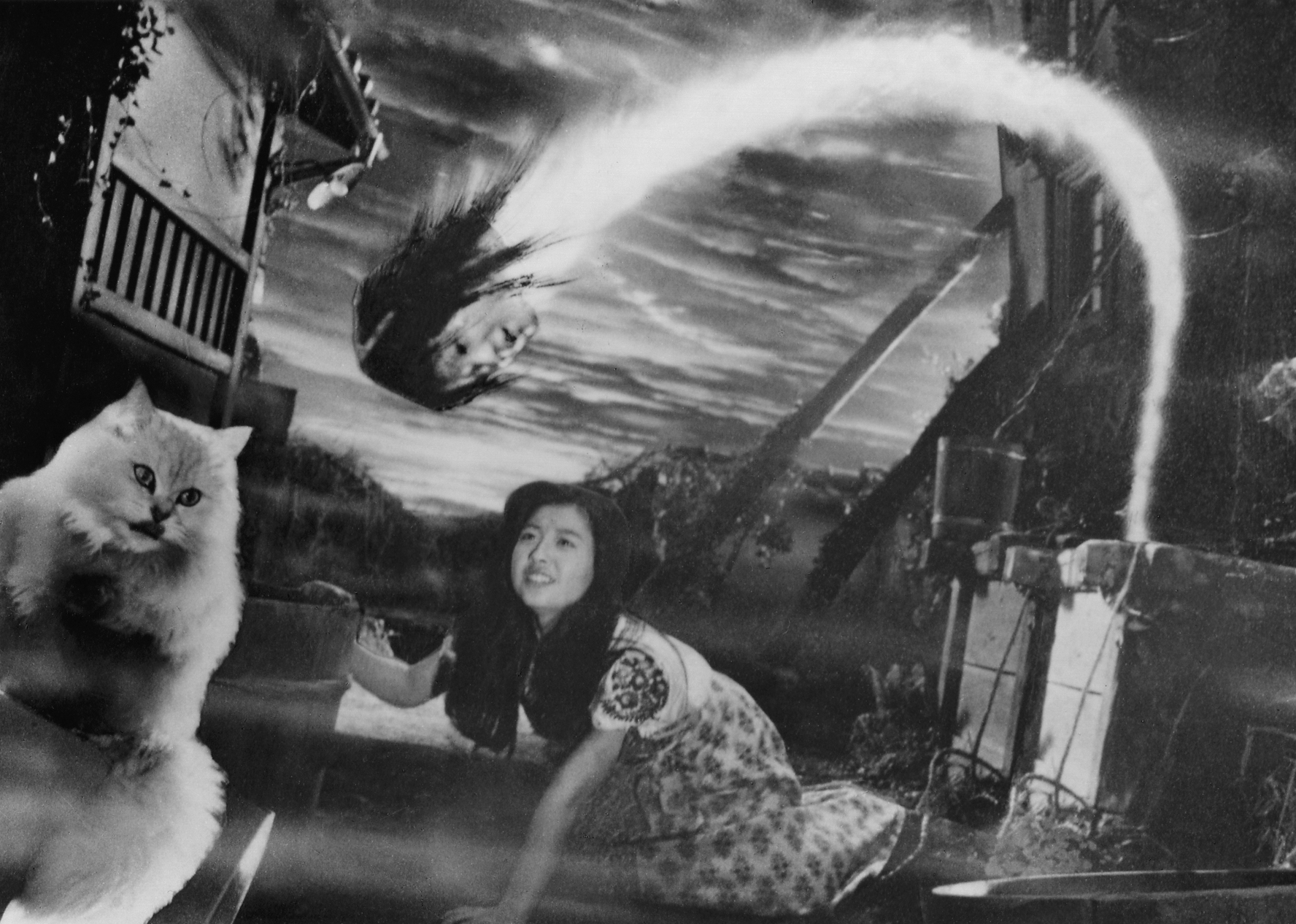
Hausu” (midnight, Union South) Listen carefully and closely when I tell you this — “Hausu” is completely and totally bananas, and a midnight screening definitely not to be missed. The phantasmagorically goofy 1977 Japanese horror film is like candy-coated Sam Raimi, as a group of teenage girls fight a vengeful spirit that manifests itself as a cat, a grand piano, a watermelon, and other forms. And even that description makes it sound like it makes more sense than it does. My full review is here. Free!

Saturday

The Hobbit: An Unexpected Journey” (4:30 p.m. and 8:30 p.m., Union South) — See Friday listing.

Face to Face” (7 p.m., UW Cinematheque) — The spaghetti Western series continues with this tale of a gentle schoolteacher’s transformation into a vicious outlaw. Free!

Ong Bak” (midnight, Union South) — I don’t know what he’s up to now, but for a little while there Thailand’s Tony Jaa looked to be the next martial arts superstar. This action film showcases him at his best, with long takes to showcase all of Jaa’s incredible skills. And there’s a plot, too — something about a stolen idol. My full review is here. Free!

Sunday

Kiki’s Delivery Service” (2 p.m., Chazen Museum of Art) — The wildly popular “Cinematheque at the Chazen” series of Studio Ghibli films continues with Hayao Miyazaki’s lovely fable about a witch-in-training who puts her broomstick to good use. Free, but get there an hour early to ensure a seat.

The Hobbit: An Unexpected Journey” (3 p.m., Union South) — See Friday listing.

Monday

Evil Dead 2” (7 p.m., Union South) — With “Oz: The Great and Powerful” in theaters, “Hausu” playing over the weekend and the trailer for an “Evil Dead” remake floating around, now is a perfect time to revisit Sam Raimi’s gonzo horror film, which splits the difference between the genuinely scary lo-fi horror of the first “evil Dead” and the campy comedy of “Army of Darkness.” Free!

Tuesday

The Take” (7 p.m., Union South) — And now, a rare piece of good news from filmmaker, author and anti-globalization activist Naomi Klein. This documentary from Klein and Ari Lewis documents an incredible true story in which a group of Buenos Aires auto workers, laid off from their shuttered auto plant, break in and restart the machines. Their act of defiance sends reverberations into Argentina’s financial and political environment. Free!

Wednesday

Half the Sky” (7 p.m., Union South) — If you enjoyed “Girl Rising” or the “Makers” documentary on PBS, continue your education of women’s rights worldwide with this powerful film inspired by New York Times columnist Nicholas Kristof, about women and girls fighting for change in 10 countries around the world. Free!

Thursday

Video Art Screenings: Between Document and Fiction 2 (7 p.m., Union South) — This is the second of a three-part experimental film series that explores the thin and shaky line between what’s real on screen and what isn’t. Free!

“The Incredible Burt Wonderstone”: Now you see the laughs, now you don’t

Image

“The Incredible Burt Wonderstone” opens Friday at Point, Eastgate, Star Cinema, Sundance and Cinema Café.” 1:40, PG-13, 2.5 stars out of 4.

In magic, as in comedy, performers talk about the “build.” It’s not enough to just have a few cool illusions (or funny jokes). The show has to go somewhere, build in momentum and energy, and almost as important as what illusion you do is where it fits in with the other tricks.

“The Incredible Burt Wonderstone” has a few good tricks up its sleeve. There are genuine laughs here and there, an overall spirit of sweetness and good humor, and this is the first movie in ages that knows what to do with Jim Carrey. But it doesn’t have a very strong build. The jokes just line up, one after the other, taking their turn and hitting or missing with the viewer.

The sweet tone is established in a prologue in which two lonely kids bond over a store-bought magic kit created by the legendary illusionist Rance Holloway (Alan Arkin). The kids become lifelong friends, and grow up to be Burt Wonderstone (Steve Carell) and Anton Marvelton (Steve Buscemi), the hottest illusionists on the Vegas strip.

Over the years, Burt gets super-rich, and super-bored, going through the motions of doing the same tricks over and over. And because there’s nothing Vegas audiences reject more than insincerity, the Burt & Anton show becomes a flop.

Their friendship severs, Anton heads to Cambodia to do “magical relief work” (a pretty funny idea), and the humbled Burt finds himself doing half-assed magic at birthday parties and retirement homes. Meanwhile, Burt has to watch as gonzo-Goth “street magician” Steve Gray (Carrey) grabs headlines with his feats of grotesque magic, such as sleeping overnight on a bed of hot coals, or going without urinating for 12 days straight. I know Carrey is a love-him-or-hate-him proposition for most people, but you have to admire the way he just throws himself full-tilt into the arrogant Gray, who is like Creed’s Scott Stapp if he did card tricks, intoning things like “I tried to warn them” before he performs his “brain-raping” (his term) illusions.

But between this and “Dinner for Schmucks,” I’m not sure Carell’s is well-chosen for broad comic characters like Burt. He just never looks comfortable in his fake mullet and perma-tanned chest – it’s a role tailor-made for a more obviously extroverted star like Will Ferrell or Jack Black (or, frankly, Carrey). He seems more at ease with the chastened Burt after his fall, and the film gets funnier at the sight of this sad-sack magician lugging his cages of pigeons and rabbits from one fleabag motel to another, or showing up for a job interview at one hotel right as it’s being demolished.

Watching Burt rediscover his love of magic, with the help of his assistant Jane (Olivia Wilde) and his old hero Rance, is kind of touching, although screenwriters Jonathan Goldstein and John Francis Daley have trouble tying the film’s redemptive arc to its comedy. And, aside from a couple of scenes, they really bobble the chance to create a duel between Burt and Steve Gray, like a comic version of “The Prestige.”

What’s surprising about the “Incredible Burt Wonderstone” is that, for a film about dexterity and sleight of hand, it’s just kind of clumsily executed, lurching from one comic set-piece to the other. Some of them are very funny on their own merits, but if this was a real Vegas magic show, much of the audience might have left midway through to see Celine Dion instead.

“Barbara”: A desperate doctor tries to save herself

Barbara_04_HF

“Barbara” opens Friday at Sundance Cinemas. PG-13, 1:45, three stars out of four.

It takes a while to get your bearings in Christopher Petzold’s “Barbara.” We know we’re in Germany by the language, but it’s not immediately apparent that the film is set in the early ’80s. And it takes even longer to realize that we’re on the wrong side of the Wall, in a backwater province of East Germany.

That sense of nervous dislocation that the viewer feels in the first few scenes — Where am I? Who is this person? Is she friend or foe? — efficently evokes the muted terror that its characters, especially the title character (Nina Foss) feels. It reminded me of “The Lives of Others,” except that in that film, the secret police are an ever-present, malevolent force. In “Barbara,” we hardly even see the police, but their unseen, watchful presence pervades the film.

Barbara is a doctor from Berlin who has been exiled to the province for some unspecified slight. Foss plays her as composed, almost aloof, but as the film goes on we see the terror lurking beneath that exterior. The police do eventually visit her, suddenly popping up, tearing up her apartment and subjecting her to invasive body searches.

But the real terror begins after they leave, when Barbara nervously looks for them around every corner, wonders if the person she’s chatting with at the hospital, especially the genial doctor Andre (Ronald Zehrfeld), is secretly an informant for the police. In one scene, Andre tells Barbara why he was demoted from Berlin to the provinces, a tragic tale of a medical error with disastrous consequences. Barbara’s response is not compassion, but suspicion that Andre is an informant and the story is a cover. She has either correctly perceived a threat, or pushed away the only person in the area to attempt to connect with her. She’ll never know which.

And, it turns out, Barbara has reason to worry. She’s saving up enough money to defect with her West German lover, and is frightened that her plan will be found out. But at the hospital, she can’t help but be concerned for her patients, including a teenage girl who nearly died from meningitis at a work camp, and a teenage boy who may have suffered brain damage in a suicide attempt.

“Barbara” is a drama made up of quiet moments and meaningful glances. But they start adding up, pushing Barbara towards a difficult moral decision. In a way, her path reminded me of Rick’s in “Casablanca,” whether to flee evil or stay and do whatever good, however small, within its borders. It’s a quiet film and, with its somewhat cryptic title, one that audiences could easily overlook. But try not to — there’s a lot going on beneath those still waters.

DVD review: “Tristana”

tristana

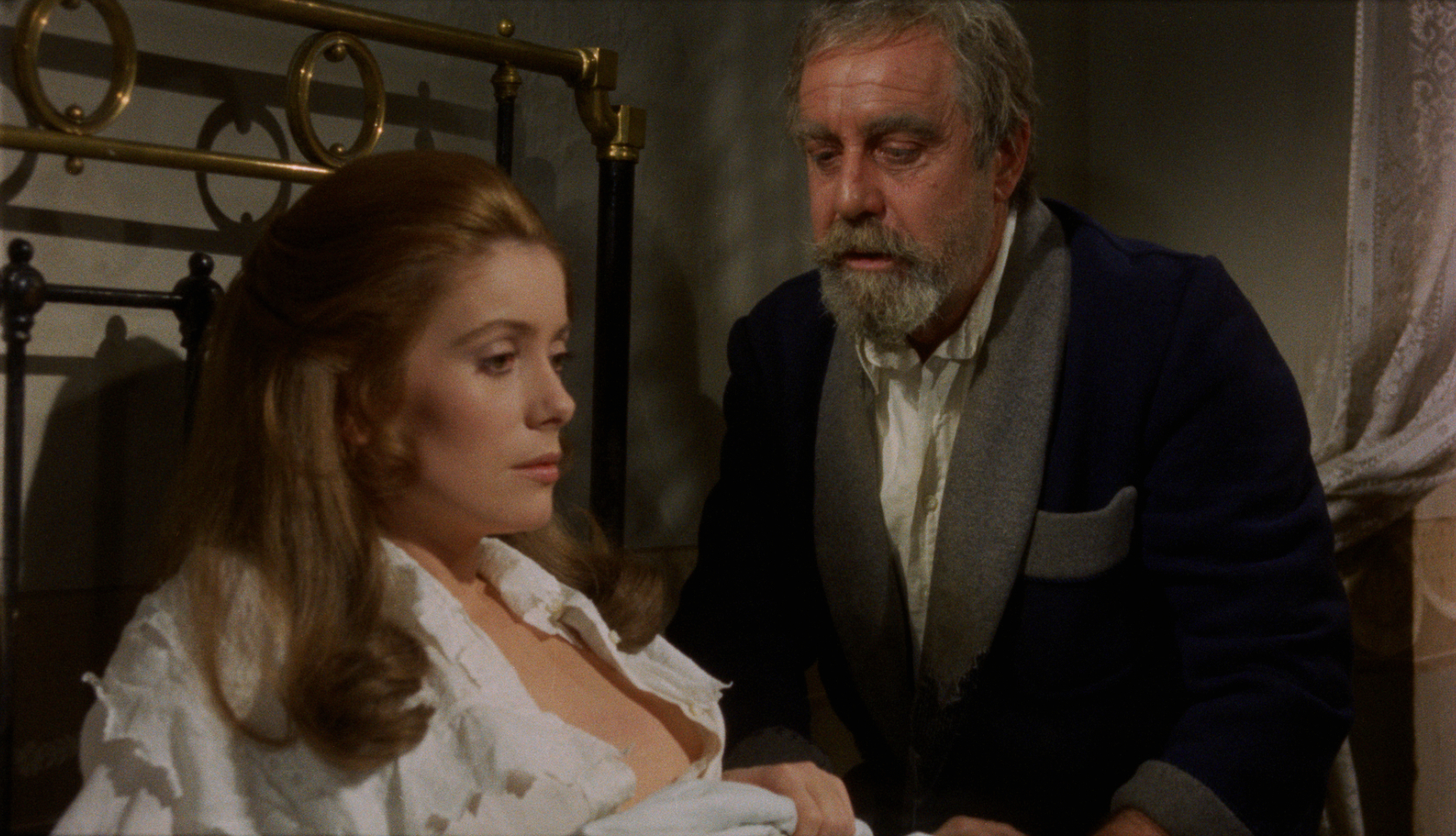
“Tristana” is relatively mellow Luis Bunuel, which means that there’s only one shot of a severed head swinging as the clapper to a church bell. And it’s pretty clearly identified as a dream sequence.

Otherwise, it’s hard to recognize the 1970 film, on the surface, as the work of the surrealist Spanish director known for “Le Chien Andalou,” or even the button-pushing sexual politics of “Belle du Jour.” In fact, I had to stick with “Tristana” (now out in a lovely new Blu-ray edition from the Cohen Media Group) about halfway through before I started feeling Bunuel’s presence.

Otherwise, the classical “Tristana” plays like a 19th-century novel, with Catherine Deneuve (returning despite her misgivings over how Bunuel treated her in “Belle du Jour,” according to the commentary track), playing the title character. When her mother dies, Tristana is taken in by a local benefactor, Don Lope (Fernando Rey), who barely hides his lecherous intentions behind a veneer of arrogant propriety. Tristana chafes under his rule, even has a dalliance with a local artist (Franco Nero), but eventually succumbs to his advances.

What makes this different than every other story of a wronged ingenue is what happens after. Don Lope grows older, softer, lonelier, and becomes less controlling and more kindly towards Tristana. But she, older and more cynical, reacts to his newfound tenderness with seething rage. How dare he now become a human being? The upper hand has shifted, as “Tristana” moves towards its inevitable unhappy climax.

I liked “Tristana” quite a bit less than “Belle du Jour’ — I get that Bunuel’s game is to lull us into thinking the relationship is going one way, then suddenly changing course. But it’s a little dry until that change in direction, when Deneuve is finally able to offer a little more depth to her character. Rey is a delight all throughout, however, with Bunuel making merciless fun of a self-proclaimed “man of the people” who lets a thief get away because he’s a member of the proletariat, but is too pampered to actually work himself.

In addition to the commentary track with Deneuve and critic Kent Jones, the Blu-ray includes an alternate ending, a 30-minute featurette, and a 20-page booklet including Deneuve’s personal diary during the making of the film.

DVD review: “Smashed”

smashed-movie-pictures00-005

Alcoholics don’t look like this, do they?

Kate is a charming twentysomething living in Los Angeles, fond of peasant dresses, indie rock and devoted to her kindergarten class. Sure, she’s also devoted to her booze; in the opening credits of “Smashed,” we see her with a bottle of beer in the shower and a nip from a flash before she enters school. But she’s not like an “alcoholic,” right?

James Ponsoldt’s excellent and insightful drama challenges our preconceptions of what drunks look and act like. The addiction drama is well-worn territory for movies, but by staying truthful and not melodramatic, “Smashed” finds a way to make an alcoholic’s descent and recovery feel like fresh territory again.

Mary Elizabeth Winstead is indeed completely likable as Kate, and she and her trust-fund husband Charlie (Aaron Paul) make exactly the sort of couple we’d like to hang out with on a Saturday night. Kate is high-functioning, until one morning in class when she vomits into a wastebasket. She panicks and tells the principal (Megan Mullaly) that it’s morning sickness, but the vice principal (Nick Offerman, Mullaly’s husband) is himself a recovering drunk who knows what he sees. He offers to become her AA sponsor, but she’s in complete denial about her problem.

She finally realizes the extent of her problem after a terrible night in which she tries smoking crack for the first time and ends up sleeping on the street. What’s extraordinary about this sequence is that it’s presented so clearly, not in a boozy “Lost Weekend” sort of haze but in a very real series of small, bad decisions fueled by alcohol.

“Smashed,” written by Susan Burke, is just as wise about recovery. The world of bad coffee, store-bought cookies and 12 steps is just so . . . uncool compared to Kate’s former life. But she learns to listen to her fellow addicts (including Offerman, terrific in a mostly dramatic role, and “The Help” Oscar winner Octavia Spencer) and recognizes herself in their stories. But as she bonds with them, she starts pulling away from Charlie, who can’t understand why she can’t just continue with their freewheeling lifestyle, with all the same friends and parties, and just not drink. But that’s the painful truth at the core of “Smashed”; in order to build a new life, you might have to tear down parts of the old life that are hard to part with.

In the end, the film doesn’t treat sobriety as any sort of magic solution, and Kate ends up with more problems sober than she had drunk. But at least now she’s facing them, honestly, and there has to be some kind of triumph in that.

“Girl Rising”: A chain of women, stretching from Madison to Sierra Leone

Girl-Rising

“Girl Rising” screens at 7 p.m. Tuesday at the Barrymore Theatre, 2090 Atwood Ave. PG-13, 1:44.

Girl Rising” is, from production to distribution, the ultimate do-it-yourself film. The film, from Academy Award-nominated documentary filmmaker Richard E. Robbins, tells of the problem of getting girls in developing countries a proper education, one that will raise them out of poverty and empowered against societies that don’t value them properly. In a country like India, Afghanistan or Peru, where most of the populations is impoverished and vulnerable, there is no one more vulnerable than a girl.

But “Girl Rising” doesn’t take the usual tack of a documentary, presenting experts and eyewitnesses to present facts and arguments. Instead, Robbins paired nine girls from nine countries and paired them with nine writers. “Girl Rising” is, instead, nine short films that allows each of the girls the chance to tell their own stories.

That direct approach extends to the way “Girl Rising” is reaching viewers as well. Instead of being marketed city by city through a distributor, the film is being released through an innovative screening-by-demand website called Gathr. Someone sets up a screening and invites everybody they know to come. If enough people buy tickets, the screening happens.

In Madison, that person was Ann Sensenbrenner, owner of Farm to Vase (and, I’ll disclose here, a friend).

“I figured there was no risk, other than embarrassment if nobody signed up,” she told the crowd at Sundance Cinemas on Sunday afternoon. Instead, thanks to a “chain of women” spreading the word by email and Facebook, the screening quickly sold out. Now there’s another screening taking place at 7 p.m. Tuesday at the Barrymore Theatre. Those interested in seeing the film Tuesday can just buy a $10 ticket at the door.

And you should, because it’s a beautiful and energizing film. Because the girls have such different stories to tell, no two short films looks exactly the same. The story of Senna, a 14-year-old poet in a bleak Peruvian mining village, is filmed in stark black-and-white, while the story of Jasmin, a rape victim in Cairo, mixes is a live-action reenactment of her testimony to police with rich animation of her superhero fantasy.

There is much hardship and tragedy in these stories, but there is also inspiration, as each girl finds a way to rise above her circumstances. An eight-year-old Haitian girl, the infatigable Wadley, simply refuses to stop coming to school after her mother can no longer afford the tuition, and her teacher eventually relents. In Nepal, Suma is sold into bonded labor (a polite word for slavery) at the age of 6, emancipates herself as a teenager, and joins a group to free others.

In all but two cases, the girls play themselves in the films, with voiceover narration provided by a host of actresses, including Meryl Streep, Anne Hathaway and Kerry Washington. In between stories, the film provides a barrage of sobering statistics (voiced by Liam Neeson), and suggests that, for developing countries, properly educating girls would make financial as well as moral sense.

But as revealing as those stats are, the eyes goes back to those short films, and those girls, telling their stories. While some of the films are more successful than others, they all show the power of engagement and education, of looking at the world and its problems, as one story put it, in a way “that makes the achievable seem doable.”

Sensenbrenner said that in getting the word out about her screening, she sparked a friend to host a screening in Milwaukee. Even more impressive, a filmmaker friend in Africa got it accepted by the Sierra Leone International Film Festival, which means one of the girls in the film, Mariama, will get to see it and show it to her community. The “chain of women” — and men — forged by and behind the film only looks to get stronger and stronger.

What’s playing in Madison theaters: March 8-14, 2013

airplane-movie-image-leslie-nielsen-01

So I was reading other publications and appreciating how their event listings are broken down day-by-day, so if you were free on a Tuesday night, you could easily see all your options for things to do.

It took me a little while longer before I realized that if I appreciated it so much, I should probably do it too. So I’m tweaking the format of the weekly Friday “What’s Playing” column a little here. This seems to make sense in an especially busy week like this one. Let me know what you think.

All Week

Oz: The Great And Powerful” (Point, Eastgate, Star Cinema, Cinema Cafe) — Did you ever wonder how the Wizard of Oz got to be the Wizard? Me neither, but Sam Raimi will tell us with this eye-popping prequel, with James Franco as the Once and Future Wiz. Reviews have been meh, but Raimi is too inventive a filmmaker to count out.

Dead Man Down” (Point, Eastgate, Star Cinema) — Despite the redundant title, I’m interested in this R-rated action film because it’s the English-language debut of Swedish director Niels Ander Oplev,, who did the superbly creepy original “Girl with the Dragon Tattoo.” (Just watch the underwhelming next two in the trilogy, done by a different director, to properly appreciate it.) So I have high hopes it’ll be stylish and unusual.

Emperor” (Sundance) — A war drama that takes place after the war is over, “Emperor” stars Tommy Lee Jones as Gen. Douglas MacArthur, who has dispatched subordinate Matthew Fox to investigate whether Emperor Hirohito should be arrested for war crimes or not. It’s a little dry, but illuminates a small but important corner of American history. And Jones as MacArthur is a lot of fun.

Happy People: A Year in the Taiga” (Sundance) — Read my review here. The happy people in question are a group of Siberian villagers living a harsh but self-sufficient life on the edge of the tundra. In the eyes of documentary filmmaker Werner Herzog, this counts as happiness. Your bliss may vary.

Friday

The Master” (6 p.m. and 9:15 p.m., Union South Marquee Theatre, 1308 W. Dayton St.) Read my review here.  My favorite movie of 2012 was Paul Thomas Anderson’s cryptic, exquisitely controlled drama about the complicated relationship between an L. Ron Hubbard-like cult leader (Philip Seymour Hoffman) and a troubled acolyte (Joaquin Phoenix) he brings into the fold. Free!

Edvard Munch” (7 p.m., UW Cinematheque, 4070 Vilas Hall, 821 University Ave.) The on-campus series concludes its two-night look at the films of Peter Watkins with his highly unorthodox biopic of the notorious painter behind “The Scream.” Free!

Drunken Master” (midnight, Union South Marquee Theatre) If you only know Jackie Chan from the “Rush Hour” movies, you ought to see him in his prime in this martial arts classic, one of the first to play to Chan’s comedic as well as physical gifts. Free!

Saturday

The Master” (6 p.m. and 9:15 p.m., Union South Marquee Theatre) See Friday listing.

The Mercenary” (7 p.m., UW Cinematheque) Remember that scene in “Django Unchained” where a character gets shot above the heart, and the blood turns his white carnation pink? That was a direct homage to this spaghetti Western classic, starring Jack Palance as a ruthless government agent trying to put down a revolution in 1915 Mexico. Free!

The Host” (midnight, Union South Marquee Theatre) Read my review here. It’s a monster movie, a family drama, a screwball comedy and a political film all rolled up into one wildly entertaining movie from South Korean director Joon-ho Bong. “Packs an emotional kick that we don’t expect from a movie where a giant iguana is running around with human legs dangling out of his mouth like stray pieces of  linguini,” I wrote back in 2007.

Sunday

Pom Poko: ( 2 p.m., Chazen Museum of Art, 800 University Ave.) The “Cinematheque at the Chazen” Sunday afternoon series of films by the hallowed Studio Ghibli continues with this take of raccoon-like creatures and their war with developers. Free!

The Master” (3 p.m., Union South Marquee Theatre) See Friday listing.

Monday

No shows

Tuesday

Girl Rising” (7:30 p.m. Barrymore Theatre, 2090 Atwood Ave.) To underscore the importance of education for girls in developing countries, this project features nine stories of nine young women in nine different countries, each narrated by a different actress, including Anne Hathaway, Meryl Streep and Cate Blanchett. Tickets are $10 at the door.

Wednesday

West Side Story” (1:10 p.m. and 6:40 p.m., Sundance Cinemas, 430 N. Midvale Blvd.) If you enjoyed the reimagined Broadway version that just played at Overture Center, check out the original 1962 film version, that brings the tragic romance of “Romeo & Juliet” to the barrio. Tickets are $7.50 for the 1:10 p.m. show and $12 for the 6:40 p.m.

Roman Holiday” (7 p.m., Union South Marquee Theatre) Audrey Hepburn and Gregory Peck star in the 1953 classic romance about a princess and a foreign correspondent who find adventure and love together in Rome. Free!

True Wolf” (7 p.m., Barrymore Theatre)  The Timber Wolf Alliance is co-sponsoring this documentary about the plight of the wolf in the United States. After the film, a panel of wolf researchers will hold a post-show Q&A. $10 at the door.

Thursday

Ek Tha Tiger” (7 p.m., Union South Marquee Theatre) Intrigue, romance, action and, of course, dancing collide in this Bollywood thriller about a secret agent and a dancer in a globe-hopping adventure. Free!

The 6th Annual Wild & Scenic Film Festival (7 p.m., Barrymore Theatre) This popular series features short films from within and beyond Wisconsin’s borders about the natural world. Tickets are $10 in advance through barrymorelive.com., $13 at the door, or a $25 VIP ticket includes a one-year membership with the sponsor, River Alliance of Wisconsin.

The President Vanishes” ( 7 p.m. Chazen Museum of Art) In an attempt to thwart warmongers in his cabinet, the President fakes his own disappearance. This film is one of a series of 1934 films screened by the Chazen and UW-Cinematheque in conjunction with the “1934: A New Deal For Artists” exhibit at the museum. Free!

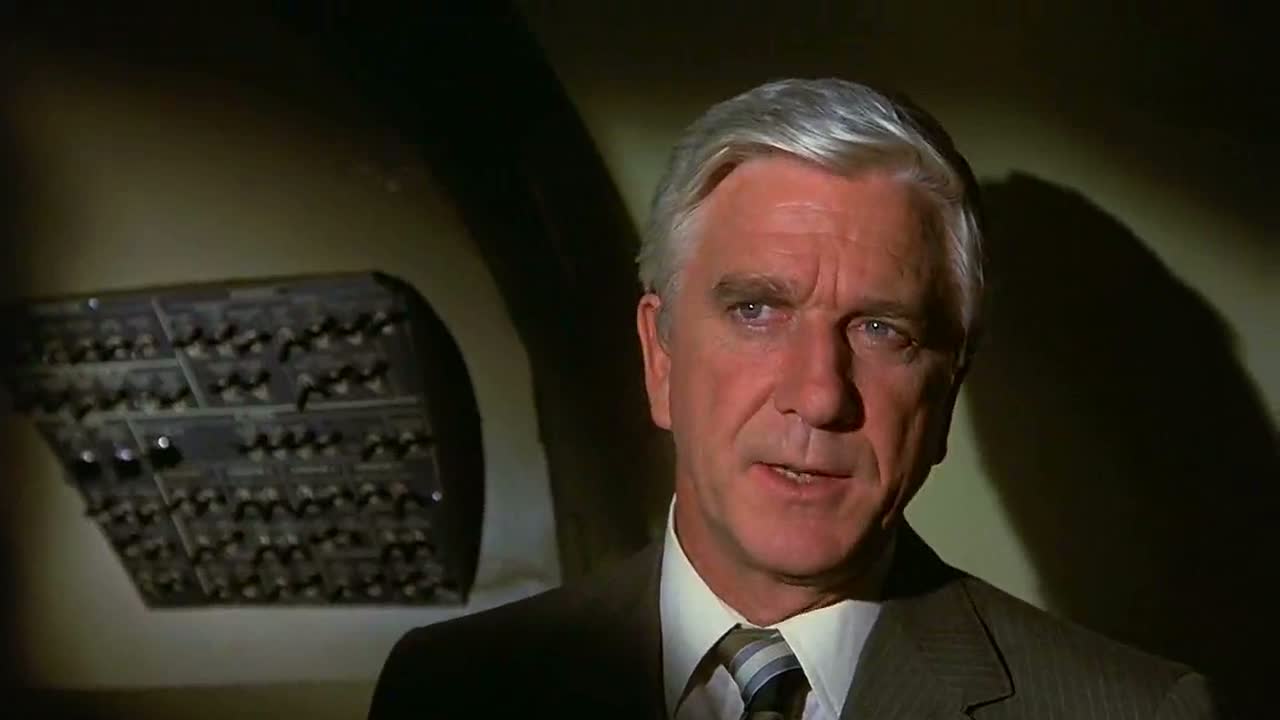
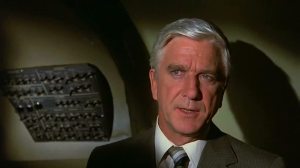
Brew & View: A Tribute To Leslie Nielsen” (7:30 p.m. and 9:30 p.m., Majestic Theatre, 115 King St.) You mean to tell me that the Majestic is honoring the deadpan comic actor by presenting his two iconic movies, “Airplane!” and “The Naked Gun,” in a double feature with a ticket price of $5 for both movies? Surely you can’t be serious!

“Emperor”: What did you do in the peace, daddy?

EMPEROR

“Emperor” opens Friday at Sundance Cinemas; PG-13, 1:45, three stars out of four.

“Emperor” is a war movie with no war in it (well, barely — got to have something to put in the trailer.) In fact, it’s a movie about the uneasy peace that occurs right after the cessation of hostilities, when one side has surrendered, and yesterday’s combatants becomes . . . what, exactly? Equals? Occupied and occupiers? Liberators and the liberated?

In this case, the war is World War II. Japan has just surrendered to the Americans, and Gen. Douglas MacArthur (Tommy Lee Jones, and is that ever great casting) strides the ruins of Tokyo like a Colossus. Having been responsible for the devastation all around, the Americans have to shift into a postwar occupation phase. They have to punish the guilty, but help the innocent rebuild. It’s not an easy distinction, not an easy task.

Chief among them is the prosecution of war criminals, and in particular whether Emperor Hirohito should be charged, particularly with ordering the attack on Pearl Harbor. MacArthur is in a dicey spot; politicians in Washington want vengeance over their former enemies. But MacArthur also needs the peaceful occupation of Japan to succeed, and if he hauls a leader that the Japanese people consider a god before a tribunal, that will be awfully difficult. Jones plays MacArthur as a cagey man with presidential ambitions, but with a humane side that might trump those aspirations.

So he tasks Gen. Sellers (Matthew Fox of “Lost”) with finding out the truth. Much of “Emperor” plays like a dry procedural, as the stifffly formal Sellers interviews higher-ups in the Japanese command, trying to ascertain what people knew and when they knew it. He finds Japanese culture to be a confounding one — the most modern of all Asian nations, yet with traditions and a mindset that stretches back 2,000 years. “If you understand devotion, then you will understand Japan,” he is told.

But Sellers is undertaking another investigation as well. His Japanese girlfriend (Eriko Hatsune) was left behind before the war started, and he’s trying to find out what happened to her. On their own, each of the investigations might be too slender to sustain a movie, but screenwriter Vera Blasi and director Peter Webber (“The Girl With a Pearl Earring”) successfully blend the political with the personal. At first, I thought Fox was playing Sellers as too stiff to be the film’s lead, but by jumping back and forth between the storylines, we see that’s his public self. His private self is more gentle, more wounded, and the deeper I got into the movie the more drawn in I was.

Fox’s internal performance makes a nice complement to Jones’ outsized MacArthur (corncob pipe and all), and although we want to see more of Jones, Webber uses him efficiently and effectively throughout the film. The film ends with a spot-on recreation of MacArthur’s actual meeting with Hirohito, who proves to be charming and decidedly ungodlike. (For the reverse view, check out Aleksandr Sokurov’s 2005 film “The Sun,” which tells the same events from Hirohito’s perspective.)

Overall, “Emperor” isn’t much of a mystery or a war movie. But it is a sober and affecting meditation on the lasting effects on war, with an understated but still-relevant message that America may reveal its best self not in its moment of military victory, but in the moments that happen afterward.

“Happy People: A Year in the Taiga”: Werner and the husky Siberians

Happy People - A Year in the Taiga

“Happy People: A Year in the Taiga,” Not rated, 1:34, opens Friday at Sundance Cinemas. Three stars (out of four).

You can tell a lot about a person by who they envy. That filmmaker Werner Herzog would look at the subjects of his new documentary “Happy People” with something approaching jealousy says a lot about the man.

Because, as rough as you think it might be living in Siberia, the reality is even harsher. The film looks at the residents of a small village in the snow-smothered region that’s 1.5 times the size of the United States. In the summer, the landscape is beautiful but inhospitable. In winter, the 300 or so residents are cut off entirely from civilization, and had better hope they’ve properly prepared for the months of isolation and survival.

In many ways, life for these denizens hasn’t changed in the last century. While modern conveniences like snowmobiles and chainsaws are employed, they do many things the way their ancestors did — they build traps the same way, they carve boats and skis out of trees. Dogs are constant — sometimes sole — companions, but they are work animals, not pets. When a snowmobiler makes the long journey from the forest to the village, the dog has to run alongside.

We spend a lot of time with one bearded gentleman, who travels from hut to hut trapping sables for their fur. The windows of the hut are filled not with glass, but heavy plastic — because bears can break glass. In one scene, he arrives late in the day to a hut, only to find it’s been crushed by a falling tree. With not enough time to travel to the next one, he has to quickly repair the hut before the subzero night falls.

This is Herzog’s idea of paradise, apparently. “They are truly free,” he rhapsodizes in his unmistakable accent on the voiceover narration. “No taxes, no governnment, no rules. Equipped only with their own individual values and standards of conduct.” Self-sufficiency is bliss for Herzog, and in a way the Siberians are as preserved in amber for him as the prehistoric artists he mused about in “Cave of Forgotten Dreams.”

In fact, Herzog is so smitten with his “Happy People” that he didn’t actually shoot the film. The footage comes from a four-hour Russian television series, which he has cut down to a brisk 94-minute travelogue and added his own narration. So, in a very real sense, we are watching Herzog watch this film, his rapturous reaction illuminating as much about himself as his subjects.

“Happy People” is not top-tier Herzog; it doesn’t have a narrative thread or a dramatic arc, content to observe and report. It’s an engrossing ethnographic study, but I have to think that if Herzog was wielding the camera himself, the film would have dug deeper into these people’s lives and why they choose the life they’ve chosen. Also, after 90 minutes in the Taiga, enduring this Wisconsin winter feels like a breeze.