“Like Someone in Love”: Tokyo as a gleaming city of exteriors

likesomeone

“Like Someone in Love” opens Friday at Sundance Cinemas. Not rated, 1:49, two stars out of four.

In his new feature, “Like Someone in Love,” expatriate Iranian director Abbas Kiarostami aims to put the viewer in the shoes of his characters.

Literally. The opening scene is shot from the viewpoint of someone sitting in a restaurant, fielding phone calls from a jealous boyfriend, exchanging chitchat with a friend at the next table. It’s only after a few minutes that we see whose eyes we’re looking through — a Japanese college student named Akiko (Rin Takanashi) who moonlights as a call girl.

The implication, I suppose, is that the men in her life don’t really see her, but the women they wish to see in her. Her pimp, who looks like an overworked banker, sees her as a commodity to be used. Her boyfriend Noriaki (Ryo Kase) sees her as an idealized, faithful supplicant, and of course flies into a rage upon realizing that isn’t true.

The third man she meets in the film is a customer, an elderly professor named Takashi (Tadashi Oduno). He sees Akiko as more of a surrogate granddaughter than a prostitute, preferring to eat and converse with her. When she heads for the bedroom, he seems to crumple quietly inside, his self-created illusion punctured.

Kiarostami returns several times to this first-person perspective with other characters, but the problem with “Like Someone in Love” is that, while we can see the world through their eyes, we rarely access how they think or feel about it. They remain frustratingly opaque, slipping into broad stereotype (kindly old man, angry young man, hooker with a heart of gold) rather than deepening.

Coming on the heels of last year’s dazzling and confounding “Certified Copy,” Kiarostami’s new film feels  like a bit of a step down. Having escaped his native Iran when the mullahs were cracking down on artists and filmmakers there, Kiarostami seems to have entered a new period as a “world director.” “Certified Copy” was set in Italy, “Like Someone in Love” in Tokyo.

The best scenes in the film use Tokyo, such as a long wordless taxi ride where the cool exteriors of the city glide by as Akiko looks on. But the film is all exteriors; where “Certified Copy” explored the deep, contradictory mysteries of the human heart, there doesn’t feel like much going on beneath the surface here.

After skimming along these surfaces, “Like Someone in Love” ends with a moment of sudden, shocking violence. It  doesn’t feel organic, more like Kiarostami figured he had to end his film somehow, and this jarring choice was as good as any. “Like Someone in Love” feels like a minor effort, an exercise in style rather than an experience.

Wisconsin Film Festival preview: “Sister”

sister2

“Sister” screens at the Wisconsin Film Festival at noon Saturday April 13, at the Union South Marquee Theatre, and 4:30 p.m. Tuesday, April 16, at Sundance Cinemas. Advance tickets are available for both screenings. Visit wifilmfest.org for tickets and other information.

At first, the boy looks like any other on the ski slope. Decked out in a snow suit, his skis thrown over his shoulder, making chit-chat about the conditions on the slope. He could be the  youngest son in any wealthy and European family spending the holidays in the Swiss Alps.

And then we see him duck furtively into the chalet, into the locker room where skiers’ backpacks are kept. He rifles through the bag quickly, efficiently, and when comes across food, cookies or sandwiches, he stuffs them into his mouth like a starving man.

So begins “Sister,” a thoughtful and quietly wrenching drama from director Ursula Meier, one of several new Swiss films playing at this year’s Wisconsin Film Festival with assistance from the Consulate General of Switzerland’s Chicago office.

The boy is Simon (Kacey Mottet Klein), and he isn’t a tourist. He lives in town in a grubby housing complex with his sister Louise (Lea Seydoux). Louise is in her early 20s, but is basically a child, spending her days chasing after unsuitable men, and then relying on 12-year-old Simon to pick up the pieces.

In fact, Simon is the one keeping them afloat through petty thievery and cons, stealing skis and goggles off the slopes and then selling them to the next batch of tourists who come into town. He’s cynical and streetwise — young Klein gives an amazing performance — but his sister is his weak spot. He’s hopelessly devoted to her, even if its her irresponsible ways that keep them from getting out of that filthy little apartment.

Meier very deftly shows the two worlds of this Swiss resort — the rich tourists who blithely sail in and out, reveling in the beauty of the Alps, and the working-class townies who live below, oblivious to the mountains, focused on making just enough money to live on. Separating the two worlds is the gondola, which Simon rides to “work” each day, and becomes a symbol for the yawning gulf between rich and poor. Gillian Anderson, of “X-Files” fame, has a small role as a wealthy mother who Simon briefly cons, and as much as Simon wants to steal from her, it seems more important for him to have her affection, to be treated, briefly, like someone who belongs there.

Back at home, the relationship with Louise is much more volatile (and contains secrets we don’t learn until late in the movie). Louise is helpless, until she finds the next man she thinks will take care of her, and then all but ignores Simon. In one heartbreaking scene, Simon offers her a fistful of his ill-gotten euros if she’ll just cuddle with him for one night. It’s hard to know whether it would have been worse for her to take the money, or refuse.

But these two people are a family, somehow, and “Sister” ends with a beautiful, wordless final shot that symbolizes their bond, always linked, never quite connecting.

DVD review: “Mystery Science Theater 3000, Vol. XXVI”

MST3K-3

In their day, the snarky ‘bots of “Mystery Science Theater 3000” took their fair share of hits from respectable movie lovers, who didn’t like the idea of somebody making a living making fun of the works of others. If you were a film purist who couldn’t bear the thought of seeing a movie presented in the wrong aspect ratio or, heavens, colorized, the notion of having the screen image partially obscured by three silhouettes pointing out how the leading man looks like Jeff Conaway would be unbearable.

But now that the show’s long gone, and Shout! Factory has been putting out four-DVD boxed sets like the current “Vol. XXVI” with regularity, it strikes me. Suddenly, a series that made fun of bad movies has now become the primary source of preserving them.

Think about it. Is there any way, without the “MST3K” stamp of disapproval, that anyone would have released the cheesy ’80s flick “Alien from L.A.,” starring a squeaky-voiced Kathy Ireland, on DVD? Or the  ’50s sci-fi film “The Mole People,” assembled from meaty chunks of stock footage? Or the wan Italian James Bond ripoff “Danger!! Death Ray” Or the Bert I. Gordon not-bad swords-and-spells epic “The Magic Sword”?

Nope. But they’re all here in this collection, affectionately riffed upon by Joel, Mike and his bots. The fact that the show set such an amiable tone from the get-go, rarely getting mean as they cheerfully skewered one lame special effect or bad performance after another, has added to its longevity. You can appreciate these films for what they were, even if you wouldn’t dare try and sit through them without a “MSt3k” commentary track. Of the four, “The Magic Sword” is my favorite, just classic Joel (“Must . . . get . . . to . . . crappy . . . special . . . effect!”) “Alien From L.A.” is initially fun but the movie is just so bad it becomes a slog to get through, even with the jokes.

“Shout! Factory” has been beefing up the extras on these discs as well. “Alien From L.A.’ includes a rather sheepish and apologetic interview with director Albert Pyun, who laments that he didn’t have CGI at his disposal back in the ’80s, and that the film was apparently used to help launder money out of the country. Well, at least somebody made money off of it. “Magic Sword” has a rather flat interview with Gordon; the opportunity to really do something fun and interesting with Gordon’s entire B-movie oeuvre, from “The Amazing Colossal Man” to “The Giant Spider Invasion,” seems to have been missed.

However, I did enjoy the 15-minute documentary on the “Mole People,” which told the backstory on how the film was slapped together, including the insight that censors of the era wouldn’t allow mixed-race couples to live happily ever after, even if the races were human and alien! The “Death Ray” disc also includes an interview with Mike Nelson, who tells how he went from “MST3k” to the new Rifftrax, with side forays into movie reviews and novel-writing. Nelson said the only job he’s coveted but never had was when he worked at TGIF’s and was never promoted to line cook.

UPDATED: 31 sellouts at this year’s Wisconsin Film Festival

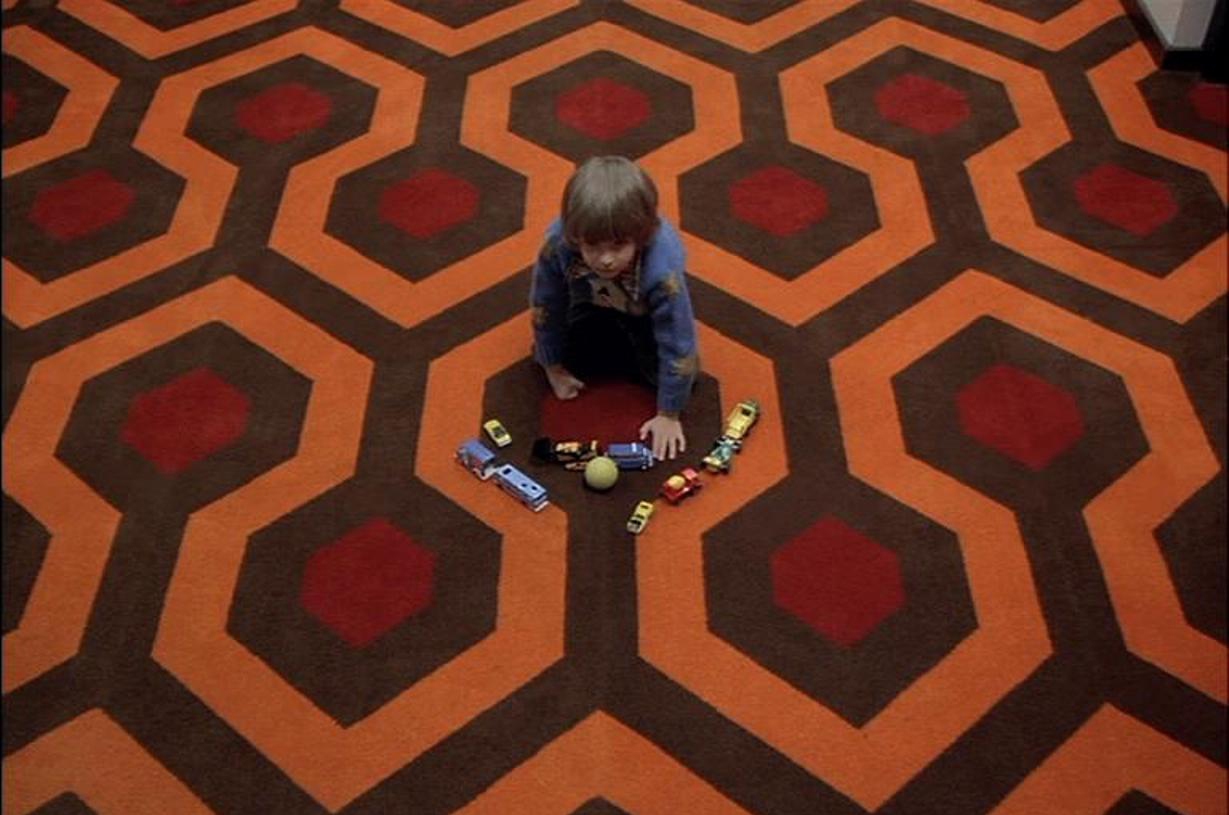
the-shining-still

“Who just bought the last two tickets for the WI Film Fest’s screening of ROOM 237?” one festival fan tweeted last week. “This dude right here is who. #Nanny #Nanny #Boo #Boo.”

Man, those Wisconsin Film Festival fans are a cutthroat bunch.

As of Monday morning, 31 films in this year’s festival (running April 11 through 18) have sold out all or some of their screenings. Here’s a list of all the sellouts, including alternate times for those films that do still have advance tickets available.

Tickets are on sale through wifilmfest.org and at the festival box office on the first floor of Union South.

56 Up” — all three screenings are sold out. One of the subjects of the doc, Nick Hitchon, will be speaking at the Saturday screening only.

7 Boxes” — The 5:15 p.m. Friday show and 9 p.m. Tuesday shows are both sold out.

All the Light in the Sky” — 4:45 p.m. Sunday sold out.

Augustine” — 7 p.m. Thursday (April 18) sold out, tickets remain for 9:15 p.m. Tuesday.

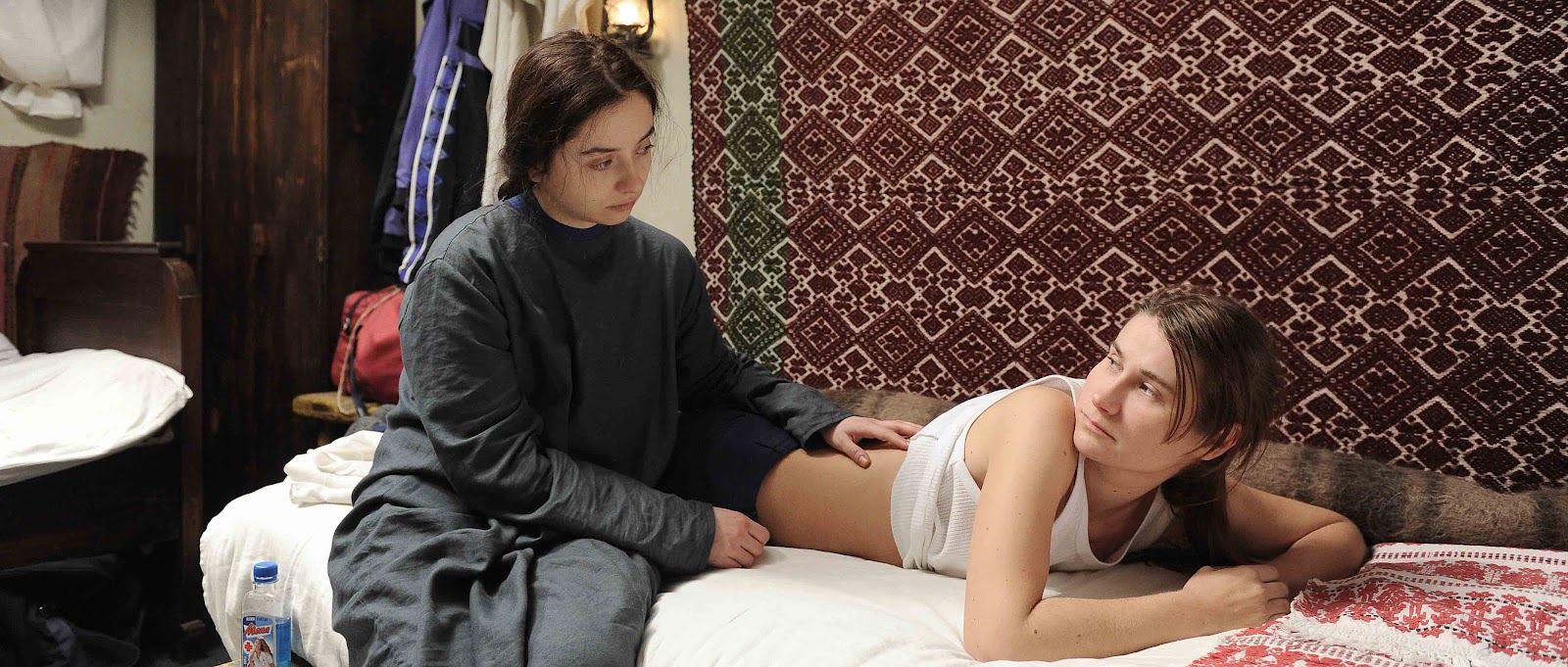
Beyond the Hills” — 5:45 p.m. Sunday sold out.

“Breakfast with Curtis” — 11:30 a.m. Saturday is sold out, but tickets remain the 12:15 p.m. Friday show.

Consuming Spirits” — 2:15 p.m. Saturday sold out.

“Dear Mr. Watterson” — 9 p.m. Monday sold out, but tickets remain for 4 p.m. Sunday.

Dragon Inn” — 11:45 a.m. Saturday sold out.

Either Way” — both screenings sold out.

The End of Time” — 11:15 a.m. Saturday is sold out, but tickets remain for 12:30 p.m. Friday.

Flicker” — 7:45 p.m. Saturday and 4 p.m. Monday are sold out, but tickets for 12:15 p.m. Friday remain.

I Am Divine” — 9:30 p.m. Friday sold out, but tickets remain for 6:30 p.m. Thursday.

“Key of Life” —  7 p.m. Wednesday is sold out, but tickets for 1:30 p.m. Thursday remain.

Kon-Tiki” — 6:30 p.m. Sunday sold out

Lore” — both screenings sold out

M” — 7:30 p.m. Saturday sold out

Much Ado About Nothing” — 9 p.m. Thursday sold out

Only the Young” — 7:45 p.m. Friday sold out, but tickets remain for 4 p.m. Sunday

Phase IV” — 11:30 a.m. Saturday sold out

Pretty Funny Stories” — 5 p.m. Saturday sold out

Radio Unnameable” — 6:45 p.m. Saturday sold out, but tickets remain for 5 p.m. Friday.

Renoir” — 1 p.m. Saturday sold out, but tickets remain for 2 p.m. Thursday

Room 237” — 6:30 p.m. Wednesday sold out

Short Films From Wisconsin’s Own” — 2 p.m. Sunday sold out

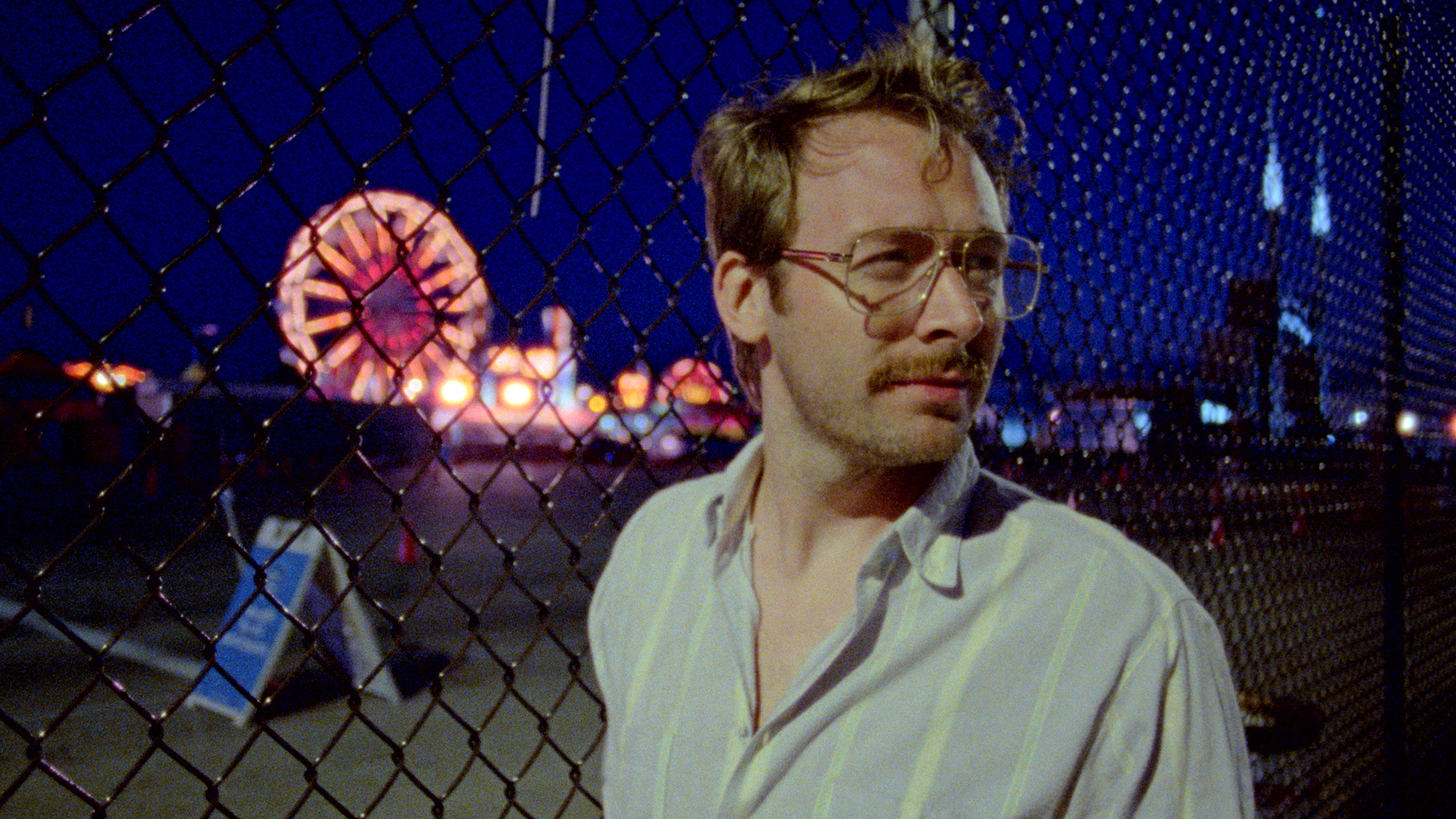
Stories We Tell” — 6:45 p.m. Thursday sold out

Tiger Tail in Blue” — 7:15 p.m. Sunday sold out.

The World Before Her” — 7:30 p.m. Friday and 11 a.m. Saturday both sold out

This is Martin Bonner” — 6:30 p.m. Saturday sold out, but tickets remain for 2 p.m. Sunday

Unfinished Song” — 5 p.m. Saturday sold out

Winter Nomads” — 4:30 p.m. Thursday sold out, but tickets remain for 12:30 p.m. Friday

“Stoker”: An Oldboy brings some new tricks to American film

Matthew-Goode-and-Mia-Wasikowska-in-Stoker-2013-Movie-Image-3

“Stoker” is now playing at Sundance Cinemas; R, 1:47, three stars out of four.

At first I thought that the projectionist at Sundance Cinemas had framed the image wrong. In the first few scenes of Park Chan-wook’s “Stoker,” Mia Wasikowska is repeatedly filmed so that there’s a few feet of empty space above her head. At first, I thought it was a framing problem, but when the adults in the film appeared, they’d be framed normally, their heads grazing the top of the frame.

It ended up being one of many clever visual decisions by Park, the South Korean director behind “Oldboy” and “Lady Vengeance” making his English-language debut. Other than a taste for twisted family relations and uneasy violence (and a plot point that feels like a direct homage to “Oldboy,” although to reveal it would spoil both movies), what connects “Stoker” to his earlier work is a determination not to waste any shot. Every frame of a film is a chance to say something, try something.

I think that relentless attention to detail can be disorienting, even irritating for some audiences, and I was surprised to see “Stoker” getting low marks from some critics, who dismissed it as an exercise in amped-up style over substance. It’s true that in “Stoker” the story itself is basically a simple, eerie Hitchcockian thriller about a strange family in a strange house. But given that, the story is oft-told, wouldn’t you want the teller to find an imaginative way to tell it?

Wasikowska plays India Stoker, a strange 18-year-old girl grieving the death of her father Richard (Dermot Mulroney) in a car accident. She was always much closer to her father than her boozy mother (Nicole Kidman), and with Richard gone, the two women circle each other in the old crumbling house uneasily. Adding to the tension is the appearance of Richard’s long-lost uncle, Charlie (Matthew Goode).

Looking like the world’s spookiest Gap model, Charlie insinuates his way into the affections of India’s mother, but seems more interested in winning over the suspicious India. The trouble with an otherwise fine screenplay (by “Prison Break” actor Wentworth Miller) is that the audience is way ahead of the characters in these early scenes; we know Goode is up to no good, and it’s just a question of discovering what kind of no good he’s up to.

But it’s only after “Stoker” is over that we realize how busy Park was in those seemingly inactive early scenes, setting up cryptic images (a water pistol in a briefcase, India making snow angels on her bedspread) that won’t pay off until later, and setting the film on a course that’s more unnerving and transgressive than we had perhaps been expecting.

There’s violence, but the film is almost always better when the violence is shown off-screen or merely alluded to. More effective is the way Park will swing the camera back and forth between the characters, illustrating the changing power dynamics at work. Even a noticeably showy flourish, like strands of Kidman’s red hair dissolving into fields of wavy grass for a flashback, are effective.

And the film is anchored by a nervy performance by Wasikowska; “Stoker” is as much anything India’s coming-of-age story, Charlie’s presence “stoking” the fires beneath her Wednesday Addams exterior. As the film goes on, India literally rises higher and higher in every frame, until the last scene in the film, when her face fills the screen, the camera that had been looking down at her now gazing up reverently.

What’s playing in Madison theaters: March 22-28, 2013

tron-original-screen-capture-2560x1440

With Spring Break upon us, the UW Marquee Theater is shut down for the week, which will keep this column a little shorter. Still we’ve got more movies than usual opening around town, including four new ones at Sundance, and the UW Cinematheque has the lights on all weekend as well.

All week

Spring Breakers” (Point, Eastgate, Star Cinema, Sundance) — If you can’t get away next week, Harmony Korine’s new film will simulate the Spring Break experience — provided that experience includes armed robbery and James Franco wearing cornrows. Korine, the enfant terrible behind “Trash Humpers” and “Kids,” seems to have succeeded in making the most subversive commercial film of the year.

Admission” (Point, Eastgate, Star Cinema, Sundance) — Couples don’t get much more likable than Tina Fey and Paul Rudd, here playing a college admissions officer and a teacher with a bright kid. It’s directed by Chris Weitz (“About a Boy”), who has a flair mixes comedy and drama, so definitely worth a look.

Olympus Has Fallen” (Point, Eastgate, Star Cinema, Cinema Cafe) — It’s “Die Hard” in the White House, as a former Presidential guard tries to save the day when terrorist seize the Oval Office. Implausible, sure, but after the disappointment of “A Good Day to Die Hard,” our action-movie standards are pretty low.

The Croods” (Point, Eastgate, Star Cinema, Cinema Cafe) — This animated film about a family of cavemen looking for a new home looked pretty dumb to me, but reviews have actually been pretty good, with critics say it doesn’t have much depth, but it’s entertaining and eye-poppingly beautiful to look at.

Stoker” (Sundance) — I’ve very excited to see the English-language debut of South Korean director Park Chan-wook (“Oldboy,” “Lady Vengeance”). It’s basically a stylized retelling of Hitchcock’s “Shadow of a Doubt,” with a creepy uncle (Matthew Goode) moving in with his niece (Mia Wasikowska) and grieving sister-in-law (Nicole Kidman). But, man, what style!

Any Day Now” (Sundance) — A gay couple try to adopt a teenage boy with Down syndrome and hit a brick wall of a system in 1970s California in this sensitively-acted drama. I’m doing a post-show chat after the 6:50 p.m. Tuesday show at Sundance — it’s a film with lots to say. My review is here.

InAPPpropriate Comedy” (Eastgate, Point) — Apparently because he couldn’t get a part in “Movie 43,” Adrien Brody makes an appearance in this sketch-comedy film alongside Rob Schneider and Lindsay Lohan. Yeesh.

Friday

The Connection” (7 p.m., UW Cinematheque, 4070 Vilas Hall, 821 University Ave.) — Filmmaker Shirley Clarke takes a gritty look at the world of heroin addicts in this feature about a group of junkies waiting for their supplier. Free!

Saturday

If You Meet Sartana Pray For Your Death” (7 p.m., UW Cinematheque) — A laconic hero tracks down the mastermind behind a bloody stagecoach robbery in this spaghetti Western with an undeniably awesome title. Free!

Tron” (8 p.m., Majestic Theatre) — This is the original 1982 classic, in which a computer programmer and arcade owner find themselves sucked into the world of computers. Tickets are $5, which is about how much I’d sink into the arcade game on an average Saturday of my youth.

Sunday

Whisper of the Heart” (2 p.m., Chazen Museum of Art, 800 University Ave.) — Two teenagers become friends one summer and have a magical adventure in this charmer from director Yoshifumi Kondo, a protege of legendary Japanese animator Hayao Miyazaki who tragically died at the age of 47, leaving this his only feature. Free!

“Any Day Now”: I see my light come shining

AnyDayNow_002

Any Day Now” opens Friday at Sundance Cinemas; R, 1;37, three stars. I will host a post-show chat after the film’s 6:50 p.m. Tuesday screening.

“Any Day Now” has so many ways to break your heart that it seems less a question whether Travis Fine’s indie drama will do it, but how. This is a sensitively-acted film that engages directly with several “issues” that resonate on today’s op-ed pages — gay adoption, treatment of people with disabilities — but does so without being didactic or preachy.

The setting is California in the late 1970s, and Rudy (Alan Cumming) is a drag queen who dreams of a singing career, his fleabag apartment a marked contrast to his glamorous day job. Rudy meets a closeted assistant district attorney named Paul, who seems as uncomfortable as his skin as Rudy is at ease in his. They hook up, but are a little surprised to find that not only are they attracted to each other, they like each other, and a relationship starts.

One night, Rudy sees that his junkie neighbor is neglecting her son, a teenage boy with Down syndrome named Marco (Isaac Leyva). On a whim of goodwill, he takes Marco in for the night, and then when the mother disappears, takes Marco in for good. They move in with Paul, and the three become a family of outsiders. But in the late ’70s when homophobia is overt and institutionalized, the authorities would rather see a special-needs child in an institution than a loving home run by a gay couple.

Rudy and Paul face an uphill legal battle to keep Marco, and the movie keeps us guessing whether they will prevail or not. Writer-director Fine sets up a seemingly insurmountable set of obstacles, and almost everywhere Paul and Rudy turn, they face a cold, unfeeling bureaucrat. At times the film plays with our expectations about how legal dramas work; when the couple hires a flamboyant, crusading African-American attorney (Don Franklin), we think this is the moment when the tables will finally turn in their favor.

But “Any Day Now” isn’t that simple, or that immune to how a legal system that has prejudice embedded into itself operates. The film features deeply felt, lived-in performances from all three of its leads. This is really Cumming’s showcase, as he has to reveal several layers to Rudy — the tough-talking Queens cynic inside the drag queen, the caring maternal figure inside the cynic. It’s an extroverted performance — Cumming even sings several songs in the film, such as the one referred to i the title song.

And it matches up well with Dillahunt’s introverted performance. Dillahunt usually plays either goofballs (“Raising Hope”) or villains (you knew there was trouble coming the moment he showed up in “Looper”), and he’s very effective playing a closeted gay man who, if he can’t secure justice and equality for himself, went into the law to try and quietly secure it for others.

But the film’s secret weapon may be Leyva, an actor who does have Down syndrome, and plays Marco with authenticity and dignity. “Any Day Now” is an ode to human kindness, as well as an exasperated cry against a system seemingly designed to discourage such compassion.

UPDATED: 18 sellouts at this year’s Wisconsin Film Festival

beyondthehills

I’ll update this list of sold-out films at the Wisconsin Film Festival every couple of days or so. Since Monday’s posting, sellouts include Cristian Mingiu’s “Beyond the Hills” (pictured) and Joe Swanberg’s “All the Light in the Sky,” along with the second screenings of “7 Boxes” and “The World Before Her.” Visit wifilmfest.org for tickets and other information.

56 Up” — all three screenings are sold out. One of the subjects of the doc, Nick Hitchon, will be speaking at the Saturday screening only.

7 Boxes” — The 5:15 p.m. Friday show and 9 p.m. Tuesday shows are both sold out.

All the Light in the Sky” — 4:45 p.m. Sunday sold out.

Beyond the Hills” — 5:45 p.m. Sunday sold out.

“Breakfast with Curtis” — 11:30 a.m. Saturday is sold out, but tickets remain the 12:15 p.m. Friday show.

Either Way” — 8:45 p.m. Tuesday sold out, but tickets remain for 2:15 p.m. Wednesday

The End of Time” — 11:15 a.m. Saturday is sold out, but tickets remain for 12:30 p.m. Friday.

Flicker” — 7:45 p.m. Saturday is sold out, but tickets for 12:15 p.m. Friday and 4 p.m. Monday remain.

“Key of Life” —  7 p.m. Wednesday is sold out, but tickets for 1:30 p.m. Thursday remain.

Kon-Tiki” — 6:30 p.m. Sunday sold out

Lore” — both screenings sold out

M” — 7:30 p.m. Saturday sold out

Much Ado About Nothing” — 9 p.m. Thursday sold out

Pretty Funny Stories” — 5 p.m. Saturday sold out

Short Films From Wisconsin’s Own” — 2 p.m. Sunday sold out

Stories We Tell” — 6:45 p.m. Thursday sold out

Tiger Tail in Blue” — 7:15 p.m. Sunday sold out.

The World Before Her” — 7:30 p.m. Friday and 11 a.m. Saturday both sold out

Wisconsin Film Festival preview : “The Jeffrey Dahmer Files”

dahmer

“The Jeffrey Dahmer Files” screens at 9:15 p.m. Saturday, April 13 at the UW-Elvehjem (the original Chazen building), and at 8:30 p.m. Sunday, April 14 at Sundance Cinemas. Director Chris James Thompson will attend both screenings. Visit wifilmfest.org for tickets and other information.

Here’s what may be the most disturbing aspect of “The Jeffrey Dahmer Files”; there isn’t a drop of blood in the film.

Instead of diving deep into the gruesome crimes of Milwaukee serial killer Jeffrey Dahmer, director Chris James Thompson (who grew up partly in Madison) has made a film that sort of orbits around that evil in a innovative mix of documentary and drama. We hear about the crimes in detail, but we don’t see them. Instead, we see the effect that those crimes had on three people, innocent bystanders of a sort. Together, the three witnesses provide an intimate yet horrifying perspective of what was discovered in that cookie-cutter apartment building.

Thompson interviews Pat Kennedy, the detective who got Dahmer’s confession and was, briefly, a media celebrity. (“When I tell you what I tell you,” Dahmer told him in the interview room, “You’ll be famous.”)  He interviews Jeffrey Jentzen, the lead pathologist on the case, who maintains his professional composure as a case no coroner’s office was meant to handle arrived at his doorstep. And he interviews Pam Bass, a neighbor in Dahmer’s building who befriended him, and was became an unwilling focus of the media when the crimes were revealed. “How could you not have known?” everyone asks her, accusingly.

But of course, nobody knew. And that’s the point of “Files,” how long a polite young man was able to skate under the radar of the city, selecting young black men for his crimes in part because he knew the police were less likely to go looking for them.

Illustrating this point is the other half of “The Jeffrey Dahmer Files,” which features actor Andrew Swant playing Dahmer. But we don’t see Dahmer committing his crimes; instead, we see him doing seemingly ordinary, mundane things — sitting by an empty riverbed drinking beer, wandering around in the parking lot at the Wisconsin State Fair, buying large plastic barrels and other “supplies” at drugstores and warehouses. Of course, we know what he’s going to do with those things, but the bored clerks barely raise an eyebrow. Even when he takes a giant blue barrel on a bus, the other passengers don’t look up.

“The Jeffrey Dahmer Files” will likely disappoint horror fans hoping for a bloodthirsty recreation of Dahmer’s quiet rampage. Instead, Thompson’s film is something really different, a film as polite and as unnerving as its subject, one that burrows down deep into your imagination and stays there.

DVD review: “Badlands: The Criterion Collection”

badlands

While watching for the first time, Terrence Malick’s 1973 debut film “Badlands,” I knew I should be reminded of other landmark films featuring road-tripping, serial-killing lovers, such as “Natural Born Killers” and “Bonnie & Clyde.”

But those weren’t the movies that came to mind as I watched the film, just out on Blu-ray in a fascinating new edition from the Criterion Collection. The movie I kept being reminded of was “Moonrise Kingdom,” Wes Anderson’s hit from last summer.

Both movies are about young couples on the lam, with misunderstanding adults close on their heels. Both movies conjure up a wistful reverie about first love and vanishing innocence. Both movies use the natural world as a vivid backdrop, an idyll that the “civilized” world can’t reach.

Granted, 12-year-old Sam Shakusky never shot anyone in the back. But “Badlands” is surprising and disturbing because it drenches such a violent story in such romantic reverie. The film is based on the real-life killing spree of 19-year-old Charlie Starkweather in 1959, now fictionalized as Kit Carruthers (Martin Sheen), a James Dean-lookalike who acts as if he’s acting in a James Dean movies, being watched, always. At 31, Sheen is a little too old for the part, but that works in his favor, suggesting that, beneath the pompadour and practiced swagger, this is an unstable man unready to finally leave adolescent passions and rages behind.

In the vein, it makes sense that Kit picks 15-year-old Holly (Sissy Spacek) for his girlfriend and, later, partner in crime. “Badlands” is told literally and aesthetically from Holly’s viewpoint, with her earnest, unaffected voiceover seemingly ripped from the pages of her diary.

That guileless perspective gets contrasted against the brutality of Kit’s crimes; he starts by shooting Holly’s father and burning down her house, and later victims include three bounty hunters and, most disturbingly, an innocent couple who Kit needlessly guns down after locking them inside a storm cellar.  Kit is starring in a movie in his mind, while Holly starts to realize, slowly, that he’s more than just “trigger-happy.” Take away the violence, and “Badlands” is a complex look at a relationship’s rise and fall, as the lovers slowly drift away from each other. It’s not the law that breaks them up, it’s the end of innocence.

What’s striking about “Badlands” is how much of Malick’s aesthetic appears fully realized in his debut film. The languid pacing, the silent, unrealized longing of its characters, and especially the gorgeous imagery of nature found throughout the film. The new HD transfer for Criterion revitalizes the film’s beauty, particular in a sequence in which the couple hides out in the forest, building themselves a treehouse like Robinson Crusoe. It’s like a dream, right down to the Maxfield Parrish print hanging on the wall of the clubhouse. But the dream can’t last long.

Malick is absent on the DVD extras, although he amusingly turns up in a small cameo in the film as, fittingly, an architect; hard to imagine the reclusive auteur ever making that kind of public appearance again. The highlight of the Criterion extras is a 42-minute documentary, “Making ‘Badlands'” which includes present-day interviews with both Sheen and Spaceck about making the film and how it launched their careers. Sheen tells a lovely story of, having just gotten the part, driving down Pacific Coast Highway, and then pulling off the road and weeping with “uncontrollable joy” that, after years of struggle, he had gotten the part of a lifetime.

He was right. Although both Spacek and Sheen — and of course, Malick — would go on to great careers, there’s something strange and special about “Badlands.” The Criterion Collection edition makes for an excellent opportunity to discover it.