“The Amazing Nina Simone”: A trailblazing musician gets a familiar documentary

amazingsimone

“The Amazing Nina Simone” opens Friday at Sundance Cinemas. Not rated, 1:42, two stars out of four.

All of a sudden, the movies can’t get enough of Nina Simone. Earlier this year came “What Happened Miss Simone?” a fine, haunting documentary by Liz Garbus that premiered on Netflix. Tentatively set for December is “Nina,” a controversial biopic starring Zoe Saldana as the late jazz singer and David Oyelowo as her aide and confidant.

Coming in between is “The Amazing Nina Simone,” an independent documentary that’s clearly a labor of love from writer-producer-director Jeff L. Lieberman. While “What Happened” relied heavily on audio interviews with Simone and intimate interviews with her daughter Lisa, Lieberman had access to neither.

Continue reading

“Fidelio: Alice’s Odyssey”: In the middle of the Atlantic, a less than titanic love triangle

A scene in Lucie Borleteau's FIDELIO: ALICE'S ODYSSEY, playing at the 58th San Francisco International Film Festival, April 23 - May 7, 2015.

“Fidelio: Alice’s Odyssey” has its Madison premiere on Wednesday at 7 p.m. at the Madison Museum of Contemporary Art, 227 State St. Not rated, 1:37, two and a half stars out of four. Tickets are free for museum members, $7 for non-members.

“Fidelio: Alice’s Odyssey” opens with an idyllic scene in which lovers swim naked in a secluded cove. The woman, Alice (Ariane Labed) is about to leave for the sea, and the man, Felix (Anders Danielson Lie), draws a picture of her as a mermaid, swimming merrily off as he sobs on the shoreline.

But Alice doesn’t grow scales and a tail, but takes on the shapeless overalls of an engineer on a massive freighter, where she is the only female on board. That opening scene reminds us that, in a world surrounded by men, she is still a woman, which brings a host of complexities on board. It becomes ironic that the ship she’s assigned to is named “Fidelio,” as fidelity turns out to be something of a problem for her.

Continue reading

Instant Gratification: “Beasts of No Nation” and four other good movies on Netflix and Paramount Vault

beasts

Pick of the week: “Beasts of No Nation” (Netflix) — My full review is here. This brutal and beautiful film follows a West African boy who gets conscripted as a rebel child soldier under the tutelage of a charismatic Commandant (Idris Elba). Sections of the film are hard to watch, as the boy witnesses (and takes part in) unspeakable acts of cruelty, but we somehow hang onto a thread of empathy for him, especially as the war ends and he struggles with his guilt and grief.

Continue reading

“Bridge of Spies”: Doing the right thing, doing the smart thing

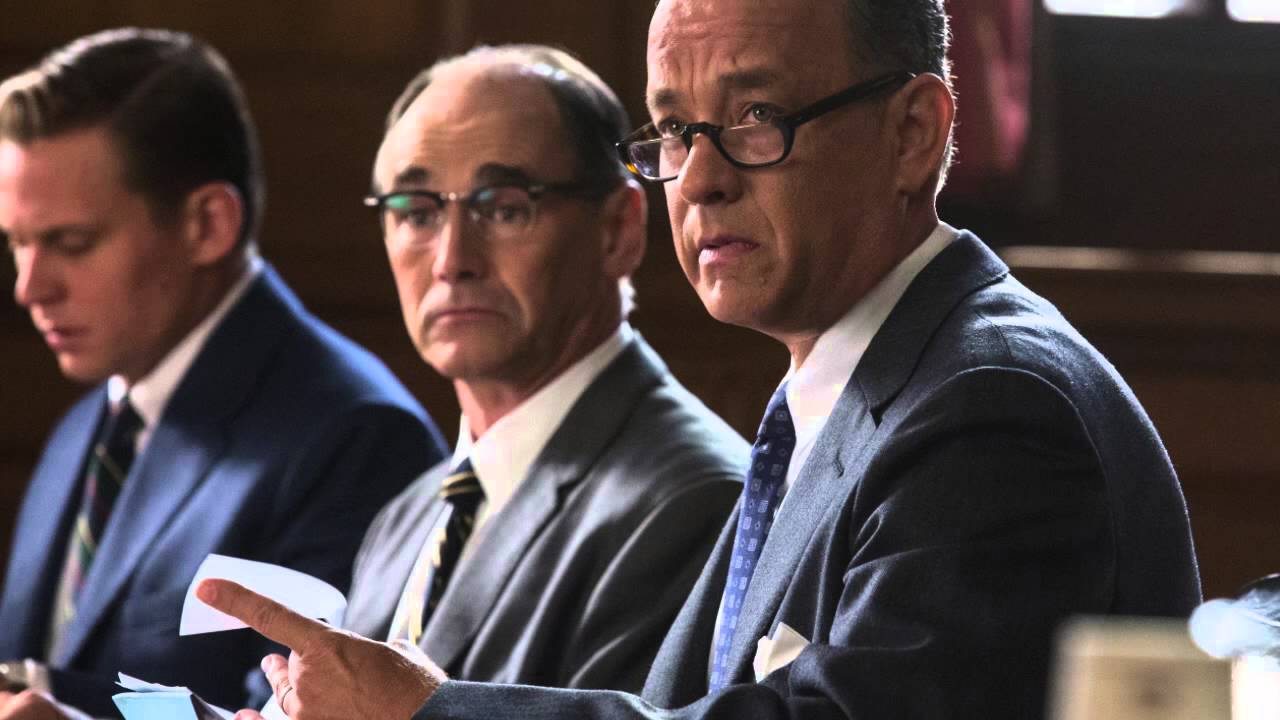
Bridge-of-Spies-8

Those going to see Steven Spielberg’s “Bridge of Spies” last weekend might have thought, based on the trailers, that they were getting a white-knuckle thriller in the vein of “Argo.” All the scenes of men drinking scotch and negotiating were left on the cutting room floor.

But hopefully audiences were able to adjust expectations, slow down their heart rates a little, and appreciate “Bridge of Spies” for the top-notch and engrossing film that it is. Featuring a director, actors (Tom Hanks and Mark Rylance) and screenwriters (playwright Marc Charmin and, on rewrite, Joel & Ethan Coen) working at the top of their game, “Bridge” is immensely enjoyable and something of a companion piece to Spielberg’s last film, “Lincoln.” Both are historical dramas about men doing the right thing against immense obstacles, both because it’s the right thing to do, and because it’s the smart thing to do.

Spielberg’s touch asserts itself in a witty opening shot, in which Russian spy Rudolph Abel (Rylance) is using a mirror to paint his self-portrait, likely an allusion to Norman Rockwell’s “Triple Self-Portrait.” Rockwell was the quintessential American, and so it seems is the quiet, normal Abel, who moves through 1957 Brooklyn with his ill-fitting coat and paintbox. But, of course, he’s also a Russian spy.

Spielberg reasserts this with his bravura ten-minute opening sequence, devoid of dialogue or music, in which Abel, shadowed by FBI agents, goes about his day — taking the subway, painting a landscape, and, oh, picking up a secret message in a hollow coin taped to the underside of a park bench. In its evocation of the authentic sights and sounds of 1950s New York, this opening could be a spy sequence as envisioned by “On the Bowery” filmmaker Lionel Rogosin.

From this wordless sequence, we go right into a sequence full of words, as we see insurance lawyer Jim Donovan (Tom Hanks) negotiate a case. In one exchange, he shows himself to be canny, direct, and above all absolutely sure of what constitutes fair and unfair. I didn’t realize until the closing credits that Joel & Ethan Coen had done a rewrite on the screenplay, but of course their fingerprints are all over this scene in its use of quick, juicy dialogue to establish character.

Donovan is tasked with defending Abel in court, and the first half of “Bridge of Spies” is rather familiar one-man-against-the-system courthouse drama (not unlike Spielberg’s own “Amistad”). When even the judge is openly siding against you, you know you’ve got a losing case, and Donovan becomes a pariah for not just defending Abel, but defending him to the best of his abilities.

Two things stand out of this first half of the film for me. The first is how important the relationship between Donovan and his client Abel are. Donovan is no bleeding-heart, and recognizes Abel as a foe of his country. But he also respects the man as a fellow good soldier who plays by the rules rather than taking the easy way out. These are both practical, honorable men. It helps that Rylance turns in such a sly and winning performance, with Abel concealing a dry wit underneath that hangdog face.

spies2

The second thing is how Donovan plays the case. In front of the Supreme Court, Donovan talks in flowery terms about America and the need for America to put its best foot forward, to play by the rule book, as an example to the rest of the world. He believes this. But in private, especially when he’s arguing sentencing with the judge, Donovan brings forth more practical arguments. Keep Abel alive, and he’ll be good insurance in case an American spy is ever caught by the Soviets. Treat Abel well, and our future captured spy might be treated as well in return.

This is where “Bridge of Spies” has its strongest linkage to “Lincoln,” which focused on President Lincoln’s political efforts to get the 13th amendment abolishing slavery passed into law. It’s the right thing to do for the country, but it’s also the smart thing to do for a divided country. “Lincoln” is less about big speeches and more about the hard work of politics, of calling in favors and twisting arms and using your power strategically to achieve a desired outcome.

And that’s what the second half of “Bridge of Spies” is all about, set in 1960, as Donovan goes to East Berlin to negotiate the exchange of Abel for U2 pilot Gary Powers and American grad student Frederick Pryor. The first half of “Bridge of Spies” has beautifully set up the second. The scenes of Donovan sipping Scotch with Russian and East German officials (each with competing agendas) may not making for thrilling spy cinema. But, just like in “Lincoln,” it does become thrilling to watch Donovan use his powers of negotiations, of understand when to bend and when to stand firm to achieve a desired outcome.

Rylance’s droll presence is missed in this second half, although the screenplay (presumably the Coens) includes some funny touches, such as the fact that these Cold Warriors all have actual colds. (When the cynical CIA agent catches Donovan’s cold, it’s a nifty metaphor for how he’s coming around to Donovan’s way of seeing the world.) And that last scene on the bridge, a pre-dawn stalemate, is suspenseful because the film has laid the groundwork for how shaky this agreement is, how it’s built on human relationships that could go wrong at any time.

Many critics have drawn connections between “Bridge of Spies” and contemporary American politics, whether it be Guantanamo Bay or drone strikes, and whether they reflect American values. I think that’s accurate, but the film is making an even broader point about the way America engages the world.

The Cold War was often described as a chess game between superpowers, and “Bridge” would like to see us get back to that mindset, to start thinking two or three moves ahead, to foresee what consequences might arise from what we do, instead of reacting rashly. To do the right thing, because it’s also often the smart thing. To keep talking to our enemies. And to carry some insurance.




“Meet The Patels”: Arrange a date with this soulful and funny documentary

Ravi Patel and his sister, Geeta, worked together on the documentary Meet the Patels, in which Ravi struggles to find a partner both he and his parents love.

Ravi Patel and his sister, Geeta, worked together on the documentary Meet the Patels, in which Ravi struggles to find a partner both he and his parents love.

“Meet the Patels” opens Friday at Sundance Cinemas. PG, 1:28, three stars out of four.

To modern sensibilities, the idea of an arranged marriage seems arcane, arbitrary, if not downright silly. After all, the modern single person chooses to find a partner in a more modern and scientific way — say, by putting their picture on a stranger’s phone and hoping they swipe left.

Continue reading

“The Final Girls”: Horror movie spoof takes a trip to Unpleasantville

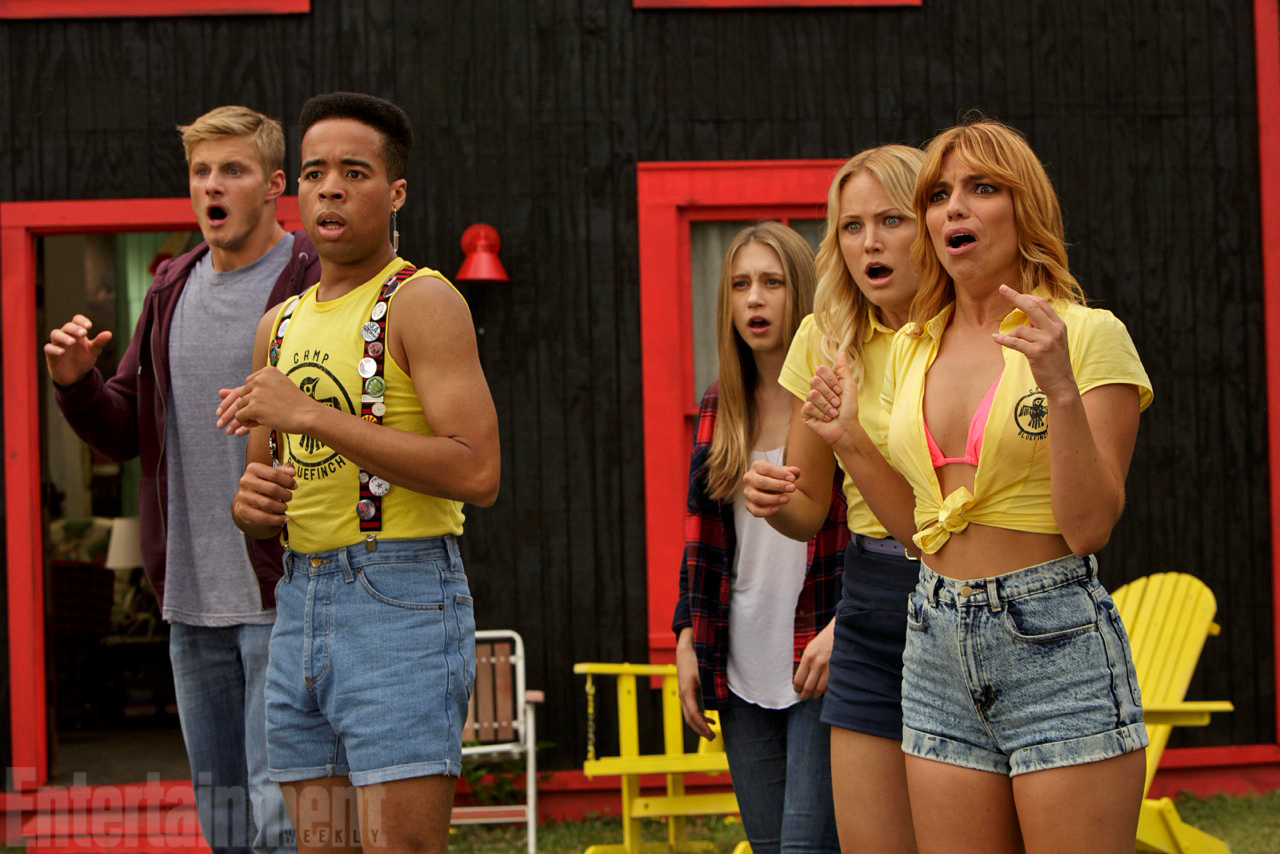
the-final-girls-02

“The Final Girls” is now playing on video-on-demand, including ITunes and Amazon Prime. PG-13, 1:28, two stars out of four.

At this point, nearly 20 years after “Scream,” it seems daring to make a horror movie that isn’t a meta deconstruction of the genre. “The Final Girls” aims to play with the campy conventions of ’80s summer-camp slasher movies, especially the “Friday the 13th movies.” But this is more straight comedy than horror comedy, with the scares and violence toned way down for PG-13 consumption. If you’re enough of a horror fan to know what a “Final Girl” is, ironically, you might not be the right audience for it.

Continue reading

“Breaker Morant”: An officer and a gentleman, and a murderer

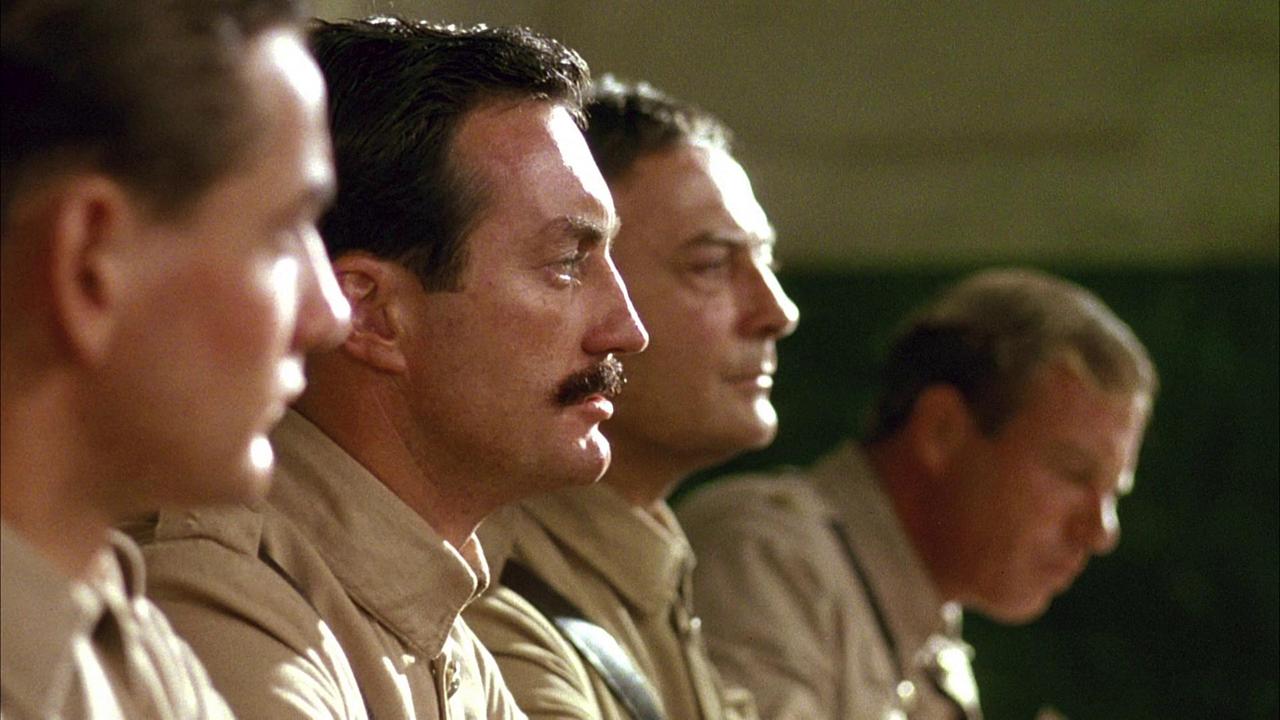
breaker-morant

The box art for the new Criterion Collection edition of “Breaker Morant” features the image of a lone man standing, arms tied behind his back, awaiting a firing squad.

Except that in Bruce Beresford’s 1980 movie, things look quite different. Harry “Breaker” Morant (Edward Woodward) faces his executioners not on his two feet, but sitting, in the middle of a field in a little wooden chair that looks like it was swiped from someone’s kitchen table. The sun is setting over the hills — it could be a nice little moment, if it weren’t for the rifles.

It’s a surreal touch of civilization in the middle of a very uncivilized war in Africa. Throughout Beresford’s gripping film, we see civilization and savagery at odds with each other, the former offering a veneer of cover for the latter. It’s a great film, and the new Blu-ray edition gives “Breaker Morant” its due.

Continue reading

“Deutschland 83”: Cold War skullduggery gets a synth-pop soundtrack

TV STILL -- DO NOT PURGE -- Season 1 Episode 1 -- Jonas Nay - in the SundanceTV original series "Deutschland 83" - Photo Credit: Conny Klein

TV STILL — DO NOT PURGE — Season 1 Episode 1 — Jonas Nay – in the SundanceTV original series “Deutschland 83” – Photo Credit: Conny Klein

For those of us who lived through the ’80s and the paranoia that nuclear war was imminent, it’s no consolation to learn that the feeling was mutual on the other side.

In the opening scene of SundanceTV’s “Deutschland 83”, East German agents nervously watch Ronald Reagan’s “Evil Empire” speech and worry about an American first strike. This is how wars happen, with each side assuming the worst of the other and feeling pressured to act first. As another East German says later in the series, quoting Chekhov, “Don’t put a rifle on stage if you’re not going to fire it.” And there were a lot of rifles on stage in 1983.

“Deutschland 83,” a German TV series created by the husband and wife team of Anna and Jorg Winger, plays off that sense of mutual nervousness in giving us an antihero — a young East German spy who has infiltrated the West. Comparison’s to FX’s “The Americans” abound, but young Martin (Jonas Nay) earns our sympathies even as he’s responsible for some terrible things, because he’s idealistic and thinks he’s doing good. This is not a story of good vs. evil, but of two sides who don’t understand each other, don’t trust each other, and could blunder into Armageddon if they’re not very careful.

Martin is basically kidnapped by his spymaster aunt (a chilling Maria Schrader) and sent to West Germany, where, under the tutelage of a debonair Bonn professor and East German agent (Alexander Byer), he’s tasked with impersonating the aide to a West German general (Ulrich Noethen). He feeds information on NATO strategies back to the Stasi in East Berlin.

“Deutschland 83” is an enjoyably odd series in the way it mixes Cold War paranoid and ’80s pop culture, the slinky synth of Eurythmics and snap of The Police playing as background music to Martin’s espionage. (The lyrics to Duran Duran’s “Hungry Like the Wolf” make for a great joke in the third episode.) The ’80s spy tech Martin uses is delightfully clunky; his superiors stare at a “floppy disc” as if it might bite them, and his wonderment at the luxuries of the West (the discovery of the Walkman sends him into rapturous delight) is good for a few chuckles.

deutschland2

Just when we’re lulled by the Reagan-era kitsch, “Deutschland 83” suddenly twists the knife on us, as Martin’s subterfuge has real-world consequences on those around him. The fate of a NATO secretary who falls for his youthful charm is particularly tragic, and, back home, his girlfriend is spying on his ailing mother, who may be smuggling black-market books behind the Iron Curtain. As fun as “Deutschland 83” is along the way, we can’t see how any of this turns out well for anybody.

Of course, we know that the Wall is just a few years from falling, and none of this will matter in the end. But that only makes the moral corruption of Martin more tragic, not less. There are rumors that the Wingers might do two more series, one just before German reunification and one after. If so, I’m looking forward to more thrills and twists as the Wall comes down, likely as Jesus Jones’ “Right Here Right Now” plays on the soundtrack.


“99 Homes”: Turning the subprime mortgage crisis into prime drama

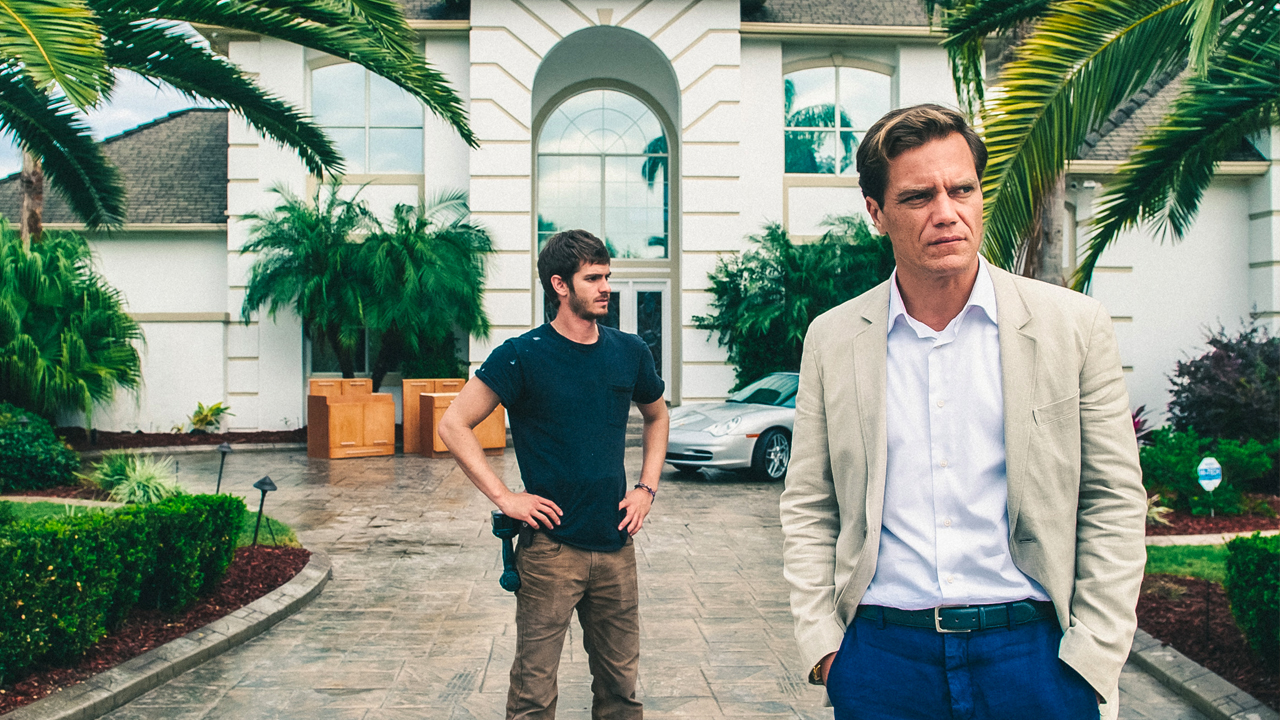
99-homes2

“99 Homes” opens Friday at Marcus Palace Cinemas. R, 1:52, three stars out of four.

Ramin Bahrani has made a weird turn as a filmmaker. He started out making elliptical character studies like “Man Push Cart” and “Goodbye Solo.” Now he’s making social-issue dramas with recognizable Hollywood stars that aim to get a few bullet points across along with the drama.

2012’s “At Any Price” tried to show the crisis in modern farming, but was too unfocused and shrill, with dialogue that sounded like people shouting op-eds at each other. But “99 Homes,” which looks at the damage wreaked by the subprime mortgage crisis, is a big improvement.

Continue reading