“The Iceman”: Diary of a cold-blooded killer

The-Iceman

“The Iceman” is now playing at Point and Eastgate Cinemas. R, 1 hour 46 minutes, three stars out of four.

There isn’t a character that Michael Shannon has played that it seems like a good idea to screw with. Even one of his most likable recent characters, the loopy uncle in “Mud,” seemed like trouble.

So it’s something to say that Richard Kuklinski, the hitman Shannon plays in Ariel Vromen’s fact-based crime drama “The Iceman,” is one of his most fearsome characters. The post-title cards say that Kuklinski is thought to have killed over 100 people in the ’70s and ’80s, and in looking into Shannon’s cold, dead eyes, you wonder if that’s lowballing it.

Kuklinski led a double life, both as a busy employee of the mob in New Jersey and as a loving husband and family man. We get a sense of that duality in the movie’s opening scene. In the first, he sweet-talks his future wife (Winona Ryder) on their first date; in the second, he slashes the throat of somebody who insults her in a pool hall.

Once local crime boss Roy DeMeo (Ray Liotta) catches wind of Kuklinski’s “aptitude,” he brings him in as a contract killer. The film follows Kuklinski’s 20-year career, shooting, stabbing, poisoning a long list of victims. He approaches every job with a businesslike precision, his face betraying only a slight irritation at the the pleadings of his victims, like he’s remembering he forgot to pay the water bill. When one victim (James Franco in a cameo) prays for God to save him, Kuklinski sneers. “I don’t feel anything,” he says. “God must be busy.”

The case is peppered with good supporting work from actors who we both expect to see in a mob drama (Liotta, Robert Davi) and some we don’t, including David Schwimmer as a sad-mustached, jumpsuit-wearing rival hitman, and Chris Evans (“Captain America”), almost unrecognizable under scraggly facial hair as a freelance hitman who Kuklinski partners with.

Although “The Iceman” has a high body count, Vromen doesn’t wallow in the blood, focusing more on the characters than the violence they do. There’s no honor or nobility in this rogues’ gallery, just a parade of sociopaths and opportunists feeding on the innocent, and eventually each other. I don’t know that we root for Kuklinski to survive them, but we’re undeniably fascinated at his ability to do so.

We know the arc of “The Iceman” from “Goodfellas” and a hundred other mob movies. Things are good for a while, and Kuklinski is able to keep his life compartmentalized. But the syndicate starts to crumble, with the police closing in and mobsters plotting to whack each other before they get whacked first. The pressure starts getting to Kuklinski, most notably when DeMeo shows up at his daughter’s 16th birthday party.

It’s a testament to Shannon’s raw, gritty performance that even though we’ve seen him kill dozens of helpless people up until this point, we still feel for him a little as his family starts to see him for who he really is. Shannon could have gone for a much more showy performance, but he keeps Kuklinski largely reined in, the fury that occasionally ignites in his eyes more than enough to chill us. He’s not a psychopath, he tells himself. He’s a guy doing a job he seems frighteningly well-suited for.

“Fast & Furious 6”: Going along for the ride

fast-furious-6-car-jump

“Fast & Furious 6” opens Friday at Point, Eastgate, Star Cinema and Cinema Cafe. PG-13, 2 hours 10 minutes, 2 and a half stars out of four.

Back when I reviewed the first “The Fast and the Furious” movie in 2000, I griped about the unreality of the film’s car chases. Surely a car wouldn’t really fly that high in the air after hitting a jump that small.

In “Fast & Furious 6,” as a tank flipped up on the highway, launching the woman perched on its turret over a gorge, and another man leaped from the other side of the divide to catch her in midair, I considered I might have been too hasty in my original criticism.

Forget real-world physics. The car chases and crashes of the sixth installment don’t adhere to the physics of my old Matchbox car races, when cars would do septuple-flips off the dining room table and into the litter box.

But that is much of the fun of the franchise since director Justin Lin (who was at the Wisconsin Film Festival a lifetime ago with his indie debut “Better Luck Tomorrow” in 2003) took over the “F & F” movies. “Fast Five” was unquestionably the best of the series, bookending a decent heist plot with two inventive and hilariously over-the-top car chases.

“6” doesn’t have quite the gonzo appeal of that giant safe smashing through the streets of Rio, but it does end with two lengthy and inspired action sequences, which is all anybody is in their seats for. It’s loud, dumb fun — sometimes too dumb for its own good.

After the $100 million heist of “Fast Five,” the heroes are enjoying their ill-gotten goods in extradition-free countries. But government agent Hobbs (Dwayne Johnson) convinces them to reunite, this time on the side of the angels to take down an ex-Special Forces agent named Shaw (Luke Evans) and his team, who want to steal a thing. Really, it does not matter what that thing is, so why waste time explaining it?

Hobbs’ ace card is that one of Shaw’s team is Letty (Michelle Rodriguez), back from the dead and apparently suffering from amnesia. (They must be saving the evil twin plot for “F&F 7.”) So her ex-lover Dom (Vin Diesel), partner Brian (Paul Walker) and the crew are persuaded to take Shaw down so they can take Letty back.

For a six-film series that’s basically a series of tenuously-connected action sequence, it’s surprising how much “Fast & Furious” relies on its mythology, bringing back recurring characters and tying up loose ends. Dom and Brian’s team has gotten larger and larger with every film, and the movie hammers home its idea that this isn’t car thief ring, it’s “family,” every chance they get. A welcome addition to the team this time around is MMA star Gina Carano (“Haywire”), who plays Hobbs’ new partner and gets into one dilly of a fight in a subway station.

The film briskly moves along — there may be as many as a dozen separate action sequences before those two closing setpieces — only slowing down enough for some comic relief from Tyrese Gibson or Chris “Ludacris” Bridges (who have the only good lines in the film). And those setpieces — a tank vs. cars duel on the freeway, and a desperate chase to catch a plane that’s taking off, with cars ending up dangling off the plane’s wings like Christmas ornaments — are pretty great.

A coda contains a cameo setting up the villain for the next installment — it’s the one actor who should be in these movies by now but isn’t. I expect it’ll be about as good and about as silly as this one — this is a franchise that knows what it is and what it needs to deliver.

“The Reluctant Fundamentalist”: From Manhattan to the madrassah

the_reluctant_fundamentalist_1

“The Reluctant Fundamentalist” opens Friday at Sundance Cinemas. R, 2 hours 8 minutes, 3 stars out of 4.

In the mid ’00s we got a spate of films that looked at the post-9/11 world and tried to “make sense of it all,” both what was happening in the Muslim world and what was happening in America. Some were good (“In the Valley of Elah”), some were not (“Sorry, Haters”), all seemed well-intentioned. Then, right about the time President Obama was inaugurated, they seem to die down, as if a collective memory fog was descending on Hollywood. Who would want to go back there?

But the next generation of post-9/11 films, including “Zero Dark Thirty” and now “The Reluctant Fundamentalist,” seems to be coming around, having the benefit of a little perspective to tell their stories. I came into “Fundamentalist” worried that it would suffer from the didacticism and stridency of some of its predecessors. But the film from writer William Wheeler and director Mira Nair (“Monsoon Wedding’) is smart and complex, as unwilling to cling to one ideology as its protagonist.

The weakest part of the film is its ticking-clock framing device. An American professor (and likely CIA agent) has been kidnapped off the streets of Lahore, Pakistan. A newspaper writer (and even more likely CIA agent) named Bobby (Liev Schreiber) thinks one of his fellow professors, a young Pakistani man named Changez (Riz Ahmed), might have terrorist ties. So, in a cafe, Bobby and Changez sit down for what shifts between a friendly conversation and a canny interrogation. Meanwhile, Bobby’s superior (Martin Donovan) is listening, ready to send the troops in to seize Changez at a moment’s notice.

It’s a little hokey, but the film gets much better once Bobby and Changez start to talk. Changez spins a fascinating tale of his life, a former financial analyst (“a Navy SEAL of finance,” in his words) who takes a job in New York in the late ’90s, fully committed to living the capitalist dream.  Kiefer Sutherland is terrific has his boss and mentor, who recognizes a fellow predator in his rising young star.

But then the planes hit the Twin Towers, and everything changes for the aptly named Changez. It would be easy for a film to overstate the shift in attitude that Muslims had to face, but “Fundamentalist” is subtle and believable in charting that change. Changez gets pulled aside at the airport every time he flies, receives dirty looks and epithets from passers-by on the streets. In the office, his co-workers whisper anti-Muslim sentiments to each other, and make nervous jokes when Changez decides to grow out his beard. Even his artist girlfriend (Kate Hudson) makes a ham-handed art installation about Islam. Changez, formerly on his way to being a titan of Wall Street, finds himself an outcast.

So he returns to Pakistan and takes a teaching job, and the film keeps us guessing how far his intellect and passion took him, if he became the thing that America suspected he always was. The film is helped immeasurably by Ahmed’s canny, sympathetic performance. Changez is no victim — he radiates confidence and intelligence in all situations, so clearly beyond the simple fundamentalism of both sides of the culture war.

The essential question of “Fundamentalist” is whether his intelligence and humanity keeps him from getting sucked into the undertow of fundamentalism. Once you get away from the kidnapping plot, the audience spends an engrossing time in the film finding that out.

“Lore”: Over the river and through the Allies

lore

“Lore” is now playing at Sundance Cinemas. Not rated, 1:49, 3 stars out of 4. I’ll be doing a post-show chat after the 7:05 p.m. showing Monday in Sundance’s Overflow Bar — it should start about 9 p.m. if you just want to come for the chat.

“Lore” is unlike any movie about the Holocaust that I’ve ever seen. Maybe it’s because writer-director Cate Shortland is Australian, not German, and so doesn’t feel the weight to exorcise demons and “tell the truth” the way many well-meaning films from Germany seem to.

Instead, Shortland has gone more in the direction of her first film, 2004’s “Somersault.” Both films are about teenage girls trying to navigate circumstances they clearly aren’t emotionally ready for. It’s just that, in this case, the girl is a Nazi.

Lore (Saskia Rosendahl) is a 14-year-old German girl who knows something’s very wrong when she gets home from school. Her SS officer father and mother are packing up, quietly panicked. The Allies are at the country’s doorstep, and the family needs to flee. The parents are quickly seized, and it’s up to Lore to guide her four younger siblings, including a baby, through the Black Forest to her grandmother’s house.

If that sounds more like a fairy tale than a historical drama, the comparison is deliberate. Shortland is almost Malick-like in her use of the natural world to tell her story, with long takes of the family trudging through dark woods and bright meadows, hiding in decrepit farmhouses, scrabbling for enough food to survive. Politics takes a back seat to survival.

Eventually, the siblings come across a young man named Thomas (Kai Malina), who has a six-pointed star among his papers. Thomas has had years of practice surviving on the run, hiding out, and he’s able to procure food and transportation for the family. But Lore has been trained all her life to hate Jews, and the film very subtly tracks her growing confusion over those prejudices, and her adolescent feelings towards Thomas.

One could have made a much more didactic film with the same story — German girl learns Jews aren’t so bad after all! — but Shortland is after something much more elliptical here. She ties Lore’s slow moral awakening to the universal transition of adolescence, as children come to realize that their parents don’t have all the answers, and come to rebel against those answers. It’s a tricky balanced to pull off, but “Lore” works, especially thanks to Rosendahl’s fearless, unvarnished performance.

Here’s a girl we should hate — I thought of her as the Nazi girl in “Schindler’s List” who nastily shouts “Good bye, Jews!” as Jewish families are rounded up — and yet we become deeply invested in her journey.

What’s playing in Madison theaters: May 17-23, 2013

et

It’s commencement weekend, which means that graduating students are thrilled, parents are teary-eyed, restaurants are packed — and this column gets a lot shorter for a while as the campus film series come to an end.

All week

“Star Trek Into Darkness” (Point, Eastgate, Star Cinema, Sundance) — My full review is here. J.J. Abrams’ second outing in the captain’s chair of the Enterprise is getting mostly positive but not many rapturous reviews. I had a fun time watching it (especially in eye-popping IMAX 3D) but felt the screenplay panders too much to Trekkies (of which I’m one) instead of pushing the franchise forward.

Lore” (Sundance) — Cate Shortland’s film dares the audience to identify with a teenage girl who at least shares her Nazi parents’ Aryan sensibilities, as she tries to shepherd her siblings to safety in post-war Germany. It’s a beautiful, at times elliptical film that’s more about adolescence that politics. I’m doing a post-show chat on Monday after the 7:05 p.m. showing at Sundance Cinemas, 430 N. Midvale Blvd. Come for the movie, or if you already saw it at the Wisconsin Film Festival or elsewhere, just meet us in the Overflow Bar at 9 p.m.!

Free the Mind” (Sundance) — A documentary about pioneering research in the beneficial aspects of meditation on the brain could be a high-falutin’ esoteric exercise, but this film is level-headed and practical, looking at research done right here in Madison on veterans with post-traumatic stress disorder and preschoolers with ADHD. Some teachers from the program will take part in a post-screening chat after the 7 p.m. show on Saturday.

Saturday

“E.T. The Extra Terrestrial” (8:30 p.m., Olbrich Park) — Madison Parks and the Madison Mallards have a great idea — show free movies outside all summer long, at both local parks and the Duck Pond. The series kicks off with Steven Spielberg’s enchanting sci-fi classic. UPDATE: This screening was originally scheduled to take place Friday, but was moved to Saturday because of the weather. Free!

Wednesday

Crafting a Nation” (7:30 p.m., Barrymore Theatre) — Did Madison Craft Beer Week make you thirsty to learn more about craft beers and the people who make them? Check out this new documentary, which looks at craft beer makers in seven states (not Wisconsin, though) who quit their jobs and cashed in their 401ks to chase their dreams of making and selling great beer. Tickets are $10 in advance through barrymorelive.com, $12 at the door.

“Star Trek Into Darkness”: A rather cynical Enterprise

startrekintodarkness

“Star Trek Into Darkness” opens Thursday at Point, Eastgate, Star Cinema and Sundance. PG-13, 2:08, 2 and a half star out of four.

I hate to be that guy. It’s no fun to be the humorless fanboy who can’t just enjoy the latest installment in a franchise, but has to hold it up against everything that has gone before. But, as a lifelong “Star Trek” fan, of the sort that used to hold his little audiocassette recorder up to the console TV as a kid to record “Amok Time” and “The Trouble With Tribbles,” it’s hard not to.

So, while “Star Trek Into Darkness” is a fun ride that captures a lot of what made the original series so enjoyable, I couldn’t help feeling let down. Not because J.J. Abrams and his writers have ignored what “Star Trek” fans want. It’s that they’ve pandered to it to such a degree that it feels less like fan appreciation and more like base-covering pragmatism. Add to that the usual summer-movie pandering to audiences who want lots of big explosions and people dangling from ledges (seriously, that engine room has to violate every 23rd-century OSHA requirement in the book), and you’ve got a film that’s surprisingly timid.

Disappointing, because Abrams’ 2009 “Star Trek” reboot was such a triumph. I was extremely skeptical going in  of the idea of reviving Kirk, Spock and company with a new young cast, but Abrams and his writers captured the human element that made the series work, the banter between Kirk, Spock and McCoy, the sense of optimism and humanism that pervaded Gene Roddenberry’s visit. Add in a rather elegant way of using time travel — a recurring theme in the series — to justify the reboot, and it felt like “Star Trek” was well and truly rejuvenated, ready to boldly go forward.

And then we have “Into Darkness.” An ex-Starfleet officer named John Harrison (Benedict Cumberbatch) has gone rogue, engineering a bombing in London and an attack on Starfleet headquarters. He hides out in a deserted part of the Klingon homeworld, and Admiral Marcus (Peter Weller) sends a revenge-seeking Kirk (Chris Pine) and his crew on a mission to assassinate him. The crew, especially the moralistic Spock (Zachary Quinto), has deep misgivings about the mission, but the hot-blooded Kirk wants atonement for a personal loss. The film is obviously aiming at a kind of post-9/11 allegory, not because it has anything to say about the War on Terror, but because “Star Trek” always does allegory, right? Again, it feels like pandering to a fan base that Abrams doesn’t quite get.

Where the plot goes from there shouldn’t be spoiled (although I want to write about “Into Darkness” again in a week or two), except to say that the plot basically revisits one of the classic episodes of the series. Winking at old fans is fine — I’m a sucker for a Gorn reference or a Tribble cameo as much as the next Trekkie — but “Into Darkness” basically becomes a retelling of that story, down to the point that screenwriters Roberto Orci, Alex Kurtzman, and “Lost” co-creator Damon Lindelof rehash familiar scenes and lines of dialogue almost verbatim. There’s nothing new here, and what’s old isn’t done nearly as well as it was the first time around.

Which is not to say that, moment to moment, “Into Darknes” isn’t a fun summer movie to watch. There are some great action sequences, such as Kirk as a human torpedo getting shot from one starship to another, navigating a debris field in between. And there’s a masterful visual effects sequences with the Enterprise in free-fall, the characters falling and running onto corridor walls and ceilings as the ship tumbles helplessly into orbit. (It’s quite an upgrade from the old TV series, where they’d just shake the camera and the actors would lurch back and forth in unison.)

And the character work is great — I felt a huge wave of satisfaction, 40 minutes in, when the entire crew finally settled for the first time at their usual posts on the Enterprise bridge. Pine makes a fine, swaggering Captain Kirk, although at some point he’s got to lose that reckless-hothead image and start acting like a Captain. And Quinto makes an ideal foil, able to both play straight man to Kirk’s quips and top them, drily. They act more as friends here than in the first movie, and that’s an appropriate and necessary step forward.

The screenplay also gives all the supporting characters a scene or two to shine; Scotty (Simon Pegg) gets to skulk around an enemy ship, while McCoy (Karl Urban) grouses entertainingly and Sulu (John Cho) gets to sit in the captain’s chair a little. Cumberbatch is marvelous as the imperious, mysterious Harrison, although the film hedges on the real depths of his villainy to suit the machinations of the plot. (Abrams had the same problem with his last film, “Super 8,” in which the alien would turn from misunderstood “E.T.”-like vagabond to ruthless killing machine and back again, depending on whatever the particular scene needed.)

After finding the right emotional ending, though, you can almost feel Abrams panic, and “Into Darkness” adds on yet another climax, with more big explosions and more chase-fight-dangle. I can’t imagine the next “Star Wars,” which is near and dear to Abrams’ heart, will be like this. He seems to be saving himself, cautiously maintaining the “Trek” franchise until he can pass it off to a director with a little more skin in the game.

Like I said, “Into Darkness” isn’t bad, but it’s a missed opportunity to be more than the summer blockbuster of the week, spiced with winking asides at the “Star Trek” faithful. At the end of the film, we get the promise that the Enterprise will finally, finally embark on its five-year mission. I hope they find something new out there.

“Free the Mind”: Life-changing research in our own backyard

freethemind

“Free the Mind” opens Wednesday at Sundance Cinemas in Madison. Not rated, 1:31, three stars out of four. There will be post-show Q&As featuring the filmmaker, several of the film’s subjects, and other experts after the 7 p.m. shows on Wednesday, Thursday and Saturday.

I know I shouldn’t judge a movie by its title, but hearing about a documentary called “Free the Mind” made me assume this would be one of those hippy-dippy films preaching about the mystical powers of positive thinking, like “What the Bleep Do We Know?” or “I Am.”

How refreshing it is that Danish documentary filmmaker Phie Ambo’s film, largely made in Madison, is so grounded and even utilitarian in its approach to the human brain. There’s some trippy visual effects intended to illustrate the activity of the brain, to be sure. But most of the film looks at the very practical applications of the meditation research done by Dr. Richard Davidson at the UW’s Center for Investigating Healthy Minds.

Davidson’s groundbreaking research (my interview with him this week is here) indicates that, just as trauma and other external experiences can shape the way we think, there are positive influences such as meditation that can rewire our brains in a more healthy direction. Ambo looks at two groups the Center is working with to put these theories into practice.

The first is preschoolers, especially one little boy who suffers from rage and fear issues, possibly a result of a life spent in foster care. The other are Iraq War vets suffering from post-traumatic stress disorder. One, Rich Low, is haunted by the faces of the fellow soldiers who he couldn’t save while at war.

Another, Stephen Lee, is a former military intelligence officer who vividly describes the harsh interrogation tactics he used on people. “In order to do my job, I had to become a horrible person,” Lee said. “And I was good at it.” Ambo’s film gets about as close as I’ve ever seen to capturing the torment of PTSD sufferers; Low and Lee allow her intimate access into their daily lives.

The techniques that researchers use aren’t any sort of hocus-pocus, just a mix of meditation, breathing exercises and other methods. One thing I learned from the film is that there are hundreds of different kinds of meditations, and the trick is matching the right meditation with the individual. By the end of the sessions, the veterans’ anxiety levels have dropped and they’re sleeping much better.

There are some clunky stylistic touches in “Free the Mind,” such as an overbearing score that seems needlessly intrusive at times; when Davidson appears on Michael Feldman’s “Whad’Ya Know?” the music seems ominous for some reason. (Come on, it can’t be that bad.) But this is overall a compassionate and curious film about the real-world implications of some fascinating research happening right in our backyard, helping our own neighbors.

“West of Memphis”: A strange kind of justice

westofmemphis

“West of Memphis” is now playing at Sundance Cinemas. R, 2:26, three stars out of four.

While watching “West of Memphis,” I kept thinking about another documentary about the criminal justice system I saw recently, one that probably won’t get as much attention as “Memphis” and its notorious case. “Gideon’s Army,” which played at the Wisconsin Film Festival last month and will be on HBO in July, looks at three overburdened public defenders in Southern courts. It depicted a criminal justice engine that was designed to elicit guilty pleas out of defendants, particularly poor defendants, whether they are actually guilty or not.

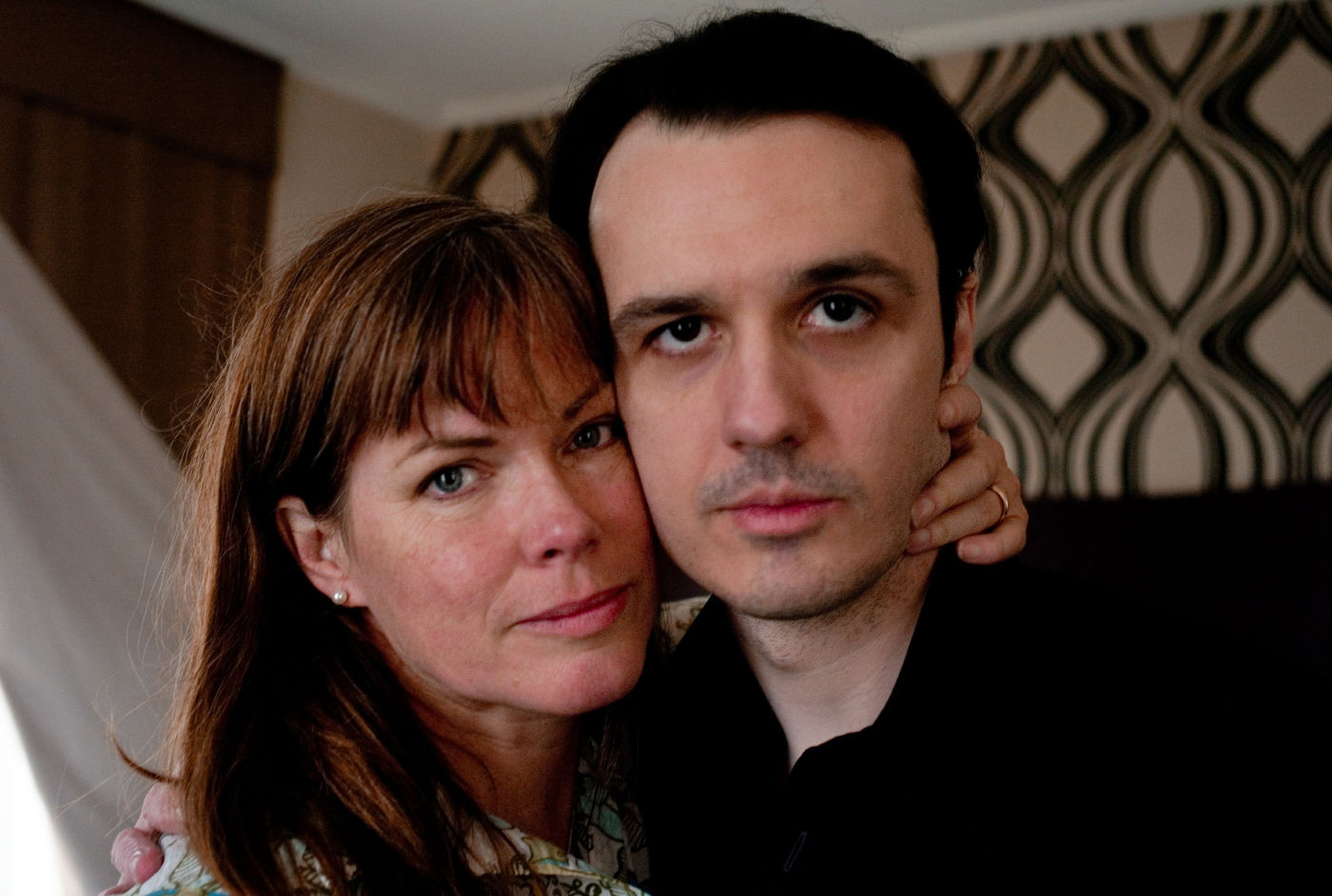
Because that’s pretty much how the historic “West Memphis 3” case ended, a shocking miscarriage of justice in Arkansas in which three teenagers were railroaded into being convicted of the murders of three 8-year-old boys in 1992. The case has now been the subject of four documentaries, and the teens (now in their late 30s, having spent 18 years in prison) had celebrities like Eddie Vedder, Natalie Maines and “Lord of the Rings” director Peter Jackson fighting on their behalf. But at heart, right to its troubling end, it’s another case where, instead of a prosecution having to prove a case, a defendant has to choose the lesser of two evils. “This happens all the time,” defendant Damien Echols says of the whole process, and he’s right.

The three “Paradise Lost” documentaries aired on HBO covered the twists and turns of the case as they happened, but now Amy Berg’s fascinating and maddening “West of Memphis” gets to look back on the entire arc of the case. Berg is no disinterested observer in the case (Echols serves as producer, as did Jackson, who bankrolled an investigation to clear the three defendants’ names). But largely, Berg lets the evidence tell the story, meticulously examining what might have happened on that night when three boys went missing, only to turn up dead in a river the next morning, bound and bludgeoned. (Berg includes some horrifying crime scene photos as she sifts through the evidence, so this film is not for the faint of heart.)

From the start, the investigation by local police reeked of incompetence; mistaking post-modem wounds by swamp turtles as some sort of ritual mutilation, the police jumped on the idea that this was some sort of Satanic murder, and focused on Nichols and the other two because of what they wore, what they listened to  and what they wrote in their notebooks. It’s shocking how seemingly important players in the case were simply never interviewed by police, so sure they were of their theory. But with some misleading “experts” and a jailhouse informant willing to testify on behalf of the state for a lesser sentence, convictions were secured.

But advocates continue to fight the case, and DNA evidence points squarely at the stepfather of one of the boys, who had a history of abuse. If this were a TV show, the real killer would confess in dramatic fashion. But this is real life, and he walks free. Instead, largely to save face after such an embarrassing miscarriage of justice, a complicated plea agreement is worked out that allows the three defendants to claim innocence while still entering a guilty plea.

Again, just get a guilty plea on the books. This happens all the time.

“The Great Gatsby”: It’s a shame about Jay

gatsby

“The Great Gatsby” opens Friday at Point, Eastgate, Star Cinema, Sundance and Cinema Cafe. PG-13, 2:28, two stars out of four.

“I like large parties,” Jordan Baker (Elizabeth Debicki) gushes in “The Great Gatsby.” “They’re so intimate.”

That seeming contradiction may be the closest thing Baz Luhrmann finds to a mission statement in F. Scott Fitzgerald’s prose for his adaptation of the quintessential Jazz Age novel. Luhrmann revels in throwing cinematic parties on the big screen, gaudy senses-pounding affairs that leave you little room to breathe. But he’s also genuinely sincere in wanting to get the intimate heart of the novel on screen, in Jay Gatsby’s doomed attempt to remake himself and preserve the past.

Luhrmann’s done it before — “Romeo + Juliet” was a feature-length music video that stayed surprisingly true to its source material, while “Moulin Rouge” amped up kitsch to operatic proportions. But he struggles honorably but mightily here to connect his film’s glitzy first half with its darker second half. I suspect there will be people who buy the Blu-ray, only to turn it off midway through every time, just as the last strand of confetti hits the floor.

Narrator Nick Carraway (Tobey Maguire) gets swept up the din of the Roaring ’20s — the “golden roar” of Wall Street money, the wild parties, the constant throb of hip-hop music. Wait, what? Yes, as most probably know, Luhrmann and executive producer Jay-Z have fused period music to hip-hop, dubstep and pop on the soundtrack, to best translate the orgiastic glee of the era to modern audiences, and to best sell that soundtrack. After “Moulin Rouge” and “Marie Antoinette,” it feels a little old hat, really, and one can’t help but how a film with its tone rooted in African-American culture keeps its black characters in the margins, brief flashes of musicians and dancers and servants who exist only to entertain the rich white characters. That’s true of the lily-white book and the segregated times, of course, but still, there’s something deeply distasteful about watching all the black people in the film grin and grind and cheerfully let their culture be appropriated by the swells.

Luhrmann shoots in 3D, and his camera is restless and relentless, zipping back and forth across the bay between the old-money types of East Egg and the new strivers of West Egg, then through the sooty wasteland to New York City and back again. Tom (Joel Edgerton) and Daisy (Carey Mulligan) are East Eggers, born so rich they never hard to worry about developing character. Over on the West Egg, Gatsby (Leonardo DiCaprio) throws outrageous parties but is rarely seen. (His appearance a half-hour into the film, his confident grin lit by fireworks and Gershwin, is a doozy.)

Gatsby befriends his befuddled neighbor Nick, but there’s an agenda at work; he loved Daisy in a previous life, and hopes to not just win her back, but erase the five years they spent apart. Di Caprio is not just good in “The Great Gatsby,” he’s necessary; once he finally appears, his charismatic presence finally holds Luhrmann’s manic camera still. It’s funny that Fitzgerald included Nick as the surrogate for the reader, because in this version it’s really Gatsby we understand and empathize with, his hopeful illusions leading him to his downfall, his cool facade slipping away to reveal the desperate, uncomprehending man-boy underneath.

But in transforming from bacchanalia to costume drama, Luhrmann gets tripped up, losing the head of steam he’s built up along the way. He can’t think of anything to do with Jay and Daisy and Nick and Tom other than to have them in rooms talking to each other, and the shift in tone is deathly. Which is not to say individual scenes don’t work; the final hotel room confrontation, with Tom and Gatsby parrying over drinks while Daisy vacillates, is a masterful piece of acting and staging all around. But it comes from another, more conventional literary adaptation, and for better or for worse, Luhrmann has already bet his chips on not making that adaptation.

“Koch”: A tale of two mayors

koch

“Koch” opens Friday at Sundance Cinemas. Not rated, 1:40, three stars out of four.

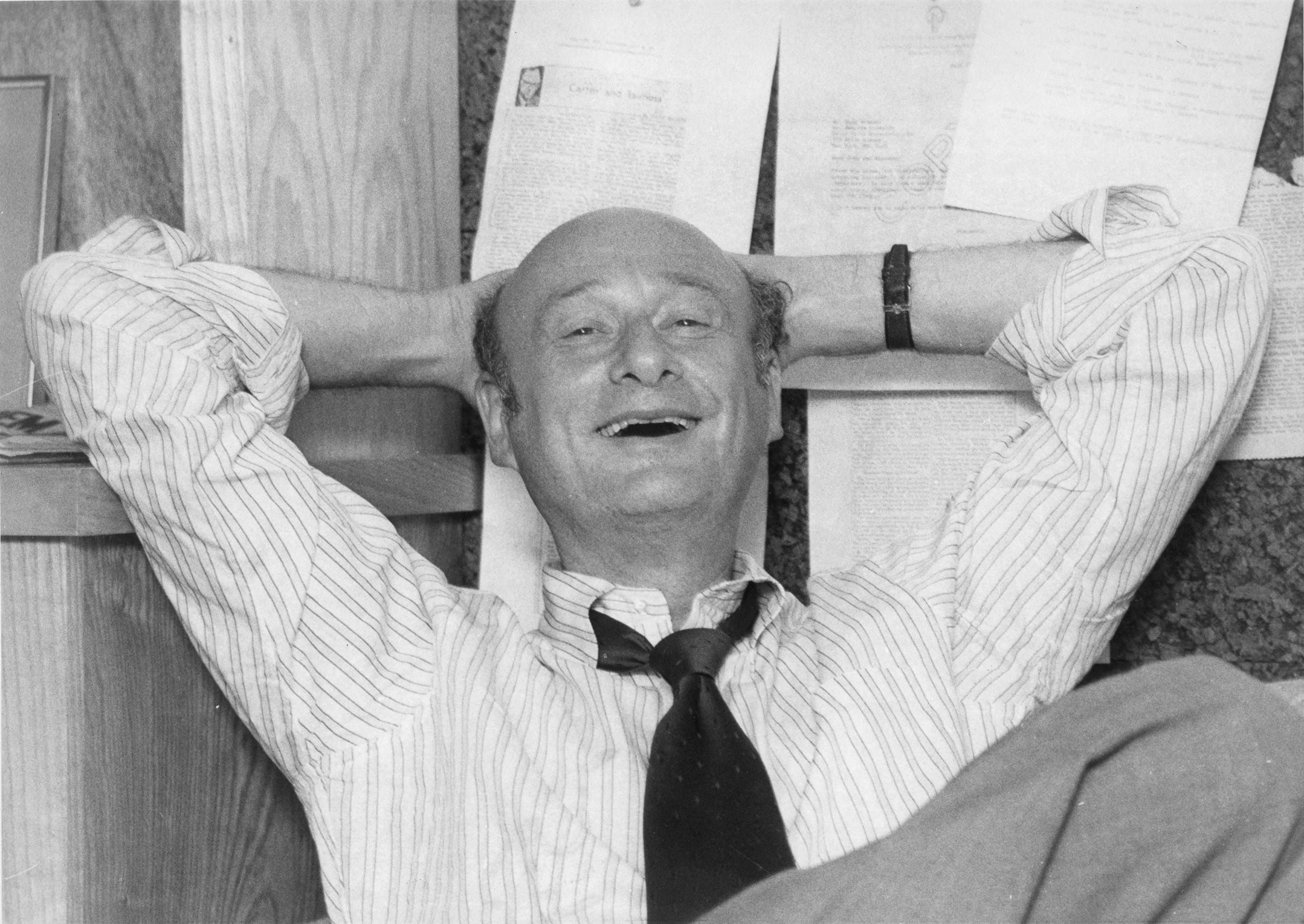
Ed Koch, the recently deceased mayor of New York City, was a man of contradictions so obvious that he must have secretly reveled in them. He was an arrogant man who famously asked everybody “How’m I doing?”, a man who could be generous and gregarious with crowds but petty and arrogant at the one-on-one level. Even at the end of his life, his politics were tricky — supporting of same-sex marriage, opponent of the so-called “Ground Zero Mosque.”

Forget “A Tale of Two Cities:” — the documentary “Koch” is a tale of two mayors. At least two.

Neil Barsky’s first film does an entertaining job capturing the many facets of Ed Koch — or at least as many as Koch has ever been willing to reveal to the world. Barsky keeps the focus almost exclusively on Koch’s three terms as mayor in the 1980s, how his tenure both revived the strengths of the city he loved as well as exposed its flaws.

When he took office in 1978, Koch was handed a city on the brink of financial ruin. With a strange combination of fervent social liberalism and brutal fiscal conservatism, he slashed budgets, alienated some constituencies (especially African-Americans) while forging alliances with others. He also launched major rebuilding projects — the New York we see today is in many ways his vision, from the newly sanitized and corporatized Times Square to the gentrified Lower East Side.

Koch was never one to shy away from a camera, and Barsky has a wealth of archival footage to choose from — Koch on a street corner, parrying merrily with his citizens, or on television news, sharply dressing down an interviewer. Interviews with former staffers, political rivals and journalists who covered Koch offer context to his decisions — some masterful, some disastrous. Even those who opposed him seem to regard him with a kind of wonder.

But if “Koch” offers context, it never really offers explanation for what made him tick, what drove him. The closest Barsky gets is a quote from Koch on how a bigger-than-life city needed a bigger-than-life mayor. So was it all an act by a savvy career politician? If so, it was a remarkably consistent one, continued long after the cameras had turned away. Barsky also touches on the long-standing rumors that Koch was a closeted gay man, but handles it discreetly (and Koch shuts down the questioning with a “It’s none of their f—— business.”

Barsky intercuts the archival Koch with present-day footage of the former mayor, stumping for local candidates, going to fundraisers, arguing politics with family members at Yom Kippur, an elder statesman who seems ill at ease on the sidelines. Mellowing with age did not seem to be an option. Barsky takes us inside Koch’s apartment, and it’s a surprisingly spare place, the walls covered in photos and outsized caricatures of Koch.

What he truly saw in those portraits we’ll never know, but “Koch” is an engaging film about what New Yorkers saw in them. Had Koch lived to see it (he died this spring just a week before it opened in New York City), I think he would have found much to like and much to complain about. But he would have enjoyed the complaining, too.