Instant Gratification: “The Wrath of Khan” and four other good movies to watch on Netflix

wrathofkhan

Every Tuesday, Instant Gratification brings you five movies currently streaming on Netflix Instant, most of which are new to the service. I made an exception for this week’s top choice, since I bet it’s of particular interest this week. If you have suggestions for movies on Netflix to recommend, let me know in comments.

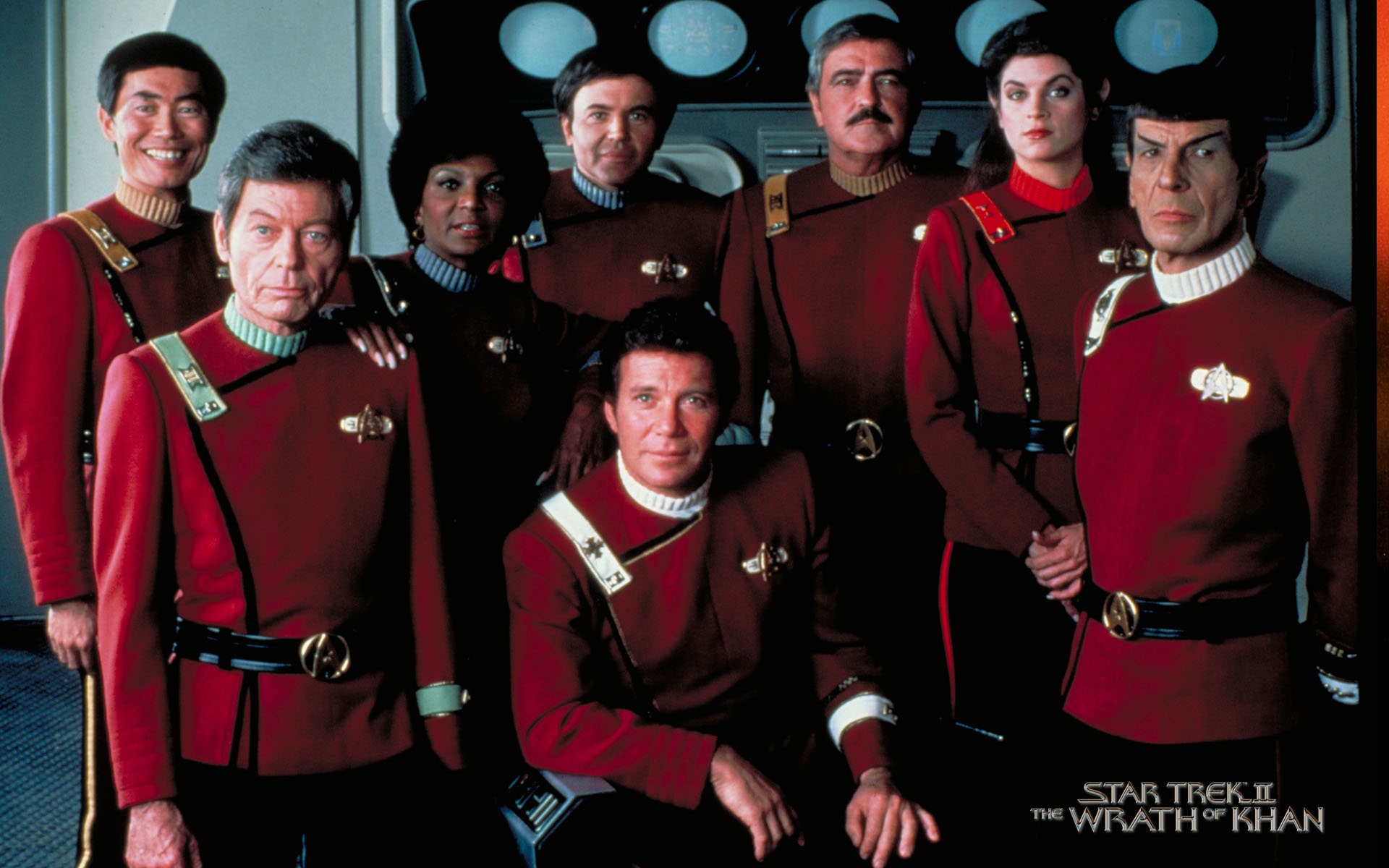
Top pick of the week: “Star Trek II: The Wrath of Khan” — Whatever you thought of “Into Darkness,” you should have left the theater hankering to see this 1982 film, unquestionably the best of all “Star Trek” movies. Action, humor, exciting cat-and-mouse combat between starships, and a truly great villain.

Drama of the week: “Leaving Las Vegas” — Nicolas Cage’s name may be synonymous with hammy acting now, but he deservedly won an Oscar in 1995 for playing an alcoholic deliberately drinking himself to death, with Elisabeth Shue playing against type as the prostitute who falls for him.

Comedy of the week: “Gregory’s Girl” — A charmer from Scottish director Bill Forsyth (“Local Hero”), about an awkward teen who wants to ask out a fellow player on his soccer team.

Foreign film of the week: “Flame and Citron” — This World War II film, co-starring Mads Mikkelsen of “Hannibal,” follows a pair of celebrated Danish Resistance fighters who showed no mercy in fighting the Nazis on their doorstep.

Foodie film of the week: “Big Night” — Green Bay’s Tony Shalhoub and Stanley Tucci play brothers who own an Italian restaurant, preparing for a possible visit from the great Louis Prima. The last, wordless cooking scene in the film is a thing of beauty.


A few more spoiler-y thoughts on “Star Trek Into Darkness”

khan

I’ve loved the comments I’ve gotten so far on my original “Star Trek Into Darkness” review from last week, even though they differ widely from those who absolutely loved the film to those who were crushingly disappointed. To be clear, I’m somewhere in the middle — I enjoyed most of it as a purely fun ride, but ultimately felt somewhat let down by the missed opportunities. And, for the record, I say so as someone who is both a lifelong Trekkie and huge fan of J.J. Abrams’ first “Star Trek” film.

My biggest problem with the film is the ending, which obviously I couldn’t get into in my original review. So I wanted to take a little time now under the “Spoiler Alert!” banner to talk about that.

I can pinpoint the exact moment that “Into Darkness” lost me:

“KHAAAAAAN!”

Up until then, like I said, it was a fun ride. The film is Abrams’ chance to riff on the best “Trek” movie of all time, “The Wrath of Khan.” Benedict Cumberbatch makes a fine, imperious villain (although his level of villainy seems to vary widely depending on the needs of a given scene), and the film has great visual effects sequences, like the Enterprise in free fall, the characters inside clinging onto walls as the ship rotates helplessly.

I also thought the Kirk-Spock friendship was nicely developed, to the point where I thought recreating the iconic engine room death scene from “Khan,” the roles reversed, actually worked. It was one of those sweet-spot moments that Abrams shoots for — something that will work for general non-Trekkie audiences while giving a nod to the diehard fans.

And then, “KHAAAAAN!” Having Spock yell that completely disrupts the death scene, drawing lots of knowing chuckles in the audience I was with. More importantly, it’s just the worst sort of pandering to “Star Trek” fans, as if Abrams had a checklist of “Wrath of Khan” elements that he was briskly checking off. “Oh, they’ll want to see that!”

Well, no, not if it disrupts the emotional arc of the movie for what’s basically a cheap callback joke. For me, I think the “Star Trek” reboots work when they riff on the overall dynamics of the series and the relationships between the characters. But to recreate a specific line from a specific movie in that series — especially at such a dramatic high point — feels cheap.

And after that, the film descends into what I call the usual “chase-fight-dangle” — a big starship crash and an interminable fight on top of a shuttle, because that’s how these big action movies end, right? It’s another form of pandering, just now to the broad general audiences who expect that sort of thing.

I’ve tried to assiduously avoid comparisons to how “Wrath of Khan” did it because, I agree, “Into Darkness” should be allowed to stand or fall on its own merits. You can’t make a 1982 film in 2013 and expect it to work. But on its own merits, and despite being a lot of fun at times, “Into Darkness” doesn’t live up to the 2009 “Star Trek” reboot.

“Lore”: Over the river and through the Allies

lore

“Lore” is now playing at Sundance Cinemas. Not rated, 1:49, 3 stars out of 4. I’ll be doing a post-show chat after the 7:05 p.m. showing Monday in Sundance’s Overflow Bar — it should start about 9 p.m. if you just want to come for the chat.

“Lore” is unlike any movie about the Holocaust that I’ve ever seen. Maybe it’s because writer-director Cate Shortland is Australian, not German, and so doesn’t feel the weight to exorcise demons and “tell the truth” the way many well-meaning films from Germany seem to.

Instead, Shortland has gone more in the direction of her first film, 2004’s “Somersault.” Both films are about teenage girls trying to navigate circumstances they clearly aren’t emotionally ready for. It’s just that, in this case, the girl is a Nazi.

Lore (Saskia Rosendahl) is a 14-year-old German girl who knows something’s very wrong when she gets home from school. Her SS officer father and mother are packing up, quietly panicked. The Allies are at the country’s doorstep, and the family needs to flee. The parents are quickly seized, and it’s up to Lore to guide her four younger siblings, including a baby, through the Black Forest to her grandmother’s house.

If that sounds more like a fairy tale than a historical drama, the comparison is deliberate. Shortland is almost Malick-like in her use of the natural world to tell her story, with long takes of the family trudging through dark woods and bright meadows, hiding in decrepit farmhouses, scrabbling for enough food to survive. Politics takes a back seat to survival.

Eventually, the siblings come across a young man named Thomas (Kai Malina), who has a six-pointed star among his papers. Thomas has had years of practice surviving on the run, hiding out, and he’s able to procure food and transportation for the family. But Lore has been trained all her life to hate Jews, and the film very subtly tracks her growing confusion over those prejudices, and her adolescent feelings towards Thomas.

One could have made a much more didactic film with the same story — German girl learns Jews aren’t so bad after all! — but Shortland is after something much more elliptical here. She ties Lore’s slow moral awakening to the universal transition of adolescence, as children come to realize that their parents don’t have all the answers, and come to rebel against those answers. It’s a tricky balanced to pull off, but “Lore” works, especially thanks to Rosendahl’s fearless, unvarnished performance.

Here’s a girl we should hate — I thought of her as the Nazi girl in “Schindler’s List” who nastily shouts “Good bye, Jews!” as Jewish families are rounded up — and yet we become deeply invested in her journey.

What’s playing in Madison theaters: May 17-23, 2013

et

It’s commencement weekend, which means that graduating students are thrilled, parents are teary-eyed, restaurants are packed — and this column gets a lot shorter for a while as the campus film series come to an end.

All week

“Star Trek Into Darkness” (Point, Eastgate, Star Cinema, Sundance) — My full review is here. J.J. Abrams’ second outing in the captain’s chair of the Enterprise is getting mostly positive but not many rapturous reviews. I had a fun time watching it (especially in eye-popping IMAX 3D) but felt the screenplay panders too much to Trekkies (of which I’m one) instead of pushing the franchise forward.

Lore” (Sundance) — Cate Shortland’s film dares the audience to identify with a teenage girl who at least shares her Nazi parents’ Aryan sensibilities, as she tries to shepherd her siblings to safety in post-war Germany. It’s a beautiful, at times elliptical film that’s more about adolescence that politics. I’m doing a post-show chat on Monday after the 7:05 p.m. showing at Sundance Cinemas, 430 N. Midvale Blvd. Come for the movie, or if you already saw it at the Wisconsin Film Festival or elsewhere, just meet us in the Overflow Bar at 9 p.m.!

Free the Mind” (Sundance) — A documentary about pioneering research in the beneficial aspects of meditation on the brain could be a high-falutin’ esoteric exercise, but this film is level-headed and practical, looking at research done right here in Madison on veterans with post-traumatic stress disorder and preschoolers with ADHD. Some teachers from the program will take part in a post-screening chat after the 7 p.m. show on Saturday.

Saturday

“E.T. The Extra Terrestrial” (8:30 p.m., Olbrich Park) — Madison Parks and the Madison Mallards have a great idea — show free movies outside all summer long, at both local parks and the Duck Pond. The series kicks off with Steven Spielberg’s enchanting sci-fi classic. UPDATE: This screening was originally scheduled to take place Friday, but was moved to Saturday because of the weather. Free!

Wednesday

Crafting a Nation” (7:30 p.m., Barrymore Theatre) — Did Madison Craft Beer Week make you thirsty to learn more about craft beers and the people who make them? Check out this new documentary, which looks at craft beer makers in seven states (not Wisconsin, though) who quit their jobs and cashed in their 401ks to chase their dreams of making and selling great beer. Tickets are $10 in advance through barrymorelive.com, $12 at the door.

“Star Trek Into Darkness”: A rather cynical Enterprise

startrekintodarkness

“Star Trek Into Darkness” opens Thursday at Point, Eastgate, Star Cinema and Sundance. PG-13, 2:08, 2 and a half star out of four.

I hate to be that guy. It’s no fun to be the humorless fanboy who can’t just enjoy the latest installment in a franchise, but has to hold it up against everything that has gone before. But, as a lifelong “Star Trek” fan, of the sort that used to hold his little audiocassette recorder up to the console TV as a kid to record “Amok Time” and “The Trouble With Tribbles,” it’s hard not to.

So, while “Star Trek Into Darkness” is a fun ride that captures a lot of what made the original series so enjoyable, I couldn’t help feeling let down. Not because J.J. Abrams and his writers have ignored what “Star Trek” fans want. It’s that they’ve pandered to it to such a degree that it feels less like fan appreciation and more like base-covering pragmatism. Add to that the usual summer-movie pandering to audiences who want lots of big explosions and people dangling from ledges (seriously, that engine room has to violate every 23rd-century OSHA requirement in the book), and you’ve got a film that’s surprisingly timid.

Disappointing, because Abrams’ 2009 “Star Trek” reboot was such a triumph. I was extremely skeptical going in  of the idea of reviving Kirk, Spock and company with a new young cast, but Abrams and his writers captured the human element that made the series work, the banter between Kirk, Spock and McCoy, the sense of optimism and humanism that pervaded Gene Roddenberry’s visit. Add in a rather elegant way of using time travel — a recurring theme in the series — to justify the reboot, and it felt like “Star Trek” was well and truly rejuvenated, ready to boldly go forward.

And then we have “Into Darkness.” An ex-Starfleet officer named John Harrison (Benedict Cumberbatch) has gone rogue, engineering a bombing in London and an attack on Starfleet headquarters. He hides out in a deserted part of the Klingon homeworld, and Admiral Marcus (Peter Weller) sends a revenge-seeking Kirk (Chris Pine) and his crew on a mission to assassinate him. The crew, especially the moralistic Spock (Zachary Quinto), has deep misgivings about the mission, but the hot-blooded Kirk wants atonement for a personal loss. The film is obviously aiming at a kind of post-9/11 allegory, not because it has anything to say about the War on Terror, but because “Star Trek” always does allegory, right? Again, it feels like pandering to a fan base that Abrams doesn’t quite get.

Where the plot goes from there shouldn’t be spoiled (although I want to write about “Into Darkness” again in a week or two), except to say that the plot basically revisits one of the classic episodes of the series. Winking at old fans is fine — I’m a sucker for a Gorn reference or a Tribble cameo as much as the next Trekkie — but “Into Darkness” basically becomes a retelling of that story, down to the point that screenwriters Roberto Orci, Alex Kurtzman, and “Lost” co-creator Damon Lindelof rehash familiar scenes and lines of dialogue almost verbatim. There’s nothing new here, and what’s old isn’t done nearly as well as it was the first time around.

Which is not to say that, moment to moment, “Into Darknes” isn’t a fun summer movie to watch. There are some great action sequences, such as Kirk as a human torpedo getting shot from one starship to another, navigating a debris field in between. And there’s a masterful visual effects sequences with the Enterprise in free-fall, the characters falling and running onto corridor walls and ceilings as the ship tumbles helplessly into orbit. (It’s quite an upgrade from the old TV series, where they’d just shake the camera and the actors would lurch back and forth in unison.)

And the character work is great — I felt a huge wave of satisfaction, 40 minutes in, when the entire crew finally settled for the first time at their usual posts on the Enterprise bridge. Pine makes a fine, swaggering Captain Kirk, although at some point he’s got to lose that reckless-hothead image and start acting like a Captain. And Quinto makes an ideal foil, able to both play straight man to Kirk’s quips and top them, drily. They act more as friends here than in the first movie, and that’s an appropriate and necessary step forward.

The screenplay also gives all the supporting characters a scene or two to shine; Scotty (Simon Pegg) gets to skulk around an enemy ship, while McCoy (Karl Urban) grouses entertainingly and Sulu (John Cho) gets to sit in the captain’s chair a little. Cumberbatch is marvelous as the imperious, mysterious Harrison, although the film hedges on the real depths of his villainy to suit the machinations of the plot. (Abrams had the same problem with his last film, “Super 8,” in which the alien would turn from misunderstood “E.T.”-like vagabond to ruthless killing machine and back again, depending on whatever the particular scene needed.)

After finding the right emotional ending, though, you can almost feel Abrams panic, and “Into Darkness” adds on yet another climax, with more big explosions and more chase-fight-dangle. I can’t imagine the next “Star Wars,” which is near and dear to Abrams’ heart, will be like this. He seems to be saving himself, cautiously maintaining the “Trek” franchise until he can pass it off to a director with a little more skin in the game.

Like I said, “Into Darkness” isn’t bad, but it’s a missed opportunity to be more than the summer blockbuster of the week, spiced with winking asides at the “Star Trek” faithful. At the end of the film, we get the promise that the Enterprise will finally, finally embark on its five-year mission. I hope they find something new out there.

“Free the Mind”: Life-changing research in our own backyard

freethemind

“Free the Mind” opens Wednesday at Sundance Cinemas in Madison. Not rated, 1:31, three stars out of four. There will be post-show Q&As featuring the filmmaker, several of the film’s subjects, and other experts after the 7 p.m. shows on Wednesday, Thursday and Saturday.

I know I shouldn’t judge a movie by its title, but hearing about a documentary called “Free the Mind” made me assume this would be one of those hippy-dippy films preaching about the mystical powers of positive thinking, like “What the Bleep Do We Know?” or “I Am.”

How refreshing it is that Danish documentary filmmaker Phie Ambo’s film, largely made in Madison, is so grounded and even utilitarian in its approach to the human brain. There’s some trippy visual effects intended to illustrate the activity of the brain, to be sure. But most of the film looks at the very practical applications of the meditation research done by Dr. Richard Davidson at the UW’s Center for Investigating Healthy Minds.

Davidson’s groundbreaking research (my interview with him this week is here) indicates that, just as trauma and other external experiences can shape the way we think, there are positive influences such as meditation that can rewire our brains in a more healthy direction. Ambo looks at two groups the Center is working with to put these theories into practice.

The first is preschoolers, especially one little boy who suffers from rage and fear issues, possibly a result of a life spent in foster care. The other are Iraq War vets suffering from post-traumatic stress disorder. One, Rich Low, is haunted by the faces of the fellow soldiers who he couldn’t save while at war.

Another, Stephen Lee, is a former military intelligence officer who vividly describes the harsh interrogation tactics he used on people. “In order to do my job, I had to become a horrible person,” Lee said. “And I was good at it.” Ambo’s film gets about as close as I’ve ever seen to capturing the torment of PTSD sufferers; Low and Lee allow her intimate access into their daily lives.

The techniques that researchers use aren’t any sort of hocus-pocus, just a mix of meditation, breathing exercises and other methods. One thing I learned from the film is that there are hundreds of different kinds of meditations, and the trick is matching the right meditation with the individual. By the end of the sessions, the veterans’ anxiety levels have dropped and they’re sleeping much better.

There are some clunky stylistic touches in “Free the Mind,” such as an overbearing score that seems needlessly intrusive at times; when Davidson appears on Michael Feldman’s “Whad’Ya Know?” the music seems ominous for some reason. (Come on, it can’t be that bad.) But this is overall a compassionate and curious film about the real-world implications of some fascinating research happening right in our backyard, helping our own neighbors.

Instant Gratification: “Y Tu Mama Tambien” and four other good movies to watch on Netflix right now

ytumamatambien

It’s a common complaint for Netflix Instant users — it’s just too hard to find something good to watch. So, every Tuesday, the Instant Gratification column features five good movies recently added to Netflix Instant. If you come across any winners that you’d like to share with other readers, let me know in comments below.

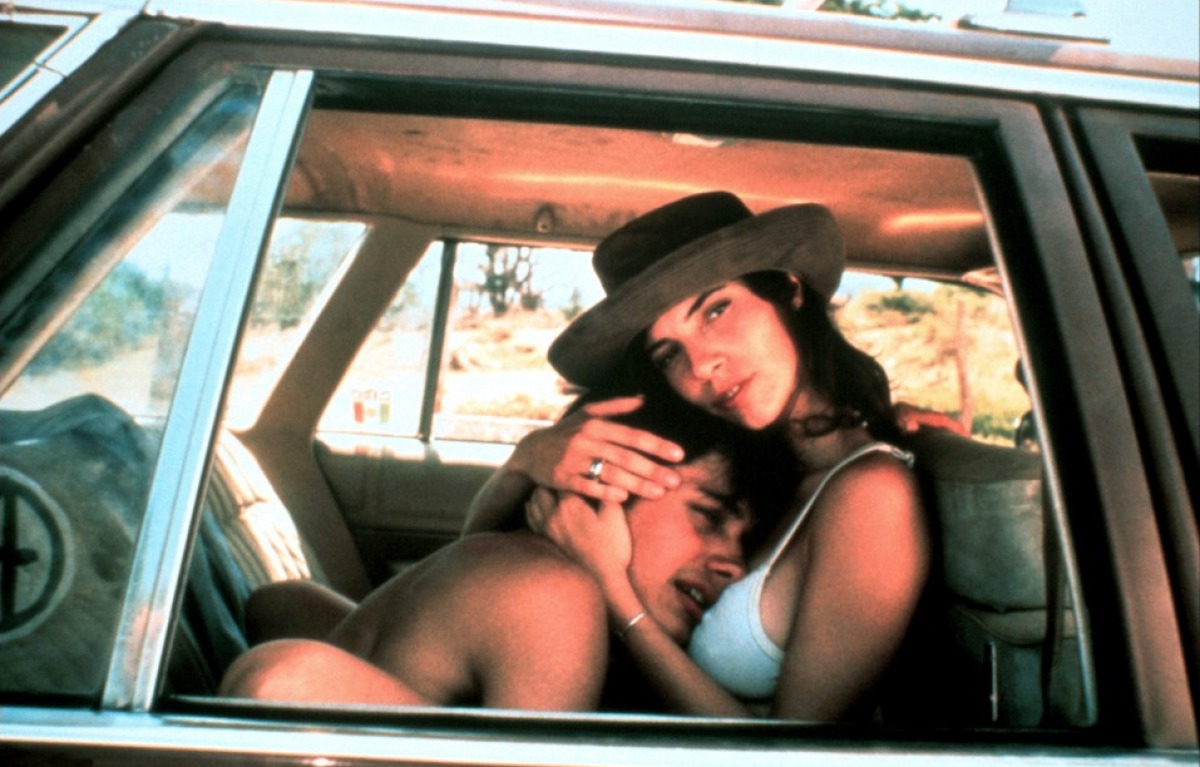
Pick of the week: “Y Tu Mama Tambien — This Mexican road movie from Alfonso Cuaron (who went on to make “Children of Men” and this year’s “Gravity”) launched the careers of Gael Garcia Bernal and Diego Luna. It’s a sexy, funny and unexpectedly poignant film about two horny young men on a road trip with a mysterious older woman. What they learn about Mexico — and themselves — on the trip is quietly unforgettable.

Drama of the week: “The Kid With a Bike” — The latest film from the Dardennes Brothers just wrecked me, as an 11-year-old boy largely abandoned by his father is taken in by a good-hearted hairdresser. Without sentimentality or melodrama, the film beautifully shows the effect of a quiet, sustained act of kindness on a troubled child.

Horror movie of the week: “Dead Snow” — Two words: Nazi zombies. On a ski trip to Norway, some teens run into the remnants of Hitler’s undead corps, with gory results. Not the greatest, but good if you’re looking for some late-night splatter. The film was directed by Tommy Wirkola, who went on to do that “Hansel & Gretel” movie.

Documentary of the week: “Brooklyn Castle” — This inspiring documentary in the tradition of “Spellbound” looks at an inner-city Brooklyn school that’s home to the best junior-high chess club in the country. In addition to dealing with triumphs and heartbreaks on the board, they have to deal with severe school budget cuts that might cripple their program.

Crazy movie of the week: “Antichrist — I panned Lars Von Trier’s out-there psychological horror movie when it played in theaters, but that doesn’t mean you shouldn’t try it. A psychiatrist takes his grieving wife into a cabin in the woods to work on her, with disastrous, bloody, and borderline ridiculous results.

“West of Memphis”: A strange kind of justice

westofmemphis

“West of Memphis” is now playing at Sundance Cinemas. R, 2:26, three stars out of four.

While watching “West of Memphis,” I kept thinking about another documentary about the criminal justice system I saw recently, one that probably won’t get as much attention as “Memphis” and its notorious case. “Gideon’s Army,” which played at the Wisconsin Film Festival last month and will be on HBO in July, looks at three overburdened public defenders in Southern courts. It depicted a criminal justice engine that was designed to elicit guilty pleas out of defendants, particularly poor defendants, whether they are actually guilty or not.

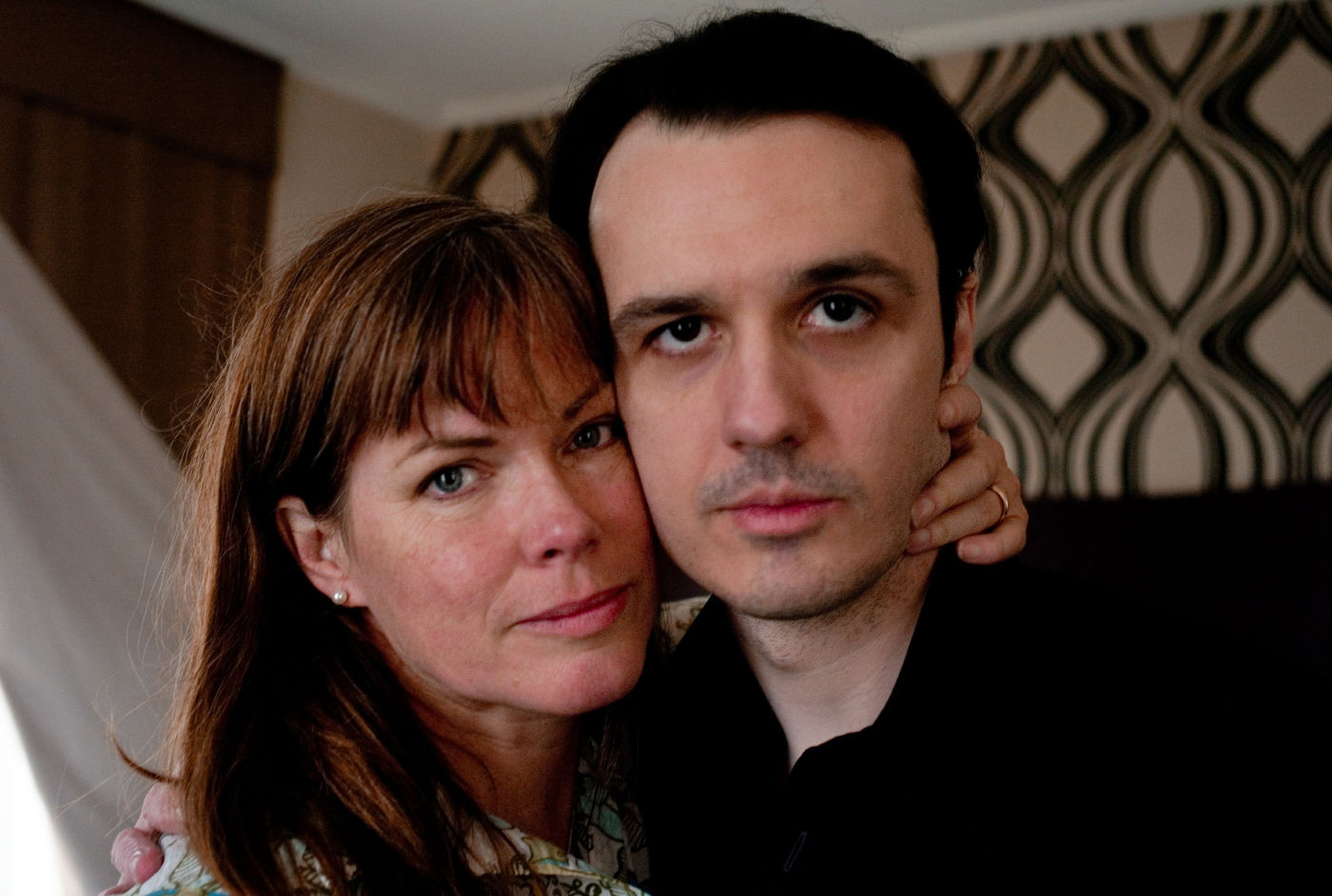
Because that’s pretty much how the historic “West Memphis 3” case ended, a shocking miscarriage of justice in Arkansas in which three teenagers were railroaded into being convicted of the murders of three 8-year-old boys in 1992. The case has now been the subject of four documentaries, and the teens (now in their late 30s, having spent 18 years in prison) had celebrities like Eddie Vedder, Natalie Maines and “Lord of the Rings” director Peter Jackson fighting on their behalf. But at heart, right to its troubling end, it’s another case where, instead of a prosecution having to prove a case, a defendant has to choose the lesser of two evils. “This happens all the time,” defendant Damien Echols says of the whole process, and he’s right.

The three “Paradise Lost” documentaries aired on HBO covered the twists and turns of the case as they happened, but now Amy Berg’s fascinating and maddening “West of Memphis” gets to look back on the entire arc of the case. Berg is no disinterested observer in the case (Echols serves as producer, as did Jackson, who bankrolled an investigation to clear the three defendants’ names). But largely, Berg lets the evidence tell the story, meticulously examining what might have happened on that night when three boys went missing, only to turn up dead in a river the next morning, bound and bludgeoned. (Berg includes some horrifying crime scene photos as she sifts through the evidence, so this film is not for the faint of heart.)

From the start, the investigation by local police reeked of incompetence; mistaking post-modem wounds by swamp turtles as some sort of ritual mutilation, the police jumped on the idea that this was some sort of Satanic murder, and focused on Nichols and the other two because of what they wore, what they listened to  and what they wrote in their notebooks. It’s shocking how seemingly important players in the case were simply never interviewed by police, so sure they were of their theory. But with some misleading “experts” and a jailhouse informant willing to testify on behalf of the state for a lesser sentence, convictions were secured.

But advocates continue to fight the case, and DNA evidence points squarely at the stepfather of one of the boys, who had a history of abuse. If this were a TV show, the real killer would confess in dramatic fashion. But this is real life, and he walks free. Instead, largely to save face after such an embarrassing miscarriage of justice, a complicated plea agreement is worked out that allows the three defendants to claim innocence while still entering a guilty plea.

Again, just get a guilty plea on the books. This happens all the time.

“The Great Gatsby”: It’s a shame about Jay

gatsby

“The Great Gatsby” opens Friday at Point, Eastgate, Star Cinema, Sundance and Cinema Cafe. PG-13, 2:28, two stars out of four.

“I like large parties,” Jordan Baker (Elizabeth Debicki) gushes in “The Great Gatsby.” “They’re so intimate.”

That seeming contradiction may be the closest thing Baz Luhrmann finds to a mission statement in F. Scott Fitzgerald’s prose for his adaptation of the quintessential Jazz Age novel. Luhrmann revels in throwing cinematic parties on the big screen, gaudy senses-pounding affairs that leave you little room to breathe. But he’s also genuinely sincere in wanting to get the intimate heart of the novel on screen, in Jay Gatsby’s doomed attempt to remake himself and preserve the past.

Luhrmann’s done it before — “Romeo + Juliet” was a feature-length music video that stayed surprisingly true to its source material, while “Moulin Rouge” amped up kitsch to operatic proportions. But he struggles honorably but mightily here to connect his film’s glitzy first half with its darker second half. I suspect there will be people who buy the Blu-ray, only to turn it off midway through every time, just as the last strand of confetti hits the floor.

Narrator Nick Carraway (Tobey Maguire) gets swept up the din of the Roaring ’20s — the “golden roar” of Wall Street money, the wild parties, the constant throb of hip-hop music. Wait, what? Yes, as most probably know, Luhrmann and executive producer Jay-Z have fused period music to hip-hop, dubstep and pop on the soundtrack, to best translate the orgiastic glee of the era to modern audiences, and to best sell that soundtrack. After “Moulin Rouge” and “Marie Antoinette,” it feels a little old hat, really, and one can’t help but how a film with its tone rooted in African-American culture keeps its black characters in the margins, brief flashes of musicians and dancers and servants who exist only to entertain the rich white characters. That’s true of the lily-white book and the segregated times, of course, but still, there’s something deeply distasteful about watching all the black people in the film grin and grind and cheerfully let their culture be appropriated by the swells.

Luhrmann shoots in 3D, and his camera is restless and relentless, zipping back and forth across the bay between the old-money types of East Egg and the new strivers of West Egg, then through the sooty wasteland to New York City and back again. Tom (Joel Edgerton) and Daisy (Carey Mulligan) are East Eggers, born so rich they never hard to worry about developing character. Over on the West Egg, Gatsby (Leonardo DiCaprio) throws outrageous parties but is rarely seen. (His appearance a half-hour into the film, his confident grin lit by fireworks and Gershwin, is a doozy.)

Gatsby befriends his befuddled neighbor Nick, but there’s an agenda at work; he loved Daisy in a previous life, and hopes to not just win her back, but erase the five years they spent apart. Di Caprio is not just good in “The Great Gatsby,” he’s necessary; once he finally appears, his charismatic presence finally holds Luhrmann’s manic camera still. It’s funny that Fitzgerald included Nick as the surrogate for the reader, because in this version it’s really Gatsby we understand and empathize with, his hopeful illusions leading him to his downfall, his cool facade slipping away to reveal the desperate, uncomprehending man-boy underneath.

But in transforming from bacchanalia to costume drama, Luhrmann gets tripped up, losing the head of steam he’s built up along the way. He can’t think of anything to do with Jay and Daisy and Nick and Tom other than to have them in rooms talking to each other, and the shift in tone is deathly. Which is not to say individual scenes don’t work; the final hotel room confrontation, with Tom and Gatsby parrying over drinks while Daisy vacillates, is a masterful piece of acting and staging all around. But it comes from another, more conventional literary adaptation, and for better or for worse, Luhrmann has already bet his chips on not making that adaptation.

What’s playing in Madison movie theaters, May 10-16, 2013

howls

So we beat on, boats against the current, borne back ceaselessly into the past — in 3D!

The big release this weekend is Baz Luhrmann’s glitzy 3D version of “The Great Gatsby,” which came pre-trashed for a lot of critics. It’s also the last weekend for a lot of film series on campus, so there are options in case you don’t want to see Daisy Buchanan coming right at you!

All week

The Great Gatsby” (Point, Eastgate, Star Cinema, Sundance, Cinema Cafe) — It’s hard to think of a more unlikely summer movie than this all-star adaptation. I highly enjoyed both Luhrmann’s “Romeo and Juliet” and “Moulin Rouge,” but is he chasing the glamour of “The Jazz Age” at the expense of the tragedy?

Peeples” (Point, Eastgate, Star Cinema) — Tyler Perry put his stamp on this domestic dramedy, although he isn’t more than a producer for this film about a suitor (Keith Robinson) stuck with his uptight future in-laws on vacation. But it’s getting a little better reception from critics than Perry’s usual fare.

Koch” (Sundance) — My full review is here. Not the Wisconsin Film Festival hit “Citizen Koch,” this documentary is about Ed Koch, the combative former New York mayor who embodied both the strengths and the flaws of his city.

West of Memphis” (Sundance) — The latest and most extensive documentary to look into the case of the West Memphis 3, three Arkansas teenagers railroaded into a conviction for a supposedly “Satanic” murder. This installment focuses on DNA evidence that strongly pointed to another suspect.

Friday

Gimme Shelter” (6:30 p.m.,  Union South) — The death of the ’60s can be charted in this gritty tour documentary, which follows the Rolling Stones to their disastrous Altamont show. Free!

Max Et Al Ferrailleurs” (7 p.m., UW Cinematheque) — In Claude Sautet’s largely neglected 1971 crime masterpiece, a bored detective lures a gang into committing a big bank robbery. Free!

Trainspotting” (8:30 p.m., Union South) — Danny Boyle’s exuberant and raw 1996 film about a bunch of cheery lowlifes in Edinburgh. Free!

Django Unchained” (11 p.m., Union South) — Tarantino’s best since “Jackie Brown,” this intense and funny mash-up of spaghetti Western and blaxploitation uses its genre influences to make a surprisingly direct and powerful indictment of the legacy of racism in America. Free!

Saturday

Django Unchained” (5 p.m. and 8:30 p.m., Union South) — See Friday listing

Communication Arts Showcase (7 p.m., UW Cinematheque) — A showcase of the work done by this semester’s Comm Arts students. Free!

Monty Python and the Holy Grail” (midnight, Union South)  — The eminently quotable 1974 riff on the Arthurian legend, with killer rabbits, horny nuns, and rude Frenchmen is a comedy classic. Free!

Sunday

Howl’s Moving Castle” (2 p.m., Chazen Museum of Art) — Cinematheque at the Chazen’s immensely popular series on Studio Ghibli concludes with Hayao Miyazaki’s wonderful animated film, in which a teenager is trapped in a magician’s walking castle and must find the spell to set her free. Free (the movie, that is), but these have almost all sold out, so get there early.

Billy Elliot” (3 p.m., Union South) — You’ve seen the musical at Overture Hall, now enjoy the original movie, with Jamie Bell as a Welsh boy who yearns to put down the boxing gloves and pick up the unitard and join the ballet. Free!

Wednesday

Free the Mind” (all day, Sundance) — In honor of the Dalai Lama’s visit to Madison, Sundance is screening this documentary about Dr. Richard J. Davidson of the UW, and his research into the power of meditation. The film also plays all day Thursday.

Blazing Saddles” – (1:40 and 7 p.m., Sundance) — The Sundance Classics series features Mel Brooks’ zany Western classic, with Cleavon Little and Gene Wilder.

Thursday

Star Trek Into Darkness”  (Point, Eastgate, Star Cinema, Sundance, Cinema Cafe) — J.J. Abrams’ second film in the rebooted franchise gets an early jump on the weekend, with Benedict Cumberbatch reportedly Khan-level good as the bad guy.