Wisconsin Film Festival review: “The Final Member”

The_Final_Member_2

“The Final Member” screens at 10 p.m. Saturday at the Union South Marquee.

Everybody needs a hobby. For Siggi Hjartarson, it was collecting penises.

It started with a dried bull penis, and then grew to a private collection, and then finally a museum in Iceland devoted to displaying the equipment of every species of animal on Earth. (It’s like Noah’s Ark, although Siggi only lets in one of each.) Except one.

Man.

The hilariously straight-faced documentary “The Final Member” chronicles Siggi’s quest to find that lucky donor. Like any good Christopher Guest mockumentary, it’s full of oddball characters who take something way more seriously than they should, and it pulls up just shy of openly making fun of them.

Siggi, in particular, cuts a rather sympathetic figure, an old man who tends to his cows, loves his family, and is a scholar on the side who translates centuries-old books. He just wants a legacy to live on after he goes, and a museum full of penises dunked in formaldehyde has somehow become that legacy.

At first, Siggi has a donor — 93-year-old “adventurer” Pall Arason, who claims to have slept with hundreds of women, which makes you wonder when he made time for “adventuring.” But Pall is getting up there, and Siggi worries that certain aging processes (in the words of George Costanza, “shrinkage”) will mean the specimen isn’t big enough for his museum.

Enter an American, Tom Mitchell, and “Elmo.”

Elmo is certainly big enough to make it into the museum, but Tom is one seriously weird dude. He’s obsessed with his little sidekick (frontkick?), dressing him up in little costumes, getting him a stars-and-stripes tattoo, even commissioning a comic book starring Elmo. Tom is so thrilled at the idea of Elmo becoming famous that he’s even considering donating Elmo to the museum WHILE HE IS STILL ALIVE to head Pall off at the pass. If Tom wasn’t a real person, Will Ferrell would have had to invent him.

Much hilarity ensues, including a riotous sequence in which Pall tries to get a plaster-of-Paris cast of his equipment made, with disastrous results. Ouch. In the end, Siggi gets his museum acquisition, and the rest of us have watched a very strange and funny film. (By the way, one of the editors of the film is a UW grad, whose name is . . . and I’m not kidding . . . Andrew Dickler.)

Wisconsin Film Festival review: “Blancanieves”

blancanieves_pabloberger-2

“Silent film” may be an inapt description for Pablo Berger’s “Blancanieves.” Yes, the film is a beautiful homage to the silent films of the 1920s — shot in black and white in full-frame, with no spoken dialogue and only one sound effect, that of fireworks exploding in the sky.

But this film, which played Thursday on Day 1 of the Wisconsin Film Festival, is anything but quiet. It has an absolutely gorgeous score by Alfonso de Villalonga that is in many ways an equal partner to the images, highlighting and evoking the emotions of a scene or the motivations of a character. Like “The Artist,” this was an unusual but rewarding experience to see on the big screen.

“Blancanieves” literally translates into “Snow White,” and the film is a retelling of the classic fairytale, transported to 1920s Seville and the world of bullfighting. When the great matador Antonio Villarta is gored by a bull, and his pregnant wife dies during childbirth, Villarta falls into the clutches of scheming nurse Encarna (Maribel Verdu, who looks a lot like “Artist”‘s Berenice Bejo).

Encarna gets the ailing, wheelchair-bound Villarta to marry her, and he and his young daughter Carmen come to live with her. Encarna, it won’t surprise you, is a wicked stepmother, tormenting both and having designs to kill them both. Carmen escapes her clutches, but loses her memory and wanders into the path of a troupe of bullfighting dwarfs (six of them, but who’s counting?) Carmen, who the dwarves name Blancanieves “like the girl in the tale,” joins up with the dwarves, and soon discovers she has bullfighting talents of her own.

The images are sumptuous, from expressive close-ups of the main characters to frenetic quick cuts during action scenes, such as the bullfighting, which is truly scary at times. Berger plays with the “Snow White” tropes — there’s a poison apple, but Prince Charming isn’t who you might expect — and opts for less of a happy ending than we might expect.

And that score! Stirring orchestral movements during the most dramatic scenes, with flamenco guitar and handclaps to illustrate the energy and goodness of Blancanieves, while horror-movie theremin is employed for the villainous Encarna. No, “Blancanieves” isn’t subtle, but it’s an unforgettable time at the movies.

“Blancanieves” plays again at 7:45 p.m. Friday at Sundance, and a few rush tickets should be available at the door.

Wisconsin Film Festival preview: “This is Martin Bonner”

this-is-martin-bonner-paul-eenhoorn

“This is Martin Bonner” screens at 6:30 p.m. Saturday at Sundance and 2 p.m. Sunday at the UW Elvehjem. Writer-director Chad Hartigan will talk at both screenings.

The 15th annual Wisconsin Film Festival starts today! And while I’ll be shifting from “preview” mode to “review” mode in just a few hours, I couldn’t let one lovely little gem of a film slip by unmentioned.

In most movies, Martin Bonner would be a memorable minor character, the sort where you’d idly wonder “What’s that guy’s story?” Chad Hartigan’s second feature gives Martin that movie, and the results are quietly astonishing.

Martin (Paul Eenhoorn) is a man in his 50s who lives in Reno, Nevada and works as a counselor for inmates at the local correctional facility. Eenhoorn, a fine Australian character actor, plays Martin as a good man, but one who keeps the world somewhat at a distance. As the film unfolds, quiet conversation by quiet conversation, we learn that Martin self-detonated his old life in Maryland — getting divorced, getting fired from his job, losing his faith — and has come across the country to — start again? Or simply to spend the rest of his days alone, away from the prying eyes of everyone who knows him? Hartigan, and Eenhoorn’s warm performance, keep us guessing.

Martin meets Travis Holloway (Richmond Arquette), a recently paroled inmate in his program. Travis is also trying to restart his life, starts attending church, tries to reconnect with his grown daughter. Even though Travis is perhaps a decade or so younger than Martin, he seems older, wearier. The two men are facing the world alone, the sum of the bad choices they’ve made etched in their faces. Slowly, they become friends, but the wary sort of friends that middle-aged men make, when they’re not sure if they have the room in their lives for another connection.

“This is Martin Bonner” tells its story at its own pace, which might seem frustratingly slow to some, but felt just right to me, riding the real cadences of everyday life. Both men spend a lot of time alone, with their thoughts, and the film reflects that almost monastic existence in its tone. But then, all of a sudden, Hartigan includes a scene that’s so stunningly lyrical as to take your breath away, such as Martin refereeing a girls’ soccer game, the field nestled right up against the looming mountains, or an incredible 360-degree pan of a bleak highway scene, all motels and storage tanks, the future that Travis sees for himself.

Both Eenhoorn and Arquette give layered, honest performances, not straining against expectations so much as just allowing Martin and Travis to be authentic human beings. The film pulls you into their lives, and when the time came for the screen to finally fade to black, I was so invested in their story that it was kind of a shock to see it end.

Wisconsin Film Festival preview: “Nameless Gangster: Rules of the Time”

nameless_gangster_press

“Nameless Gangster” plays at 6:45 p.m. Friday and 2 p.m. Monday at Sundance Cinemas, and advance tickets are still available for both shows.

If you get squeamish at the sight of somebody getting a good beatdown in a film, steer clear of “Nameless Gangster: Rules of the Time.”

Guns barely appear in the film, but it seems everybody is carrying a big stick in this South Korean gangster epic, and not afraid to use it to punish their enemies. Even the prosecutor, a so-called “good guy,” delivers a thrashing to an unarmed prisoner cowering in his cell.

That’s part and parcel of this cynical but engrossing film, where might makes right, everyone is on the take somehow and the idea of a criminal “code” is laughable. Yoon Jong-bin’s film has the epic sweep and detail of a gangster movie like “Scarface,” but none of the mythologizing.

For example, the hero isn’t a young up-and-comer like Henry Hill in “Goodfellas,” but a sad-sack, deeply corrupt customs official named Choi (Choi Min-Sik). His crew routinely skims their own percentage off the illegal goods coming into Seoul, but he’s about to be made the fall guy when their corrupt schemes can’t go ignored any more.

Then he discovers a shipping container full of drugs, meant to be sold in Japan, and sees his play. He seizes the drugs and plans to sell them himself, rationalizing in a hilarious monologue that it’s payback for Japan’s occupation of Korea. (“It’s called patriotism!” he insists to his partner.)

The sale puts him in the orbit of South Korea’s real criminal underworld, especially the smooth and lethal Hyung-bae (Ha Yung-woo). Choi is desperate to survive in a world he clearly isn’t cut out for, and Choi’s performance as an ordinary middle-management sort of guy way in over his head is a revelation, as he goes from false bravado to fawning obsequience, changing alliances recklessly, anything to keep him alive. It’s not a likable performance, but it is a memorable one.

The film has none of the stylish action one might expect from an Asian gangster movie; the cruel violence is shot plainly and unsparingly, underscoring just how dangerous this world is and how ill-prepared Choi is to survive in it. “Nameless Gangster” is a different kind of mob movie, but one that gangster movie fans should definitely seek out.


“Upstream Color” will lead off next round of Sundance Screening Room titles

UpstreamColor_still1_AmySeimetz_ShaneCarruth

It may be hard for a movie fan in Madison to think past the Wisconsin Film Festival, which kicks off Thursday and brings over 150 movies to town. But the festival will end eventually, and the trick is to keep your hunger for offbeat and interesting films going after it does.

Luckily, there will be plenty of chances to do so — the Union South Marquee Theater will jump into its Mini Indie Film Festival in late April. And Sundance Cinemas will kick off its next Screening Room calendar on Friday, April 19, the day after the Wisconsin Film Festival ends.

I’m especially excited about the new Screening Room schedule, as I’ll be doing a pair of post-show chats about a couple of the films in Sundance’s new Overflow Bar, located on the first floor where the gift shop used to be. And the first one should be a doozy. Visit sundancecinemas.com for more information.

Upstream Color” (opens April 19) — Nine years ago, writer-director-star Shane Carruth made one of the best time-travel movies ever, “Primer,” on a budget of just $7,000. Now he returns with a beautiful and just as confounding sci-fi tale involving true love, an ageless organism, and pigs. I’m doing a post-show chat after the Monday, April 22 early evening show — I’ll post more details closer to the event.

Room 237” (April 26) — If you miss Rodney Ascher’s engrossing documentary about the various arcane film theories surrounding Stanley Kubrick’s “The Shining,” it’s coming back.

The Angel’s Share” (May 3) — Acclaimed director Ken Loach returns with another tale of working-class life in the United Kingdom, in this case a comedy about four young Scotsmen and a cask of rare whisky.

Koch” and “West of Memphis” (May 10) — A double dose of documentaries. “Koch” has nothing to do with the notorious Koch brothers, but instead follows the career of former New York Mayor Ed Koch. “West of Memphis” is a follow-up look at the lives of the West Memphis 3, three teenagers wrongfully convicted of murder, and the case that remains unsolved.

Lore” (May 17) — Another film festival sellout, this drama follows a group of children, left alone after their SS parents are arrested after World War II, who must traverse Germany, and see the results of their parents’ legacy along the way. I’ll be doing a post-show cat after the early evening show on Monday, May 20.

The Reluctant Fundamentalist” (May 24) — A Pakistani immigrant working on Wall Street has his allegiances tested after 9/11 in this film from director Mira Nair.

UPDATED: 58 Wisconsin Film Festival sellouts; festival starts Thursday

phaseiv

Obviously it would have been better for headline purposes if only 56 films had sold out, so I could have made a play on “56 Up” somehow. But you just weren’t satisfied, were you Wisconsin Film Festival fans?

As of Sunday night, 58 films at the festival had all or some screenings sold out in advance. Which still leaves a lot of films with advance tickets still up for sale (if you can see a movie on a weekday afternoon, you’re in the catbird’s seat). And every screening will have a limited number of rush tickets released at the door — get to the theater at minimum an hour early, bring something good to read while you wait in line, and you’ve got a pretty good shot.

Advance tickets will be on sale through Wednesday at wifilmfest.org and the festival box office on the first floor of Union South. After that — well, the festival starts Thursday, so they wouldn’t be advance tickets any more, would they? — you can buy them on the day of the show at the venue. Follow me at @r0bt77 — I’ll be live-tweeting the festival and linking to reviews I’ll be writing for both this blog and 77 Square.

Oh, and get some extra sleep between now and Thursday if you can.

56 Up” — all three original screenings are sold out, but a fourth screening has been added at 9:15 a.m. Saturday at Union South, and advance tickets remain for that. One of the subjects of the doc, Nick Hitchon, will be speaking at the 6 p.m. Saturday screening only. (Note: the original version of this post said the fourth screening was at Sundance. That has been corrected.)

7 Boxes” — The 5:15 p.m. Friday show and 9 p.m. Tuesday shows are both sold out.

All the Light in the Sky” — 4:45 p.m. Sunday sold out.

Augustine” — 7 p.m. Thursday (April 18) sold out, tickets remain for 9:15 p.m. Tuesday.

Beyond the Hills” — 5:45 p.m. Sunday sold out.

Blancanieves” — both shows sold out.

“Breakfast with Curtis” — 11:30 a.m. Saturday is sold out, but tickets remain the 12:15 p.m. Friday show.

The Bronte Sisters” — 1 p.m. Wednesday is sold out, but tickets remain for 9:15 p.m. Monday.

Citizen Koch” — 11 a.m. Sunday is sold out, but tickets remain for 7:15 p.m. Saturday.

“Coming of Age” — 7 p.m. Sunday is sold out, but tickets remain for 2 p.m. Tuesday.

Computer Chess” — 6:15 p.m. Tuesday sold out, but tickets remain for 11:15 a.m. Sunday.

Consuming Spirits” — 2:15 p.m. Saturday sold out.

“Dear Mr. Watterson” — Both screenings are sold out.

Dragon Inn” — 11:45 a.m. Saturday sold out.

Either Way” — both screenings sold out.

The End of Time” — both screenings sold out.

Father’s Birth” — both screenings sold out.

The Final Member” — 9:15 p.m. Friday is sold out, but tickets remain for 10 p.m. Saturday.

Flicker” — All three screenings are sold out.

The Good, the Bad and the Ugly” — 2:30 p.m. Sunday is sold out, but tickets remain for 1 p.m. Monday

Grave of the Fireflies” — 2:30 p.m. Sunday is sold out, but tickets remain for 4:45 p.m. Thursday, April 18.

A Hijacking” — 9:30 p.m. Saturday is sold out, but tickets remain for 3 p.m. Friday.

I Am Divine” — Both screenings are sold out.

In the Fog” — 4:30 p.m. Sunday is sold out, but tickets remain for 2:30 p.m. Friday.

The Institute” — 6:45 p.m. Thursday (April 11) is sold out, but tickets remain for 6:45 p.n, Tuesday.

The Jeffrey Dahmer Files” — 8:30 p.m. Sunday is sold out, but tickets remain for 9:15 p.m. Saturday.

Kauwboy” — 2:15 p.m. Saturday is sold out, but tickets remain for 4:15 p.m. Wednesday.

“Key of Life” –  both screenings sold out.

Kon-Tiki” — 6:30 p.m. Sunday sold out

Leviathan” — 6:30 p.m. Thursday, April 18 sold out, but tickets remain for 4:45 p.m. Friday.

The Librarian and the Banjo” — 4:30 p.m. Sunday sold out

Lore” — both screenings sold out

Low & Clear” — 2:45 p.m. Sunday is sold out, but tickets remain for 4:45 p.m. Friday.

M” — 7:30 p.m. Saturday sold out

The Moo Man” — 1:45 p.m. Saturday is sold out, but tickets remain for 4:45 p.m. Monday.

Much Ado About Nothing” — 9 p.m. Thursday sold out

Mussels in Love” — 7:30 p.m. Friday sold out, but tickets remain for 7 p.m. Monday.

Only the Young” — 7:45 p.m. Friday sold out, but tickets remain for 4 p.m. Sunday

Ornette: Made in America” — 7:15 p.m. Thursday sold out, but tickets remain for 9:30 p.m. Sunday.

The Painting” — both screenings sold out

Phase IV” — 11:30 a.m. Saturday sold out

Piazza Fontana: The Italian Conspiracy — 8:45 p.m. Monday is sold out, but tickets remain for 8:45 p.m. Sunday.

Present Tense” — Both screenings sold out.

Pretty Funny Stories” — 5 p.m. Saturday sold out

Radio Unnameable” — Both screenings sold out.

Renoir” — Both screenings sold out.

Room 237” — 6:30 p.m. Wednesday sold out

Shepard and Dark” — 6:30 p.m. Monday sold out, but tickets remain for 1:15 p.m. Tuesday

Short Films From Wisconsin’s Own” — 2 p.m. Sunday sold out

“Source Tags and Codes” — 9:15 p.m. Thursday sold out

Stories We Tell” — 6:45 p.m. Thursday sold out

Street Pulse” — 4 p.m. Saturday screening sold out

This is Martin Bonner” — 6:30 p.m. Saturday sold out, but tickets remain for 2 p.m. Sunday.

Tiger Tail in Blue” — 7:15 p.m. Sunday sold out.

A Touch of Zen” — 11 a.m. Sunday sold out.

Unfinished Song” — 5 p.m. Saturday sold out.

Winter Nomads” — 4:30 p.m. Thursday sold out, but tickets remain for 12:30 p.m. Friday

The World Before Her” — 7:30 p.m. Friday and 11 a.m. Saturday both sold out

“On the Road”: Hey Jack Kerouac, now for the tricky part

on-the-road-stewert

“On the Road” is now playing at Sundance Cinemas: R, 2:05, three stars out of four.

Who would dare try to make a movie out of “On the Road”? How could you not, in the eyes of the many faithful followers of Jack Kerouac’s counterculture epic, not screw it up? This is an autobiographical book about which not only the events it’s based on have been mythologized, but the writing of the book itself is the stuff of legend. Kerouac famously blurted out “On the Road” in a three-week literary bender, taping the pages into one long scroll so he could write in one uninterrupted explosion.

Yet if anybody dare attempt it, it would be director Walter Salles and screenwriter Jose Rivera, whose 2004 film “The Motorcycle Diaries,” featuring a young Che Guevara, traveled the same highways as Kerouac’s mix of free-wheeling travelogue and consciousness awakening. They haven’t made a film version of “On the Road,” because that would be impossible, but they’ve made a film for “On the Road” fans.

British actor Sam Riley plays Kerouac’s fictional avatar, Sal Paradise, who in the free-wheeling haze of post-war America drifts into the orbit of Dean Moriarty (Garrett Hedlund), who, in Kerouac’s memorable phrase, spend “a third of his life in the pool hall, a third of his life in jail, and a third of his life in the public library.” A two-fisted philosopher-drunk, Dean drapes an arm around Sal and takes him on a nonstop adventure — jazz clubs, poppers, wild parties and above all else, the open road. With Dean’s child bride Marylou (Kristen Stewart) in tow, the film cruises back and forth across the country, its essential fuel Kerouac’s words, delivered by Riley in a convincing imitation. It’s all episodic, with characters drifting in and out of the film without explanation, including Tom Sturridge in what looks like a Ginsberg knockoff, and Viggo Mortensen as a stone-cold William S. Burroughs imitation.

Hedlund is good as Dean, although I think the part works better if you think of him as Kerouac’s reminiscence of Dean (or Neal Cassady, actually) rather than a fully-dimensional person. Dean in the archetype Sam aspires to be, living fully in the moment. But that comes at a cost to everyone around him, including the women — Marylou, Camille (Kirsten Dunst), the mother of his child, and assorted women along the way. The film doesn’t judge, which I think I mistook for acquiescence until “On the Road” kept going, and Dean gradually, and finally, finds himself isolated from the world. The last meeting between Dean and Sal, now married and prosperous, is a heartbreaker. Dean got what he wanted from Sal, Sal got what he wanted from Dean, and the two men go on their way.

Surprisingly, but perhaps wisely, Salles doesn’t try to recreate the heady stream-of-conscious rush of reading “On the Road.” Instead, it’s staged as a rather traditional road picture, with title cards telling us what state we’re driving through, or what the month and year are. Which seems a little odd for a book that was originally written not only without chapter headings, but without even paragraph indentations. There’s something just a little too tidy about it (even the film’s fever dream, brought on by Sam’s bout with dysentery, is an awfully tidy fever dream), especially because there’s no real story to follow here, only encounters and images. But it gives the viewer time and space to really savor those moments, brought to life with Eric Gautier’s gorgeous camerawork, taking us out in the middle of the desert or deep inside the tangled bodies of a Manhattan house party.

The beauty of the images gives “On the Road” a touch of nostalgia, for a long-lost Beat Generation that felt it could change the world, or at least abstain from it. The movie version of “On the Road” won’t have the impact on a person that the book ever did. But it does go some way to explaining why the book did.

“Ginger & Rosa”: A special friendship goes nuclear

ginger-and-rosa_01

Ginger & Rosa” opens Friday at Sundance Cinemas. PG-13, 1:29, three stars out of four.

Elle Fanning has one of those faces you can’t help but watch. Her expression can become opaque and thoughtful, and then suddenly blossom into a smile that seems so unforced and unexpected that it seems to surprise even her.  She was good in “Somewhere” and even “We Bought A Zoo,” but you almost can’t wait for her to grow up to see what kind of actress she’ll be when she gets older, more complex parts.

She gets her most fully realized role to date in “Ginger & Rosa,” a delicate coming-of-age drama from writer-director Sally Potter. Potter is known for making more experimental and daring films like “Yes”: “Ginger & Rosa” is much more conventional, a finely-observed tale of friendship tested and outgrown.

Ginger (Fanning) and Rosa (Alice Englert) were fated to be friends from the day they were born, when their mothers met in a maternity ward in London in 1945. Both mothers knew their share of disappointment; Rosa’s mother (Jodhi May) raised her children on her own, while Ginger’s mother (Christina Hendricks of “Mad Men”) may as well have; her philosopher husband Roland (Alessandro Nivola), a pacifist and writer, was often too busy chasing after a cause (or a girl he met through the cause) to be a father. He doesn’t even like Ginger calling him “Dad.”

Now it’s 1962, and the girls are inseparable. Potter opens the film with gorgeous images of friendship — perhaps made all the more beautiful because they’re set against the ruins of post-Blitz London. The girls, now teenagers, sneak cigarettes together, shrink their jeans in the tub, hang out with Mod boys in fast cars. At first it seems like Potter is going to make “Ginger & Rosa” a nostalgia trip to adolescence and an England long gone.

But the bond between Ginger and Rosa starts to crack a little. The Cuban Missile Crisis looms, and Ginger starts to become more worried about the threat of nuclear war. That unforced smile vanishes, and she goes to anti-nuke rallies and meetings. Rosa, meanwhile, is sexually maturing much faster than the more tentative Ginger, and begins flirting with the dashing Roland. To everyone’s surprise (including the audience), he reciprocates, and Ginger is forced to accept this development with an air of false sophistication, as if it was natural for her best friend and her father to become romantically involved.

The title of the movie is misleading, because this is really Ginger’s story, and Fanning’s show. She manages the British accent convincingly (her bright orange dye job slightly less so), but is even better at showing the contradictions and complexities of adolescence, careering from confusion to anger, trying to play the part of a world-weary adult while still a trusting child at heart. She has some especially lovely scenes with Oliver Platt and Timothy Spall, who play a gay couple she befriends, and some raw emotional scenes with Hendricks as her mother.

“Ginger & Rosa” flirts with melodrama, especially as the Roland-Rosa relationship plays itself out. But Fanning brings such a groundedness and authenticity to the film’s central role that you stick with her every step of the way.

What’s playing in Madison theaters: April 5 to 11, 2013

jurassic-park-large-picture

It’s a sad week for movie lovers with the passing of Roger Ebert. Over at the Capital Times, I reposted a 2003 interview I did with Ebert along with a few thoughts about his generosity and his passing. For some, going to see a movie might feel a little strange, especially without a review from Ebert to guide them. For others, what better way to say goodbye; after all, his last written words for us were “I’ll see you at the movies.”

All week

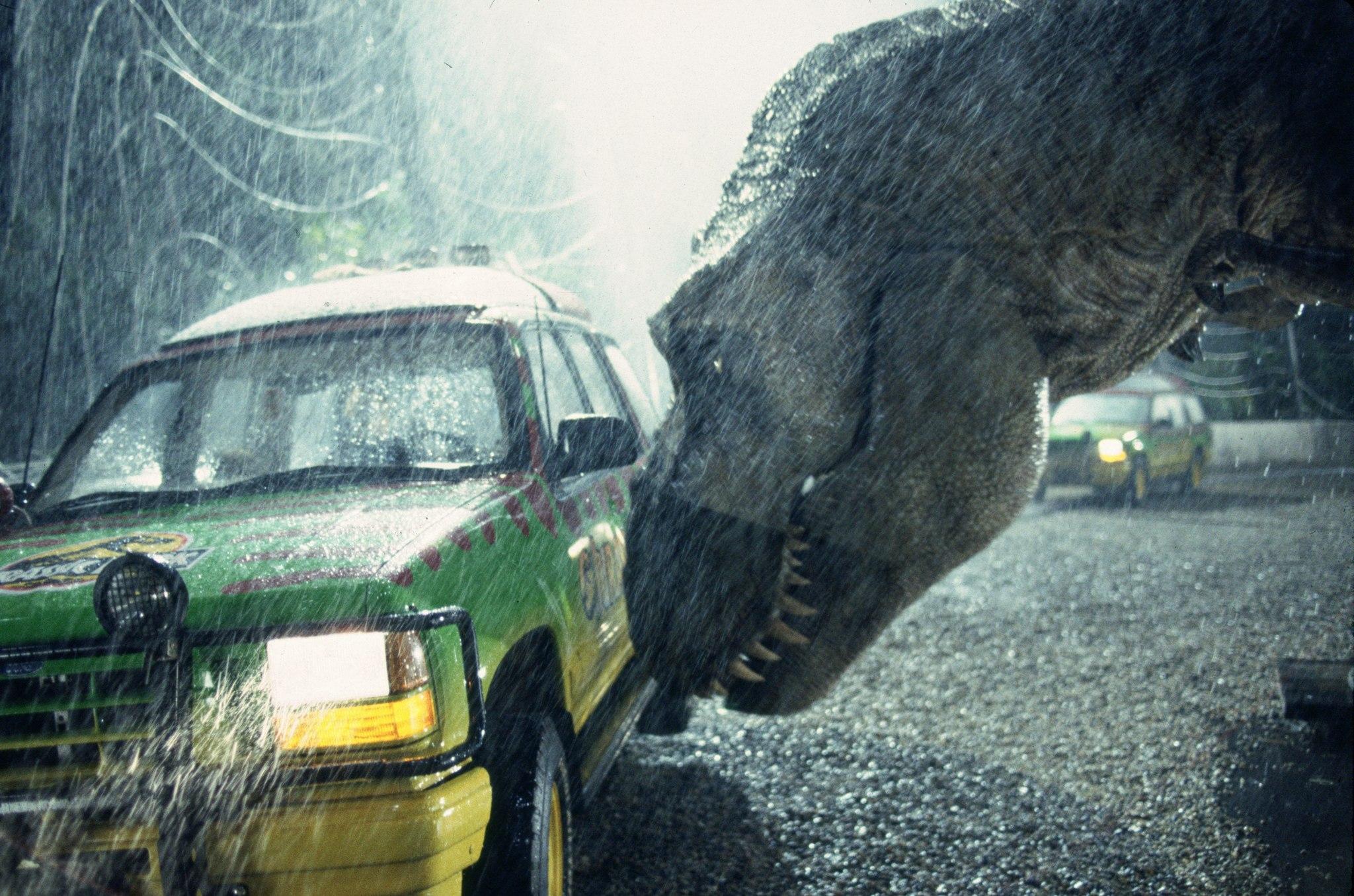
Jurassic Park 3D” (Point, Eastgate, Star Cinema) — Steven Spielberg’s dinosaur thriller gets a 3D upgrade for its 20th anniversary, but for me, what I still remember about that film was the sound, the roar of the T. rex or the sound of his footsteps growing closer. Definitely one to catch in the theater again.

Evil Dead” (Point, Eastgate, Star Cinema) — Or “Cabin in the Woods” without the jokes. Folks who only know the “Evil Dead” movies from the jokey last two would be surprised to learn how unfunny and nasty Sam Raimi’s no-budget original was, and this remake seems to follow in those footsteps.

No” (Sundance) — The best movie out this week is Pablo Larrain’s highly entertaining film about an advertising executive (Gael Garcia Bernal) who devises a campaign to oust Chilean dictator Augusto Pinochet. Inspiring, but wise about the power of television to sway public opinion. Read my full review here.

Ginger & Rosa” (Sundance) — Elle Fanning convincingly adopts a British accent for this tale of two teens in 1962 London whose friendship is tested both by maturity, and by the threat of nuclear war.

On the Road” (Sundance) — Walter Salles (“The Motorcycle Diaries”) was perhaps the logical choice to try and adapt Jack Kerouac’s stubbornly unfilmable novel for the big screen. Sam Riley and Garrett Hedlund play his counterculture road-tripping heroes.

Friday

Lincoln” (6 p.m., Union South Marquee Theatre) — I expected another “War Horse” from Steven Spielberg, a gauzy paean that was as much a monument as a movie. Instead, I found “Lincoln” to be incredibly engrossing and even suspenseful, about a man living at the intersection of myth and mortal, idealism and pragmatism, and trying to pull off an audacious political masterstroke. Free!

Mini Film Festival (6 p.m., Madison Public Library Pinney Branch) — Get your cinematic appetite whetted for next week’s Wisconsin Film Festival with some local films and filmmakers. Ben Reiser will present his feature “The Grapes of Madison,” and Marc Kornblatt will present a pair of his short films. Film festival managing director Christina Martin-Wright will also talk about the films and the upcoming festival. Free!

“Tchoupitoulas” (7 p.m., UW Cinematheque) — Fittingly following on the heels of two films by documentary filmmaker Shirley Clarke, this film blurs the line between narrative and documentary, following three young brothers who spend the night soaking up the sounds and sights of New Orleans after they miss the last ferry home to Mississippi. Free!

Footnote” (9:30 p.m., Union South) — The Coen Brothers must be kicking themselves for having not made this wry Israeli comedy, about rival Talmudic scholars who also happen to be father and son. When one gets an award meant for the other, chaos ensues. My full review is here. Free!

Pulp Fiction” (midnight, Union South) — Come on, it’s a midnight screening of “Pulp Fiction.” What else need be said? I will say that there are a few moviegoing experiences I remember vividly as experiences, and one of them was being packed into a sold-out theater on opening night for “Pulp Fiction” (I even remember where I was sitting — front row, left side) and coming out of that theater feeling like I had been pleasantly electrocuted. (“Django” gave me a similar rush.) Free!

Saturday

Lincoln” (6 and 9:15 p.m., Union South) — See Friday listing

Navajo Joe” (7 p.m., UW Cinematheque) — Burt Reynolds (yes, Burt Reynolds) plays a Native American on a mission of vengeance in his only spaghetti Western, directed by the great Sergio Corbucci. Free!

Donnie Darko” (midnight, Union South) — Another quintessential midnight movie, Richard Kelly’s mindbending debut mixes time travel and ’80s angst for a strange and haunting sci-fi tale of fate and consequences. Free!

Sunday

Ocean Waves” (2 p.m., UW Chazen) — I’m guessing the nicer weather won’t slow the crowds for the wildly popular Studio Ghibli series at Cinematheque at the Chazen. This weekend, it’s a tender coming-of-age story never seen on home video in America, about two school friends who find their bond tested by the arrival of a new transfer student. Free!

Lincoln” (3 p.m., Union South) — See Friday listing

Monday

No special screenings

Tuesday

Half the Sky — Part 2” (7 p.m., Union South) — Catch the second half of the full version of the PBS documentary, in which New York Times columnist Nicholas Kristoff joins some famous actresses in traveling to the third world and seeing how women and girls are fighting for change there. Free!

Wednesday

Trigger” (7  p.m., Union South) — This documentary looks squarely at gun violence — what really causes it, what the impact really is, and how it can be stopped. Filmmaker David Barnhart will be at the screening and will take part in a post-show panel discussion. Free!

Thursday

Ferris Bueller’s Day Off” (8:30 p.m., Majestic Theatre) — The Majestic picks the best day of hooky ever for its latest Brew ‘n’ View. Admission is $5.

Wisconsin Film Festival — The eight-day festival kicks off at several on-campus venues tonight and then expands to Sundance for the weekend. Watch this space for lots of previews and reviews, and follow me on Twitter (@robt77) for even more.

“No”: And now a word from our sponsor — freedom

no-gael-garcia-bernal-2

“No” opens Friday at Sundance Cinemas. 1:50, R, four stars out of four.

In 2009, one of the last films to get a first run at the Orpheum Theatre was a strange and unsettling little movie from Chile called “Tony Manero.” It followed a sad-eyed serial killer named Raul, who was obsessed with “Saturday Night Fever” and dreamed of winning a John Travolta lookalike contest on TV. In a Chile under the thumb of General Augusto Pinochet, where the police were more concerned with quelling dissidents than protecting the citizenry, Raul was free to indulge in both of his obsessions — murder and disco dancing — with impunity.

Director Pablo Larrain made Raul’s ridiculousness intertwined with his depravity, which is part of what made “Tony Manero” so disturbing. “Manero” ended up being the first part of a trilogy by Larrain about life under Pinochet, and the third part, the Oscar-nominated “No,” arrives in Madisn this week. It’s also a strange mix of the horrific and the silly, but this time silliness is on the side of the angels in a brilliant and highly entertaining film that’s part political thriller, part media satire.

The year is 1987, and Pinochet has been in power for 15 years. He wants the country to look forward, forget about the dead and the disappeared, and he wants the rest of the world to recognize him as a legitimate political leader, not a brutal thug. So he takes the unusual step of scheduling a referendum, a simple “YES” or “NO” on Pinochet’s rule. He figures he can’t lose — most of his opponents think the election is a sham, anyway. The entire election campaign will last 28 days, and every day both sides will get 15 minutes of airtime on Chilean television to make their case. (Say what you will about Pinochet’s crimes, but that sounds awfully refreshing in a country where we’re already talking about candidates for 2016.)

To make their case on television, the “NO” camp reaches out to a flashy young advertising executive, Rene Saaverda (Gael Garcia Bernal). Rene’s father is a political dissident exiled in Mexico, and Rene has steered clear of politics, making flashy, cheesy commercials for soft drinks. At first, he’s reluctant to have anything to do with “NO” campaign, but eventually signs on. His boss, played by Alfredo Castro, who was Raul in “Tony Manero,” is already working for the “YES” campaign.

The central joke of “No” is that Rene is a creature of advertising, of jingles and slogans, cute puppies and cleavage, into a deadly serious political campaign. When the “NO” camp shows him their first attempt at an ad, featuring horrific footage and statistics of all those Chileans tortured and murdered, his response is unequivocal: “It doesn’t sell.” Instead, he comes up with a hliarious mash-up of Coke and fried chicken commercials to sell democracy to the people. Bernal very deftly and amusingly plays Rene as sort of a vacuous advertising guy, a divorced dad who still rides a skateboard to work, whose political consciousness slowly gets reawakened.

From there, “No” is by turns comic and dramatic as it shows the escalating media arms race between the “YES” and “NO” camps, as Rene’s simple, optimistic campaign starts to gain traction with the population. On the one hand, Larrain is clearly making fun of the banality of advertising, how even the most serious issues have to be reduced to easy-to-digest sound bites for a population — you want to depose a dictator, but you don’t want to bum anybody out. On the other hand, there is skill and craft involved in advertising, and as silly as some of the images that Raul comes up with are, when we see them on the TV screen, they’re effective. Finally, the people get a turn to create their own propaganda.

Larrain made the intriguing decision to film “No” as if it was made for 1987 television, shot in pre-letterbox full frame on crummy video. The effect is jarring at first, but ends up being very clever, because it makes the transitions from new to archival footage (much of the original ad campaign is used in the film) absolutely seamless. By the time we get to a scene where a “NO” rally is attacked by truncheon-carrying police officers, we’ve been so immersed in this world that the horror and chaos of the moment feels even more immediate.

In the end, “No” leaves us with a satisfying mix of emotions. The film ends on a triumphant note, but is it a triumph of freedom over totalitarianism, or of one catchy slogan over another? Even Rene doesn’t seem to be sure.