Mumford and Sons coming to Madison! (In a movie. If you want.)

bigeasyexpress4

Face facts, Mumford & Sons fans. Your favorite neo-folk band won’t be stopping in Madison this summer, most likely. They’ve grown too big for the likes of the Barrymore or the Orpheum — your best shot might be cramming down with the throngs at Lollapalooza this summer.

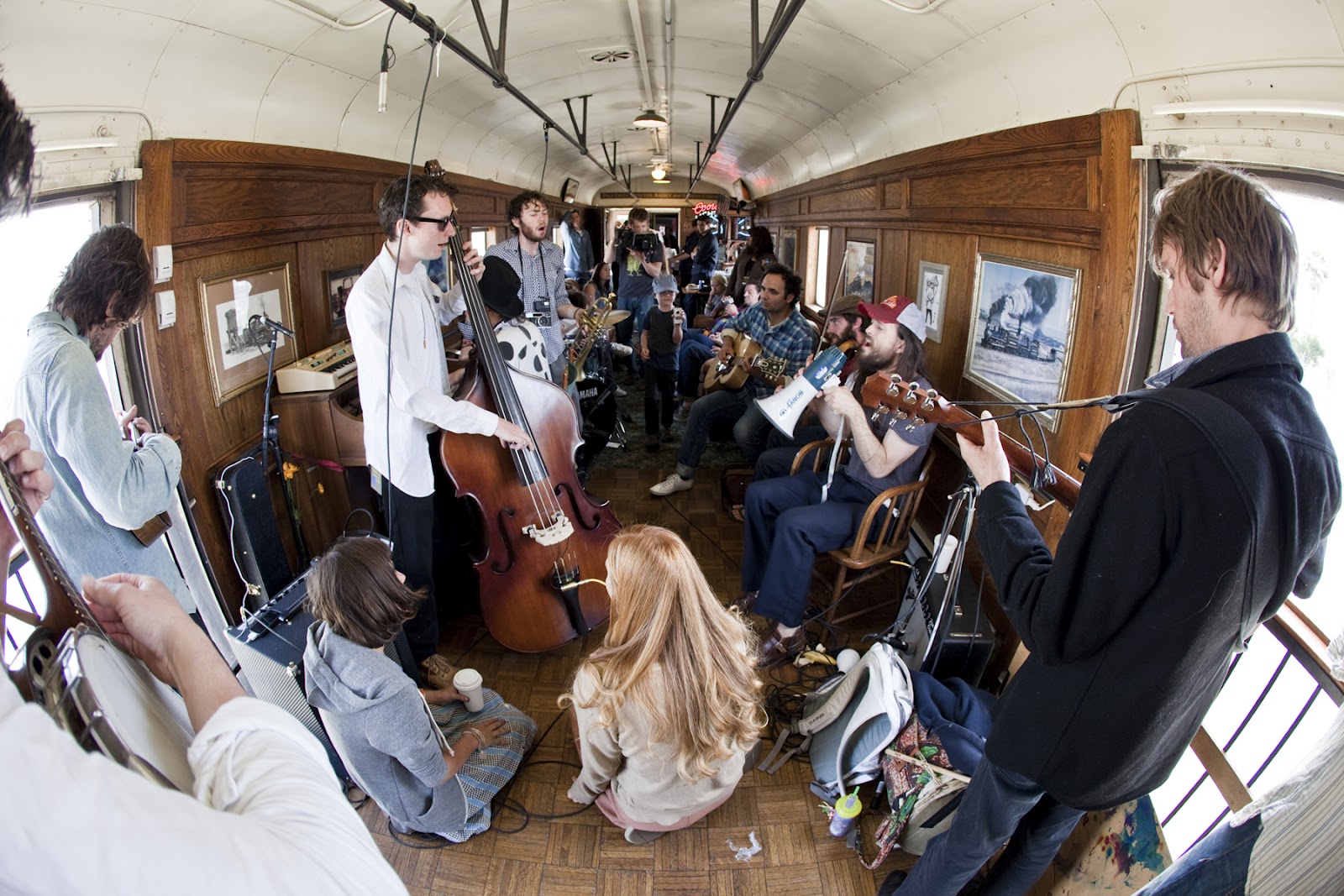
Unless you’d like to see them up close and personal — in movie form. A local fan is trying to arrange a Gathr screening of the documentary “Big Easy Express,” which chronicles a tour featuring Team Mumford along with Edward Sharpe & The Magnetic Zeroes and Old Crow Medicine Show. The tour was made by train, which became a rolling jam session as it went from town to town.

The screening is set for May 22, but the way Gathr works is that folks have to sign up ahead of time and pledge to attend. If enough people sign up, the screening happens. (It’s not unlike the Kickstarter model.) Gathr was used to bring the documentary “Girl Rising” to Madison for two sold-out showings earlier in the year.

So, if you’re interested, the link to the screening’s Gathr page is here. Hurry — they’ve got only another 15 days to make this happen, and unlike the song, Gathr won’t wait, Gathr won’t wait, for you.

“Upstream Color”: Shane Carruth goes whole hog with strange and brilliant film

UpstreamColorStills_0001_Screen-Shot-2012-12-04-at-3.14.41-PM.png

“Upstream Color” is now playing at Sundance Cinemas. Not rated, 1:38, four stars out of four. I’ll be doing a post-show chat following the 7:05 p.m. show Monday at Sundance Cinemas.

At heart, “Upstream Color” is about a woman who escapes a controlling relationship and finds love with another equally damaged soul.

It’s just that the controlling relationship involved mind-controlling worms, the new love affair seems to be connected with psychic pigs, and “Upstream Color” is like no other movie you’ve ever seen. Even if you loved writer-director-star Shane Carruth’s mind-bending first feature “Primer” back in 2004, you might be utterly befuddled by his long-awaited follow-up.

While “Primer” was narratively dense, it was a time-travel thriller that traveled down a set of tangled but discrete narrative pathways, if you took the time to sort them all out. “Upstream Color,” meanwhile, is much more abstract and elliptical, leaving fuzzy patches in the story for the audience to make connections. Some might find that frustrating; I found it one of the most invigorating and intoxicating movie experiences of the year.

The first 20 minutes or so, I think I have a pretty clear handle on. Kris (Amy Seimetz) is abducted by a man (known only as The Thief in the credits) who forces her to ingest a small parasite that gives him absolute and total control over her mind. He can convince her not to feel hungry even if she hasn’t eaten for days, convince her to copy pages and pages of Henry David Thoreau’s “Walden” without question, and, oh, he can get her to turn her life savings over to him. It’s a scary sequence, seeing how completely Kris’ will and identity is turned over to a stranger, all because of a little mealworm.

When The Thief has drained her dry, he leaves, and Kris is left to pick up the pieces of her life. The worm in her body is drawn out by a pig farmer (Andrew Sensenig, known in the credits as The Sampler) who implants it in one of his animals. Here’s where it gets hazy — the worms seem to retain some kind of psychic residue of its human host, and The Sampler can use sound effects to access those memories. It’s seemingly a more benign form of mind invasion than The Thief’s, but no less intrusive.

Kris falls in love with Jeff (Carruth), who it turns out has been through the same experience with The Thief and The Sampler. What surprised me in the midst of all the sci-fi overtones is how raw and affecting their relationship is — Kris’ abduction has filled her with a rage-filled wariness at others, and the pair chafe and snap at each other before finally finding some kind of harmony. Amid all the narrative arabesques and visual splendor of “Upstream Color,” the honesty of that relationship, and especially of Seimetz’s performance, shouldn’t be overlooked.

“Upstream Color,” as far as I can tell, is about realizing that unseen, distant forces have a powerful hold on your life, and figuring out a way to wrest control back again. Or not — this is a film that leaves things way open to interpretation, and I would hate to impose my narrative upon the one you find. (That would certainly run counter to the theme of the film, wouldn’t it?)

While “Primer” was made for $7,000 and looked like it was built in a garage, “Upstream Color” is flat-out beautiful to look at, Carruth composing images with a Terrence Malick-like attention to depth of field and light. Images of the natural world — the worms, those cute pigs, and an unearthly blue orchid — play a major part in both the story of “Upstream Color” and its visual aesthetic. Watching it feels, in the best way, like a form of hypnosis.

What’s playing in Madison theaters: April 18-24, 2013

oblivion-movie-7

No, I’m sorry, no breaks. Though you may still be reeling from binge-watching at the Wisconsin Film Festival, the Madison movie scene keeps right on rolling with another busy weekend.

All week

Oblivion” (Point, Eastgate, Star Cinema, Sundance) — The big blockbuster of the week is the sci-fi action tale starring Tom Cruise as WALL-E (basically, right?) a repairman who happens to be the last man on a battle-ravaged Earth. Or so he thinks.

The Lords of Salem” (Eastgate) — This is the first horror movie Rob Zombie has made with complete creative control, which means he’s able to cast his wife in the lead role, not just in a supporting role like in all his other movies. She plays a DJ questioning her sanity as a town’s coven of witches rises again.

Upstream Color” (Sundance) — Shane Carruth returns nine years after “Primer” with a film that makes that 2004 time-travel film look simple to understand by comparison. This time around, a couple gets ensnared in a bizarre life cycle that involves mind-control, maggots, and pigs. Lots of pigs. I’ll be doing a post-show Q&A in Sundance’s Overflow Bar after the 7:05 p.m. Monday show, which should be a blast.

From Up on Poppy Hill” (Sundance) — If you’ve been enjoying the Cinematheque at the Chazen series of Japanese animated films Sunday afternoons this year, make sure to check  out the latest from Japan’s legendary Studio Ghibli. Hayao Miyazaki (“Spirited Away”) and his son Goro directed this lovely film about two teens in 1963 Japan, caught between the country’s painful past and bright future. My review is here.

The Sapphires” (Sundance) — Chris O’Dowd (the Irish cop in “Bridesmaids”) is supposed to steal the show as a disreputable music promoter who discovers an aboriginal girl group in 1960s Australia in this musical-comedy.

Friday

The Rules of the Game” (7 p.m., UW-Cinematheque) — Jean Renoir’s masterpiece tale of the upstairs and downstairs denizens of a country estate, and how tragedy briefly levels the playing field one memorable weekend, is one of the great movies of all time. Free!

Zero Dark Thirty” (5 p.m. and 8:30 p.m., Union South Marquee Theatre) — Kathryn Bigelow’s meticulous recreation of the hunt for Osama Bin Laden doesn’t take a political stance, but forces the audience to own all that was done in the country’s name, both the heroic and the morally questionable. Free!

Flash Gordon” (midnight Friday, Union South) — Sam Jones’ hilarious cameo in “Ted” last summer revived interest in this 1980 camp classic. Free!

Saturday

Honor Flight” (6 p.m. Union South Marquee) — This stirring documentary highlights a program that takes World War II veterans to Washington D.C. to see the monument erected in their honor. Free!

“A Fistful of Dollars” (7 p.m., UW Cinematheque) – If the Wisconsin Film Festival whetted your appetite for Spaghetti Westerns, check out this Sergio Leone classic update of “Yojimbo,” with Clint Eastwood as the Man With No Name, playing two gangs controlling a small town against each other. Free!

Zero Dark Thirty” (8:30 p.m., Union South) — See Friday listing.

Stripes” (midnight, Union South) — If “Caddyshack” did not exist, this would be the most quotable Bill Murray movie ever made. I’ve never been a huge fan of the film’s turn into action-movie territory in the third act but up until then — gold.

Sunday

Princess Mononoke” (2 p.m. UW-Chazen) — The Studio Ghibli series continues with the studio’s first big breakthrough in America, this ecological-minded fantasy adventure with surprisingly adult themes. Not to be missed. Free!

Zero Dark Thirty” (3 p.m.  Sunday, Union South) — See Friday listing.

Thursday

King of the Hill” (7 p.m., UW Chazen) — After several films made in 1934, the Cinematheque at the Chazen’s “New Deal Cinema” series shifts to a movie set in 1934, specifically Steven Soderbergh’s wonderfully observed tale of a boy living on the margins during the Great Depression, without his family, and includes a wonderful performance from the late Spalding Gray. Incredibly, this film still isn’t available in the United States on DVD — paging Criterion? Free!

God Loves Uganda” (7 p.m.,  Union South Marquee) — Another film festival! This time it’s the Wisconsin Union Directorate’s annual Mini Indie Film Festival, a four-day celebration of new independent film, most of it playing in Madison for the first time. It kicks off with this unsentimental look at the work of American missionaries in the Third World, looking at both the good they do and the harmful attitudes (such as rampant homophobia) that they foster. Free!

Caesar Must Die!” (9:30 p.m., Union South Marquee) — In this Italian docudrama, inmates at a prison in Rome prepare to put on a production of Julius Caesar. Joss Whedon’s “Much Ado About Nothing” this ain’t. Free!

Wisconsin Film Festival review: “Stories We Tell”

stories-we-tell-sarah-polley-super-8-cam

From the beginning, Sarah Polley opens the hood of her documentary “Stories We Tell” and shows the machinery whirring inside. The film begins with her and her father entering a recording studio, and a montage of Polley and her crew setting up cameras and lighting for the film’s interview subjects.

It’s an introduction that’s tantamount to a magician’s “nothing-up-my-sleeve” insistence, because Polley has something far more interesting and unusual in mind that the typical nuts-and-bolts documentary. “Stories We Tell” is a powerful and very personal story from Polley, but she’s also constantly mindful that it’s a “story,” a series of facts and opinions shaped into a narrative, and as such isn’t entirely to be trusted.

And this is, in a very literal sense, Polley’s story. The film digs deep into the lives of her parents, Mick and Diane Polley, who met on the Toronto theatrical scene. Mick cut a dashing figure onstage, while Diane was beautiful and vivacious, the sort of woman who “make the record skip” when she walked into a room in more ways than one.

As Mick settled into kind of a middle-aged fog, Diane grew frustrated, and took an acting job in Montreal in 1978 that took her away from home for a couple of months. What happens next, the viewer should discover from the film, as Polley digs through layers after layers of reminiscences and rumors, interviewing her four siblings and friends of the family.

As we’re following the sudden revelations of the story — and there are some doozies, expertly revealed by Polley as she shifts from perspective from perspective — we’re also becoming aware of how each account differs. Some people have the facts a little off, others just view the same facts differently than others. One man, who seems to be just a supporting character in the drama, insists that his account and only  his is the truth, and all the others are just noise.

The closest the film has to an authority is Mick, who reads from his writing about the family history in plummy, theatrical tones throughout the film. But even he doesn’t have the full picture of his own family.

The perspective that is largely missing, ironically, is Polley’s — although we see B-roll footage of her about to be interviewed, it never appears in the film. Instead, she seems to be getting at the truth of her life the way a submarine uses sonar, pinging off the other people in her life until she finds a spot that overlaps. It’s a fascinating process, and Polley (an actress turned acclaimed director of the dramas “Away From Her” and “Take This Waltz”) blends the different voices expertly until a bigger picture emerges.

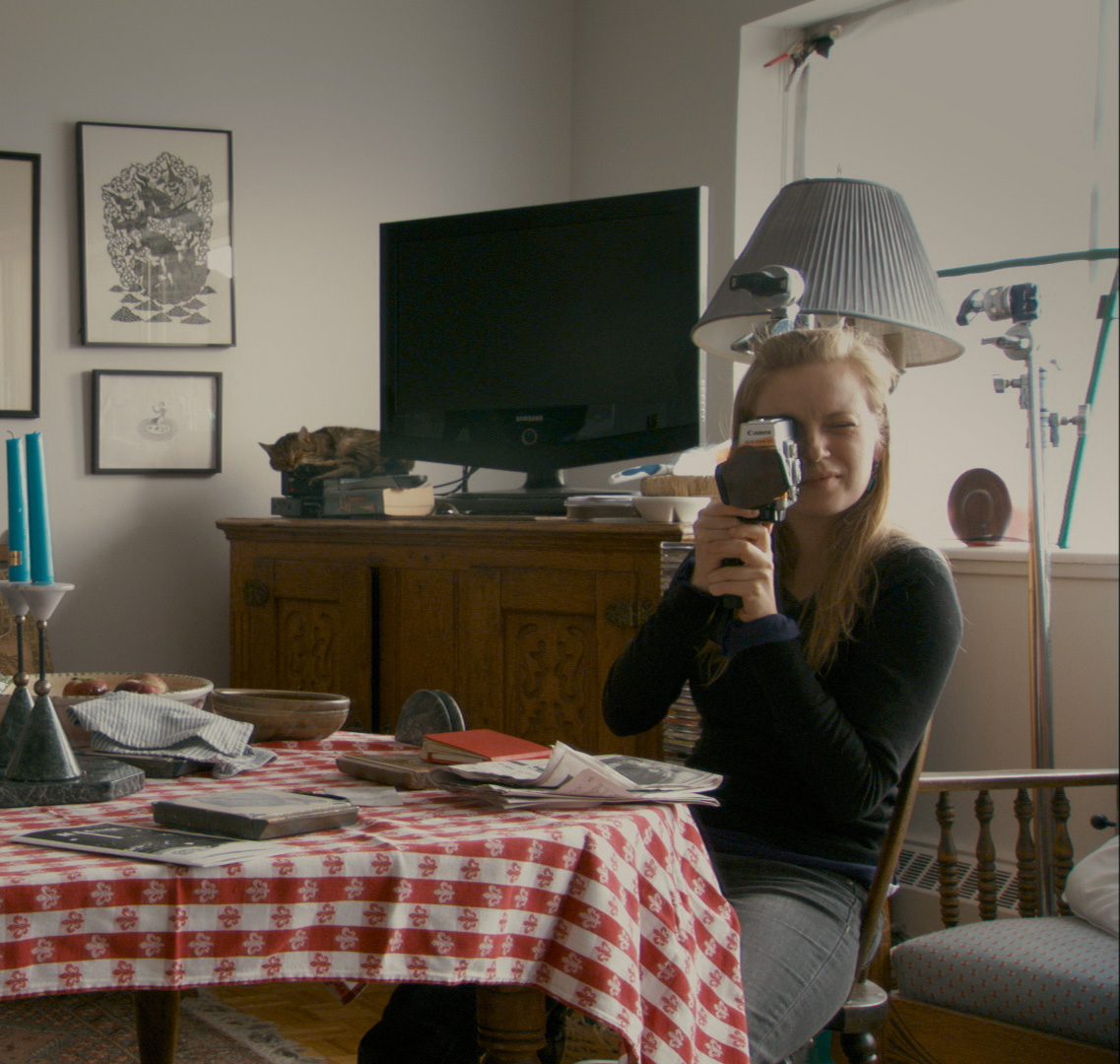
The film also weaves in Super 8 home movie footage of Diane and the family, although it turns out that the way Polley is telling the story contains as many secrets as the story itself. Put it this way; critics who like their documentaries the way Joe Friday likes his witnesses — “Just the facts, ma’am” — are going to have a big problem with this movie.

For me, it’s a brilliant film that manages to be both one family’s shared history and all families’ shared histories. Would “Stories We Tell” have been as compelling if Polley didn’t add all the post-modern devices to it? On the level of pure storytelling, probably. But the way she tells the story takes it beyond “What happened?” and forces us to examine the too-tidy narratives of the stories we tell ourselves.

Wisconsin Film Festival review: “Key of Life”

KEY-OF-LIFE-2012.mp4_snapshot_01.11_[2012.11.05_23.32.33]

Oh, you could make such a terrible Hollywood remake of “Key of Life.” The pieces are all there, just waiting for some hack screenwriter to mess them up.

But it hasn’t happened yet, so enjoy the dizzying original Japanese screwball comedy while you can, which had two screenings at the Wisconsin Film Festival this week.

The premise is classic high-concept comedy; wannabe actor and all around loser Takeshi (Masato Sakai) sees an opportunity in the bathhouse when another bather slips on a bar of soap and is knocked out cold. Takeshi quietly switches locker keys with the unconscious man, steals his clothes and cash out of his locker, and hightails it out of there.

Only it turns out that he has switched identities with a cold-as-ice hitman, Kondo (Teruyuki Kigawa). Driving Kondo’s car and living in Kondo’s fancy apartment, Takeshi is mistaken for the killer and roped into doing some unfinished business for the local yakuza.

The real Kondo, meanwhile, has amnesia, and settles into in Takeshi’s old sad-sack existence. But he’s happier than he ever was as a contract killer, especially after he meets magazine editor Kanae (Ryoko Hirosue) who has marked her wedding date on her day planner. Now she just has to find a husband, and Kondo seems as good as any.

Writer-director Kenji Uchida has written a crackerjack script, one with jokes that detonate right away and others that lay fizzing for most of the film before suddenly exploding when we least expect them too. At over two hours, “Key of Life” could have been a little snappier in the pacing department, but the energy level and inventiveness never flags, and when the comics twists and turns come along, they’re beautifully executed.

“Key of Life” was picked up for U.S. distribution by Film Movement, which bodes well for a DVD release.

“From Up on Poppy Hill”: Studio Ghibli finds magic in the mundane

poppyhill

“From U p on Poppy Hill” opens Friday at Sundance Cinemas. PG, 1:31, 3.5 stars out of 4.

There are no moving castles in “From Up on Poppy Hill.” No witches, no fishes who turn into children, no little people living under the floorboards.Madison movie fans who have been regulars at the Sunday afternoon “Cinematheque at the Chazen” Studio Ghibli retrospective series this year, they know that it’s not unheard of for the legendary Japanese animators to take a break from fantasy films. But for most Western audiences, who know Ghibli through “The Secret World of Arrietty,” “Spirited Away” and “Princess Mononoke,” the relatively ordinary plot of “Poppy Hill” might seem like a bit of a shock.

But don’t worry, because “Poppy Hill” really takes place in two magical, powerful kingdoms that exist in the same place with each other. One is called the Past. The other is called the Future. And the wonderful “Poppy Hill” has, in its own gentle way, many wise and warm things to say about the difficulties of trying to live in both.

Umi (voiced in the English-language version by Sarah Bolger) is a teenage girl living in Yokohama in 1963. Her father was lost at sea during the Korean War, and her mother is at school in the United States, but Umi is very capable, and can not only get her two younger siblings off to school, but can run a small boarding house out of their home as well. Yet, every morning, she goes out and raises the naval flags outside her house, in the faint hope that they will someday guide her father home.

All around her, Japan is excited about the 1964 Olympics coming to Tokyo, and the country is in the midst of a cultural shift, trying to push away the painful past of World War II and look towards a bright future. At Umi’s school, that mindset comes to a head around the student clubhouse, a ramshackle old building nicknamed the Latin Quarter. The towering building houses all the clubs at school — the Archaeology Club, the Chemistry Club, even the one-man Philosophy Club — floor after floor of nerds stacked on top of each other. But the administrators see it as an eyesore and want it torn down before the world comes to Japan for the Olympics.

Leading the student revolt is Shun (Anton Yelchin), who we first see leaping off the roof of the Latin Quarter and into a pond as a publicity stunt. Together, with Umi leading the girl students and Shun leading the boys, they try to whip the clubhouse into shape. Shun and Umi also fall in love — the most chaste, platonic love you’ll see on a movie screen in quite some time. But that love is threatened when the pair learn of a secret connection between their fathers, dating back years, that could scuttle their relationship.

“It’s like a cheap melodrama,” grumbles Shun, which is a great joke, because of course in the hands of Studio Ghibli it’s anything but. The film was written (“planned”) by Ghibli’s master filmmaker Hayao Miyazaki and directed by his son, Goro Miyazaki. It almost goes without saying how beautiful the hand-painted animation of “Poppy Hill” is to look at, whether it’s the millions of tiny details in the labyrinthine Latin Quarter, or the evocation of a 1960s Japan street scene, with the peppy Japanese pop hit “Sukiyaki” playing on the soundtrack.

But “Poppy Hill” proves to be more than just a visual feast. It’s seemingly slight storyline has a warm emotional resonance, tapping into both the uncertainty of a Japan caught between past and future, and adolescents Umi and Shun, caught between childhood and adulthood. Most movies posit the teenage years as someting to be endured, so it’s such a treat to see Umi and Shun taking charge of their lives, at home and at school, learning how to master their regrets and uncertainties. It’s easy to build up a lot of empathy for these characters, and the hope they carry forward with them.

In my household, the film was perhaps a bit too slow and fairy-free for a 5-year-old who loved “Arrietty,” but the 9-year-old was captivated. As was the 44-year-old.

One further note: like many recent Studio Ghibli imports, the film is dubbed into English rather than subtitled, and in the past the English versions have been rather poor, with colorless dialogue and flat vocal performances. The translation in “Poppy Hill” feels a cut above those recent efforts, though, with Yelchin and Bolger turning in appealing performances ahead of a large supporting cast that includes Aubrey Plaza, Bruce Dern, Jamie Lee Curtis and Gillian Anderson, as well as a very funny surprise cameo by Ron Howard.

Wisconsin Film Festival review: “Shepard and Dark”

postcard_template_us

“It’s not that you need to be the same. It’s that you need to fit in some weird way.”

For nearly 50 years, Sam Shepard and Johnny Dark have fit in a weird way. Shepard is the acclaimed actor and playwright (“True West,” “Buried Child”). Dark works the deli counter at a supermarket in Mexico. And yet, somehow, they’ve been friends most of their lives, and the engaging documentary “Shepard & Dark” shows how.

The laconic Shepard describes himself as rootless and solitary, someone who keeps moving on, even if that hurts the ones closest to him. Dark, meanwhile, is happy staying put in his cozy little house in New Mexico, surrounded by his dogs and his books. Seeing them together, there’s an easy broken-in rapport, as they tease each other and trade Dylan lyrics. But the question can’t help but occur as it often does with long friendships — if they met each other on the street today, would they become friends?

The pair have exchanged letters for decades, and a university wants to buy them for their archives and perhaps turn the correspondence into a book. So they settle down with their boxes of old letters and try to make sense out of them. Dark in particular is almost obsessive when it comes to archiving his past, and the occasion causes the pair to reminisce about their long history together.

This delights Dark, but rankles Shepard, who has some things in his past he’s not eager to revisit. His abusive, alcoholic father looms large in his psyche, and there was a notorious incident in 1983 when Shepard left his wife and son for Jessica Lange. Dark, as it turns out, was married to Shepard’s ex-mother-in-law, and ended up staying to pick up the pieces of Shepard’s decision.

That’s a lot of shared history, and it’s perhaps inevitable that Shepard and Dark are heading for a big reckoning. Mixing interviews with old photographs and film from Dark’s personal collection, filmmaker Treva Wurmfeld has made a lovely and insightful film, not just about this friendship, but all friendships, and how having people in your life who know you so well can be a comfort and a curse.

Wurmfeld said during the post-show Q&A that she first met Shepard while making one of those making-of documentaries for the film “Fair Game.” She thought she would make a documentary just about him, but when she met Dark during the first week of filming, she knew the friendship would be the real subject of her film, each man providing insight into the other.

As intimate as “Shepard & Dark” gets, Wurmfeld said both subjects were extremely open and giving with their time, a bit of a surprise given Shepard’s reputation as being somewhat mysterious.

“I was always surprised about what he was willing to share,” she said. “They were both extremely generous in terms of answeering questions. Johnny was incredibly open with his old archives. It was really a treasure trove of material.”

Come have a drink and help me figure out what the hell “Upstream Color” is about

UpstreamColor_still1_AmySeimetz_ShaneCarruth

The first two post-show chats at Sundance Cinemas have gone pretty well so far — last month’s talk after “Any Day Now,” coincidentally scheduled the same day as the Supreme Court heard oral arguments for and against gay marriage, went quite well.

But I’m really excited for the next one. It’s Shane Carruth’s mindbending “Upstream Color,” a heady film about mind control, true love, and mysterious piglets, and I think it will give us a LOT to talk about. Next Monday, April 22, immediately following the 7:05 p.m. screening at Sundance, we’ll meet over in the theater’s new Overflow Bar (where the gift shop used to be) to try and puzzle out the elliptical and beautiful film together.

It should be lots of fun. Hope you can make it. The next Sundance chat will be for “Lore” some time in May.

Wisconsin Film Festival: Michael Murphy takes “Manhattan”

manhattan

I had not planned on going to all three of Michael Murphy’s events at the Wisconsin Film Festival. I thought I would hit “Phase IV” for sure, and then maybe “Brewster McCloud” just to hear the actor tell Robert Altman stories. But that was it. Certainly not Woody Allen’s “Manhattan,” which I love but have seen plenty of times in my life.

And there I was, watching “Manhattan” at the Union South Marquee Theater. And loving it. Because it’s “Manhattan.” And it’s Michael Murphy.

Murphy is just such a great storyteller and such a gregarious guy (and, let’s face it, “Manhattan” is such a wonderful film) that I couldn’t pass up the chance. Festival director of programming Jim Healy said it was a new print of “Manhattan,” and the black-and-white shots of ’70s New York looked awesome on the big screen. I got chills during that final “Rhapsody in Blue” overture. And, after Allen’s spotty later years, it’s just such a pleasure to return to the sharp writing (with UW-Madison graduate Marshall Brickman) of his peak years.

So, of course, Murphy talked during the Q&A about how much Allen never liked “Manhattan,” so much that he wanted to take the print back from the studio and make them another film for free. Murphy said he agreed with actor Pat Healy, who was at the screening, that Allen might have been so uncomfortable with the film because it hit so close to home.

“This is as close to Woody as you’ll ever see,” Murphy said.

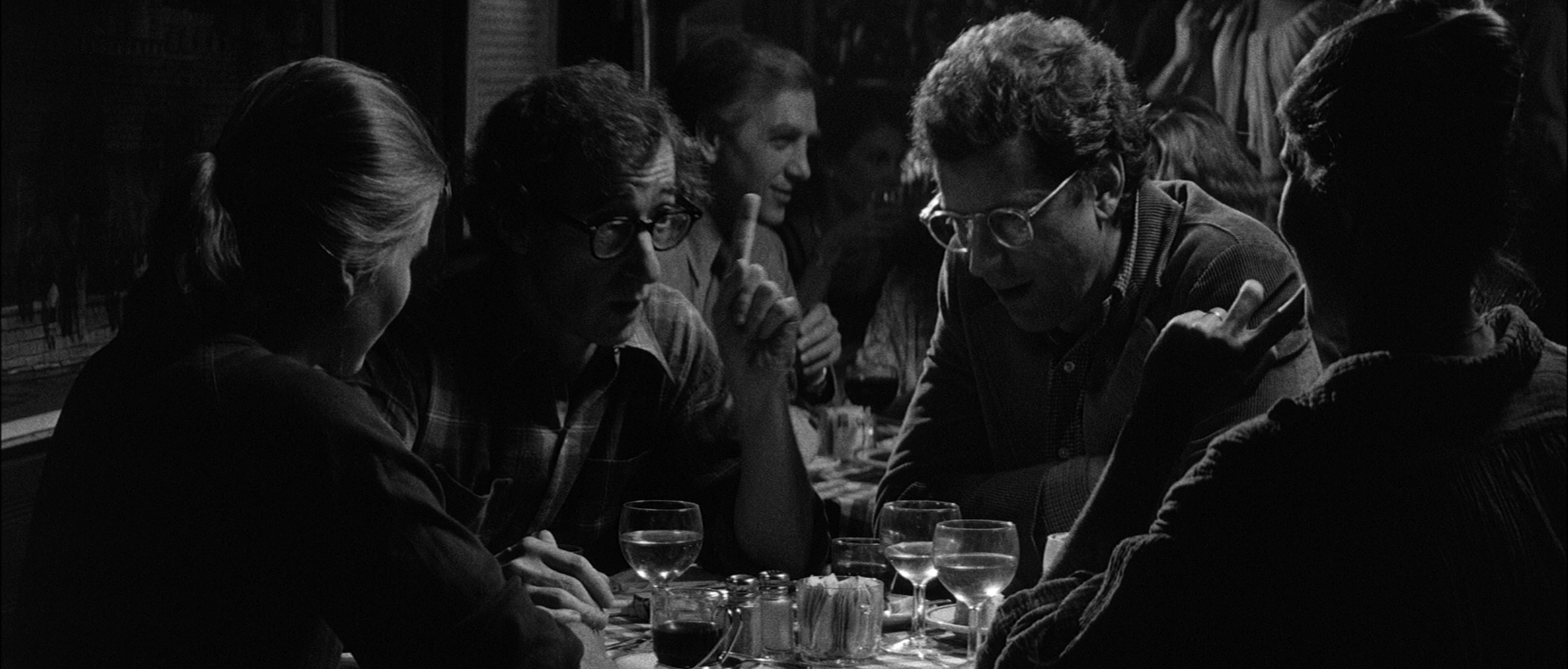
Murphy and Allen became friends while acting together on 1976’s “The Front,” and Murphy said what you see in “Manhattan” is pretty much their lives together (minus the adultery,etc.) “We had a million meals at that table in Elaine’s, some unbelievable conversations,” he said. “It was just like going out and having dinner with your friends.”

Murphy also told some funny stories about Allen’s notorious hypochondria, such as convincing himself that he had a brain tumor after listening to a lot of George Gershwin, who died of a brain tumor. Another time, Murphy remembered trying to convince Allen that he wouldn’t die young, noting that both his parents lived to be well into their 90s.

“Genetics will only get you so far, Murphy,” Allen reportedly responded.

Wisconsin Film Festival review: “Cheap Thrills”

cheap_thrills_credit_

Between last year’s “Compliance” (which he also brought to the Wisconsin Film Festival) and this year’s “Cheap Thrills,” actor Pat Healy is cornering the market on a special kind of horror movie.

Sure, the two movies couldn’t be more different in tone. “Compliance” is a stomach-twisting moral nightmare in which a phone prankster convinces a fast-food manager to detain and abuse an employee. “Cheap Thrills,” which screened Saturday night, is a raucous pressure cooker that dishes out laughs and shrieks with equal measure.

But at heart, both are horror movies. They’re just not horror movies that try to make us afraid of a vampire, or a serial killer, or some other evil entity out there. They try to make us afraid of ourselves, what good decent folks like us are capable of.

“Compliance” played on our unthinking obedience to authority figures. “Cheap Thrills” makes us question what we would do for money, if we were desperate enough and there was no chance of anyone finding out.

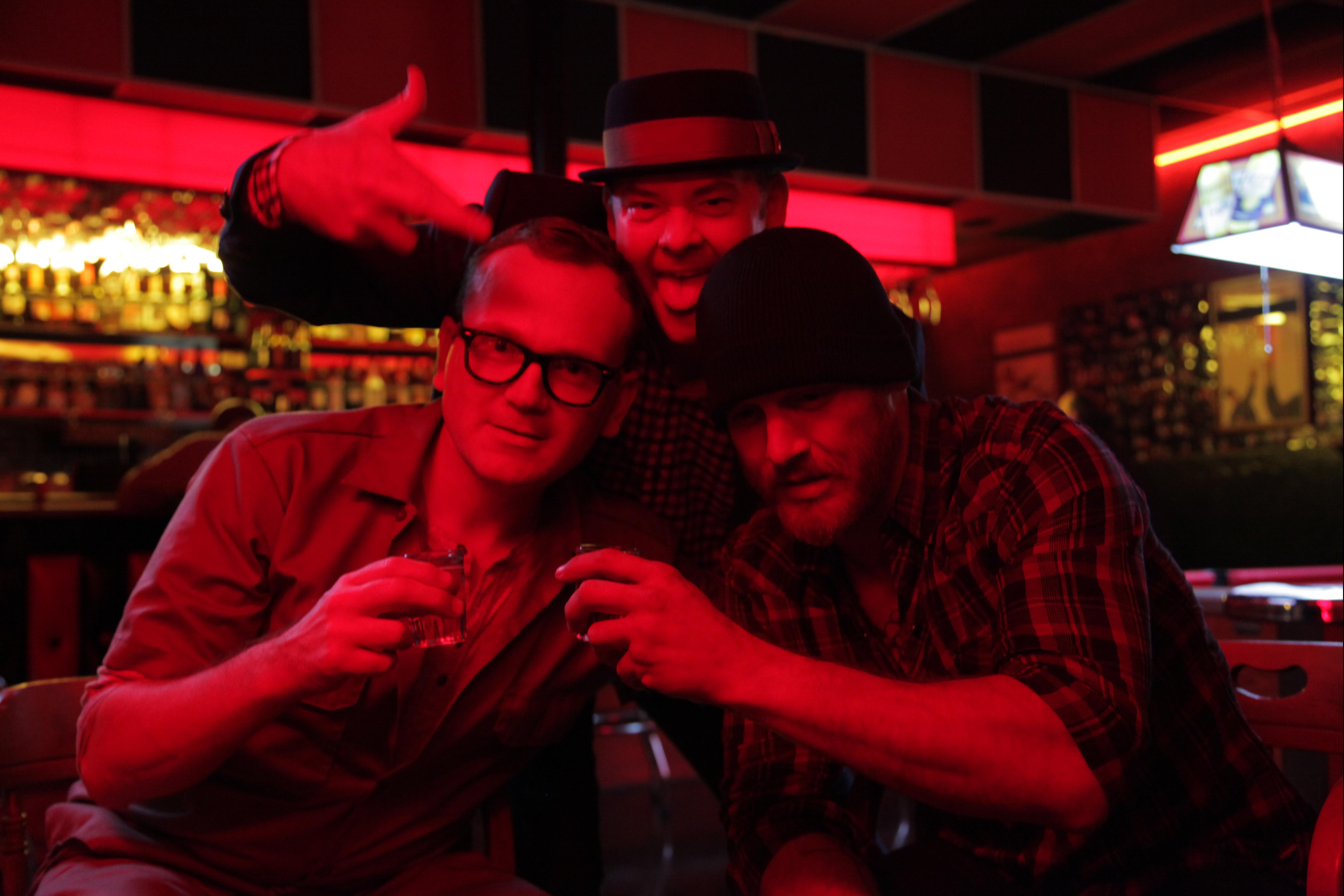
Craig (Healy) is plenty desperate. In a few deft strokes, essential for spelling out the stakes of the film, Katz shows us how Craig is in trouble; he’s got a wife and infant son in an apartment he’s about to be kicked out of, and just lost his job as an auto mechanic, a long step down from his failed dreams of being a writer. In a daze, he stumbles into a dive bar and meets Vince (Ethan Embry), an old high school buddy turned low-level enforcer. He’s tougher than Craig, but in his own way he’s just as desperate as Craig.

And the a wealthy couple, Colin (David Koechner) and Violet (Sara Paxson) calls them over to their table. Colin is dropping $100 bills like they were about-to-expire Groupons, and buys round after round of expensive tequila. He suggests a friendly bet to Craig and Vince for $100. Then another friendly bet for $200.

Eventually, they head back to the couple’s house. And the bets start getting a lot less friendly.

As the dares get more and more depraved (and lucrative), “Cheap Thrills” gets more outrageous and more disgusting. But Katz and screenwriters Trent Haaga and David Chirchirillo, along with the foursome of actors, always keep track of the relationships among the four characters. Who wins one bet isn’t as important as how it strains the friendship between Vince and Craig, getting them to turn on each other. And how back-slapping Colin and the seemingly bored Violet manipulate them into vying for more and more money. The horror doesn’t come from what Colin offers them. It comes from Vince and Craig eagerly accepting, even low-balling each other for the opportunity to debase themselves.

One of the most telling moments in the film comes, in the middle of some out-there dares, when Colin idly offers $300 to the first guy who can fix him a vodka tonic. Vince jumps at the chance, like an obsequious waiter, and Colin knows he has him. Vince just sold his dignity for $300. “Cheap Thrills” is all about what lines you’re willing to cross, and for what. The parallels are there to larger forces in American life, whether it’s reality television, or moneyed interests pitting one segment of the lower classes against the other (“Unions are ruining America!”) But the movie never overstates this, focusing on everyman Craig and his bizarre, bloody quest to bring home the bacon.

Healy gives such a fearless and funny performance as Craig, and Embry draws lots of laughs as the tough guy who can’t believe how far his nerdy friend will go. Koechner, best known for big comic parts in “Anchorman” and on “Saturday Night Live,” brings just the right dose of menace and condescension beneath Colin’s jovial exterior — he’s like a sociopathic Bill Murray. Paxson, who also worked with Healy in “The Innkeepers,” is quietly unnerving, as Violet casually snaps away on her camera phone at all the mayhem.

In the post-show Q&A, Healy said he really liked how the screenplay made every step Craig takes seem utterly believable, no matter how strange things get.

“The role had everything I would want to do in a movie,” he said. “What excites me the most about any part is a real arc, that goes from Point A to Point Z, and that it charts logically, as crazy as it is.”

Saturday’s screening was the Midwest premiere of the film, which opened last month at South by Southwest and was immediately snapped up for distribution by Alamo Drafthouse Films.