Wisconsin Film Festival: Michael Murphy takes “Manhattan”

manhattan

I had not planned on going to all three of Michael Murphy’s events at the Wisconsin Film Festival. I thought I would hit “Phase IV” for sure, and then maybe “Brewster McCloud” just to hear the actor tell Robert Altman stories. But that was it. Certainly not Woody Allen’s “Manhattan,” which I love but have seen plenty of times in my life.

And there I was, watching “Manhattan” at the Union South Marquee Theater. And loving it. Because it’s “Manhattan.” And it’s Michael Murphy.

Murphy is just such a great storyteller and such a gregarious guy (and, let’s face it, “Manhattan” is such a wonderful film) that I couldn’t pass up the chance. Festival director of programming Jim Healy said it was a new print of “Manhattan,” and the black-and-white shots of ’70s New York looked awesome on the big screen. I got chills during that final “Rhapsody in Blue” overture. And, after Allen’s spotty later years, it’s just such a pleasure to return to the sharp writing (with UW-Madison graduate Marshall Brickman) of his peak years.

So, of course, Murphy talked during the Q&A about how much Allen never liked “Manhattan,” so much that he wanted to take the print back from the studio and make them another film for free. Murphy said he agreed with actor Pat Healy, who was at the screening, that Allen might have been so uncomfortable with the film because it hit so close to home.

“This is as close to Woody as you’ll ever see,” Murphy said.

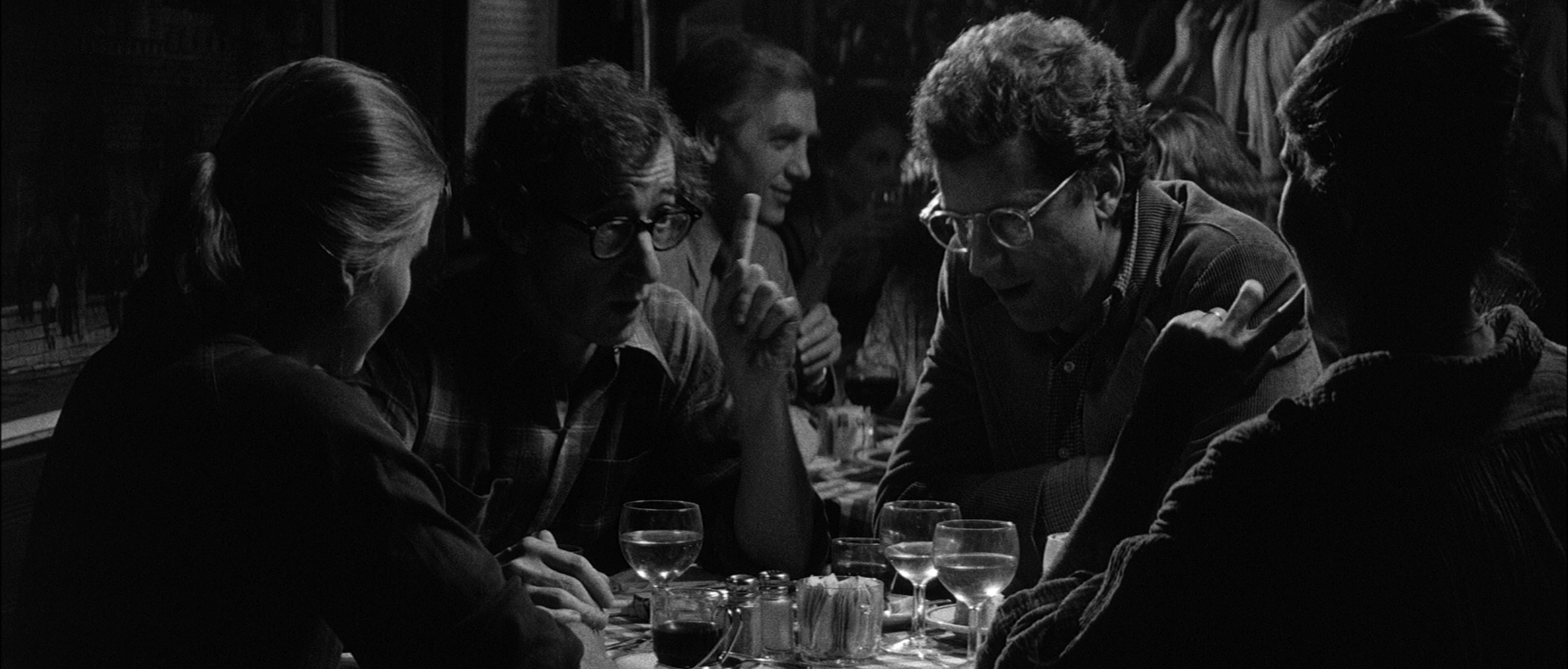
Murphy and Allen became friends while acting together on 1976’s “The Front,” and Murphy said what you see in “Manhattan” is pretty much their lives together (minus the adultery,etc.) “We had a million meals at that table in Elaine’s, some unbelievable conversations,” he said. “It was just like going out and having dinner with your friends.”

Murphy also told some funny stories about Allen’s notorious hypochondria, such as convincing himself that he had a brain tumor after listening to a lot of George Gershwin, who died of a brain tumor. Another time, Murphy remembered trying to convince Allen that he wouldn’t die young, noting that both his parents lived to be well into their 90s.

“Genetics will only get you so far, Murphy,” Allen reportedly responded.
Wisconsin Film Festival review: “Cheap Thrills”

cheap_thrills_credit_

Between last year’s “Compliance” (which he also brought to the Wisconsin Film Festival) and this year’s “Cheap Thrills,” actor Pat Healy is cornering the market on a special kind of horror movie.

Sure, the two movies couldn’t be more different in tone. “Compliance” is a stomach-twisting moral nightmare in which a phone prankster convinces a fast-food manager to detain and abuse an employee. “Cheap Thrills,” which screened Saturday night, is a raucous pressure cooker that dishes out laughs and shrieks with equal measure.

But at heart, both are horror movies. They’re just not horror movies that try to make us afraid of a vampire, or a serial killer, or some other evil entity out there. They try to make us afraid of ourselves, what good decent folks like us are capable of.

“Compliance” played on our unthinking obedience to authority figures. “Cheap Thrills” makes us question what we would do for money, if we were desperate enough and there was no chance of anyone finding out.

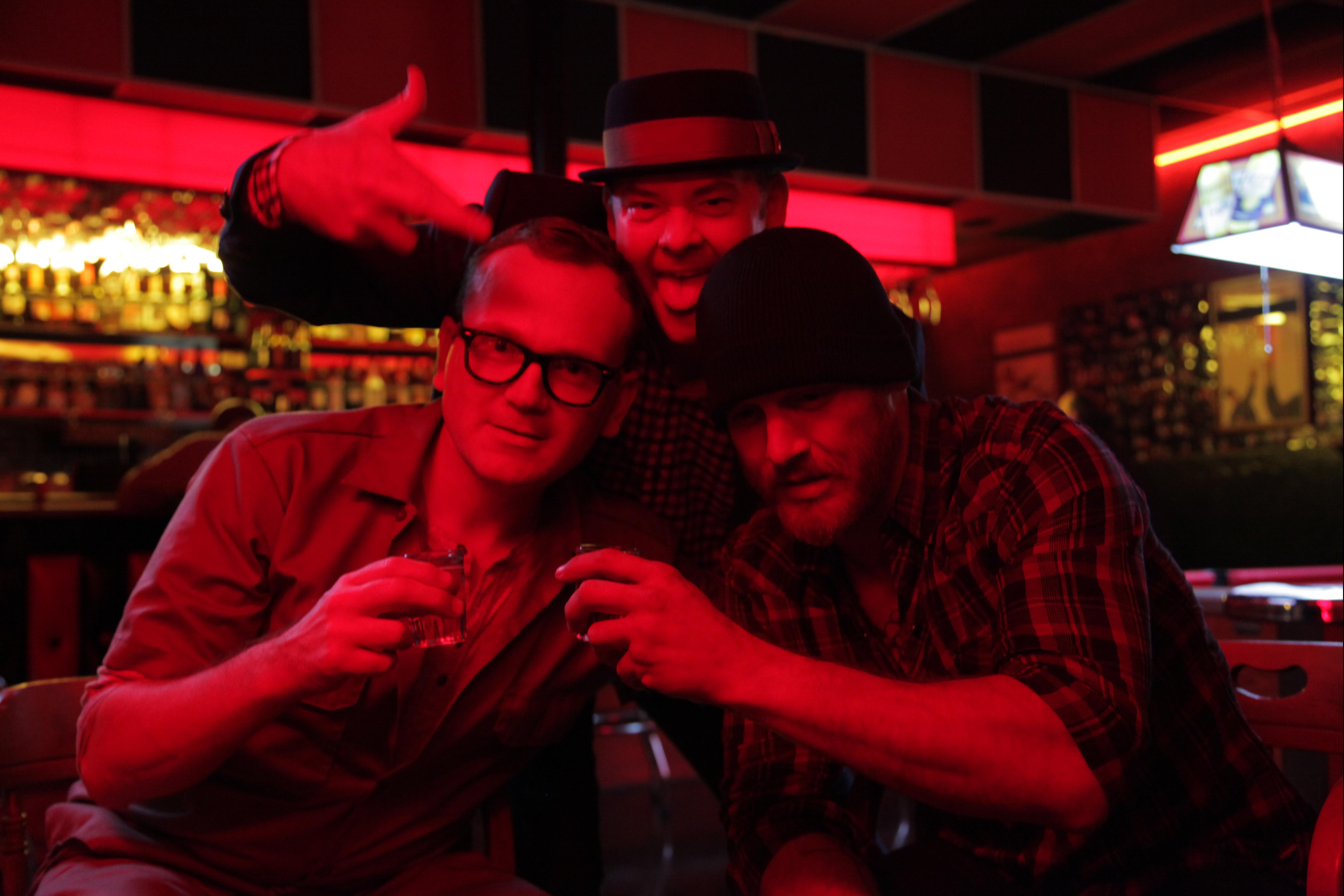
Craig (Healy) is plenty desperate. In a few deft strokes, essential for spelling out the stakes of the film, Katz shows us how Craig is in trouble; he’s got a wife and infant son in an apartment he’s about to be kicked out of, and just lost his job as an auto mechanic, a long step down from his failed dreams of being a writer. In a daze, he stumbles into a dive bar and meets Vince (Ethan Embry), an old high school buddy turned low-level enforcer. He’s tougher than Craig, but in his own way he’s just as desperate as Craig.

And the a wealthy couple, Colin (David Koechner) and Violet (Sara Paxson) calls them over to their table. Colin is dropping $100 bills like they were about-to-expire Groupons, and buys round after round of expensive tequila. He suggests a friendly bet to Craig and Vince for $100. Then another friendly bet for $200.

Eventually, they head back to the couple’s house. And the bets start getting a lot less friendly.

As the dares get more and more depraved (and lucrative), “Cheap Thrills” gets more outrageous and more disgusting. But Katz and screenwriters Trent Haaga and David Chirchirillo, along with the foursome of actors, always keep track of the relationships among the four characters. Who wins one bet isn’t as important as how it strains the friendship between Vince and Craig, getting them to turn on each other. And how back-slapping Colin and the seemingly bored Violet manipulate them into vying for more and more money. The horror doesn’t come from what Colin offers them. It comes from Vince and Craig eagerly accepting, even low-balling each other for the opportunity to debase themselves.

One of the most telling moments in the film comes, in the middle of some out-there dares, when Colin idly offers $300 to the first guy who can fix him a vodka tonic. Vince jumps at the chance, like an obsequious waiter, and Colin knows he has him. Vince just sold his dignity for $300. “Cheap Thrills” is all about what lines you’re willing to cross, and for what. The parallels are there to larger forces in American life, whether it’s reality television, or moneyed interests pitting one segment of the lower classes against the other (“Unions are ruining America!”) But the movie never overstates this, focusing on everyman Craig and his bizarre, bloody quest to bring home the bacon.

Healy gives such a fearless and funny performance as Craig, and Embry draws lots of laughs as the tough guy who can’t believe how far his nerdy friend will go. Koechner, best known for big comic parts in “Anchorman” and on “Saturday Night Live,” brings just the right dose of menace and condescension beneath Colin’s jovial exterior — he’s like a sociopathic Bill Murray. Paxson, who also worked with Healy in “The Innkeepers,” is quietly unnerving, as Violet casually snaps away on her camera phone at all the mayhem.

In the post-show Q&A, Healy said he really liked how the screenplay made every step Craig takes seem utterly believable, no matter how strange things get.

“The role had everything I would want to do in a movie,” he said. “What excites me the most about any part is a real arc, that goes from Point A to Point Z, and that it charts logically, as crazy as it is.”

Saturday’s screening was the Midwest premiere of the film, which opened last month at South by Southwest and was immediately snapped up for distribution by Alamo Drafthouse Films.

Wisconsin Film Festival review: Michael Murphy revisits “Phase IV”

phaseiv

“If I had been a tube of blue paint, he would have liked me more.”

That was actor Michael Murphy talking about Saul Bass, legendary designer and less-than-legendary filmmaker. In fact, although he designed iconic posters and opening-credits sequences for films like “Vertigo” and “The Man With the Golden Arm,” Bass made just one film as a director, the 1974 sci-fi thriller “Phase IV.”

Underseen for decades, “Phase IV” has resurfaced, and it played at the Wisconsin Film Festival on Saturday morning with a somewhat chagrinned-looking Murphy talking about it. “I heard some inappropriate laughter, dammit!” he joked to the audience after the film.

The foundation of the film is a rather silly sci-fi premise, that ants are starting to evolve and fight back against their predators, including humans. A pair of scientists (Murphy and Nigel Davenport) have come to a remote part of Arizona to study the phenomenon, and find themselves trapped in an escalating war of wits with the collective little buggers.

Universal Pictures sold the film to audiences as a horror movie in the vein of “Kingdom of the Spiders,” and there are some of those cheesy elements in there, to be sure. But Bass also brings a striking visual style to many scenes, including many close-up shots of the ants, and a gonzo original ending fully of trippy, baffling images that turned off test audiences.

After years working with improvisation-friendly director Robert Altman (such as on “Brewster McCloud,” which Murphy screened at the festival on Friday) Murphy wasn’t used to the strict hit-your-marks style of a director like Bass, and it showed. Bass and the studio constantly battled over the film, and Murphy said he was frustrated with several poor decisions, such as an intrusive introductory voiceover and terrible looped dialogue.

“It would have been a really interesting film if there was a little bit of attention paid to performances,” Murphy said. “Saul was a great artist, a good guy.”

Sean Savage of the Academy Film Archive, who found and restored the long-lost original ending, says he has a treasure trove of Bass material about “Phase IV” and other projects, and there have been some informal discussions about trying to release a restored Blu-ray edition at some point.

Murphy will be at the Union South Marquee Theater at 1:15 p.m. Sunday to introduce a film he’s much prouder of, Woody Allen’s “Manhattan.”

Wisconsin Film Festival review: “A Hijacking”

ahijacking

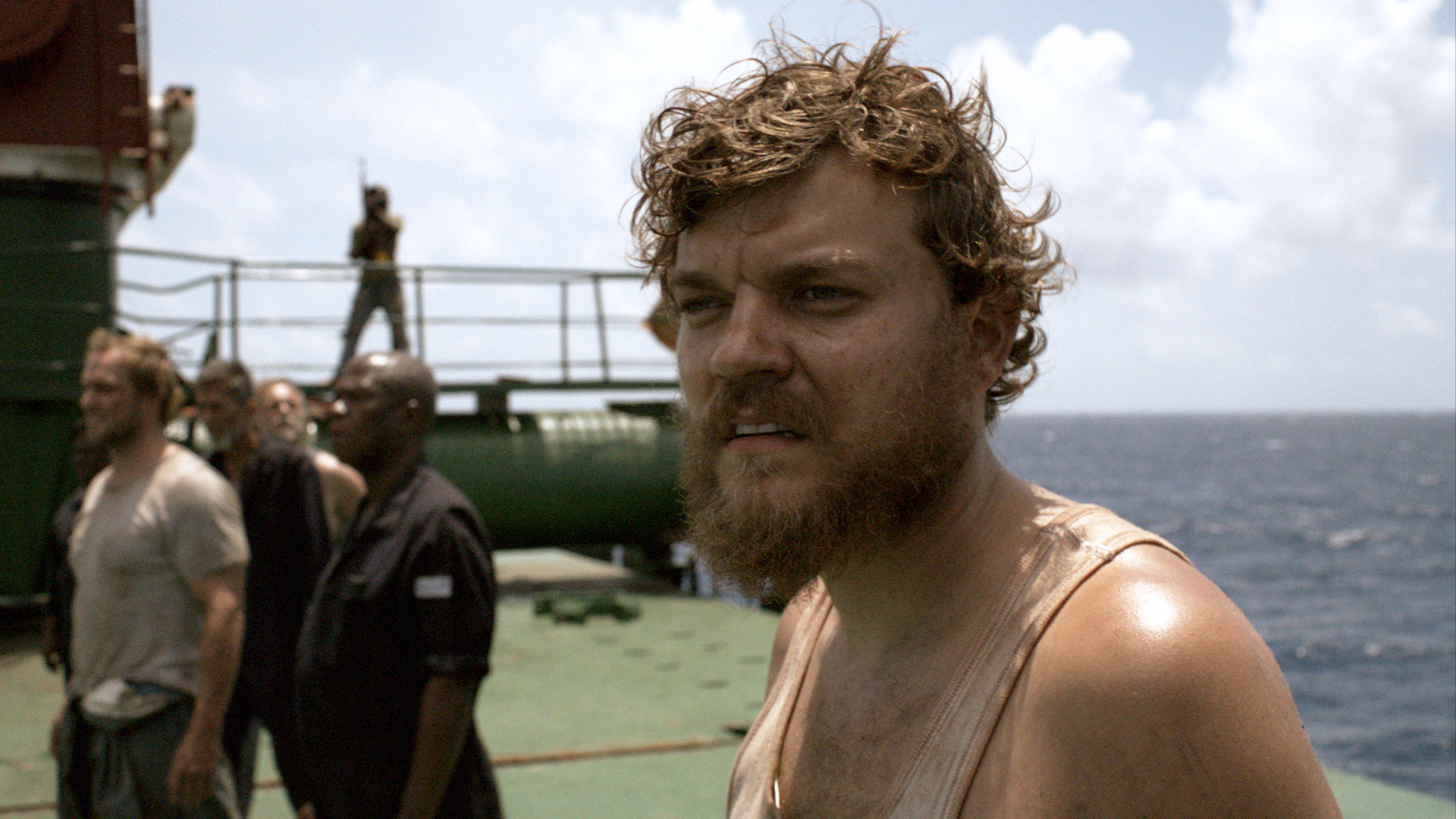
“A Hijacking” tells its tale as plainly as its title, without Hollywood action, without true heroes or villains, without the expected emotional button-pushing (there’s hardly even any music on the soundtrack.) What it is an authentic, suspenseful film about seemingly real people dealing with an unreal situation.

Mikkel is the cook on a ship heading for Mumbai. Peter is the CEO of the company that owns the ship. When Somali pirates storm the ship, Mikkel is appropriately terrified. Back in Denmark, Peter demands to handle the ransom negotiations himself over the objections of his counter-terrorism adviser. We’ve just seen Peter close a big deal, and he seems like the right man for the job, almost superhumanly unflappable.

But as days turn into weeks, weeks into months, the tension takes its toll on Peter. Meanwhile, back on the ship, Mikkel must learn to cope with constant terror. The Somali translator Omar is almost kindly, insisting this is a business transaction. The rifles being brandished say otherwise.

One would assume writer-director Tobias Lindholm would keep most of the movie on the  ship, since that’s where the action is. But he wrings a surprising amount of suspense out of the board room as well, often building drama through the separation between the two locations. Mikkel, trapped on the ship, can’t understand  why his boss doesn’t just pay the money. Peter’s only connection to his crew is a shaky phone connection; at one point, we hear a gunshot over the line, but don’t find out what happened until several scenes later.

The press notes say some of the actors involved in the film have lived through similar experiences; the actor who plays the counter-terrorism adviser used to be one. You can tell right away; this is a film that doesn’t use Hollywood conventions to let the viewer off easily.

What’s playing in Madison theaters: April 12-18

Yeah, that’s fair. The week that the Wisconsin Film Festival begins is the same week that two of the films I’ve most looked forward to seeing so far in 2013 open at Sundance. Why not open Terrence Malick’s “To the Wonder” as well and really twist the knife in?

Well, I suppose I should just be happy that Danny Boyle’s “Trance” and Derek Cianfrance’s “The Place Beyond the Pines” are here, and assume they’ll be around after the eight-day festival ends next Thursday.


All week

 “Trance” (Point, Sundance) – Danny Boyle seems to rocket back and forth between Oscar contenders (“Slumdog Millionaire,” “127 Hours”) and gleeful genre fare (“28 Days Later,” “Sunshine”), and the appropriately named “Trance” definitely seems to fall in the latter category. It’s a trippy crime film about an art heist where the audience is never sure what’s real and what isn’t. It looks cool, anyway.


The Place Beyond the Pines” (Sundance) – Derek Cianfrance’s follow-up to “Blue Valentine” is a similarly bleak drama, this time an epic crime drama about a cop (Bradley Cooper),  a robber (Ryan Gosling), and the connection between their two sons. Reviews suggest Cianfrance may have bitten off more than he can chew, but I’m more than curious.


42” (Point, Eastgate, Star Cinema, Cinema Café) – Writer-director Brian Helgeland’s biopic about Jackie Robinson looks earnest and inspiring – and would you want it to be any other way? Harrison Ford, playing crotchety baseball owner Branch Rickey, who signed Robinson and cross the color barrier when nobody else would, looks like he’s a ball of fire in this one.


Scary Movie V” (Point, Eastgate, Star Cinema) – David Zucker, who recently slapped Robert Hays with a fish in the new Wisconsin Department of Tourism ad, goes back to the horror-movie-parody franchise yet again. And by “parody,” I mean “obvious references to recent horror movies that even people who just saw the trailer will get.” Sigh.


Tuesday


Girl Rising” (7 p.m., Union South) – Back by popular demand, the inspiring anthology film, looking at girls in eight different developing countries and their struggles to get a good education, has a free screening on campus. Highly recommended – here’s my reported from a packed Gathr screening last month.


Banff Mountain Film Festival (7 p.m., Barrymore Theatre) – The touring film festival features nature and environment documentaries from all across the countries, so much so that it’s spread across two nights (Tuesday and Wednesday) this week with different film programs each night. Tickets are $12 in advance ($14 at the door) for a single-day ticket or $20 for a two-night pass; buy advance tickets at barrymorelive.com and check out the film line-up for each night.

Wednesday


Banff Mountain Film Festival (7 p.m. Barrymore Theatre) – See Tuesday listing.


Thursday


Zero Dark Thirty” (7 p.m., Union South Marquee Theatre) – Kathryn Bigelow’s fact-based thriller about the hunt for Osama Bin Laden doesn’t preach for or against the “enhanced interrogation” techniques – i.e. torture – used along the way. But it does put ownership of those incidents in the lap of the American audience. If we want to cheer Osama’s death, the movie implicitly says, we have to own everything else as well. One of the best films of 2012. Free!

Wisconsin Film Festival review: “The Final Member”

The_Final_Member_2

“The Final Member” screens at 10 p.m. Saturday at the Union South Marquee.

Everybody needs a hobby. For Siggi Hjartarson, it was collecting penises.

It started with a dried bull penis, and then grew to a private collection, and then finally a museum in Iceland devoted to displaying the equipment of every species of animal on Earth. (It’s like Noah’s Ark, although Siggi only lets in one of each.) Except one.

Man.

The hilariously straight-faced documentary “The Final Member” chronicles Siggi’s quest to find that lucky donor. Like any good Christopher Guest mockumentary, it’s full of oddball characters who take something way more seriously than they should, and it pulls up just shy of openly making fun of them.

Siggi, in particular, cuts a rather sympathetic figure, an old man who tends to his cows, loves his family, and is a scholar on the side who translates centuries-old books. He just wants a legacy to live on after he goes, and a museum full of penises dunked in formaldehyde has somehow become that legacy.

At first, Siggi has a donor — 93-year-old “adventurer” Pall Arason, who claims to have slept with hundreds of women, which makes you wonder when he made time for “adventuring.” But Pall is getting up there, and Siggi worries that certain aging processes (in the words of George Costanza, “shrinkage”) will mean the specimen isn’t big enough for his museum.

Enter an American, Tom Mitchell, and “Elmo.”

Elmo is certainly big enough to make it into the museum, but Tom is one seriously weird dude. He’s obsessed with his little sidekick (frontkick?), dressing him up in little costumes, getting him a stars-and-stripes tattoo, even commissioning a comic book starring Elmo. Tom is so thrilled at the idea of Elmo becoming famous that he’s even considering donating Elmo to the museum WHILE HE IS STILL ALIVE to head Pall off at the pass. If Tom wasn’t a real person, Will Ferrell would have had to invent him.

Much hilarity ensues, including a riotous sequence in which Pall tries to get a plaster-of-Paris cast of his equipment made, with disastrous results. Ouch. In the end, Siggi gets his museum acquisition, and the rest of us have watched a very strange and funny film. (By the way, one of the editors of the film is a UW grad, whose name is . . . and I’m not kidding . . . Andrew Dickler.)

Wisconsin Film Festival review: “Blancanieves”

blancanieves_pabloberger-2

“Silent film” may be an inapt description for Pablo Berger’s “Blancanieves.” Yes, the film is a beautiful homage to the silent films of the 1920s — shot in black and white in full-frame, with no spoken dialogue and only one sound effect, that of fireworks exploding in the sky.

But this film, which played Thursday on Day 1 of the Wisconsin Film Festival, is anything but quiet. It has an absolutely gorgeous score by Alfonso de Villalonga that is in many ways an equal partner to the images, highlighting and evoking the emotions of a scene or the motivations of a character. Like “The Artist,” this was an unusual but rewarding experience to see on the big screen.

“Blancanieves” literally translates into “Snow White,” and the film is a retelling of the classic fairytale, transported to 1920s Seville and the world of bullfighting. When the great matador Antonio Villarta is gored by a bull, and his pregnant wife dies during childbirth, Villarta falls into the clutches of scheming nurse Encarna (Maribel Verdu, who looks a lot like “Artist”‘s Berenice Bejo).

Encarna gets the ailing, wheelchair-bound Villarta to marry her, and he and his young daughter Carmen come to live with her. Encarna, it won’t surprise you, is a wicked stepmother, tormenting both and having designs to kill them both. Carmen escapes her clutches, but loses her memory and wanders into the path of a troupe of bullfighting dwarfs (six of them, but who’s counting?) Carmen, who the dwarves name Blancanieves “like the girl in the tale,” joins up with the dwarves, and soon discovers she has bullfighting talents of her own.

The images are sumptuous, from expressive close-ups of the main characters to frenetic quick cuts during action scenes, such as the bullfighting, which is truly scary at times. Berger plays with the “Snow White” tropes — there’s a poison apple, but Prince Charming isn’t who you might expect — and opts for less of a happy ending than we might expect.

And that score! Stirring orchestral movements during the most dramatic scenes, with flamenco guitar and handclaps to illustrate the energy and goodness of Blancanieves, while horror-movie theremin is employed for the villainous Encarna. No, “Blancanieves” isn’t subtle, but it’s an unforgettable time at the movies.

“Blancanieves” plays again at 7:45 p.m. Friday at Sundance, and a few rush tickets should be available at the door.

Wisconsin Film Festival preview: “This is Martin Bonner”

this-is-martin-bonner-paul-eenhoorn

“This is Martin Bonner” screens at 6:30 p.m. Saturday at Sundance and 2 p.m. Sunday at the UW Elvehjem. Writer-director Chad Hartigan will talk at both screenings.

The 15th annual Wisconsin Film Festival starts today! And while I’ll be shifting from “preview” mode to “review” mode in just a few hours, I couldn’t let one lovely little gem of a film slip by unmentioned.

In most movies, Martin Bonner would be a memorable minor character, the sort where you’d idly wonder “What’s that guy’s story?” Chad Hartigan’s second feature gives Martin that movie, and the results are quietly astonishing.

Martin (Paul Eenhoorn) is a man in his 50s who lives in Reno, Nevada and works as a counselor for inmates at the local correctional facility. Eenhoorn, a fine Australian character actor, plays Martin as a good man, but one who keeps the world somewhat at a distance. As the film unfolds, quiet conversation by quiet conversation, we learn that Martin self-detonated his old life in Maryland — getting divorced, getting fired from his job, losing his faith — and has come across the country to — start again? Or simply to spend the rest of his days alone, away from the prying eyes of everyone who knows him? Hartigan, and Eenhoorn’s warm performance, keep us guessing.

Martin meets Travis Holloway (Richmond Arquette), a recently paroled inmate in his program. Travis is also trying to restart his life, starts attending church, tries to reconnect with his grown daughter. Even though Travis is perhaps a decade or so younger than Martin, he seems older, wearier. The two men are facing the world alone, the sum of the bad choices they’ve made etched in their faces. Slowly, they become friends, but the wary sort of friends that middle-aged men make, when they’re not sure if they have the room in their lives for another connection.

“This is Martin Bonner” tells its story at its own pace, which might seem frustratingly slow to some, but felt just right to me, riding the real cadences of everyday life. Both men spend a lot of time alone, with their thoughts, and the film reflects that almost monastic existence in its tone. But then, all of a sudden, Hartigan includes a scene that’s so stunningly lyrical as to take your breath away, such as Martin refereeing a girls’ soccer game, the field nestled right up against the looming mountains, or an incredible 360-degree pan of a bleak highway scene, all motels and storage tanks, the future that Travis sees for himself.

Both Eenhoorn and Arquette give layered, honest performances, not straining against expectations so much as just allowing Martin and Travis to be authentic human beings. The film pulls you into their lives, and when the time came for the screen to finally fade to black, I was so invested in their story that it was kind of a shock to see it end.

Wisconsin Film Festival preview: “Nameless Gangster: Rules of the Time”

nameless_gangster_press

“Nameless Gangster” plays at 6:45 p.m. Friday and 2 p.m. Monday at Sundance Cinemas, and advance tickets are still available for both shows.

If you get squeamish at the sight of somebody getting a good beatdown in a film, steer clear of “Nameless Gangster: Rules of the Time.”

Guns barely appear in the film, but it seems everybody is carrying a big stick in this South Korean gangster epic, and not afraid to use it to punish their enemies. Even the prosecutor, a so-called “good guy,” delivers a thrashing to an unarmed prisoner cowering in his cell.

That’s part and parcel of this cynical but engrossing film, where might makes right, everyone is on the take somehow and the idea of a criminal “code” is laughable. Yoon Jong-bin’s film has the epic sweep and detail of a gangster movie like “Scarface,” but none of the mythologizing.

For example, the hero isn’t a young up-and-comer like Henry Hill in “Goodfellas,” but a sad-sack, deeply corrupt customs official named Choi (Choi Min-Sik). His crew routinely skims their own percentage off the illegal goods coming into Seoul, but he’s about to be made the fall guy when their corrupt schemes can’t go ignored any more.

Then he discovers a shipping container full of drugs, meant to be sold in Japan, and sees his play. He seizes the drugs and plans to sell them himself, rationalizing in a hilarious monologue that it’s payback for Japan’s occupation of Korea. (“It’s called patriotism!” he insists to his partner.)

The sale puts him in the orbit of South Korea’s real criminal underworld, especially the smooth and lethal Hyung-bae (Ha Yung-woo). Choi is desperate to survive in a world he clearly isn’t cut out for, and Choi’s performance as an ordinary middle-management sort of guy way in over his head is a revelation, as he goes from false bravado to fawning obsequience, changing alliances recklessly, anything to keep him alive. It’s not a likable performance, but it is a memorable one.

The film has none of the stylish action one might expect from an Asian gangster movie; the cruel violence is shot plainly and unsparingly, underscoring just how dangerous this world is and how ill-prepared Choi is to survive in it. “Nameless Gangster” is a different kind of mob movie, but one that gangster movie fans should definitely seek out.


“Upstream Color” will lead off next round of Sundance Screening Room titles

UpstreamColor_still1_AmySeimetz_ShaneCarruth

It may be hard for a movie fan in Madison to think past the Wisconsin Film Festival, which kicks off Thursday and brings over 150 movies to town. But the festival will end eventually, and the trick is to keep your hunger for offbeat and interesting films going after it does.

Luckily, there will be plenty of chances to do so — the Union South Marquee Theater will jump into its Mini Indie Film Festival in late April. And Sundance Cinemas will kick off its next Screening Room calendar on Friday, April 19, the day after the Wisconsin Film Festival ends.

I’m especially excited about the new Screening Room schedule, as I’ll be doing a pair of post-show chats about a couple of the films in Sundance’s new Overflow Bar, located on the first floor where the gift shop used to be. And the first one should be a doozy. Visit sundancecinemas.com for more information.

Upstream Color” (opens April 19) — Nine years ago, writer-director-star Shane Carruth made one of the best time-travel movies ever, “Primer,” on a budget of just $7,000. Now he returns with a beautiful and just as confounding sci-fi tale involving true love, an ageless organism, and pigs. I’m doing a post-show chat after the Monday, April 22 early evening show — I’ll post more details closer to the event.

Room 237” (April 26) — If you miss Rodney Ascher’s engrossing documentary about the various arcane film theories surrounding Stanley Kubrick’s “The Shining,” it’s coming back.

The Angel’s Share” (May 3) — Acclaimed director Ken Loach returns with another tale of working-class life in the United Kingdom, in this case a comedy about four young Scotsmen and a cask of rare whisky.

Koch” and “West of Memphis” (May 10) — A double dose of documentaries. “Koch” has nothing to do with the notorious Koch brothers, but instead follows the career of former New York Mayor Ed Koch. “West of Memphis” is a follow-up look at the lives of the West Memphis 3, three teenagers wrongfully convicted of murder, and the case that remains unsolved.

Lore” (May 17) — Another film festival sellout, this drama follows a group of children, left alone after their SS parents are arrested after World War II, who must traverse Germany, and see the results of their parents’ legacy along the way. I’ll be doing a post-show cat after the early evening show on Monday, May 20.

The Reluctant Fundamentalist” (May 24) — A Pakistani immigrant working on Wall Street has his allegiances tested after 9/11 in this film from director Mira Nair.