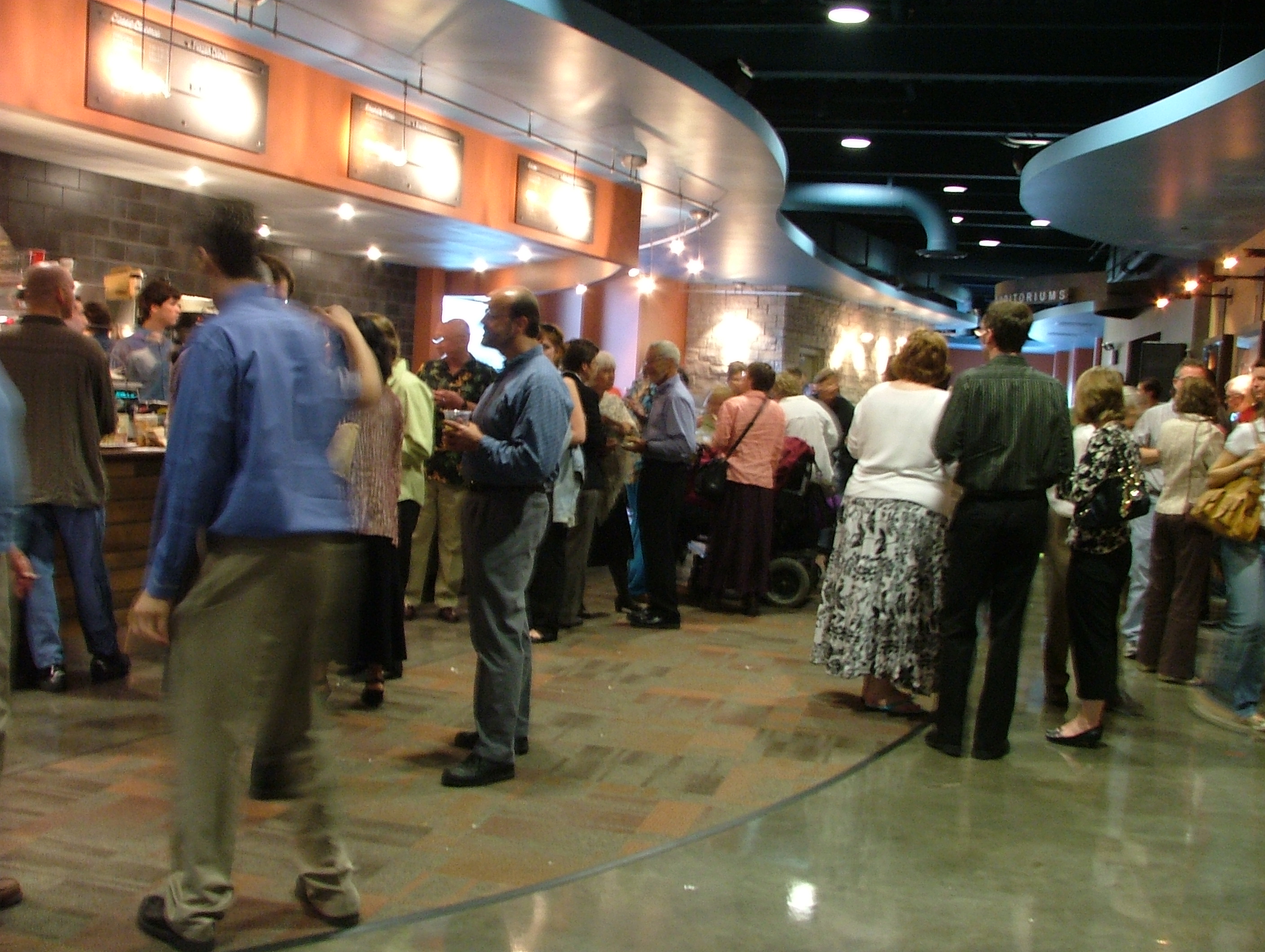
As I sat with about 60 other people at MMOCA Rooftop Cinema on Friday night, watching one harvester ant rip the head off another one on the big projection screen, I wondered if the concern that theatrical moviegoing is an endangered pastime might not be so grave.
Which is not to say that there isn’t reason for concern. But if you can fill seats for “The Hellstrom Chronicle,” as MMOCA did, there’s definitely room for hope.
The concern, expressed well by Mark Riechers at Madison Arts Extract last week, is that there’s a large group of movie lovers in Madison who don’t go out to the movies. They’ll come out in droves for the Wisconsin Film Festival, but when independent films come back to Sundance Cinemas and elsewhere, the theaters are nearly empty. Granted, this is a problem everywhere; when I was last home visiting my parents in Denver, I sat in the city’s majestic Mayan Theatre all alone to see “Rust and Bone.”
But I think Madison has a particular challenge, having to do largely with the fact that we’re a second- or third-tier market with first-tier taste in movies. Independent films don’t usually open everywhere at the same time the way “The Internship” does; instead, they roll out slowly, starting in New York and Los Angeles, spreading to cities like Chicago and San Francisco, eventually making their way to some smaller markets if they’re doing well enough. It’s a cinematic Doppler effect: you hear about a movie through reviews in the New Yorker or New York Times, and then weeks or months later you see it. A larger city like Denver can largely dictate when an indie movie will get to their theaters, but for Madison, we seem to largely have to wait and see for many of them to trickle down to our level.
The problem for Sundance is that they don’t often know when the films will finally make it to Madison until, sometimes, the Tuesday before the Friday they open. That’s not much time to build up any word of mouth that a film is opening. If a movie that already has a fair bit of advertising and viewer interest, such as “Before Midnight” or “Much Ado About Nothing,” it has a good chance of making a big splash. Madison will usually come out big to support those films, judging by the lines at the concessions counter at Sundance. But other, lesser-known films might arrive without much notice, and if audiences aren’t willing to take a chance on them, they could open and close in a week. And, as the price of going to the movies goes up, audiences are less likely to take those chances.
Of course, there are exceptions; “Free the Mind,” a film made in Madison about meditation research at the UW, ended up being a surprise hit for Sundance, playing for several weeks. Sundance does broadcast what’s playing through its e-newsletter, and programs smaller indie movies into its Screening Room Calendar, which maps out weeks ahead what arthouse movies will be showing. And there are media resources (such as, ahem, this blog) that feature reviews and news about what movies are playing. But in general, the burden is on the viewer to keep track of what’s playing where and when.
And, as Mark points out, the rise of Netflix Instant and VOD has changed the equation. On the one hand, streaming makes a vast treasure trove of movies available for movie lovers, cheaply and easily. That’s an unalloyed great thing, giving good films that might have tanked theatrically (or never even made it to a Madison theater) the chance to be seen. The trade-off, though, is that there’s no sense of urgency for audiences to go see a film in theaters, because they know it will inevitable end up on DVD. (And yet so called “day-and-date” releases, simultaneously out on VOD and in theaters, seems to be working for indie distributors like IFC and Magnolia. Go figure.)
Yet, in Madison, we’re blessed to have this other strain of filmgoing, exemplified by Rooftop Cinema, Cinematheque and the Wisconsin Film Festival, that seems to do very well. Those Studio Ghibli films that screened Sunday afternoon at the Chazen this past semester were absolutely packed, the festival never seems to go wanting for crowds, and folks will turn up to see almost anything, no matter how off-the-beaten-path, at Cinematheque or Rooftop. The other encouraging sign I’d point to is the continuing success of the “Classics” series at Sundance Cinemas, which often has the biggest crowds of any theater there on a Wednesday night. We actually outpace other Sundance theaters in larger cities like Houston when it comes to our support of classic movies.
All of which is to say that there’s we’re ahead of the game compared to many other places — there’s a lot of movies to see, and a lot of appreciative and hungry movie fans who could go see them. The challenge continues to be making sure audiences know what movies they can get out to see, and why it’s important they do so.



 Madison Movie