“Girl Rising”: A chain of women, stretching from Madison to Sierra Leone

Girl-Rising

“Girl Rising” screens at 7 p.m. Tuesday at the Barrymore Theatre, 2090 Atwood Ave. PG-13, 1:44.

Girl Rising” is, from production to distribution, the ultimate do-it-yourself film. The film, from Academy Award-nominated documentary filmmaker Richard E. Robbins, tells of the problem of getting girls in developing countries a proper education, one that will raise them out of poverty and empowered against societies that don’t value them properly. In a country like India, Afghanistan or Peru, where most of the populations is impoverished and vulnerable, there is no one more vulnerable than a girl.

But “Girl Rising” doesn’t take the usual tack of a documentary, presenting experts and eyewitnesses to present facts and arguments. Instead, Robbins paired nine girls from nine countries and paired them with nine writers. “Girl Rising” is, instead, nine short films that allows each of the girls the chance to tell their own stories.

That direct approach extends to the way “Girl Rising” is reaching viewers as well. Instead of being marketed city by city through a distributor, the film is being released through an innovative screening-by-demand website called Gathr. Someone sets up a screening and invites everybody they know to come. If enough people buy tickets, the screening happens.

In Madison, that person was Ann Sensenbrenner, owner of Farm to Vase (and, I’ll disclose here, a friend).

“I figured there was no risk, other than embarrassment if nobody signed up,” she told the crowd at Sundance Cinemas on Sunday afternoon. Instead, thanks to a “chain of women” spreading the word by email and Facebook, the screening quickly sold out. Now there’s another screening taking place at 7 p.m. Tuesday at the Barrymore Theatre. Those interested in seeing the film Tuesday can just buy a $10 ticket at the door.

And you should, because it’s a beautiful and energizing film. Because the girls have such different stories to tell, no two short films looks exactly the same. The story of Senna, a 14-year-old poet in a bleak Peruvian mining village, is filmed in stark black-and-white, while the story of Jasmin, a rape victim in Cairo, mixes is a live-action reenactment of her testimony to police with rich animation of her superhero fantasy.

There is much hardship and tragedy in these stories, but there is also inspiration, as each girl finds a way to rise above her circumstances. An eight-year-old Haitian girl, the infatigable Wadley, simply refuses to stop coming to school after her mother can no longer afford the tuition, and her teacher eventually relents. In Nepal, Suma is sold into bonded labor (a polite word for slavery) at the age of 6, emancipates herself as a teenager, and joins a group to free others.

In all but two cases, the girls play themselves in the films, with voiceover narration provided by a host of actresses, including Meryl Streep, Anne Hathaway and Kerry Washington. In between stories, the film provides a barrage of sobering statistics (voiced by Liam Neeson), and suggests that, for developing countries, properly educating girls would make financial as well as moral sense.

But as revealing as those stats are, the eyes goes back to those short films, and those girls, telling their stories. While some of the films are more successful than others, they all show the power of engagement and education, of looking at the world and its problems, as one story put it, in a way “that makes the achievable seem doable.”

Sensenbrenner said that in getting the word out about her screening, she sparked a friend to host a screening in Milwaukee. Even more impressive, a filmmaker friend in Africa got it accepted by the Sierra Leone International Film Festival, which means one of the girls in the film, Mariama, will get to see it and show it to her community. The “chain of women” — and men — forged by and behind the film only looks to get stronger and stronger.


“Emperor”: What did you do in the peace, daddy?

EMPEROR

“Emperor” opens Friday at Sundance Cinemas; PG-13, 1:45, three stars out of four.

“Emperor” is a war movie with no war in it (well, barely — got to have something to put in the trailer.) In fact, it’s a movie about the uneasy peace that occurs right after the cessation of hostilities, when one side has surrendered, and yesterday’s combatants becomes . . . what, exactly? Equals? Occupied and occupiers? Liberators and the liberated?

In this case, the war is World War II. Japan has just surrendered to the Americans, and Gen. Douglas MacArthur (Tommy Lee Jones, and is that ever great casting) strides the ruins of Tokyo like a Colossus. Having been responsible for the devastation all around, the Americans have to shift into a postwar occupation phase. They have to punish the guilty, but help the innocent rebuild. It’s not an easy distinction, not an easy task.

Chief among them is the prosecution of war criminals, and in particular whether Emperor Hirohito should be charged, particularly with ordering the attack on Pearl Harbor. MacArthur is in a dicey spot; politicians in Washington want vengeance over their former enemies. But MacArthur also needs the peaceful occupation of Japan to succeed, and if he hauls a leader that the Japanese people consider a god before a tribunal, that will be awfully difficult. Jones plays MacArthur as a cagey man with presidential ambitions, but with a humane side that might trump those aspirations.

So he tasks Gen. Sellers (Matthew Fox of “Lost”) with finding out the truth. Much of “Emperor” plays like a dry procedural, as the stifffly formal Sellers interviews higher-ups in the Japanese command, trying to ascertain what people knew and when they knew it. He finds Japanese culture to be a confounding one — the most modern of all Asian nations, yet with traditions and a mindset that stretches back 2,000 years. “If you understand devotion, then you will understand Japan,” he is told.

But Sellers is undertaking another investigation as well. His Japanese girlfriend (Eriko Hatsune) was left behind before the war started, and he’s trying to find out what happened to her. On their own, each of the investigations might be too slender to sustain a movie, but screenwriter Vera Blasi and director Peter Webber (“The Girl With a Pearl Earring”) successfully blend the political with the personal. At first, I thought Fox was playing Sellers as too stiff to be the film’s lead, but by jumping back and forth between the storylines, we see that’s his public self. His private self is more gentle, more wounded, and the deeper I got into the movie the more drawn in I was.

Fox’s internal performance makes a nice complement to Jones’ outsized MacArthur (corncob pipe and all), and although we want to see more of Jones, Webber uses him efficiently and effectively throughout the film. The film ends with a spot-on recreation of MacArthur’s actual meeting with Hirohito, who proves to be charming and decidedly ungodlike. (For the reverse view, check out Aleksandr Sokurov’s 2005 film “The Sun,” which tells the same events from Hirohito’s perspective.)

Overall, “Emperor” isn’t much of a mystery or a war movie. But it is a sober and affecting meditation on the lasting effects on war, with an understated but still-relevant message that America may reveal its best self not in its moment of military victory, but in the moments that happen afterward.

“Happy People: A Year in the Taiga”: Werner and the husky Siberians

Happy People - A Year in the Taiga

“Happy People: A Year in the Taiga,” Not rated, 1:34, opens Friday at Sundance Cinemas. Three stars (out of four).

You can tell a lot about a person by who they envy. That filmmaker Werner Herzog would look at the subjects of his new documentary “Happy People” with something approaching jealousy says a lot about the man.

Because, as rough as you think it might be living in Siberia, the reality is even harsher. The film looks at the residents of a small village in the snow-smothered region that’s 1.5 times the size of the United States. In the summer, the landscape is beautiful but inhospitable. In winter, the 300 or so residents are cut off entirely from civilization, and had better hope they’ve properly prepared for the months of isolation and survival.

In many ways, life for these denizens hasn’t changed in the last century. While modern conveniences like snowmobiles and chainsaws are employed, they do many things the way their ancestors did — they build traps the same way, they carve boats and skis out of trees. Dogs are constant — sometimes sole — companions, but they are work animals, not pets. When a snowmobiler makes the long journey from the forest to the village, the dog has to run alongside.

We spend a lot of time with one bearded gentleman, who travels from hut to hut trapping sables for their fur. The windows of the hut are filled not with glass, but heavy plastic — because bears can break glass. In one scene, he arrives late in the day to a hut, only to find it’s been crushed by a falling tree. With not enough time to travel to the next one, he has to quickly repair the hut before the subzero night falls.

This is Herzog’s idea of paradise, apparently. “They are truly free,” he rhapsodizes in his unmistakable accent on the voiceover narration. “No taxes, no governnment, no rules. Equipped only with their own individual values and standards of conduct.” Self-sufficiency is bliss for Herzog, and in a way the Siberians are as preserved in amber for him as the prehistoric artists he mused about in “Cave of Forgotten Dreams.”

In fact, Herzog is so smitten with his “Happy People” that he didn’t actually shoot the film. The footage comes from a four-hour Russian television series, which he has cut down to a brisk 94-minute travelogue and added his own narration. So, in a very real sense, we are watching Herzog watch this film, his rapturous reaction illuminating as much about himself as his subjects.

“Happy People” is not top-tier Herzog; it doesn’t have a narrative thread or a dramatic arc, content to observe and report. It’s an engrossing ethnographic study, but I have to think that if Herzog was wielding the camera himself, the film would have dug deeper into these people’s lives and why they choose the life they’ve chosen. Also, after 90 minutes in the Taiga, enduring this Wisconsin winter feels like a breeze.

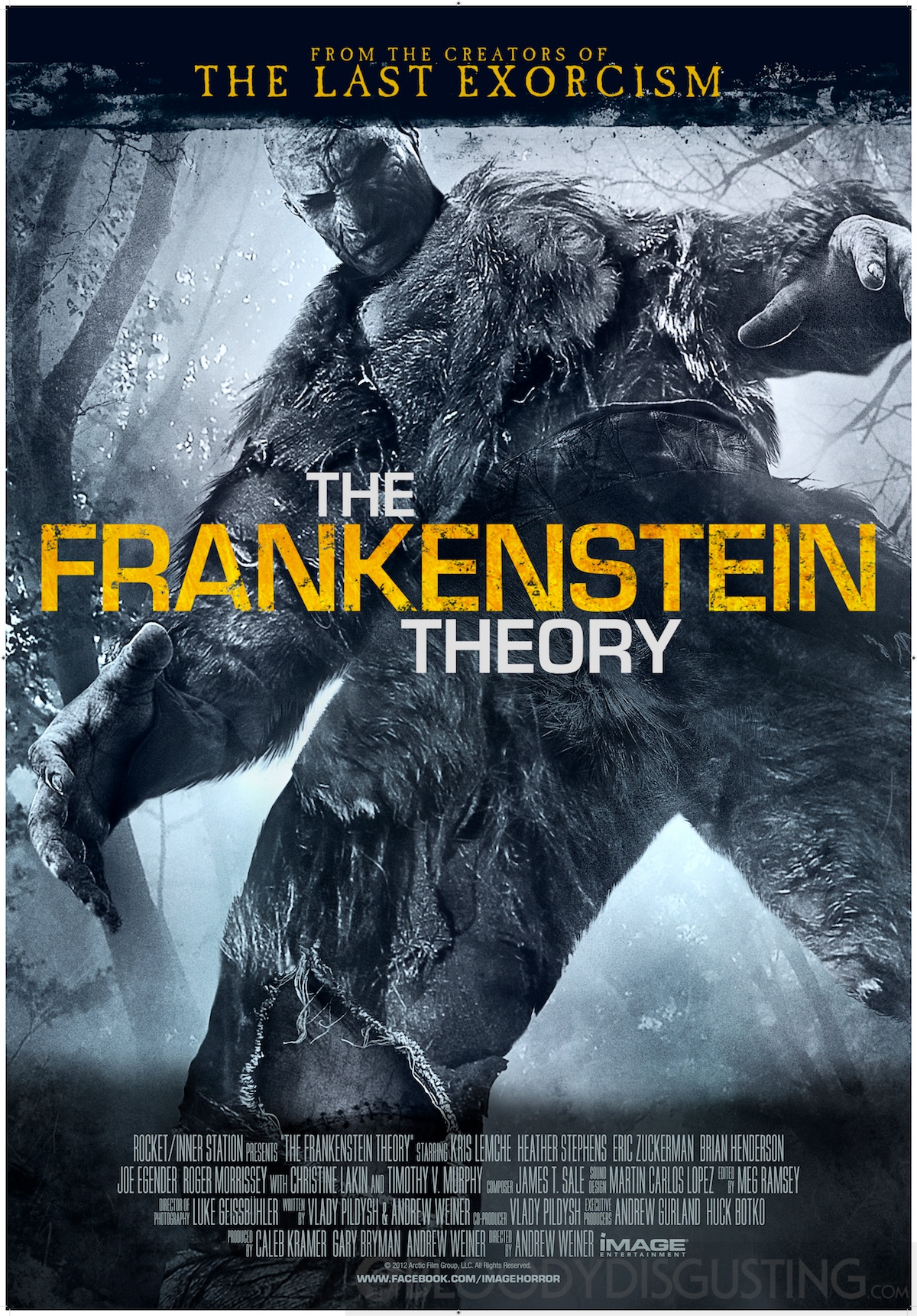
“The Frankenstein Theory”: The found-footage horror genre is still alive . . . alive!

Image

“The Frankenstein Theory” is now playing at AMC Star Cinema. 1:25, and not rated, but would likely be rated R for pervasive language and violent images.

Almost 14 years after “The Blair Witch Project,” you’d think the found-footage horror genre would be played out by now. But every few years, some filmmaker with a lot of ingenuity and a little money comes along to reinvent the genre. Oren Peli did wonders with $10,000 and some in-camera special effects for the first “Paranormal Activity,” and Barry Levinson made an effective eco-horror thriller with last fall’s “The Bay” by drawing in multiple “found” sources, from local news B-roll to Skype chats. Heck, “Trollhunter” even made the genre hilarious.

Andrew Weiner’s “The Frankenstein Theory” definitely does not reinvent the genre; it very much follows the “Blair Witch” template, as a group of unwary documentary filmmakers go after a mysterious creature, and don’t come back.

But it’s the first found-footage film I can remember to marry the 21st-century horror genre to classic horror from a century ago, and that makes it at least worth a look. The film is getting a very small cinematic rollout before it comes out on DVD on March 26, and among the 15 theaters it’s playing in is Fitchburg’ s AMC Star Cinema.

Arrogant young Jonathan Venkenheim (Kris Lemche) believes Shelley’s classic tale was a fictionalized account of real events, and that his ancestor was the real Mad Scientist. The book leaves Frankenstein and his creature stranded on an ice floe in the Arctic, and Venkenheim believes the creature is still roaming the tundra somewhere.

He bankrolls a documentary filmmaker (Heather Stephens) and her crew to chronicle his exploits, and off they go.

The film takes a while to get to the creepy stuff, and Weiner isn’t able to always hold the viewer’s interest until then. The movie’s saving grace are the two deeply skeptical film crew (Brian Henderson and Eric Zuckerman), who spend the first half of the movie giving each other Wet Willies and snickering behind Venkenheim. They’re genuinely funny, especially when things start to get a little scary in the frozen north (“I don’t want some bear to be making fun of me while he’s eating my leg!”)

Unfortunately, they’re also genuinely expendable, and “Theory” follows a familiar path as the characters are picked off one by one. Weiner keeps most of the mayhem offscreen, using unnerving sound effects and famliiarfound-horror visual touches (like night vision) to enhance the spooks. (Unfortunately, the effect is lessened a little by the fact that, for the monster’s roars, he seems to have cribbed sound effects from the video game “Doom.”)

Still, it’s an engaging debut, and possibly points the way forward for found-horror — backwards, to horror’s classic tales. I’m sure a shaky-cam visit to Dracula’s castle is in the works somewhere.

“Jack the Giant Slayer”: Fee fie fo fumble

Jack-the-Giant-Slayer_20

“Jack the Giant Slayer” opens Friday at Point, Eastgate, Star Cinema and Cinema Cafe in Stoughton. PG-13, 1:56.

It was just a little over a month ago that “Hansel & Gretel: Witch Hunters” opened, and I joked to a colleague that “Jack and the Beanstalk” would be the next storybook tale to get the IMAX 3D treatment. I thought I was joking, but here it is, “Jack the Giant Slayer.” I would quip that next up will be a PG-13 “Little Miss Muffet,” with Amanda Seyfried battling armies of giant spiders, but I don’t want to give anybody any ideas.

Suffice to say that “Jack” isn’t the worst of the fairytale trend (“Little Miss Riding Hood” owns that) nor is it the best (the gonzo stylish “Snow White and the Huntsman”). But the story of Jack does present a tricky question for director Bryan Singer and his team of writers (including Singer’s “The Usual Suspects” collaborator, Christopher McQuarrie); who’s the movie for, exactly?

You can’t just make a kids’ movie, since the studio is demanding a PG-13 action film that will bring in the teens. But there’s only so dark and violent you can go in a movie that has magic beans as a key plot element. So “Jack,” although energetic and prone to some moments of giddy visual wit, never settles on a consistent tone. It’s too scary for your youngest kid and too silly for your oldest.

A lengthy animated prologue (in which the giants don’t look much different than in the “live-action” film) explains how there’s a world of giants living in the clouds above ours, and how magic beans can build beanstalks to bridge the two worlds, so the giants can come down and kick our asses. (No real upside to the magic beans, methinks.) Luckily, a magic crown is forged that allows the wearer to control the giants.

The human sent the giants upstairs generations ago, but the king’s right-hand man Roderick (a gap-toothed Stanley Tucci) gets his hands on both the beans and the crown, with plans to use the giants to conquer the kingdom. Except farmboy Jack (Nicholas Hoult) gets ahold of the beans, accidentally sprouting a stalk in his living room that sends his house — with princess Isabelle (Eleanor Tomlinson) inside it — shooting up to the heavens.

The king (Ian McShane) sends a few good knights, along with Jack and the sneaky Roderick up to find her. It’s here, I think, that “Jack the Giant Slayer” makes its first major misstep. What I remember of previous fairytale iterations was the tension of Jack sneaking around the giant’s lair, trying not to be discovered, hearing the rumble as the giant gets closer and closer. Here, the humans are caught almost immediately, and the CGI giants are presented almost immediately. Wouldn’t want to waste any of that visual-effects money on actually building a little suspense.

And, honestly, the giants are a little boring. Visually and personality-wise, it’s hard to tell them apart, aside from one that looks like Harvey Keitel for some reason, and another that looks like either Kid or Play from “House Party” (I can never remember which is which.) Otherwise, they’re basically just one-dimensional brutes that like to munch humans like they were at Buffalo Wild Wings.

There’s one clever action sequence, in which gallant knight Elmont (Ewan McGregor) has to avoid being baked into the giant equivalent of a Hot Pocket. But Singer otherwise doesn’t get much mileage out of his villains — other than their size, they’re just generic “Lord of the Rings”-knockoff bad guys. Just imagine the mischief that a more daring filmmaker like Terry Gilliam would have had with this story.

But then, the studio likely couldn’t have trusted Gilliam to hit all the expected notes of big-budget fantasy-action, including the obligatory endless battle between humans and giants. It’s not awful, but for a movie about 40-foot behemoths, “Jack the Giant Slayer” has pretty small aspirations.

“A Place at the Table”: The face of hunger in America

placeattable2

“A Place at the Table” opens Friday at Sundance Cinemas. PG, 1:24. I’ll be doing a post-show chat about the film after the showing at 7:05 p.m. Tuesday, March 5.

“If another country was doing this to our kids, we’d be at war.”

Jeff Bridges says that in “A Place at the Table,” and it’s an interesting point. Imagine if North Korea developed some kind of biological weapon and dumped it in our drinking supply. Imagine it didn’t kill people — not right away — but instead made then more prone to developing lifelong illnesses, including one in three American children contracting Type 2 diabetes, exploding the cost of health care. Imagine it made children feel so sick that they couldn’t concentrate in school, leading to lower grades and dimmer futures. Imagine it made the population so unhealthy that only 1 in 4 Americans between the ages of 19 and 25 were physically fit enough to serve in the military, weakening the armed forces.

The “biological weapon,” of course, is hunger, and its cousin obesity. Filmmakers Kristi Jacobson and Lori Silverbush tackle a complex and seemingly intractable problem with every weapon at a skilled documentarian’s disposal. They present an array of sobering data, such as the fact that 51 million Americans don’t get enough to eat, but wrap that information around the personal stories of three very different members of that 51 million.

The film opens with beautiful shots of western Colorado — snow-capped peaks, verdant forests, rolling fields — as a song by T Bone Burnett and the Civil Wars plays on the soundtrack. It presents America as the land of plenty — surely hunger can’t exist in a country with so much bounty? But in fact it does; living right in the middle of all that natural beauty is Rosie, a Colorado teenager whose family lives hand-to-mouth, depending on charity from neighbors and the local food bank for meals each day. Poverty seems rampant in her picturesque little town; the local pastor’s food pantry is crowded with needy people, and we meet one father who works two eight-hour shifts a day — one as a cattle rancher, the other as a school janitor — and still has to use it.

The other two people are a Mississippi second-grader whose health problems are worsening because her mother can only afford processed foods, and a Philadelphia single mother living right at the edge of eligibility for food stamps. We see her get a good full-time job, which would be the triumphant finale of most documentaries. But the slightly higher salary means she loses her food stamps, and her children ended up eating worse than they did when she was classified as poor.

It’s a difficult, complex problem, one that can’t be solved by just donating a few cans of food to the local pantry. (Although, by all means, do that.) Jacobson and Silverbush show how addressing hunger needs a comprehensive, systematic approach at the federal government level, including an expansion not just of social programs but a look at agriculture policy, which subsidizes corporate crops like soybeans and inedible corn used for high-fructose corn syrup to the tune of $20 billion a year, but not fruits and vegetables. The result is a growing population that doesn’t have enough to eat, and can only afford the cheap calories that junk food provides.

And, somehow, there needs to be an honest conversation in the culture about American poverty, once and for all dispelling the grotesque misconception that those on welfare are living high on the hog on the taxpayers’ dime. Watching “A Place at the Table” is a good place to start that conversation.

“A Glimpse Inside the Mind of Charles Swan III”: Believe me, a glimpse is plenty

Charlie-swan

“A Glimpse Inside the Mind of Charles Swan III” opens Friday at Sundance Cinemas. R, 1:24.

We don’t get enough fiascoes. Sure there are plenty of bad movies out there, but most aim low and miss the bar. It takes something special, some innate drive, to produce something really misbegotten, to conceive the ill-conceived. When Nathan Rabin of the A.V. Club writes a “Year of Flops” entry and dubs it a fiasco, you can almost sense his half-smile of admiration. Good for you, he seems to say, for being brave enough to fail so spectacularly.

Good for you, “A Glimpse Inside the Mind of Charles Swan III.” You are a unqualified fiasco.

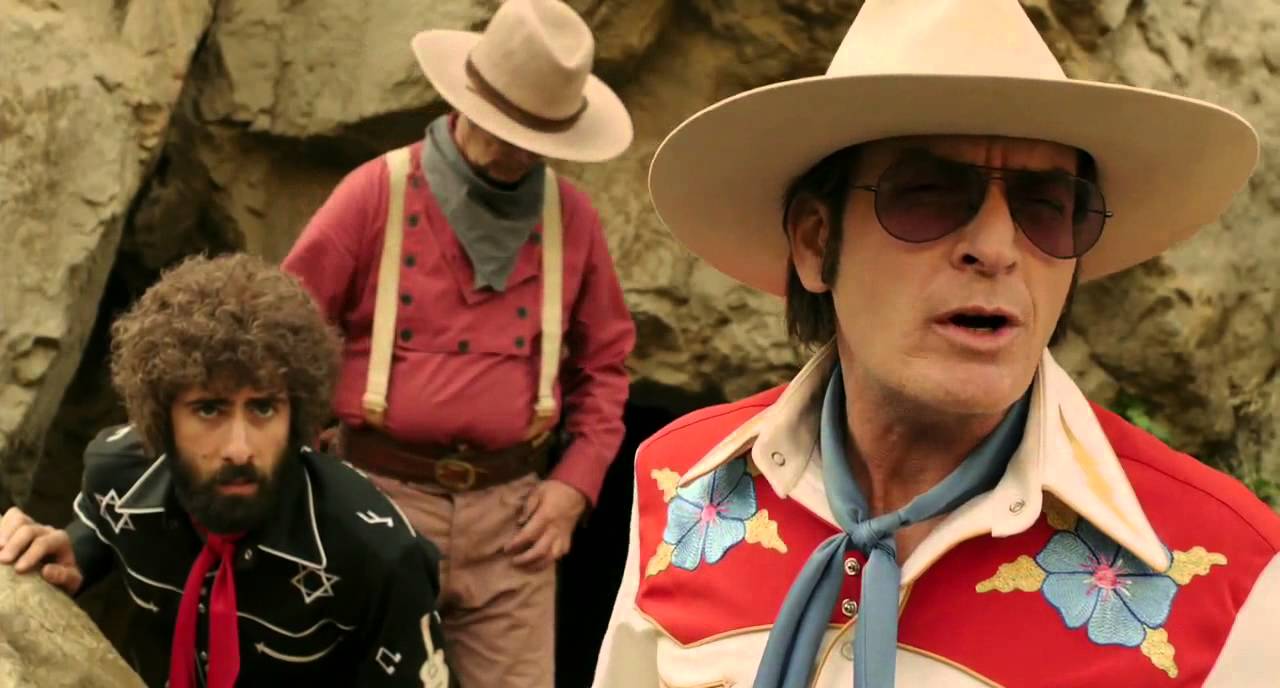
Charles Swan III is a misogynist who thinks he’s an incurable romantic hero, a middle-aged graphic designer in ’70s Los Angeles who loves neither wisely nor well, but often. His latest girlfriend (Katheryn Winnick) kicks him to the curb for cheating on her, and he wanders the movie in a funk. Writer-director Roman Coppola indeed does give us occasional glimpses into the mind of Charles Swan, and it looks like a water-damaged pile of old Playboys. Scantily-clad women run around everywhere, but what’s remarkable (and ugly) is the level of persecution that Swan feels. In one, bikini-clad women in costume-store Indian outfits go on the warpath against him; in another, a command center of busty women call down airstrikes on men who dare to flirt with other women.

The kicker is that Charles Swan is played by Charlie Sheen, himself a misogynist who thinks he’s some kind of hero — or at least he did, publicly, before his management team muzzled him. Writer-director Roman Coppola (who has co-written some of Wes Anderson’s infinitely better films) seems to think his movie can coast on Sheen’s charms. Except he doesn’t have any. He’s gotten kind of creepy in middle age, and can’t sell any of the wounded-puppy notes that the film requires of him. There’s a scene late in the film when we see a marionette version of Charlie Sheen, dancing around a party and using its little wooden arms to peek up women’s skirts. It’s actually a little less creepy than the real thing.

To see how it might have worked, watch Bill Murray in a small, thankless role as Swan’s agent. He’s also a lothario, but Murray brings such a sad-sack weariness to lines like “Desire is as close as I’ll ever come to happiness” that you kind of feel for the guy. We never feel anything for Swan except a mild revulsion, like that feeling the night before you get the flu.

Coppola dresses up his film with all kinds of ’70s Pop Art kitsch — Swan drives a Cadillac that has eggs and bacon airbrushed on the doors, and his office has a couch that looks like a giant Chicago hot dog with the works. Jason Schwartzman’s biggest contribution to the movie is his Marjoe Gortner perm, Patricia Arquette (as Swan’s sister) dresses in every scene like she’s on her way to the Golden Globes on Gil Gerard’s arm. You get the feeling that production design is really where Coppola’s heart is at, rather than character or story. He can imitate the look of a Hal Ashby movie like “Harold & Maude,” but can’t get below the sun-baked surface to anything interesting.

Swan spends the film alienating everyone around him, and then, magically he goes to the office Christmas party and everyone loves him again, without explanation. Then the movie just kind of ends after a mercifully brisk 84 minutes, and the actors start introducing themselves to the camera, which pulls back to reveal the entire cast and crew. This seems like one desperate, last-ditch attempt at audience empathy (“See, real people made this movie! Nice people! Please don’t be mad at us!”) And, like the rest of the movie, it doesn’t work.

“The Loneliest Planet”: The backpacker’s guide to rocky emotional terrain

the-loneliest-planet-gael-garcia-bernal

If you get up to go to the bathroom at the wrong moment during “The Loneliest Planet,” you’ll miss everything.

The UW-Cinematheque is hosting the Madison premiere of the film at 7 p.m. Friday at 4070 Vilas Hall, 821 University Ave. The screening is free, but seating is limited and first-come, first-serve.

Much of Julia Loktev’s gorgeous and unsettling film is like a travelogue, with long scenes of the three characters trudging through the vibrant green hills of the Caucacus Mountains in the country of Georgia. It’s a vacation for an adventurous engaged couple, Alex (Gael Garcia Bernal) and Nica (Hani Furstenberg), and I’m guessing the title is a play on those “Lonely Planet” guidebooks. There isn’t much to do out in these remote hills except hike, but they pass the time playing teasing word games (he’s teaching her his native Spanish, verb by verb) and all the other things young couples do when they’re in love, and the enormity of the world seems to reside in the other person.

“Planet” requires a bit of patience from the viewer at first; there are a lot of hiking shots, and while undeniably beautiful (this is a movie that demands a theatrical viewing) it can get a little repetitive to see similar shots of the same figures, tiny as ants, moving across an emerald backdrop. (Loktev only uses music during those extreme long shots, quickly cutting it off when the camera narrows in on the couple).

There’s a third figure with the couple, a local guide named Dato (Bidzina Gujabidze). He’s a somewhat mysterious figure, trying to make jokes in English while the couple nods politely. There’s a few moments of uncertainty — at one point, Dato freezes in his tracks as if he hears something, but doesn’t say what. We sense something is going to happen to these three, but what?

And then, midway through the film, it finally does. It only lasts a few seconds, but has a profound impact, and we realize we needed all that time spent earlier with the happy couple to see just how profound. The rest of the film is, again, a lot of walking and some talking (although, tellingly, never about the incident). But everything’s changed. Alex and Nica are more distant, uncertain how to relate to each other. One of the fascinating aspects of “The Loneliest Planet” is how slight adjustments can completely alter the effect of what is basically the same shot, much as how a small moment can send love that seemed secure tumbling into doubt.

“The Loneliest Planet” is a film about connection, or the attempt at connection; everybody’s trying to learn each other’s language, both verbal and emotional, but there are limits to what you can understand about another person. It’s telling that, in some early scenes, the characters are visually obscured from us — in one local tevern, Alex and Nica sit in semi-darkness, illuminated occasionally by a rotating blue light from the dance floor. Out in the mountains, there’s nowhere to hide from the camera, and the couple learns that perhaps it’s best not to know exactly what’s in the other person’s heart, or their own.